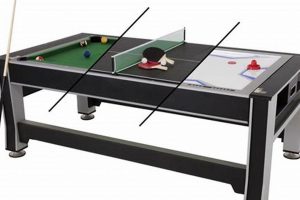
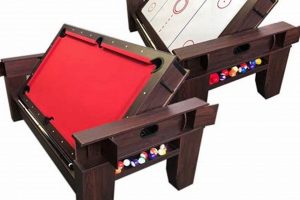
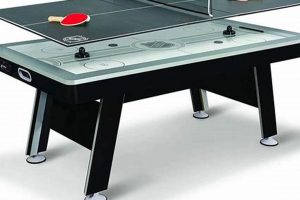
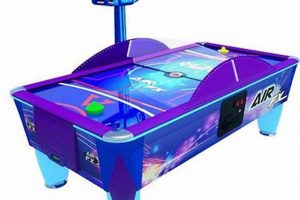
A personalized recreational gaming surface, typically constructed from wood, metal, or synthetic materials, designed for two players to propel a puck across with minimal friction. This surface differentiates itself from mass-produced equivalents through alterations to size, design, materials, and integrated features. Examples include tables crafted to precisely fit available space, adorned with company logos, or integrated with digital scoring systems.
The appeal of personalized gaming equipment stems from several factors. It allows for optimization of space utilization, ensuring seamless integration within specific environments. Bespoke designs and materials can enhance the aesthetic appeal, aligning with interior design schemes or branding requirements. Furthermore, unique features such as advanced scoring or interactive elements can elevate the user experience, creating a more engaging and memorable form of entertainment. The emergence of this trend can be traced to a desire for individualized experiences and a rejection of standardized products in favor of items that reflect personal taste or business identity.
This article will explore the various design considerations involved in the creation of such a gaming surface, examining material choices, feature integration options, and the process of commissioning a bespoke build. It will further delve into the benefits and potential drawbacks of opting for a personalized approach compared to selecting commercially available alternatives.
Tips for Custom Air Hockey Table Acquisition
The procurement of a personalized air hockey table necessitates careful consideration to ensure optimal performance, durability, and aesthetic alignment with the intended environment. The following guidelines provide insights into key aspects of the decision-making process.
Tip 1: Material Selection: The choice of materials significantly impacts gameplay and longevity. Consider the composition of the playing surface (e.g., acrylic, laminate), the frame (e.g., solid wood, metal), and the rails (e.g., aluminum, polymer). Each material possesses unique properties regarding puck speed, structural integrity, and resistance to wear.
Tip 2: Blower System Evaluation: The blower system is crucial for generating a consistent air cushion. Assess the motor’s power (CFM – cubic feet per minute), noise level (decibels), and energy efficiency. A robust blower ensures smooth puck movement and a competitive playing experience.
Tip 3: Surface Precision: The playing surface must be perfectly level and free of imperfections. Inquire about the manufacturing tolerances and quality control procedures to guarantee a uniform air distribution and prevent puck deflection.
Tip 4: Customization Options: Explore the available customization options, including size adjustments, graphic overlays, lighting integration, and electronic scoring systems. Clearly define the desired aesthetic and functionality to facilitate effective communication with the manufacturer.
Tip 5: Manufacturer Reputation: Research the manufacturer’s track record, customer reviews, and warranty policies. A reputable manufacturer should demonstrate expertise in air hockey table construction and provide reliable after-sales support.
Tip 6: Budget Allocation: Establish a realistic budget that encompasses material costs, manufacturing fees, customization charges, and shipping expenses. Obtain multiple quotes from different manufacturers to ensure competitive pricing.
Tip 7: Space Considerations: Accurately measure the available space and account for player movement. Choose a table size that comfortably fits the intended location without compromising gameplay.
These considerations are paramount in ensuring that the resulting personalized gaming surface meets specific requirements and provides a sustained, enjoyable gaming experience. The long-term value of such a surface is directly linked to the careful planning and execution of these key elements.
The subsequent sections of this article will address the process of commissioning a custom build and the maintenance requirements for ensuring optimal performance.
1. Dimensions

The dimensions of a personalized air hockey table directly influence its usability and integration into a given space. Unlike mass-produced tables with standardized sizes, these offer dimensional flexibility, which impacts gameplay dynamics and room suitability. A larger playing surface generally allows for faster and more complex gameplay, necessitating more open space. Conversely, a smaller table can fit within tighter areas, sacrificing some gameplay intensity for spatial efficiency. Selection of appropriate dimensions must consider both player skill level and the available area to ensure an enjoyable and practical recreational setup. An undersized playing field could constrain movements and tactical options, while an oversized table might dominate a room and inhibit movement around it. The initial assessment of available space is a prerequisite for determining the optimal dimensions.
Consider a professional setting, such as a corporate break room with limited square footage. A custom air hockey table could be designed with smaller dimensions to fit the space while still providing an engaging activity for employees. Another example would be a residential game room where the homeowner prefers a larger playing surface for competitive play but has constraints in room width. The personalized approach allows for modification of the table length while minimizing its width to meet the room’s specific requirements. The cause-and-effect relationship is evident: dimensional constraints cause alterations in gameplay dynamics, influencing the overall user experience. The practical significance of understanding these relationships lies in optimizing the balance between space utilization and gameplay enjoyment.
In conclusion, dimensional considerations are critical in the creation of a bespoke air hockey table. These considerations directly affect gameplay and space utilization. Ignoring the importance of appropriate dimensions can lead to a suboptimal experience, hindering gameplay or rendering the table impractical for its intended environment. Therefore, careful planning and measurement are essential steps in creating a surface that fulfills both functional and aesthetic needs. Accurate measurement of space helps match the custom size of air hockey table.
2. Materials

The selection of materials for a personalized air hockey table directly dictates its performance characteristics, lifespan, and aesthetic qualities. The composition of the playing surface, frame, rails, and even the pucks and mallets significantly impacts gameplay dynamics and overall durability. Different materials exhibit varying degrees of friction, impacting puck speed and responsiveness. For instance, a playing surface crafted from high-grade acrylic offers a faster and more consistent puck glide compared to laminate alternatives. The frame’s material, typically wood or metal, determines the table’s structural integrity and resistance to warping. The quality of the materials chosen, therefore, has a cause-and-effect relationship with the overall playing experience and the table’s longevity. This selection process determines the enjoyment and the cost of operation and maintenance of the resulting table.
The practical implications of material choice extend beyond gameplay. A custom air hockey table designed for commercial use in a high-traffic environment requires materials that can withstand constant use and potential abuse. Solid wood frames, reinforced with metal supports, offer superior structural stability in such settings. In contrast, a table intended for residential use might prioritize aesthetic appeal, incorporating decorative wood veneers or custom-painted surfaces. The material selection must align with the intended application and environmental conditions. High end wood can be added to custom air hockey table to increase the aesthetic and elegance in the house.
In summary, the appropriate selection of materials is paramount in creating a personalized air hockey table that meets specific performance, durability, and aesthetic requirements. This impacts playability and cost. Failure to consider the properties of different materials can lead to a suboptimal playing experience, premature wear, and increased maintenance costs. The inherent value and prolonged usability of the table are intrinsically linked to the materials used in its construction. Customization of air hockey table starts with suitable material selection.
3. Airflow

Airflow is a critical determinant of performance in a personalized air hockey table. It directly impacts the puck’s levitation and, consequently, its speed and responsiveness across the playing surface. Insufficient airflow results in increased friction, slowing the puck and hindering gameplay. Conversely, excessive airflow can cause erratic puck movement, diminishing control. The design and implementation of the airflow system are, therefore, vital to the success of any customized table. Factors such as blower motor power, hole distribution across the playing surface, and surface material all play significant roles in regulating the airflow’s effectiveness. The performance of the table depends entirely on these characteristics.
Consider two practical examples. In one scenario, a custom air hockey table designed for competitive play requires precise airflow regulation to ensure a consistent puck speed across the entire surface. This necessitates a powerful blower motor and a meticulously engineered hole pattern to create a uniform air cushion. In another scenario, a smaller, more compact table intended for recreational use might utilize a less powerful blower, resulting in a slightly slower puck speed but reduced noise levels. Both instances demonstrate how tailored airflow systems can optimize the playing experience based on specific needs and preferences. The selection of the materials is essential and also the quantity of air injected into the playing field.
In summary, airflow management represents a fundamental aspect of personalized air hockey table design. Achieving optimal performance necessitates a balanced approach that considers motor power, surface material, and hole distribution. Neglecting the significance of airflow can lead to a compromised playing experience, characterized by inconsistent puck movement and diminished user satisfaction. Careful attention to these details guarantees a personalized gaming surface that fulfills its intended purpose and provides lasting enjoyment. The importance of the motor and its CFM are important for custom air hockey table.
4. Aesthetics
Aesthetics play a crucial role in the design and integration of a personalized air hockey table. Beyond functionality, the visual appeal of the table contributes significantly to its overall value and the enjoyment it provides. The customization process allows for incorporating aesthetic elements that reflect personal taste, complement the surrounding environment, or align with a specific theme. Attention to these details transforms a recreational gaming surface into a visually cohesive and appealing element within a space.
- Material Finishes
The selection of surface finishes, such as wood veneers, metal accents, or custom-painted graphics, profoundly influences the table’s visual character. A glossy finish might convey a modern aesthetic, while a matte finish could evoke a more traditional feel. Wood veneers offer a sense of warmth and sophistication, whereas metal accents provide a sleek and contemporary look. The choice of finishes directly impacts the table’s visual integration with its surroundings and its overall aesthetic appeal. Custom air hockey table may include polished or brushed finished.
- Color Palettes
The strategic use of color palettes extends beyond surface finishes to include the playing surface, rails, and even the pucks and mallets. Coordinating colors with existing dcor or incorporating bold contrasts can enhance the table’s visual impact. A monochromatic color scheme can create a minimalist aesthetic, while a vibrant, multi-colored design might add a playful and energetic touch. The selection of colors should be carefully considered to achieve the desired visual effect and complement the table’s intended environment. The color creates the whole custom air hockey table outlook.
- Lighting Integration
Incorporating lighting elements, such as LED strips along the rails or illuminated scoring displays, elevates the table’s visual appeal and enhances the playing experience. Strategically placed lighting can create a dramatic ambiance, highlighting the table’s features and drawing attention to its design. Lighting can also serve a functional purpose, improving visibility and enhancing gameplay in low-light conditions. Careful planning and execution are essential to ensure that the lighting integration complements the table’s overall aesthetic and enhances its visual impact. For example a blue neon light may be used to create a futuristic outlook.
- Custom Graphics and Branding
Personalized graphics and branding elements offer a unique opportunity to express individuality or reinforce brand identity. Incorporating custom logos, artwork, or text onto the playing surface or frame can transform the table into a personalized statement piece. This level of customization allows for seamlessly integrating the table into a corporate environment or reflecting personal interests and hobbies. The design and execution of custom graphics require careful attention to detail to ensure a professional and visually appealing result. Custom air hockey table graphics can be silk screen printed on.
In conclusion, aesthetic considerations are integral to the design and creation of a personalized air hockey table. Through the strategic use of material finishes, color palettes, lighting integration, and custom graphics, the table can be transformed into a visually stunning and highly personalized gaming experience. The ability to tailor these aesthetic elements allows for seamlessly integrating the table into any environment and reflecting individual tastes and preferences. Ignoring the importance of aesthetics can result in a generic and visually unappealing product, failing to fully realize the potential of personalized design.
5. Durability
Durability constitutes a primary consideration in the creation and acquisition of a custom air hockey table. Unlike mass-produced counterparts, a bespoke table offers the opportunity to specify materials and construction techniques that prioritize longevity and resistance to wear and tear. This becomes especially relevant given the potential for intensive use, particularly in commercial environments. The long-term value and enjoyment derived from a custom air hockey table hinge significantly on its capacity to withstand repeated play and environmental factors.
- Material Selection and Structural Integrity
The choice of materials directly impacts a table’s capacity to endure stress and maintain its structural integrity over time. Solid hardwoods, high-gauge metals, and impact-resistant polymers contribute to a robust framework capable of withstanding frequent use and potential accidental impacts. Inferior materials, conversely, are prone to warping, cracking, and premature failure. For instance, a table constructed with a particleboard frame is likely to exhibit significantly less durability than one with a reinforced steel frame. Material selection must, therefore, prioritize longevity to ensure a prolonged lifespan for the custom air hockey table.
- Surface Coating and Protection
The playing surface of an air hockey table is subjected to constant abrasion from the puck and mallets. Applying a durable, scratch-resistant coating protects the surface from damage, preserving its smooth playing surface and aesthetic appeal. Protective coatings also guard against moisture and spills, which can cause warping or staining. Examples include multi-layer lacquer finishes or specialized polymer coatings designed to withstand the rigors of frequent gameplay. The protective coating is particularly crucial in high-traffic environments where spills or impact damage are more likely.
- Component Quality and Reliability
The lifespan of a custom air hockey table is also influenced by the quality of its individual components, such as the blower motor, electronic scoring systems, and even the fasteners used in assembly. Selecting high-quality components from reputable manufacturers ensures reliable performance and reduces the likelihood of premature failure. For example, a robust blower motor with sealed bearings will offer significantly greater longevity than a lower-quality alternative prone to overheating and burnout. Similarly, durable electronic scoring systems contribute to a more reliable and enjoyable gaming experience.
- Construction Techniques and Assembly
Even with high-quality materials and components, proper construction techniques are essential for ensuring long-term durability. Strong, precise joints and secure fasteners prevent structural weaknesses and minimize the risk of the table falling apart under stress. Skilled craftsmanship and attention to detail during assembly are crucial for creating a durable and robust structure. For instance, using interlocking joinery and high-strength adhesives can significantly enhance the structural integrity of the table frame, preventing warping or separation over time.
In conclusion, durability represents a key consideration in the design and construction of a custom air hockey table. Prioritizing material selection, surface protection, component quality, and construction techniques ensures a prolonged lifespan and a more enjoyable gaming experience. A durable table represents a sound investment, offering lasting value and minimizing the need for costly repairs or replacements. High quality custom air hockey table requires durable parts and assembly techniques.
6. Electronics

The integration of electronics into custom air hockey tables elevates functionality beyond the traditional mechanical game. Electronic components enable automated scoring, enhanced visual displays, and interactive features, transforming the user experience. The inclusion of electronic elements directly influences gameplay dynamics, providing immediate feedback and increasing engagement. For example, tables equipped with infrared puck tracking systems can automatically detect goals and update the score in real-time, eliminating manual scoring errors. Furthermore, sound effects and visual animations synchronized with game events intensify the competitive atmosphere. The absence of such features diminishes the interactive experience, limiting the table to a purely mechanical engagement.
The practical applications of electronic integration extend to various aspects of gameplay and user convenience. Automated scoring systems simplify scorekeeping, allowing players to focus on the game itself. LED lighting embedded within the playing surface or surrounding the table enhances visibility and creates a visually appealing environment. Furthermore, custom air hockey tables can incorporate Bluetooth connectivity, enabling players to track game statistics, compete online, or even control table functions via mobile devices. The reliability and accuracy of these electronic components are paramount, as malfunctions can disrupt gameplay and diminish user satisfaction. Tables without these electronics can be perceived as less interactive and advanced.
In summary, electronics represent a significant enhancement to the custom air hockey table experience. By automating scoring, enhancing visual displays, and providing interactive features, electronics elevate gameplay and increase user engagement. The selection of reliable and well-integrated electronic components is crucial for ensuring a seamless and enjoyable gaming experience. The ongoing development of new electronic technologies promises further innovations in custom air hockey table design, blurring the lines between traditional gaming and interactive digital entertainment. Electronic components should be selected and tested.
Frequently Asked Questions
This section addresses common inquiries regarding personalized air hockey tables, providing concise and informative answers to assist in informed decision-making.
Question 1: What distinguishes a custom air hockey table from a commercially available model?
A personalized air hockey table allows for specification of dimensions, materials, design elements, and integrated features to meet individual needs and preferences. Commercially available models offer limited customization options and standardized designs.
Question 2: What are the key considerations in determining the appropriate size for a custom air hockey table?
Available space, intended player skill level, and desired gameplay dynamics are critical factors. Larger tables facilitate faster and more complex gameplay but require more space, while smaller tables offer spatial efficiency at the expense of gameplay intensity.
Question 3: What types of materials are commonly used in the construction of a custom air hockey table?
Typical materials include acrylic or laminate playing surfaces, solid wood or metal frames, and aluminum or polymer rails. Material selection impacts puck speed, structural integrity, and aesthetic qualities.
Question 4: How does the blower system affect the performance of a custom air hockey table?
The blower system generates the air cushion that enables puck levitation. The motor’s power (CFM), noise level, and energy efficiency influence puck speed, consistency, and the overall playing experience. A more robust blower will contribute to more consistent and effective airflow.
Question 5: What customization options are typically available for a custom air hockey table?
Customization options may include size adjustments, graphic overlays, lighting integration, electronic scoring systems, and unique design elements. The degree of customization varies depending on the manufacturer.
Question 6: What are the typical maintenance requirements for a custom air hockey table?
Regular maintenance involves cleaning the playing surface, inspecting and cleaning the blower system, and checking for loose fasteners or damaged components. Prompt attention to maintenance issues extends the table’s lifespan and ensures optimal performance.
These FAQs provide a foundational understanding of custom air hockey tables, highlighting the key differences from standard models and addressing common concerns.
The subsequent article section will explore potential cost factors associated with personalized air hockey tables.
Conclusion
The preceding analysis has examined the various facets of the custom air hockey table, emphasizing its design, construction, and functional aspects. Considerations such as dimensional adaptation, material selection, airflow dynamics, aesthetic integration, electronic augmentation, and long-term durability were explored in detail. The objective has been to provide a comprehensive understanding of the parameters that influence the performance, longevity, and overall value of a personalized gaming surface.
Acquiring a gaming surface tailored to specific needs and preferences requires careful evaluation and informed decision-making. The information presented serves as a guide for prospective buyers seeking to optimize their investment. Continued advancements in materials science and electronic technology will undoubtedly lead to further refinements in design and functionality, shaping the future of recreational gaming equipment. Thus, rigorous standards and commitment to quality remain essential for maximizing the gaming experience.
![Best Table Tennis Air Hockey Table [Deals!] | Your Ultimate Source for Hockey Updates, Training Guides, and Equipment Recommendations](https://ssachockey.com/wp-content/uploads/2026/03/th-549-300x200.jpg "Best Table Tennis Air Hockey Table [Deals!] Your Ultimate Source for Hockey Updates, Training Guides, and Equipment Recommendations")
![Best Air Hockey Table Tennis Table [Review & Guide] | Your Ultimate Source for Hockey Updates, Training Guides, and Equipment Recommendations](https://ssachockey.com/wp-content/uploads/2026/03/th-529-300x200.jpg "Best Air Hockey Table Tennis Table [Review & Guide] Your Ultimate Source for Hockey Updates, Training Guides, and Equipment Recommendations")