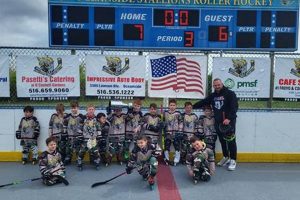
This developmental stage in youth ice hockey typically involves players between the ages of seven and eight. At this level, the focus is on introducing fundamental skills, such as skating, puck handling, and basic teamwork. For example, a child participating in this program will learn how to properly hold a hockey stick, execute forward and backward strides, and pass the puck to a teammate.
Participation at this age is crucial for building a solid foundation for future hockey development. It emphasizes skill acquisition and enjoyment of the sport over competitive outcomes. A positive experience at this level can foster a lifelong love for the game, and the fundamental skills learned can significantly improve a player’s potential as they progress through higher levels of competition. Historically, structured programs at this level were less common, which sometimes led to players developing bad habits or lacking essential techniques.
Subsequent sections will delve into specific training drills suitable for players in this age group, explore effective coaching strategies for optimal development, and address common parental concerns related to participation and safety.
Guidance for the Specified Youth Hockey Group
The following recommendations are designed to assist coaches, parents, and young athletes involved in this introductory phase of organized hockey.
Tip 1: Emphasize Fundamental Skill Development: Prioritize skating, puck handling, and passing techniques. Repetitive drills focusing on these core skills are more valuable than complex tactical exercises. For instance, simple skating drills focusing on forward stride, backward skating, and crossovers should be a primary focus.
Tip 2: Promote Equal Ice Time: Ensure all players receive equitable opportunities to participate. This fosters a sense of inclusion and allows each player to develop at their own pace, regardless of skill level. Avoid prioritizing more skilled players over others during games or drills.
Tip 3: Maintain a Positive and Encouraging Environment: Create a supportive atmosphere where mistakes are viewed as learning opportunities. Focus on effort and improvement rather than solely on winning. For example, offer constructive feedback on specific areas for improvement instead of general criticism after a mistake.
Tip 4: Implement Age-Appropriate Drills: Utilize drills that are tailored to the developmental capabilities of players in this age range. Avoid drills that are too complex or physically demanding. Small-area games, which emphasize puck control and decision-making in confined spaces, are particularly effective.
Tip 5: Prioritize Safety: Enforce all safety rules and regulations. Ensure players are properly equipped with correctly fitted protective gear. Conduct regular safety checks of equipment and playing surfaces.
Tip 6: Encourage Sportsmanship: Teach players the importance of fair play, respect for opponents, and adherence to the rules of the game. Emphasize the value of teamwork and cooperation. Promote respectful interaction with referees and opposing players, even in competitive situations.
These guidelines are intended to enhance the developmental experience for young hockey players. By focusing on skill development, inclusivity, and a positive environment, this stage can establish a lasting foundation for future athletic success and personal growth.
The subsequent section will examine specific drills and coaching methodologies to effectively implement these recommendations.
1. Skill-focused instruction

Skill-focused instruction is a foundational component of programming for players at this developmental phase. At this age, athletes are uniquely receptive to learning and refining fundamental hockey techniques. The direct correlation between focused skill development and long-term player potential is significant. For example, consistent instruction on proper skating techniqueincluding stride length, edge control, and balancedirectly impacts a players overall speed and agility on the ice. Neglecting this foundational element can lead to the development of inefficient habits that are difficult to correct later in their development. This creates a detrimental ripple effect which affects puck-handling, passing and shooting as a players overall skating will hinder their overall performance.
The implementation of skill-focused instruction necessitates age-appropriate drills and coaching methodologies. Repetitive exercises, designed to reinforce proper technique, are more effective than complex tactical strategies. For example, drills involving cone work to improve puck-handling skills or passing exercises that emphasize accuracy and timing should be prioritized over game simulations that place less emphasis on technique refinement. Further, effective instruction includes providing individualized feedback and positive reinforcement. Recognizing and correcting minor flaws in technique early can prevent the development of significant deficiencies.
In conclusion, prioritizing skill-focused instruction is not merely beneficial but essential for players in this particular age bracket. The investment in fundamental skill development at this stage yields significant long-term returns, enhancing a player’s capabilities and laying a solid foundation for future success. Challenges may arise in maintaining player engagement with repetitive drills, however, creatively designed practices and positive reinforcement can overcome this obstacle. Ultimately, a commitment to skill-focused instruction ensures players develop a strong foundation of abilities, setting them up for continued success in the sport.
2. Positive reinforcement emphasis

The application of positive reinforcement principles is a critical element within youth hockey programs tailored for players in the seven-to-eight-year-old age range. This emphasis serves as a foundational approach to instill confidence, encourage participation, and cultivate a positive association with the sport. The primary cause-and-effect relationship at play is that constructive feedback and recognition of effort directly enhance a child’s motivation and willingness to learn new skills. For instance, instead of solely focusing on missed shots, coaches who acknowledge a player’s improved skating stride or determined effort to retrieve a puck will likely see increased engagement and continued improvement. Positive reinforcement functions as a vital component for fostering a supportive and enjoyable atmosphere, which is crucial for retaining young athletes in the sport.
The practical significance of integrating positive reinforcement extends beyond immediate skill development. It instills fundamental values such as perseverance, teamwork, and sportsmanship. This approach is particularly effective during this developmental stage because young athletes are highly susceptible to external validation and easily discouraged by negative criticism. A real-life example involves teams where coaches actively celebrate small victories and improvements rather than dwelling on losses. These teams often exhibit stronger cohesion, better morale, and a higher likelihood of sustained player involvement. Recognizing individual and team accomplishments, however minor, creates a positive feedback loop that reinforces desirable behaviors and attitudes. Furthermore, positive reinforcement supports the development of intrinsic motivation, enabling athletes to find satisfaction in their efforts and progress independent of external rewards.
In summary, the deliberate emphasis on positive reinforcement forms the bedrock of a successful youth hockey program. By prioritizing encouragement and constructive feedback over solely focusing on errors or outcomes, coaches and parents can create a developmental environment that fosters a lifelong love of the sport, cultivates essential life skills, and promotes a culture of inclusivity and support. Potential challenges involve consistent application of positive reinforcement across all coaching staff and parents; however, with clear communication and established guidelines, these challenges can be effectively addressed. This approach directly contributes to the broader objective of developing well-rounded athletes who are passionate about the game and committed to personal growth.
3. Fundamental movement patterns

The developmental stage presents a critical window for establishing proficiency in fundamental movement patterns, impacting future athletic capabilities. During this period, the neurological and musculoskeletal systems are highly adaptable, allowing for efficient acquisition of these patterns. These include skating strides, balance control, lateral movement, and basic coordination skills essential for ice hockey participation. Failure to establish a solid foundation in these patterns during this timeframe creates a cascade of negative effects, hindering future skill development and potentially increasing the risk of injury. Consider the example of a player who does not develop proper skating technique, their agility is limited, making them unable to execute complex maneuvers and hindering their overall progress in the sport.
Understanding the interconnectedness between movement patterns and overall athletic development influences training methodologies. Coaches at this level should prioritize drills focused on developing efficient skating mechanics, balance, and agility. For example, utilizing obstacle courses emphasizing lateral movement and quick changes of direction assists players in developing the coordination necessary for game situations. Such drills not only enhance the player’s physical capabilities but also improve their spatial awareness and decision-making on the ice. This focus contributes to creating a more well-rounded and adaptable athlete. Real-life outcomes support the importance of such practices. Observations reveal players with strong fundamental movement skills at this age tend to progress through higher levels of hockey with greater ease and confidence compared to those who lack these skills.
In summary, cultivating fundamental movement patterns within the age cohort is not merely a supplementary aspect but a prerequisite for long-term success. By focusing on these patterns through structured training and positive reinforcement, programs establish a foundation upon which players can build more complex skills. Addressing potential challenges, such as limited ice time or varying skill levels among players, requires adaptive coaching strategies and creative drill design. This targeted approach promotes player development, reduces injury risk, and increases the likelihood of continued involvement in hockey, benefiting both the individual and the sport.
4. Limited competition intensity
The implementation of limited competition intensity is a critical component within youth ice hockey programs designed for individuals at this age range. Its primary function lies in safeguarding the long-term development of players by prioritizing skill acquisition and fostering a positive association with the sport over premature competitive pressures. The direct cause and effect relationship is that reduced emphasis on winning at this stage correlates with increased player retention and a greater likelihood of developing fundamental hockey skills. For instance, leagues that focus on skill-based drills and small-area games, rather than strict win-loss records, tend to witness higher player engagement and improved overall skill levels among participants. Limiting competition intensity serves as a protective mechanism, preventing early specialization and burnout, which can be detrimental to long-term athletic development.
The practical significance of maintaining limited competition intensity extends to influencing player attitudes and team dynamics. A focus on learning and improvement, as opposed to exclusively pursuing victory, promotes teamwork, sportsmanship, and a more supportive team environment. This, in turn, enhances the overall hockey experience for young athletes. Real-world outcomes demonstrate that teams and leagues that prioritize development over competition foster a more inclusive environment, where players of varying skill levels have the opportunity to contribute and grow. Furthermore, this approach reduces the potential for negative behaviors associated with high-pressure competitive situations, such as excessive aggression or unsportsmanlike conduct.
In conclusion, the careful management of competition intensity represents a cornerstone of effective youth hockey programs at this level. By deliberately minimizing the emphasis on competitive outcomes and maximizing opportunities for skill development and positive experiences, coaches and administrators can foster a lasting love for the game, promote a supportive team culture, and build a strong foundation for future athletic success. Potential challenges involve managing parental expectations and addressing the inherent competitive drive in some players; however, clear communication and consistent reinforcement of program goals can effectively mitigate these challenges. This strategy contributes to creating a developmentally appropriate environment, benefiting both the individual players and the overall health of the sport.
5. Age-appropriate equipment sizing

Proper equipment fit is crucial during the developmental stage. Ill-fitting equipment not only compromises performance but also significantly increases the risk of injury, making meticulous attention to sizing paramount for this age group.
- Protective Effectiveness
Equipment that is too large or too small fails to provide adequate protection. For example, an oversized helmet may shift during impact, leaving parts of the head vulnerable, while shoulder pads that are too small may not adequately cover the sternum or collarbone. Ensuring correct sizing allows equipment to function as designed, absorbing and distributing impact forces effectively.
- Mobility and Agility
Bulky or restrictive equipment hinders freedom of movement, impacting skating stride, puck handling, and overall agility. For example, overly long shin guards can interfere with ankle flexion, impeding a players ability to maintain proper skating posture. Appropriately sized equipment allows for optimal range of motion, enhancing performance and reducing the likelihood of strain injuries.
- Comfort and Compliance
Uncomfortable equipment can lead to distraction and non-compliance. If a helmet is too tight or skates cause blisters, a player is less likely to focus on skill development. Properly fitted equipment enhances comfort, increasing the likelihood that players will consistently wear the gear as intended, thereby maximizing safety during practice and games.
- Growth Accommodation
Given the rapid growth spurts common in this age group, equipment must be regularly assessed and adjusted. While purchasing slightly larger sizes may seem economical, it compromises safety and performance. Ideally, equipment should be replaced or adjusted as needed to maintain a snug, protective fit. Regular monitoring by parents or coaches is essential to ensure equipment remains appropriate throughout the season.
Therefore, adherence to proper sizing guidelines is not merely a recommendation but an essential element of this hockey level. By prioritizing correct equipment fit, stakeholders can create a safer and more conducive environment for skill development, fostering a positive experience for young players.
6. Parental involvement support

At the mite hockey age, parental involvement represents a critical component of a player’s overall experience and development. The degree and nature of parental support directly influence a child’s enjoyment, skill progression, and long-term engagement in the sport. A supportive parental environment fosters a positive attitude, builds confidence, and reinforces the values of teamwork and sportsmanship. Conversely, excessive pressure, criticism, or lack of engagement can have detrimental effects, leading to decreased motivation, anxiety, and potential disinterest in hockey. Therefore, the type and extent of parental support are significant variables in shaping a young athlete’s developmental trajectory within the sport.
The practical manifestations of effective parental involvement include providing consistent encouragement, ensuring proper equipment maintenance, facilitating timely attendance at practices and games, and promoting a balanced perspective that values effort and improvement over solely focusing on outcomes. For instance, parents who actively engage in positive discussions about the game, focusing on aspects such as teamwork and skill development, reinforce a growth-oriented mindset. Conversely, parents who consistently criticize their child’s performance or exert undue pressure to win can create a stressful and negative environment. Real-life examples include parents volunteering to assist with team activities, communicating effectively with coaches, and modeling respectful behavior toward referees, opposing players, and teammates. Such actions reinforce a supportive ecosystem that enhances the overall hockey experience for all involved.
In conclusion, parental involvement serves as a cornerstone of successful hockey development at the mite age. By prioritizing encouragement, balanced perspectives, and active participation, parents can significantly contribute to their child’s positive experience and long-term engagement in the sport. Potential challenges include managing expectations, balancing support with autonomy, and navigating the competitive aspects of youth sports. However, when parents adopt a supportive and constructive approach, they not only foster skill development but also instill valuable life lessons, contributing to the overall well-being of the young athlete. Recognizing the significance of this parental role is crucial for creating a positive and developmentally appropriate environment.
7. Safe playing environment

The establishment and maintenance of a secure environment are paramount in youth ice hockey, particularly at this level, given the participants’ limited physical development and nascent understanding of safety protocols. A protected setting mitigates the risk of injuries and promotes a positive, confidence-building experience, fostering a lifelong engagement with the sport.
- Equipment Standards and Enforcement
Stringent adherence to equipment standards ensures the protection of young players. Properly fitted helmets, shoulder pads, elbow pads, gloves, and shin guards are essential to minimize the impact of collisions and falls. Regular inspection of equipment, coupled with mandatory compliance with safety regulations, reduces the incidence of injuries. For example, requiring all players to wear mouthguards can significantly decrease the risk of dental and facial trauma.
- Ice Surface Maintenance and Condition
The physical condition of the ice surface directly impacts player safety. Regular maintenance, including resurfacing to eliminate ruts, cracks, and debris, minimizes the risk of falls and skating-related injuries. Ensuring appropriate ice temperature contributes to a surface that provides adequate traction without being excessively slippery.
- Supervision and Emergency Preparedness
Adequate supervision during practices and games is crucial for promptly addressing potential hazards and responding to injuries. The presence of qualified coaches and medical personnel, combined with a well-defined emergency action plan, ensures timely and appropriate care in the event of an incident. Establishing clear protocols for reporting and managing injuries minimizes the potential for complications.
- Rule Enforcement and Fair Play
Consistent and impartial enforcement of hockey rules promotes fair play and reduces the likelihood of dangerous behaviors. Educating players on the importance of respecting the rules and fostering a culture of sportsmanship contributes to a safer and more enjoyable environment. Examples include strict penalties for high-sticking, boarding, and other dangerous plays.
These interconnected elements of a secure playing environment are not merely ancillary considerations but essential components of youth hockey. By prioritizing safety at this level, programs cultivate a positive experience, encouraging young athletes to develop a love for the sport while minimizing the risk of injury.
Frequently Asked Questions Regarding Youth Ice Hockey for Ages 7-8
The following addresses common inquiries concerning program parameters, skill development objectives, and safety considerations for this age range.
Question 1: What specific skills are prioritized at this developmental stage?
Emphasis is placed on foundational elements: basic skating proficiency, fundamental puck handling, and rudimentary passing techniques. These skills form the basis for more complex maneuvers later in a player’s development.
Question 2: How is the level of competition managed to ensure appropriate development?
The program focuses on skill development and enjoyment of the sport, rather than intense competitive outcomes. The environment encourages learning and improvement over solely pursuing victory.
Question 3: What equipment is required, and how can a proper fit be ensured?
Mandatory protective gear includes a helmet, shoulder pads, elbow pads, gloves, shin guards, protective cup/jill, mouth guard and skates. Correct fit is critical; equipment should be appropriately sized to provide adequate protection without restricting movement. Seek guidance from experienced hockey equipment retailers.
Question 4: What role do parents play in supporting their child’s involvement in hockey at this age?
Parental support is crucial. Encouragement, ensuring equipment maintenance, facilitating attendance, and promoting a balanced perspective all contribute to a positive experience.
Question 5: How does the program address safety concerns?
Stringent safety protocols are enforced. This includes adhering to equipment standards, maintaining the ice surface, providing adequate supervision, and enforcing fair play rules.
Question 6: What is the optimal level of ice time for players at this age?
Equal ice time is encouraged, allowing all players to develop at their own pace. This promotes inclusivity and prevents more skilled players from dominating playing time to the detriment of others’ development.
These FAQs highlight key program characteristics. Maintaining a focus on skill development, safety, and positive reinforcement is paramount.
The subsequent article section will explore specific training drills and coaching methodologies.
Concluding Remarks on Mite Hockey Age
The preceding discussion has underscored critical factors pertaining to the developmental stage in youth ice hockey. Emphasis on skill-focused instruction, positive reinforcement, fundamental movement patterns, limited competition intensity, age-appropriate equipment sizing, proactive parental involvement, and a consistently safe playing environment is of paramount importance. Each element contributes to a holistic approach, shaping not only a player’s technical abilities but also their long-term engagement with the sport.
Continued adherence to these principles is essential. The formative experiences during the mite hockey age establish a foundation upon which future skill development and athletic participation are built. Prioritizing these aspects will promote a generation of skilled, well-rounded athletes who possess a lifelong appreciation for ice hockey and the values it instills. Further research and refinement of coaching methodologies are encouraged to optimize the development of young players within this critical age cohort.