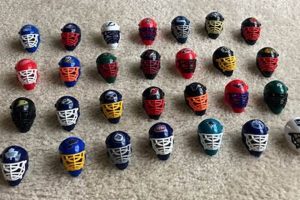
A transparent, protective shield, typically made of polycarbonate, that attaches to a hockey helmet, fully encasing the face. This equipment provides comprehensive facial protection against impacts from pucks, sticks, and other players. Its design allows for increased visibility compared to traditional cages or visors, although some distortion can occur.
The implementation of full facial shields has significantly reduced the incidence of facial injuries in hockey, particularly among younger players. This protective gear allows for a wider field of vision, aiding in enhanced situational awareness on the ice. Early versions were cumbersome, but advancements in materials and design have improved comfort and reduced weight, making them more practical for use across different levels of play. These features enhance player safety and confidence.
The forthcoming sections will delve into the specific types available, proper fitting techniques, maintenance guidelines, and considerations for optimal performance. This exploration will clarify the selection process, focusing on achieving the best possible safety and comfort.
Tips for Optimal Use
The following are recommendations for maximizing the protective and performance benefits of full facial shields used in hockey.
Tip 1: Selection Considerations: Prioritize models certified by organizations such as HECC or CSA to ensure compliance with safety standards. Verify the certification is current and applicable to the intended level of play.
Tip 2: Proper Fit: Ensure the shield sits securely on the helmet without obstructing vision. The lower edge should align comfortably with the jawline, providing adequate coverage without hindering movement.
Tip 3: Anti-Fog Treatment: Apply an anti-fog coating regularly to maintain clear visibility during gameplay. Follow the manufacturer’s instructions for application and reapplication intervals.
Tip 4: Scratch Prevention: Use a microfiber cloth to clean the shield and prevent scratching. Avoid abrasive cleaners or materials that can damage the polycarbonate surface.
Tip 5: Secure Attachment: Regularly inspect the mounting hardware to ensure secure attachment to the helmet. Replace any worn or damaged components immediately.
Tip 6: Ventilation Considerations: Choose a model with adequate ventilation to minimize fogging and heat buildup. Proper airflow contributes to comfort and visibility.
Tip 7: Replacement Schedule: Replace the shield if it sustains significant damage from impacts or develops deep scratches. Compromised structural integrity reduces its protective capabilities.
Adhering to these guidelines promotes safety and extends the lifespan of full facial protection, enhancing the overall playing experience.
The subsequent sections will explore maintenance procedures and alternative protective measures available to hockey players.
1. Impact Resistance
The fundamental purpose of a full facial shield in hockey hinges on its capacity to absorb and dissipate the energy of impacts. The materials and construction techniques employed directly determine the extent of protection offered. Polycarbonate is widely utilized due to its high tensile strength and ability to withstand significant forces without shattering. A properly designed shield deflects impacts from pucks, sticks, and collisions, minimizing the risk of facial fractures, lacerations, and concussions. For example, a direct impact from a hockey puck traveling at high speed can exert considerable force on the facial area; a shield with inadequate impact resistance may crack or shatter, failing to provide adequate protection.
Factors influencing impact resistance include material thickness, curvature of the shield, and the integrity of the mounting system. Thicker polycarbonate provides greater resistance to penetration, while a curved design helps to distribute impact forces more evenly across the surface. A secure and properly installed mounting system ensures that the shield remains firmly attached to the helmet during an impact, preventing it from dislodging and exposing the face. Rigorous testing protocols, such as those mandated by HECC and CSA, evaluate the impact resistance of shields under controlled conditions, ensuring that certified products meet minimum safety standards. A lack of impact resistance can lead to serious injuries.
Understanding the relationship between impact resistance and shield design is crucial for informed selection. Players should prioritize models constructed from high-quality materials, featuring robust mounting systems, and bearing recognized safety certifications. While enhanced impact resistance can increase the weight and slightly reduce visibility, these trade-offs are generally outweighed by the substantial increase in protection afforded. The selection of a shield is a safety decision, one to carefully consider.
2. Optical Clarity

Optical clarity is a paramount attribute of any full facial shield used in hockey. A shield’s ability to transmit light without significant distortion directly affects a player’s vision and reaction time. Compromised optical clarity can obscure the puck’s trajectory, impair peripheral vision, and hinder depth perception, leading to delayed responses and increased risk of collisions. For instance, a shield with scratches, fogging, or manufacturing defects can create visual artifacts that interfere with a player’s ability to accurately track the puck, particularly in fast-paced game situations. The result can be a missed pass, a lost scoring opportunity, or even a dangerous collision with another player.
The material composition and manufacturing processes play a pivotal role in determining optical clarity. High-quality polycarbonate, when properly molded and treated, offers excellent light transmission and minimal distortion. Anti-scratch and anti-fog coatings further enhance clarity by preventing surface damage and condensation buildup. Regular cleaning with appropriate materials and proper storage also contribute to maintaining optical performance over time. Consider the example of two players on the ice, one with a clean, clear shield and another with a scratched and fogged shield. The player with the clear shield will undoubtedly have a significant advantage in terms of reaction time and overall awareness of the game’s dynamics.
In summary, optical clarity is not merely a desirable feature but a critical safety component of full facial shields in hockey. Maintaining a clear line of sight is essential for optimal performance and injury prevention. Selecting a shield with high optical clarity, coupled with proper maintenance and care, is a crucial step in ensuring player safety and competitive advantage on the ice. The challenge lies in balancing impact resistance and optical clarity, as some materials and designs that offer superior protection may slightly reduce visibility. However, advancements in manufacturing are continually addressing this trade-off, leading to improved shield designs.
3. Ventilation Design
The effectiveness of a full facial shield in hockey is significantly influenced by its ventilation design. This design directly impacts player comfort, vision clarity, and overall performance. Inadequate ventilation can lead to fogging, overheating, and discomfort, compromising a player’s ability to react and perform optimally.
- Airflow Optimization
Ventilation systems typically incorporate strategically positioned vents to promote airflow across the inner surface of the shield. These vents are designed to draw cool air in while allowing warm, moist air to escape. The positioning, size, and shape of these vents determine the overall efficiency of the ventilation system. Without adequate airflow, exhaled moisture and sweat can condense on the shield’s inner surface, creating fog and obscuring vision. For example, a shield with poorly designed vents might fog up rapidly during intense physical activity, forcing the player to stop and clear their vision.
- Fog Reduction Technologies
Beyond vent placement, some shields incorporate advanced fog reduction technologies, such as anti-fog coatings or integrated ventilation fans. Anti-fog coatings create a hydrophobic surface that prevents moisture from condensing into fog. Integrated ventilation fans actively circulate air within the shield, further reducing the risk of fogging and providing a cooling effect. These technologies are particularly beneficial in humid environments or during high-intensity games where fogging is more prevalent. An example would be a player in a high-stakes game relying on the anti-fog coating to maintain vision in the heat of the action.
- Impact on Performance
The ventilation design directly affects a player’s ability to perform optimally. A well-ventilated shield allows for comfortable, clear vision, enabling quick reaction times and precise movements. Conversely, a poorly ventilated shield can lead to discomfort, distraction, and impaired vision, hindering performance and increasing the risk of accidents. A clear example would be a goalie who requires immediate vision to stop the puck.
- Material Considerations
The materials used in shield construction also play a role in ventilation effectiveness. Breathable materials can help to wick away moisture and promote airflow, while non-breathable materials can trap heat and moisture, exacerbating fogging and discomfort. The integration of breathable foam padding around the edges of the shield can further enhance ventilation and comfort. A practical demonstration is a player whose shield incorporates breathable foam which absorbs sweat to keep the shield from fogging as much.
The ventilation design is an integral component of full facial shields in hockey. Optimizing airflow, incorporating fog reduction technologies, considering the impact on performance, and utilizing breathable materials are all key factors in creating a shield that provides clear vision, comfort, and enhanced performance. Selection should be done to maximize on ice play.
4. Proper Fit

Achieving a precise fit is critical when using full facial protection in hockey. An ill-fitting shield compromises its protective capabilities, hinders vision, and can even create additional safety hazards. A suitable fit maximizes the shield’s intended function of deflecting impacts and maintaining clear vision during gameplay.
- Secure Attachment and Coverage
Proper fit ensures secure attachment of the shield to the helmet, preventing displacement upon impact. The shield should cover the entire facial area without gaps, extending from the forehead to the chin. For instance, if the shield is too small, the chin or upper portion of the face may be exposed, increasing the risk of injury. Similarly, a loose attachment can cause the shield to shift during play, obstructing vision or exposing vulnerable areas.
- Visual Alignment and Peripheral Vision
The shield should align with the wearer’s line of sight, providing unobstructed forward vision and adequate peripheral awareness. A misaligned shield can cause visual distortions or blind spots, impeding the player’s ability to track the puck and react to on-ice situations. Consider the scenario of a goalie: a poorly fitted shield can restrict their ability to see shots coming from the side, reducing reaction time and increasing the chance of allowing a goal.
- Comfort and Stability
Proper fit enhances comfort and stability, minimizing distractions during gameplay. A shield that is too tight can cause discomfort, pressure points, or even headaches, while a shield that is too loose can bounce or wobble, creating a distraction and potentially dislodging upon impact. Properly adjusted straps and padding contribute to a secure and comfortable fit, allowing the player to focus on the game without being hindered by their protective gear. For instance, when a hockey player checks to see if his or her equipment is secured during a stoppage in play, this could indicate discomfort or a loose piece of equipment.
- Compatibility with Helmet Size and Shape
Full facial shields are designed to be compatible with specific helmet sizes and shapes. Attempting to use a shield that is incompatible with the helmet can result in a poor fit, compromising protection and comfort. Refer to the manufacturer’s guidelines to ensure proper matching of shield and helmet. Using a size medium shield with a size large helmet may result in inadequate coverage, while using a size large shield with a size small helmet can cause the shield to sit improperly and obstruct vision.
The convergence of these facetssecure attachment, visual alignment, comfort, and helmet compatibilityis essential for maximizing the benefits of full facial shields in hockey. Ignoring these aspects not only reduces the equipment’s protective potential but may introduce new hazards. Correct fitting must be carefully evaluated to ensure maximum safety.
5. Certification Standards

Certification standards are integral to the safety and reliability of full facial shields used in hockey, acting as a foundational requirement. Organizations such as the Hockey Equipment Certification Council (HECC) in the United States and the Canadian Standards Association (CSA) develop and enforce these standards, which dictate the minimum performance criteria a shield must meet to be deemed safe for use. The primary cause for establishing these standards is to mitigate the risk of facial injuries resulting from impacts with pucks, sticks, or other players. A full facial shield lacking certification may not possess the necessary impact resistance, optical clarity, or secure attachment mechanisms to effectively protect the wearer. The consequence is heightened vulnerability to facial lacerations, fractures, and eye injuries.
The importance of certification standards lies in their role as an objective benchmark. They ensure that manufacturers adhere to rigorous testing protocols and quality control measures. For example, HECC standards mandate impact testing at specific velocities and temperatures to simulate real-world game conditions. Compliance necessitates that the shield withstand these impacts without fracturing, dislodging, or compromising the wearer’s vision. A shield bearing the HECC or CSA mark signifies that it has undergone this scrutiny and met the requisite performance levels. The absence of such a mark raises serious questions about the product’s integrity and its ability to provide adequate protection. A real-world example is the recall of non-certified equipment that failed to meet impact resistance standards, highlighting the practical significance of these regulations.
In conclusion, certification standards represent a critical safeguard in the selection and use of full facial shields in hockey. They provide a quantifiable measure of safety, enabling players and equipment managers to make informed decisions. While adherence to these standards cannot eliminate all risk of injury, it significantly reduces the likelihood of equipment failure and the potential for severe facial trauma. Challenges remain in ensuring consistent enforcement of these standards and adapting them to evolving equipment designs and playing conditions. However, the continued emphasis on certification remains paramount to promoting player safety and maintaining the integrity of the sport.
6. Attachment Security
Attachment security is a non-negotiable element in the performance of any full facial shield designed for hockey. The ability of the shield to remain firmly affixed to the helmet during gameplay, especially under the duress of impact, is paramount to its protective function.
- Hardware Integrity
The quality and design of the mounting hardware directly influence attachment security. Screws, clips, and straps must be constructed from durable materials capable of withstanding repeated stress and impact forces. Corrosion-resistant materials are preferable to prevent weakening over time. A failure in the hardware, such as a snapped screw or a broken clip, can compromise the shield’s attachment, rendering it ineffective during a collision with a puck or another player. Consider the scenario where a corroded screw shears upon impact, causing the shield to detach and exposing the player’s face. The reliability of the hardware is a direct determinant of player safety.
- Interface Design
The interface between the shield and the helmet is another critical factor. A well-designed interface ensures a snug and secure fit, minimizing the risk of slippage or displacement. This often involves precise alignment of mounting points and the use of friction-enhancing materials or textures. If the interface is poorly designed, the shield may wobble or detach easily, especially during dynamic movements or collisions. For instance, a shield with mounting holes that do not align properly with the helmet’s mounting points can create a weak connection, prone to failure. The interface acts as the foundational link between protection and player.
- Regular Inspection and Maintenance
Consistent inspection and maintenance are essential for preserving attachment security. This includes routinely checking the hardware for signs of wear, corrosion, or damage and tightening any loose connections. Neglecting these maintenance steps can lead to gradual degradation of the attachment system, increasing the risk of failure. For example, failing to tighten a loose screw can cause it to vibrate and eventually fall out, weakening the attachment. Players should be instructed on proper inspection and maintenance procedures to ensure the continued integrity of their equipment. A preventative approach is always better than an emergency repair.
- Compatibility and Compliance
Ensuring compatibility between the shield and the helmet, as well as compliance with safety standards, is a key facet of attachment security. Manufacturers often design shields to be compatible with specific helmet models or sizes. Using a shield that is not designed for a particular helmet can compromise the fit and attachment security. Additionally, shields should comply with relevant safety standards, such as those set by HECC or CSA, which often include requirements for attachment strength and durability. A mismatch of equipment or a disregard for standards can undermine the protective capacity of the full facial shield. For example, a shield and helmet coming from different makers and not tested together might not align securely.
The convergence of hardware integrity, interface design, regular maintenance, and adherence to standards is necessary for ensuring robust attachment security in full facial shields used in hockey. Any compromise in these areas can undermine the equipment’s capacity to safeguard against facial injuries. Prioritizing these aspects leads to more reliable protection and increased player safety on the ice.
Frequently Asked Questions About Full Facial Shields in Hockey
The following addresses common inquiries regarding full facial shields in hockey, providing objective information and clarifying misconceptions.
Question 1: What level of impact protection is offered by a full facial shield compared to a traditional wire cage?
Full facial shields, when certified to meet HECC or CSA standards, provide comparable impact protection to wire cages. The polycarbonate material used in shields is designed to withstand high-velocity impacts from pucks and sticks, minimizing the risk of facial fractures and lacerations. The key difference lies in the field of vision, where shields typically offer a wider, less obstructed view.
Question 2: How should a full facial shield be properly cleaned to avoid scratching or damage?
Cleaning a full facial shield requires specific techniques to prevent scratching or damage. Use a microfiber cloth and a mild cleaning solution specifically designed for polycarbonate. Avoid abrasive cleaners, solvents, or paper towels, as these can scratch the surface and reduce optical clarity. Gentle wiping is recommended; excessive pressure can also lead to scratches.
Question 3: What causes fogging on a full facial shield, and how can it be prevented effectively?
Fogging on a full facial shield is caused by condensation of moisture due to temperature differences between the inside and outside of the shield. Effective prevention methods include applying anti-fog coatings regularly, ensuring adequate ventilation through the shield’s vents, and pre-warming the shield before use to minimize temperature gradients.
Question 4: How often should a full facial shield be replaced, even if it appears to be in good condition?
The recommended replacement frequency for a full facial shield depends on usage and impact history. Even if the shield appears to be in good condition, it should be replaced after any significant impact or if scratches or abrasions compromise optical clarity. Manufacturers typically recommend replacement every one to two seasons under normal usage conditions. However, this can vary based on intensity of use.
Question 5: Are all full facial shields compatible with every hockey helmet model?
Not all full facial shields are universally compatible with every hockey helmet model. Compatibility depends on the shield’s design, mounting system, and the helmet’s shape and size. Consult the manufacturer’s guidelines or product specifications to ensure proper fit and secure attachment. Using incompatible shields can compromise both protection and comfort.
Question 6: What are the key indicators that a full facial shield needs immediate replacement?
Key indicators that a full facial shield requires immediate replacement include cracks, deep scratches, loose mounting hardware, discoloration, and any signs of structural damage. These conditions can compromise the shield’s impact resistance and optical clarity, increasing the risk of injury. Continued use of a damaged shield is strongly discouraged.
Full facial shields are protective gear that demands regular checking and proper usage to avoid injury.
The subsequent section will discuss additional protective gear used in hockey.
Conclusion
The preceding exploration of the hockey bubble helmet has illuminated its critical role in mitigating facial injuries within the sport. This protection goes beyond mere coverage; it encompasses elements of impact resistance, optical clarity, ventilation design, proper fit, certification standards, and attachment security. These factors converge to determine the effectiveness of this essential protective equipment, offering players a safer experience on the ice.
Continued adherence to safety protocols, coupled with the adoption of certified equipment, is crucial for ensuring the well-being of all participants. The significance of these preventative measures cannot be overstated; they safeguard not only physical health but also enable players to pursue their passion with confidence and reduce the long term impact injuries have on athletes. The pursuit of enhanced safety measures remains a priority in the evolving landscape of hockey equipment design and regulation. Prioritize safety and proper technique.