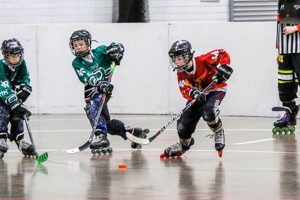
A variation of hockey played off-ice, this sport utilizes sneakers or athletic shoes instead of skates, and a ball rather than a puck. Players compete on a non-ice surface, often asphalt or a sport court, with modified hockey sticks. The object remains the same as ice hockey: to score by shooting the ball into the opposing team’s net.
This adaptation broadens accessibility to the sport, removing the need for specialized equipment like skates and ice rinks, thus lowering the barrier to entry. Its benefits include increased cardiovascular fitness, enhanced hand-eye coordination, and the development of teamwork skills. Historically, it has served as an alternative for those without access to ice facilities or as a training method for ice hockey players to improve their off-ice skills.
Subsequent sections will delve into the specific rules and regulations governing game play, explore the equipment typically used, and examine the various leagues and organizations that support and promote the sport at both amateur and professional levels. Further discussion will highlight differences compared to other hockey variations.
Strategic Approaches for the Off-Ice Game
Maximizing performance within this arena requires a tailored approach, focusing on fundamental skills and strategic execution. The following tips offer guidance for enhanced gameplay and team success.
Tip 1: Footwork Mastery: Exceptional footwork is paramount due to the absence of skates. Agility drills and quick changes of direction are critical for maintaining positional advantage and creating scoring opportunities.
Tip 2: Accurate Passing: Precise passing maintains puck possession and facilitates offensive plays. Focus on crisp, controlled passes to teammates, minimizing turnovers in the neutral zone.
Tip 3: Strategic Positioning: Maintaining optimal positioning on the playing surface is essential for both offensive and defensive effectiveness. Players must anticipate the puck’s movement and adapt their location accordingly.
Tip 4: Stickhandling Proficiency: Mastering stickhandling techniques allows for greater control of the ball, enabling players to evade opponents and create scoring chances. Practice quick stick movements and deceptive maneuvers.
Tip 5: Effective Shooting: A powerful and accurate shot is crucial for scoring goals. Players should develop various shot types, including wrist shots, snap shots, and slap shots, to maximize their offensive capabilities.
Tip 6: Defensive Discipline: A strong defensive foundation prevents opposing teams from scoring. Prioritize defensive responsibilities, maintain tight coverage, and effectively disrupt opponent’s plays.
Tip 7: Team Communication: Effective communication is vital for coordinated team play. Use clear and concise verbal cues to relay information, coordinate movements, and adjust strategies during the game.
Adhering to these guidelines enhances individual performance and contributes to overall team success. Development of these skills increases competitiveness and maximizes enjoyment of the sport.
The subsequent discussion will explore equipment considerations and rule variations that further define the sport.
1. Off-ice surface

The playing surface constitutes a defining element, differentiating it from its ice-based counterpart and dictating specific adaptations in gameplay and equipment. The characteristics of the surface significantly impact speed, friction, and player movement.
- Surface Material and its Impact on Game Speed
Surfaces typically consist of asphalt, concrete, or specialized sport court tiles. These materials introduce higher friction compared to ice, resulting in a slower game pace. The absence of gliding necessitates greater reliance on agility, footwork, and passing accuracy.
- Surface Texture and Ball Trajectory
The texture of the surface influences the ball’s trajectory and bounce. Uneven or rough surfaces can lead to unpredictable ball movement, requiring players to adapt their stickhandling and shooting techniques accordingly. Smooth, even surfaces allow for more consistent and controlled play.
- Environmental Factors: Weather Conditions
Outdoor surfaces are susceptible to weather conditions, such as rain, sunlight, and temperature fluctuations. Rain can significantly reduce traction, while direct sunlight can cause glare and discomfort. These factors influence game strategy and necessitate appropriate adjustments to equipment and playing style.
- Maintenance and Safety Considerations
Proper maintenance of the playing surface is essential for player safety and optimal game conditions. Regular cleaning removes debris and reduces the risk of injuries. Well-maintained surfaces minimize uneven spots and ensure consistent ball movement.
In essence, the off-ice playing surface fundamentally shapes the character of the game. Surface material directly affects the pace, ball control, and overall player strategy.
2. Athletic footwear

Athletic footwear serves as a critical element in distinguishing this sport from its ice-based counterpart. The selection and use of appropriate athletic footwear is fundamental to player performance, safety, and the overall nature of the game.
- Traction and Grip Requirements
The absence of skates necessitates footwear that provides adequate traction and grip on the playing surface. Sneakers or athletic shoes with rubber or synthetic soles are commonly used to ensure stability and prevent slippage during rapid movements and changes of direction. Sole patterns and materials are engineered to maximize contact with asphalt or sport court surfaces, enhancing agility and responsiveness.
- Ankle Support and Injury Prevention
Adequate ankle support is essential for minimizing the risk of ankle sprains and other lower extremity injuries. Athletic footwear with reinforced ankle support features, such as high-top designs or integrated support structures, provides stability and protects against excessive inversion or eversion during lateral movements. Proper fit and lacing techniques further contribute to ankle stability and overall injury prevention.
- Impact Absorption and Cushioning
The repetitive impact of running and jumping on hard surfaces requires footwear with sufficient cushioning and impact absorption properties. Midsole technologies, such as EVA foam or gel inserts, dissipate impact forces and reduce stress on joints, minimizing fatigue and preventing overuse injuries. Appropriate cushioning enhances comfort and allows players to maintain peak performance throughout the duration of the game.
- Weight and Flexibility Considerations
Lightweight athletic footwear promotes agility and reduces energy expenditure, enabling players to move quickly and efficiently across the playing surface. Flexibility is also crucial for facilitating natural foot movements and maximizing responsiveness. Footwear that strikes a balance between weight, flexibility, and support enhances player comfort and performance without compromising stability or protection.
The characteristics of athletic footwear profoundly impact the dynamics. Optimal footwear provides traction, support, cushioning, and flexibility, contributing significantly to player performance and injury prevention. Proper footwear selection is a key element that shapes the distinct experience.
3. Modified Sticks

The implementation of modified sticks represents a core adaptation required to translate the dynamics of ice hockey to off-ice surfaces. These modifications are critical for ensuring player safety, optimizing performance, and accommodating the distinct characteristics of the playing environment. The following facets detail the significance of these adaptations.
- Blade Material and Design
Unlike ice hockey sticks featuring rigid blades, implements utilized are typically constructed with durable plastic or composite blades designed to withstand abrasion from asphalt or sport court surfaces. The blade curvature and flex are also adjusted to facilitate optimal ball control and shot accuracy on these surfaces. For instance, blades may exhibit less curvature to account for the higher friction and reduced glide of the ball.
- Shaft Material and Flexibility
Shaft materials often consist of fiberglass, aluminum, or composite materials, providing a balance of durability, weight, and flexibility. Flexibility, or “flex,” is particularly important, as it enables players to generate power when shooting the ball. Stiffer shafts are generally preferred for players seeking increased shot velocity, while more flexible shafts offer enhanced control and responsiveness. Adjustments to shaft length are also common to accommodate varying player heights and playing styles.
- Grip and Handling Considerations
Enhanced grip is essential for maintaining control of the stick during gameplay. Many sticks incorporate textured grips or tape applications to improve handling, particularly in wet or humid conditions. Proper grip allows for more precise stickhandling, passing, and shooting, contributing to overall player performance. Players often customize their grip configurations to suit their individual preferences and hand sizes.
- Regulations and Safety Standards
League regulations often stipulate specific standards for stick dimensions, materials, and construction to ensure fairness and player safety. These regulations may restrict the use of excessively curved blades or sharp edges that could pose a risk of injury to opponents. Adherence to these standards promotes a safe and equitable playing environment.
The adaptation of stick design directly addresses the physical realities of the sport. By modifying blade materials, shaft flexibility, and grip characteristics, individuals can effectively translate hockey skills to off-ice environments. These modifications, governed by specific regulations and safety standards, contribute to the unique identity of the sport and improve player experience.
4. Ball, not puck
The substitution of a ball for a puck constitutes a foundational element defining this sport, fundamentally altering gameplay dynamics and equipment requirements. The selection of a ball, rather than a vulcanized rubber disc, introduces specific performance characteristics and necessitates adaptations in player technique and strategic approaches. This deviation significantly contributes to the sport’s unique identity and differentiates it from ice hockey.
- Material Composition and Surface Interaction
The balls utilized are typically constructed from plastic or composite materials designed to provide optimal grip and responsiveness on non-ice surfaces. This contrasts with the puck’s composition and behavior on ice, which relies on gliding and low friction. The ball’s increased friction necessitates greater force exertion for propulsion and influences passing and shooting techniques. The material properties directly impact the trajectory, bounce, and overall playability.
- Ball Weight and Velocity Considerations
The mass of the ball differs from a traditional puck, influencing shot velocity and the dynamics of player contact. A lighter ball reduces the potential for high-impact collisions and allows for faster puck movement, fostering a quicker pace of play. Velocity changes due to material properties dictate the strategic deployment of passing and shooting styles, often favoring short, controlled passes over long, forceful shots.
- Impact on Stickhandling and Ball Control
The absence of a flat, gliding surface alters stickhandling techniques. Players must develop more nuanced methods to maintain control and precision, emphasizing wrist movements and quick directional changes. Complex stickhandling maneuvers achievable on ice require adaptation and simplification when using a ball. The nature of ball control demands a greater focus on agility and finesse.
- Equipment Modifications and Safety Implications
The shift from puck to ball impacts equipment design, particularly in the construction of sticks. Modified sticks with durable plastic blades are utilized to withstand the increased abrasion and impact forces associated with ball handling on asphalt or sport court surfaces. This transition underscores the fundamental role of safety and the imperative to adapt equipment according to game conditions.
In conclusion, the use of a ball, rather than a puck, is a pivotal defining characteristic. Its properties influence the speed, tactics, and equipment, distinguishing it from traditional ice hockey and contributing to the overall sport’s identity.
5. Non-contact rules

The emphasis on non-contact regulations within this sport fundamentally shapes the character of game play, distinguishing it significantly from its ice hockey counterpart. These regulations directly influence strategic approaches, player positioning, and the overall skill set emphasized. The absence of physical checking necessitates a greater reliance on agility, stickhandling proficiency, and strategic positioning to gain a competitive advantage. For instance, players must prioritize intercepting passes and disrupting plays through skillful maneuvering rather than physical force. The implementation of non-contact rules contributes to a more accessible and inclusive environment, reducing the risk of injury and encouraging participation from a wider range of individuals regardless of size or physical strength. Leagues and organizations at various levels strictly enforce these rules, resulting in penalties for any form of physical contact, including hitting, pushing, or boarding.
The application of non-contact rules has several practical implications. Firstly, it demands heightened awareness and anticipation from players, encouraging them to develop strong positional sense and interceptive abilities. Secondly, it fosters a more skilled-based game, where finesse and tactical awareness are prioritized over brute force. Thirdly, the reduced risk of injury creates a more welcoming environment for individuals hesitant to engage in full-contact sports. For example, youth leagues frequently emphasize the non-contact aspect to promote skill development and ensure the safety of young athletes. Adult leagues also benefit from these rules, enabling individuals of varying ages and physical capabilities to participate and enjoy the sport without undue risk.
In summary, the commitment to non-contact regulations significantly contributes to shaping its identity, promoting skill development, and fostering inclusivity. The success of this sports leagues and programs hinges on the strict enforcement of these regulations. These contribute to safety. Without the focus of non-contact rule , it will be a big damage in the sport for sure.
6. Team play

Effective teamwork forms a cornerstone of success within this sport. The non-contact nature elevates the importance of coordinated strategies, communication, and collaborative execution. These elements are essential for maximizing scoring opportunities and effectively preventing opponents from achieving their goals.
- Strategic Formation and Positional Awareness
Team play hinges on the establishment and maintenance of effective strategic formations. Players must demonstrate acute positional awareness, adapting their locations and movements in response to the evolving game dynamics. For example, employing a defensive triangle to effectively contain opposing forwards requires each player to maintain their designated position and coordinate their movements with teammates. Such strategic cohesion dictates team-level success in controlling the playing surface and creating scoring opportunities.
- Passing Accuracy and Intercepting Skills
Successful team play necessitates high passing accuracy and well-timed interceptions. Precision passing facilitates quick transitions and offensive attacks, while skilled interceptions disrupt opposing team’s momentum and creates turnovers. For instance, a well-executed cross-ice pass to a teammate positioned for a clear shot exemplifies how accurate passing can directly lead to scoring opportunities. Conversely, intercepting a pass intended for an opposing forward can swiftly shift possession and change the course of the game.
- Communication and Non-Verbal Cues
Effective communication, encompassing both verbal cues and non-verbal signals, is pivotal for seamless team coordination. Clear and concise communication enables players to relay tactical information, anticipate movements, and adjust their strategies in real-time. Non-verbal cues, such as head nods and hand signals, further enhance communication efficiency, allowing for rapid adjustments without disrupting the flow of play. A well-communicating team demonstrates a heightened ability to adapt to changing circumstances and optimize team performance.
- Role Specialization and Adaptive Strategies
Team play often involves role specialization, where individual players assume specific responsibilities based on their skills and strengths. Some players may excel at defensive positioning, while others demonstrate proficiency in offensive playmaking or goal scoring. Adapting the strategies as the game evolves is crucial for optimal success. The ability to quickly transition from offensive to defensive formations and to adjust the strategies is crucial.
These components of team play significantly contribute to defining its characteristics. This aspect is especially crucial in a non-contact environment. Its essence is not just about individual skill; instead, it underscores the crucial nature of cohesive strategy.
7. Goal scoring

Goal scoring constitutes the primary objective, serving as the ultimate determinant of success. As in traditional ice hockey, the fundamental aim is to propel the ball into the opposing team’s net, thereby accumulating points. The team with the highest score at the conclusion of the regulation playing time is declared the victor. This aspect of the game, therefore, dictates strategic approaches, player development, and the overall competitive focus. Goal scoring ability serves as a benchmark of offensive effectiveness.
The characteristics of the game, specifically the absence of ice and skates, impose distinct challenges and opportunities. Because movement is predicated on athletic footwear, players must cultivate agility and quick footwork to create scoring chances. Stickhandling skills and shooting accuracy become paramount, as physical dominance is limited. For example, a player proficient in quick wrist shots can capitalize on fleeting opportunities to score, while another with exceptional passing ability can orchestrate plays that lead to open shots on the net. In essence, the non-contact nature necessitates a shift toward skillful execution and precise coordination.
Ultimately, goal scoring embodies the essence and competitive appeal. It drives team strategy, individual player development, and the ongoing evolution of tactics. The ability to consistently score goals remains the ultimate measure of achievement. The absence of the ability will mean the failure of the team.
Frequently Asked Questions
The subsequent section addresses common inquiries and clarifies misconceptions regarding this sports nature, equipment, rules, and accessibility.
Question 1: What is the primary difference between dek hockey and ice hockey?
The fundamental distinction resides in the playing surface and footwear. This variant is played on a non-ice surface, typically asphalt or sport court, utilizing athletic shoes instead of ice skates. Traditional ice hockey is played on an ice rink with ice skates. Equipment and player conduct are also modified to suit these differences.
Question 2: Is specialized equipment required to participate?
Minimal specialized equipment is required compared to ice hockey. Key items include a hockey stick designed for floor surfaces, athletic shoes, and protective gear such as gloves, shin guards, and a helmet. While ice skates are not necessary, certain leagues may mandate specific types of protective equipment to ensure player safety.
Question 3: What are the standard rules governing gameplay?
Standard rules share similarities with ice hockey but incorporate adaptations for the off-ice environment. Notably, the game is typically non-contact, emphasizing skill and strategy over physical aggression. Other rule modifications may pertain to game duration, penalties, and specific playing regulations as determined by individual leagues or organizations.
Question 4: Is the sport suitable for all ages and skill levels?
It accommodates participants of varying ages and skill levels. Many leagues offer divisions tailored to specific age groups and experience levels, ranging from youth programs to adult recreational leagues. This allows individuals to engage in competition appropriate to their abilities and physical condition.
Question 5: How does the absence of ice skates impact gameplay?
The lack of ice skates necessitates a greater emphasis on footwork, agility, and stickhandling skills. Players must develop proficiency in quick movements and changes of direction to maintain positional advantage and execute strategic plays. Furthermore, passing and shooting techniques are adapted to compensate for the increased friction of the playing surface.
Question 6: What organizations promote and regulate the sport?
Several organizations at both national and local levels promote and regulate this sports gameplay. These organizations oversee the establishment of standard rules, the organization of leagues and tournaments, and the advancement of the sport through promotional activities and player development programs.
The preceding responses provide a foundational understanding. As the sport continues to evolve, ongoing refinements to its rules, equipment, and organizational structure will continue.
Further analysis will examine common injuries associated with the sport and preventative measures that can be implemented to mitigate risk.
In Conclusion
Throughout this exploration, the defining characteristics of what is dek hockey have been established. The sport, distinguished by its reliance on off-ice surfaces, athletic footwear, and modified equipment, presents a compelling alternative to traditional ice hockey. The non-contact nature, emphasis on team play, and the universal objective of goal scoring collectively define its unique identity within the spectrum of athletic pursuits.
The continued development and accessibility of what is dek hockey offers a valuable avenue for promoting physical fitness, fostering camaraderie, and cultivating strategic thinking. As the sport evolves, ongoing commitment to safety, fair play, and inclusive participation will be crucial to its sustained growth and relevance within the broader athletic landscape. The ongoing exploration of its strategies, adaptations, and community impact holds significant promise for its future trajectory.