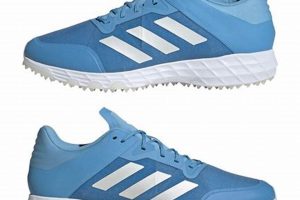
Specialized footwear designed to enhance traction and stability on various playing surfaces is a crucial component of a field hockey player’s equipment. This footwear typically incorporates protrusions on the sole to grip the ground, facilitating quick movements, sharp turns, and efficient power transfer during gameplay. For example, a player executing a powerful hit requires secure footing provided by this type of specialized footwear.
The selection of appropriate footwear is paramount for optimizing performance and minimizing the risk of injuries. A secure grip allows for faster acceleration, improved agility, and enhanced control over the hockey stick and ball. Historically, advancements in materials and design have led to increasingly sophisticated footwear options, catering to the specific needs of field hockey athletes and the diverse conditions of playing fields.
The subsequent sections will delve into the various types of sole designs, the materials commonly used in construction, and essential considerations for selecting the most suitable footwear based on playing surface, foot type, and playing style. Furthermore, guidance on proper maintenance and care will be provided to ensure longevity and optimal performance.
Essential Selection and Maintenance Guidance
This section offers practical guidance to ensure optimal performance and longevity of specialized field hockey footwear.
Tip 1: Consider the Playing Surface: Footwear designed for artificial turf often differs significantly from those intended for natural grass. Artificial turf models typically feature shorter, more numerous protrusions for enhanced grip on the dense surface. Using the incorrect type can compromise traction and increase the risk of ankle injuries.
Tip 2: Prioritize Fit and Comfort: Ill-fitting footwear can lead to blisters, discomfort, and impaired performance. Ensure sufficient toe room and a snug fit around the heel. Consider trying different brands and models to find the best match for the individual foot shape.
Tip 3: Evaluate Ankle Support: Field hockey involves rapid lateral movements, making ankle support crucial. Look for models that offer adequate support around the ankle joint to minimize the risk of sprains and strains.
Tip 4: Assess Material Durability: The demands of field hockey can be harsh on footwear. Opt for models constructed from durable materials such as reinforced synthetic leather or abrasion-resistant fabrics. Check stitching quality and overall construction for signs of robustness.
Tip 5: Clean After Each Use: Regularly remove dirt and debris from footwear after each use. Use a brush and mild soap to clean the sole and upper. Allow footwear to air dry thoroughly to prevent the build-up of moisture and odor.
Tip 6: Store Properly: When not in use, store footwear in a cool, dry place away from direct sunlight. Avoid storing them in a gear bag for extended periods, as this can trap moisture and promote bacterial growth.
Tip 7: Inspect Regularly for Wear and Tear: Periodically examine the sole for worn-down protrusions or damage. Check the upper for tears, loose stitching, or other signs of wear. Replace footwear when significant damage compromises performance or safety.
Adhering to these guidelines can significantly improve performance, enhance comfort, and extend the lifespan of specialized field hockey footwear, resulting in a more enjoyable and safer playing experience.
The following sections will provide more in-depth analysis.
1. Traction Enhancement

The correlation between traction enhancement and specialized field hockey footwear is direct and fundamental. The design and configuration of the sole directly influence a player’s ability to grip the playing surface, enabling rapid acceleration, deceleration, and lateral movements critical to the sport. Inadequate traction can result in slipping, loss of balance, and a diminished capacity to execute essential skills such as passing, shooting, and defending. For example, a player attempting a quick dodge on a wet artificial turf field relies heavily on the sole’s design to maintain stability and control.
Effective traction stems from specific design features incorporated into the sole. Stud or cleat patterns vary in shape, size, and distribution to optimize grip on diverse playing surfaces, like short and numerous cleats for artificial turf, promoting even weight distribution and preventing excessive pressure points. Conversely, longer, more spaced cleats might be preferable on natural grass to penetrate the surface and provide a secure hold. The material composition of the sole also plays a role, with rubber compounds engineered to maximize friction against the ground. Understanding these elements is essential for selecting footwear that aligns with playing surface conditions.
Optimal traction enhancement is not merely a performance advantage but also a critical safety consideration. Enhanced grip reduces the likelihood of falls and subsequent injuries, particularly ankle sprains and knee injuries. Furthermore, the appropriate type improves a player’s confidence, allowing them to execute maneuvers without hesitation. The effective incorporation of traction enhancement into field hockey footwear represents a vital intersection of athletic performance and injury prevention.
2. Ankle Support

Ankle support is a critical consideration in the design and selection of specialized footwear for field hockey, directly influencing player safety and performance. The rapid and often unpredictable movements inherent in the sport place considerable stress on the ankle joint, necessitating adequate support to mitigate the risk of injury.
- High-Cut Design
Footwear featuring a high-cut design extends upwards to cover a portion of the ankle, providing additional stability and limiting excessive movement. This design is particularly beneficial for players with a history of ankle injuries or those who engage in aggressive play. The elevated collar restricts the range of motion, preventing potentially harmful inversion or eversion of the ankle. Example: A defensive player making a quick lateral tackle requires the additional support to prevent ankle roll.
- Reinforced Heel Counter
The heel counter, located at the rear of the footwear, provides structural support and stability to the heel and ankle. A reinforced heel counter, constructed from rigid materials, helps maintain proper alignment of the foot and prevents excessive pronation or supination, common causes of ankle strain. Example: A midfielder running long distances benefits from a stable heel to minimize fatigue and prevent ankle instability.
- Internal Support Structures
Many models incorporate internal support structures, such as straps or braces, that wrap around the ankle to provide additional stability. These structures can be adjusted to customize the level of support and ensure a secure fit. Example: An attacker performing a series of quick turns and pivots needs a secure and supportive fit to maintain balance and control.
- Material Selection and Construction
The materials used in the construction of the upper portion of the footwear also contribute to ankle support. Stiffer, more supportive materials, such as synthetic leather or reinforced nylon, provide greater stability compared to softer, more flexible materials. The overall construction and stitching patterns also influence the level of support offered.
The integration of these ankle support features into specialized field hockey footwear represents a crucial element of injury prevention and performance enhancement. Players must carefully consider their individual needs and playing style when selecting footwear to ensure adequate support and protection for the ankle joint. Proper selection and use mitigate the risk of sprains, strains, and other ankle-related injuries, enabling players to perform at their optimal level.
3. Surface Compatibility

The relationship between the playing surface and the design of specialized field hockey footwear is a critical factor influencing player performance and safety. The varied nature of field hockey surfaces, ranging from natural grass to artificial turf, necessitates specific sole configurations to ensure optimal traction and stability.
- Natural Grass Adaptation
Footwear designed for natural grass typically incorporates longer, more aggressive protrusions or studs to penetrate the soft ground and provide a secure grip. These protrusions prevent slippage and allow for efficient power transfer during movements such as running and striking the ball. Example: On a wet, uneven grass field, longer studs are essential for maintaining stability and control.
- Artificial Turf Optimization
Artificial turf surfaces, characterized by their dense, short fibers, require a different approach. Footwear designed for artificial turf commonly features shorter, more numerous protrusions or molded patterns that distribute pressure evenly across the surface. This configuration minimizes the risk of excessive grip, which can lead to ankle injuries. Example: On modern artificial turf, shorter studs offer better traction without causing the player to get “stuck.”
- Hybrid Surface Considerations
Some fields incorporate hybrid surfaces, blending natural grass with synthetic fibers to enhance durability and playability. Footwear selection for hybrid surfaces requires careful consideration of the specific characteristics of the field, balancing the need for penetration with the desire for even pressure distribution. The chosen sole design should perform adequately on both grass and synthetic components. Example: A field with a sparse grass cover reinforced with synthetic fibers may require footwear with medium-length studs.
- Weather Conditions and Surface Interaction
Environmental factors, such as rain or snow, significantly impact the surface properties and influence footwear performance. Wet grass can become slippery, necessitating deeper studs for enhanced grip. Artificial turf can also become slick when wet, requiring footwear with specialized rubber compounds to maintain traction. The choice of footwear should account for prevailing weather conditions. Example: During a rainy match on natural grass, players may switch to footwear with longer, more aggressive studs for improved traction.
The careful selection of footwear that aligns with the specific playing surface represents a fundamental aspect of field hockey equipment. Optimized surface compatibility not only enhances performance but also minimizes the risk of injuries associated with inadequate traction or excessive grip. Understanding the nuances of each surface type is essential for players seeking to maximize their potential on the field.
4. Material Durability

The longevity and performance of specialized field hockey footwear are intrinsically linked to the durability of the materials used in their construction. The demands of the sport, characterized by high-impact movements, exposure to diverse weather conditions, and frequent abrasion, necessitate robust materials capable of withstanding significant wear and tear.
- Sole Composition and Abrasion Resistance
The sole unit, which directly interfaces with the playing surface, is particularly susceptible to abrasion. Materials such as high-density rubber compounds and thermoplastic polyurethanes (TPU) are commonly employed for their abrasion resistance and ability to maintain their structural integrity over prolonged use. For instance, a sole constructed from a low-quality rubber compound may exhibit premature wear, compromising traction and necessitating frequent replacement. High quality TPU can with stand the rigors of artificial turf, extending the lifespan of the cleats.
- Upper Construction and Tear Strength
The upper portion of the footwear, responsible for providing support and a secure fit, is subject to stretching, tearing, and exposure to moisture. Synthetic leathers, reinforced nylon fabrics, and durable mesh materials are frequently utilized to enhance tear strength and resist degradation from environmental factors. Consider a situation where a players cleats split during a crucial moment due to a tear in the upper, resulting in an immediate disadvantage and risk of injury.
- Stitching and Bonding Integrity
The integrity of the stitching and bonding techniques employed in the assembly of the footwear is critical for maintaining its structural integrity. High-quality stitching using durable threads and robust bonding agents prevents seams from separating or failing under stress. For example, poorly stitched seams may unravel after repeated exposure to moisture, leading to discomfort and reduced support.
- Water Resistance and Material Degradation
Field hockey is often played in wet conditions, exposing footwear to moisture that can accelerate material degradation. Water-resistant treatments and the use of materials that resist water absorption can prolong the lifespan of the footwear by preventing swelling, cracking, and loss of structural integrity. Footwear constructed from materials that readily absorb water may become heavy, uncomfortable, and prone to mold growth.
In conclusion, the selection of durable materials and the implementation of robust construction techniques are essential for ensuring the longevity, performance, and safety of specialized field hockey footwear. Footwear constructed from substandard materials may compromise traction, support, and protection, ultimately hindering player performance and increasing the risk of injury. The investment in high-quality, durable footwear represents a prudent decision for field hockey players seeking to maximize their potential and minimize equipment-related issues.
5. Optimal Fit

The concept of optimal fit in specialized field hockey footwear is not merely a matter of comfort; it is a crucial determinant of performance, injury prevention, and overall athletic efficacy. The correct fit ensures that the foot is properly supported and aligned within the footwear, enabling efficient transfer of energy, reducing the risk of blisters and chafing, and enhancing proprioception.
- Foot Length and Width Accommodation
Precise measurement of foot length and width is paramount. The internal dimensions of the footwear must correspond accurately to the player’s foot size, allowing adequate toe room while preventing excessive movement within the shoe. Footwear that is too short can cause toe crowding and blisters, while footwear that is too wide may lead to instability and reduced control. Example: A player with a wide forefoot may require a specialized model with a wider toe box to avoid discomfort and potential bunion development.
- Arch Support and Footbed Contouring
The footbed should provide appropriate arch support to maintain proper foot alignment and prevent overpronation or supination. The contouring of the footbed should conform to the natural curves of the foot, distributing pressure evenly and reducing stress on specific areas. Players with flat feet may require orthotic inserts to provide additional arch support and improve stability. Example: An athlete with high arches may experience discomfort in footwear with insufficient arch support, potentially leading to plantar fasciitis.
- Heel Counter Stability and Lockdown
The heel counter, the rigid structure at the rear of the footwear, plays a crucial role in stabilizing the heel and preventing slippage during dynamic movements. A secure heel lockdown ensures that the heel remains firmly planted within the footwear, minimizing the risk of blisters and improving overall control. Example: Heel slippage during a sprint can compromise a player’s speed and agility, increasing the risk of ankle injury.
- Lacing System and Adjustability
The lacing system should allow for precise adjustment to accommodate different foot shapes and volumes. A well-designed lacing system provides a secure and customizable fit, preventing the foot from shifting within the footwear during rapid movements. Example: A player with a high instep may require a lacing system that allows for greater adjustability to avoid pressure points and discomfort.
In summary, the optimal fit of specialized field hockey footwear encompasses a multifaceted approach, considering foot length, width, arch support, heel counter stability, and lacing system adjustability. Achieving the correct fit requires careful measurement, consideration of individual foot characteristics, and a thorough understanding of the design features of the footwear. Footwear that fits properly enhances performance, prevents injuries, and contributes to a more comfortable and enjoyable playing experience.
6. Stud Pattern
The stud pattern on specialized field hockey footwear is a primary determinant of traction, stability, and maneuverability on the playing surface. The configuration, shape, and density of the studs directly impact a player’s ability to grip the ground, execute rapid movements, and maintain balance during gameplay.
- Stud Shape and Surface Adhesion
The shape of the individual studs influences their ability to penetrate and adhere to the playing surface. Conical studs provide omnidirectional grip, suitable for various movements, while bladed studs offer enhanced linear traction for acceleration and deceleration. The choice of stud shape should align with the specific demands of the player’s position and playing style. For example, forwards prioritizing quick bursts of speed may benefit from bladed studs, whereas midfielders requiring multidirectional agility might prefer conical studs.
- Stud Density and Pressure Distribution
The number of studs and their distribution across the sole affect the pressure exerted on the playing surface. A higher stud density distributes pressure more evenly, reducing the risk of pressure points and improving comfort, particularly on harder surfaces like artificial turf. Conversely, a lower stud density concentrates pressure, enhancing grip on softer surfaces like natural grass. Example: Footwear with a high stud density is often favored for artificial turf, mitigating the risk of stud pressure and ensuring a comfortable fit.
- Stud Length and Surface Penetration
The length of the studs dictates their ability to penetrate the playing surface. Longer studs offer superior grip on soft, uneven surfaces, while shorter studs are more suitable for hard, even surfaces. Selecting the appropriate stud length minimizes the risk of slipping and enhances stability. Example: On a waterlogged grass field, longer studs are crucial for penetrating the saturated ground and providing reliable traction.
- Stud Material and Durability
The material composition of the studs influences their durability and resistance to wear. Thermoplastic polyurethane (TPU) and rubber compounds are commonly used for their abrasion resistance and ability to maintain their shape and grip over time. High-quality stud materials ensure that the footwear maintains its performance characteristics throughout its lifespan. Example: Footwear with studs constructed from a low-quality rubber compound may exhibit premature wear, compromising traction and necessitating frequent replacement.
The intricate relationship between stud pattern and playing surface underscores the importance of selecting specialized field hockey footwear with careful consideration of the prevailing conditions. An optimized stud pattern enhances traction, improves stability, and reduces the risk of injuries, ultimately enabling players to perform at their peak potential.
Frequently Asked Questions
This section addresses common inquiries regarding specialized footwear utilized in field hockey, providing clarity on selection, usage, and maintenance.
Question 1: What distinguishes specialized field hockey footwear from general athletic shoes?
Specialized footwear incorporates sole designs optimized for traction on grass or artificial turf. The upper construction provides enhanced ankle support, crucial for the sport’s dynamic movements. General athletic shoes may lack these specific features, potentially compromising performance and increasing injury risk.
Question 2: How does the playing surface influence the selection of appropriate footwear?
Natural grass surfaces generally necessitate longer studs for optimal grip and penetration. Artificial turf typically requires shorter, more numerous studs to distribute pressure evenly and prevent excessive traction. Hybrid surfaces demand a balanced approach, potentially requiring footwear with adaptable stud configurations.
Question 3: What role does ankle support play in specialized field hockey footwear?
Ankle support is paramount due to the sport’s rapid lateral movements and inherent risk of ankle sprains. High-cut designs, reinforced heel counters, and internal support structures contribute to enhanced ankle stability, mitigating the likelihood of injury.
Question 4: What materials are commonly used in the construction of specialized field hockey footwear?
Soles are typically constructed from abrasion-resistant rubber compounds or thermoplastic polyurethanes (TPU). Uppers often utilize synthetic leathers, reinforced nylon fabrics, or durable mesh materials to provide support, breathability, and resistance to wear and tear.
Question 5: How frequently should specialized field hockey footwear be replaced?
Replacement frequency depends on usage intensity, playing surface, and material durability. Regular inspection for wear and tear is essential. Indicators such as worn-down studs, tears in the upper, or compromised ankle support warrant immediate replacement to maintain performance and safety.
Question 6: What are the recommended maintenance practices for specialized field hockey footwear?
Cleaning footwear after each use to remove dirt and debris is crucial. Air drying footwear thoroughly prevents moisture build-up and odor. Storing footwear in a cool, dry place away from direct sunlight prolongs its lifespan and preserves its structural integrity.
Selecting and maintaining appropriate footwear is crucial for performance and injury prevention.
Further exploration of footwear technologies is available in the following sections.
Concluding Remarks on Footwear for Field Hockey
This exploration has underscored the critical role that specialized footwear plays in field hockey. From traction enhancement and ankle support to material durability and optimal fit, the various design elements directly influence player performance and safety. Appropriate selection, based on playing surface, individual foot characteristics, and playing style, is paramount for maximizing athletic potential and minimizing the risk of injury.
Continued adherence to proper maintenance practices will extend the lifespan and effectiveness of this essential equipment. Recognizing the significance of appropriate footwear is a fundamental step towards ensuring player well-being and fostering excellence in field hockey. The future of field hockey will always have to deal with the improvement of footwear whether its design or material.


![Elite Elizabethtown Field Hockey: [Program Details] | Your Ultimate Source for Hockey Updates, Training Guides, and Equipment Recommendations](https://ssachockey.com/wp-content/uploads/2026/05/th-100-300x200.jpg "Elite Elizabethtown Field Hockey: [Program Details] Your Ultimate Source for Hockey Updates, Training Guides, and Equipment Recommendations")