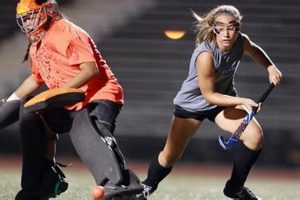
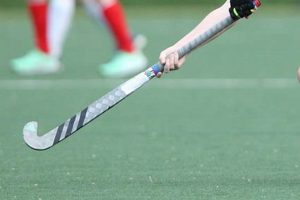
Specialized protective equipment is essential for field hockey goalkeepers. This equipment includes leg guards, kickers, body armor, gloves, and a helmet, all designed to minimize the risk of injury from high-speed balls. One brand prominent in this domain is OBO, a manufacturer recognized for its commitment to innovation and quality in goalkeeping gear. For example, their leg guards are engineered to offer maximum coverage and impact absorption, while their kickers facilitate swift and controlled clearances.
The use of high-quality goalkeeper equipment provides confidence and protection. The design and materials used contribute significantly to performance levels. Historically, the evolution of this type of equipment has been driven by a need for enhanced safety features, alongside improved mobility and comfort for the player. This evolution has allowed goalkeepers to become more agile and responsive in high-pressure situations, thereby positively affecting team performance.
This article delves into specific attributes of goalkeeper equipment, including material composition, design considerations, and maintenance protocols. The focus is on understanding how the selection and proper care of equipment contribute to safety and optimum performance on the field.
Protective Equipment Usage
Effective utilization of specialized goalkeeper gear is essential for safety and performance. The following guidelines detail key aspects of protective equipment usage and maintenance.
Tip 1: Size Accuracy is Paramount. Ensure all components, including leg guards and kickers, are appropriately sized to provide complete coverage and minimize vulnerable areas. Improper sizing can compromise protection.
Tip 2: Pre-Game Inspection. Prior to each game, thoroughly inspect equipment for signs of wear, tear, or damage. Pay particular attention to straps, buckles, and padding. Address any deficiencies before play commences.
Tip 3: Secure Fastening. Always ensure all straps and closures are securely fastened to maintain the integrity of the protective system. Loose or improperly secured equipment offers inadequate protection.
Tip 4: Environmental Considerations. Exposure to extreme temperatures can affect material properties. Avoid prolonged exposure to direct sunlight or excessive heat, which may degrade protective qualities.
Tip 5: Cleaning and Storage. Regularly clean equipment to remove dirt and sweat, using manufacturer-recommended cleaning agents. Proper storage in a cool, dry environment extends the lifespan of the gear.
Tip 6: Padding Integrity: Ensure padding within leg guards, kickers, and body armor remains uniformly distributed. Compressed or displaced padding diminishes its impact-absorbing capabilities.
Tip 7: Gradual Acclimation: New gear may require a period of adjustment. Practice and acclimatize to the equipment to ensure optimal mobility and performance before competitive play.
Adherence to these guidelines promotes safety and prolongs the useful life of specialized goalkeeper equipment. Consistent maintenance and proper usage are crucial for safeguarding against potential injury.
The subsequent sections will address material science and advanced technological integrations that further enhance protective capabilities.
1. Superior Impact Absorption

In field hockey goalkeeping, superior impact absorption is a critical performance attribute directly affecting player safety and confidence. OBO gear, specifically designed with advanced materials and construction techniques, directly addresses this need. High-speed impacts from field hockey balls, often reaching speeds exceeding 100 km/h, necessitate equipment capable of dissipating kinetic energy effectively. OBO’s use of closed-cell foams and composite materials aims to minimize the force transmitted to the goalkeeper’s body, reducing the risk of contusions, fractures, and other injuries. The effectiveness of this impact absorption directly correlates with the goalkeeper’s ability to confidently face shots and remain in the game without physical impairment.
The design of OBO equipment integrates multi-layered systems to enhance impact absorption. For instance, leg guards often feature a hard outer shell to deflect the initial impact and a series of internal foam layers to attenuate the remaining energy. This tiered approach maximizes protection while minimizing bulk and restricting mobility. A real-world example is observed in professional field hockey where goalkeepers routinely withstand multiple high-velocity shots during a single match; the effectiveness of their protective equipment, like OBO’s, directly influences their ability to perform consistently throughout the game and the season. The practical significance of this understanding lies in enabling informed equipment choices, prioritizing safety and long-term player well-being.
In summary, superior impact absorption is a fundamental requirement in field hockey goalkeeping, and OBO equipment addresses this demand through its materials and design. Its role is pivotal in reducing injuries, maintaining performance, and enabling goalkeepers to play confidently. Ongoing advancements in materials science and design continue to push the boundaries of what is possible in impact absorption, thereby enhancing safety standards in the sport. The challenge lies in balancing optimal protection with mobility and comfort, ensuring goalkeepers are both safe and agile on the field.
2. Ergonomic Design Integration

Ergonomic design integration is a critical factor in the performance and safety of field hockey goalkeeping equipment. OBO, a prominent manufacturer, incorporates ergonomic principles to enhance the functionality and user experience of their protective gear. This approach aims to optimize the fit, mobility, and overall comfort of the equipment, enabling goalkeepers to perform at their best while minimizing the risk of injury.
- Contoured Fit and Range of Motion
Ergonomic design principles dictate a close, contoured fit that allows for a full range of motion. OBO equipment, such as leg guards and body armor, are shaped to conform to the natural contours of the body. This contoured fit minimizes restriction, facilitating quick movements and agile responses. An example includes pre-curved leg guards that allow for a more natural stance, reducing fatigue and improving reaction time. The implication is enhanced performance and reduced strain during extended periods of play.
- Weight Distribution and Balance
Proper weight distribution is essential to reduce fatigue and maintain balance. OBO integrates design features that evenly distribute the weight of the equipment across the body. For example, their body armor incorporates a multi-panel construction that spreads impact forces across a larger area, reducing localized stress. This balanced weight distribution allows the goalkeeper to move more freely and maintain stability when making saves. A real-world consequence is improved endurance, particularly during high-intensity matches.
- Adjustability and Customization
Ergonomic design accommodates individual differences through adjustability and customization. OBO equipment typically features adjustable straps, buckles, and padding that allow goalkeepers to fine-tune the fit to their specific body type and preferences. This customization ensures optimal comfort and protection. For instance, adjustable helmet harnesses ensure a secure and stable fit, minimizing the risk of displacement during impacts. The resulting effect is improved comfort and confidence, translating into enhanced performance.
- Material Selection and Breathability
Material selection plays a vital role in ergonomic design. OBO utilizes materials that are lightweight, breathable, and moisture-wicking to enhance comfort and reduce heat buildup. Breathable fabrics and ventilation systems promote airflow, keeping the goalkeeper cool and dry during intense activity. This is exemplified by the use of perforated foam padding in leg guards, which allows for greater ventilation and reduces perspiration. The practical benefit is increased comfort and reduced risk of overheating, leading to improved concentration and performance.
By integrating these ergonomic design features, OBO aims to provide goalkeepers with equipment that enhances their performance, minimizes fatigue, and reduces the risk of injury. These features collectively contribute to a more comfortable, efficient, and safer goalkeeping experience, underscoring the importance of ergonomic considerations in the design of field hockey protective gear.
3. Durability and Longevity

In the context of OBO field hockey goalkeeping equipment, durability and longevity are critical performance attributes directly influencing cost-effectiveness and safety. The demanding nature of the sport necessitates equipment capable of withstanding repeated high-impact collisions and abrasion. OBOs commitment to using high-quality materials and employing robust construction techniques directly addresses this demand. For instance, OBO leg guards and kickers are engineered to endure rigorous play, resisting degradation from repeated ball strikes and contact with the playing surface. This resistance to wear and tear translates into a longer lifespan for the equipment, reducing the frequency of replacements and minimizing overall expenditure for clubs and individual players.
The direct impact of durability is evident in various real-world scenarios. Consider a competitive field hockey team that invests in durable OBO goalkeeping equipment. The extended lifespan of this equipment reduces the financial burden on the team, allowing resources to be allocated to other essential areas such as coaching, training facilities, or player development. Furthermore, durable equipment enhances safety by maintaining its protective capabilities over time. Worn or damaged equipment loses its ability to absorb impact effectively, increasing the risk of injury. OBOs focus on longevity ensures that their equipment provides consistent protection throughout its usable life, safeguarding goalkeepers from potential harm. The practical significance lies in enabling informed purchasing decisions, prioritizing long-term value, and promoting player safety.
Ultimately, the interplay between durability, longevity, and OBO field hockey equipment contributes significantly to the overall quality and value proposition. Durable construction extends the lifespan of the gear, providing long-term cost savings, while maintaining a high level of protection. This understanding emphasizes the importance of considering not only initial cost but also long-term performance and durability when selecting goalkeeping equipment. The ongoing challenge lies in balancing durability with other performance attributes, such as weight and flexibility, to create equipment that is both long-lasting and conducive to optimal gameplay. Prioritizing durability ultimately benefits players, teams, and the sport by fostering safety and sustainable resource management.
4. Customization Options

Customization options within the OBO field hockey equipment line directly address the unique physical requirements and performance preferences of individual goalkeepers. OBO recognizes that body types, playing styles, and comfort levels vary significantly, necessitating a degree of personalization not typically found in standardized sporting goods. Consequently, its product line offers several avenues for customization, impacting fit, protection levels, and overall performance. The provision of customizable components, such as adjustable straps, interchangeable padding, and modular designs, allows goalkeepers to fine-tune their equipment to achieve an optimal fit and level of protection. For example, a goalkeeper with wider legs may benefit from leg guards with adjustable side panels to ensure full coverage and unrestricted movement. Similarly, modular designs allow for the removal or addition of padding in specific areas, accommodating individual impact preferences and injury histories.
The effect of customization extends beyond mere comfort. A properly fitted set of goalkeeping equipment enhances mobility, reaction time, and overall confidence. Ill-fitting equipment can impede movement, create pressure points, and compromise protection, potentially leading to injury. OBOs customization options mitigate these risks, fostering a secure and confident playing experience. A practical application lies in the ability to tailor equipment to specific playing surfaces or weather conditions. For instance, a goalkeeper playing on a hard, artificial surface may opt for thicker padding to enhance impact absorption, while a goalkeeper playing in hot, humid conditions may choose lighter, more breathable materials to improve ventilation and comfort. Professional field hockey teams often utilize these customization options to optimize their goalkeepers performance, adjusting equipment configurations based on the specific demands of each match or tournament.
In summary, customization options represent a significant component of the OBO field hockey equipment philosophy, acknowledging the individual needs of goalkeepers and providing the means to achieve a personalized and optimized playing experience. This approach enhances safety, promotes mobility, and instills confidence, directly contributing to improved performance on the field. The challenge lies in balancing the breadth of customization options with the complexity of equipment selection, requiring retailers and coaches to provide knowledgeable guidance to ensure goalkeepers make informed decisions. Ultimately, the availability of customization options elevates the standard of goalkeeping equipment, fostering a safer and more effective playing environment.
5. Advanced Material Science

Advanced material science constitutes a fundamental pillar underpinning the performance and safety characteristics of OBO field hockey goalkeeping equipment. The selection and application of advanced materials are not arbitrary; rather, they represent a deliberate and calculated effort to engineer equipment that can withstand the extreme forces and demands inherent in the sport. Cause and effect are clearly discernible: the implementation of advanced materials directly results in enhanced impact absorption, increased durability, and improved comfort for the goalkeeper. The materials employed, such as high-density closed-cell foams, composite polymers, and reinforced textiles, are selected for their specific mechanical properties. For example, closed-cell foams excel at dissipating kinetic energy upon impact, reducing the transmission of force to the body. Composite polymers provide structural integrity and resistance to abrasion, extending the lifespan of the equipment. Reinforced textiles offer tear resistance and flexibility, ensuring both protection and freedom of movement. Without these advanced materials, the protective capabilities of the equipment would be severely compromised. Real-life examples include professional field hockey goalkeepers who routinely withstand ball speeds exceeding 100 km/h, relying on the material science embedded within their OBO gear to mitigate injury. The practical significance of understanding this lies in the ability to make informed equipment choices, prioritizing safety and long-term performance.
Further analysis reveals a sophisticated interplay between material properties and design considerations. Advanced material science is not merely about selecting the “strongest” material; it involves optimizing the material’s properties to meet specific performance requirements. For instance, lightweight materials are crucial for reducing fatigue and enhancing agility, while materials with high energy absorption are essential for minimizing impact forces. The integration of these materials into the design of OBO equipment often involves complex layering and molding techniques. Multi-density foam systems, where different layers of foam provide varying levels of impact absorption, are a common example. Similarly, composite materials are often molded into complex shapes to provide structural support and protection in critical areas. Practical applications include the design of leg guards that effectively distribute impact forces across the lower leg, reducing the risk of fractures and contusions. These design innovations are directly enabled by advances in material science.
In conclusion, advanced material science is an indispensable component of OBO field hockey goalkeeping equipment, directly influencing its performance, safety, and durability. The strategic selection and application of these materials, combined with innovative design considerations, represent a concerted effort to engineer equipment that meets the rigorous demands of the sport. While challenges remain in terms of balancing performance attributes and managing material costs, the ongoing advancements in material science promise to further enhance the protective capabilities of goalkeeping equipment. This connection extends to the broader theme of athletic safety, highlighting the critical role of technology and innovation in minimizing injury risk in high-impact sports.
Frequently Asked Questions About OBO Field Hockey Goalkeeping Equipment
This section addresses common inquiries regarding OBO field hockey goalkeeping equipment, providing concise and informative answers to assist in equipment selection and maintenance.
Question 1: What distinguishes OBO equipment from other brands in terms of protective capability?
OBO goalkeeping equipment distinguishes itself through the integration of advanced material science and ergonomic design. Specifically, the strategic use of multi-density foams and composite materials optimizes impact absorption. The engineering is intended to minimize force transmission and maximize player protection.
Question 2: How does one determine the correct size of OBO leg guards for optimal protection?
Correct sizing of OBO leg guards is paramount for effective protection. It is advised to measure the distance from the mid-patella to the top of the foot while bearing weight. Consult the OBO sizing chart to determine the appropriate leg guard size based on this measurement.
Question 3: What cleaning and maintenance protocols are recommended to prolong the lifespan of OBO goalkeeping equipment?
To prolong the lifespan of OBO equipment, regular cleaning with mild soap and water is recommended. Avoid harsh chemicals or abrasive cleaners. Allow equipment to air dry thoroughly after each use. Store in a cool, dry environment away from direct sunlight to prevent material degradation.
Question 4: Are OBO field hockey helmets certified for impact protection, and what standards do they meet?
OBO field hockey helmets are certified to meet or exceed international safety standards for impact protection. Specific certifications vary by model but typically include those established by recognized governing bodies in field hockey. Compliance with these standards assures a defined level of protection against ball strikes.
Question 5: Can OBO equipment be customized to accommodate specific player preferences or medical conditions?
Select OBO equipment lines offer customization options, including adjustable straps, removable padding, and modular components. Consult with authorized OBO retailers or representatives regarding specific customization capabilities. Alterations to equipment may affect its certified protective qualities.
Question 6: Where can one purchase authentic OBO field hockey goalkeeping equipment, and how can counterfeit products be identified?
Authentic OBO equipment is available through authorized retailers and distributors. Verify retailer authenticity on the official OBO website. Counterfeit products can often be identified by substandard materials, poor construction, and discrepancies in branding or labeling.
These FAQs offer a foundation for understanding the critical facets of specialized field hockey goalkeeping equipment. Additional specific inquiries should be directed to certified OBO representatives or professional equipment specialists.
The subsequent segment will address innovative technological advancements in field hockey safety gear.
Conclusion
This article has explored specialized goalkeeping equipment, with a focus on obo field hockey products. The investigation covered superior impact absorption capabilities, ergonomic design considerations, the importance of durability and longevity, the availability of customization options, and the role of advanced material science. Each aspect contributes to the overall safety and performance of goalkeepers on the field.The integration of these features exemplifies how protective sports equipment is advancing.
Ultimately, prioritizing advanced equipment is vital for player safety and performance. As field hockey continues to evolve, future development should focus on continuous improvement in material design, and ergonomic considerations, to further enhance athlete well-being and competitive potential. Continued adherence to safety standards is imperative.