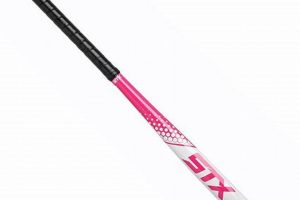
Composite sporting equipment designed for ice and roller hockey, known for its lightweight construction and enhanced performance characteristics, has become increasingly prevalent. These implements utilize interwoven strands of carbon atoms, creating a material significantly lighter and stronger than traditional wood or aluminum alternatives. This construction allows for increased stick handling speed and shot power.
The advantages of this advanced material extend beyond mere weight reduction. The responsiveness allows for quicker energy transfer during shots, resulting in increased velocity. Furthermore, the enhanced durability compared to traditional materials minimizes the risk of breakage during gameplay, representing a long-term cost-saving benefit. Historically, these implements marked a significant technological advancement in hockey equipment, revolutionizing the sport at both amateur and professional levels.
The subsequent discussion will delve into the specific manufacturing processes, performance characteristics, and factors influencing the selection of these essential pieces of equipment. This will include an examination of different weave patterns, resin types, and flex profiles, providing a comprehensive understanding of their impact on playability.
Enhancing Performance
Optimizing play requires careful consideration of several factors related to composite hockey implements. The following guidelines offer insights to maximize the potential of this technology.
Tip 1: Flex Selection: Appropriate flex directly impacts shot power and accuracy. Lower flex values are generally preferred for wrist shots and quick releases, while higher flex values suit slap shots and heavier players.
Tip 2: Curve Pattern Evaluation: Blade curve affects puck lift and control. A deeper curve aids in elevating the puck quickly, whereas a shallower curve provides better puck handling and passing precision.
Tip 3: Grip Enhancement: Proper grip tape application ensures secure handling. Consistent layering avoids slippage, especially during intense gameplay. Experimentation with different tape patterns can personalize the feel.
Tip 4: Regular Inspection: Prior to each use, thoroughly inspect for cracks or damage, particularly near the blade-shaft connection and the shaft’s lower portion. Undetected damage can lead to sudden breakage and potential injury.
Tip 5: Shaft Length Adjustment: Optimal shaft length allows for comfortable stick handling and powerful shots. Generally, the implement should reach between the players chin and nose when standing on skates.
Tip 6: Understanding Weave Patterns: Different fiber weave patterns (e.g., 3K, 12K) influence stiffness and durability. Higher K values often correlate with increased robustness, but individual preference and playing style should guide the selection.
Tip 7: Proper Storage: Store in a temperature-controlled environment away from direct sunlight. Extreme temperatures and prolonged exposure can degrade the resin matrix, compromising structural integrity.
Selecting the appropriate flex, curve, and grip, alongside vigilant inspection and maintenance, significantly improves performance and extends the lifespan of the equipment.
The following sections will cover the science behind composite materials and delve further into the relationship between design and performance.
1. Lightweight

The reduced mass of composite sporting equipment, specifically those constructed from carbon fiber, represents a primary performance advantage. This characteristic stems directly from the inherent density of carbon fiber materials, which are significantly lower than traditional wood or aluminum alloys. The decreased weight translates to improved maneuverability and faster reaction times for players on the ice. For instance, a lighter implement allows for quicker stick handling and a more rapid response to puck movement, resulting in heightened agility and control.
Moreover, the correlation between low mass and player fatigue is noteworthy. A lighter implement requires less energy expenditure during extended periods of play. This reduction in physical strain can lead to improved endurance, enabling players to maintain a high level of performance throughout the duration of a game. Professional athletes, for example, often cite the reduced fatigue associated with lightweight designs as a critical factor in their ability to perform optimally in demanding competitive scenarios. The impact is also noticeable in youth hockey, where the reduced weight allows developing players to focus on technique rather than struggling with a heavy implement.
In summary, the lightweight nature of carbon fiber hockey sticks is a fundamental characteristic directly impacting performance, reducing fatigue, and enhancing maneuverability. This attribute, coupled with other performance advantages, solidifies its position as a key factor in modern hockey equipment design. However, the focus on lightweight construction must be balanced with considerations for durability to ensure the implement withstands the rigors of competitive play.
2. Durability

Durability, in the context of composite sporting equipment, directly relates to the product’s ability to withstand stress and maintain structural integrity over extended use. The incorporation of carbon fiber in hockey implement construction significantly enhances this attribute. This is primarily due to the high tensile strength and resistance to impact exhibited by carbon fiber composites compared to traditional materials. A critical cause of implement failure is repeated impact with pucks, boards, and opposing players. The enhanced strength inherent in these designs mitigates these risks, extending the lifespan of the equipment. The importance of this factor is evident in professional leagues, where high-impact collisions and intense gameplay are commonplace. Without adequate durability, the cost associated with frequent replacement becomes a significant burden.
Real-life examples underscore the practical significance of this durability. Hockey teams and individual players often select specific models renowned for their robust construction, indicating a clear preference for longevity. Further, improvements in resin technologies used to bind the carbon fibers have also contributed to increased impact resistance and overall product life. These advancements enable the implement to absorb and dissipate energy from impacts, further minimizing the risk of catastrophic failure. Independent testing and player feedback consistently demonstrate the superior resistance to breakage exhibited by these composite implements compared to their wooden predecessors. The adoption rate across all levels of play reflects the widespread recognition of this benefit.
In conclusion, durability is a crucial component of composite hockey equipment, directly impacting cost-effectiveness and player performance. The challenges lie in balancing the desire for lightweight designs with the need for sufficient robustness to withstand the rigors of the sport. Continued research into advanced materials and construction techniques remains essential to further enhance durability without compromising other performance characteristics. This balance will ultimately determine the long-term viability and widespread adoption of composite hockey equipment.
3. Flex Profile

Flex profile, in the context of composite hockey equipment, specifically carbon fiber implements, represents the degree to which the shaft bends under applied force. This attribute significantly influences shot power, release speed, and overall feel. Variations in flex profile are deliberately engineered to cater to diverse playing styles and individual player preferences.
- Flex Number and Stiffness
The flex number indicates the force required to bend the implement one inch. A lower number signifies greater flexibility, facilitating faster loading and release of energy, beneficial for wrist shots. Conversely, a higher number denotes greater stiffness, suited for powerful slap shots requiring more force to initiate bending. For example, a player prioritizing quick releases might choose a flex of 75, while one focusing on power might opt for 100 or higher.
- Kick Point Location
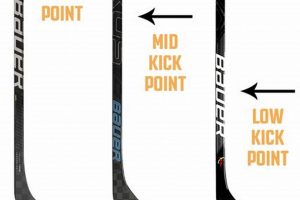
The kick point represents the area where the majority of bending occurs. Low kick points are designed for quick release shots, where the implement bends closer to the blade. Mid kick points offer a balance between power and release, while high kick points facilitate powerful shots with a longer loading period. A defenceman, for example, may prefer a higher kick point for delivering powerful slap shots from the blue line.
- Taper Design and Responsiveness
The taper design influences the responsiveness of the implement. A tapered design generally allows for more whippiness and thus promotes quicker release. Tapered designs are found in sticks that favour low kick-point. A non-tapered design usually contributes to a stiffer feel, which allows for greater control. An example, a quick and skilled player often opts for a tapered shaft to optimize quick puck release.
- Material Composition and Flex Consistency
Variations in the carbon fiber layup and resin matrix affect the consistency of the flex profile. Manufacturers strive for consistent bending characteristics across the entire shaft to ensure predictable performance. Inconsistent flex can lead to inaccurate shots and diminished control. Advanced manufacturing techniques, such as precise fiber alignment and controlled resin application, are employed to maintain consistent flex characteristics.
The interplay between flex number, kick point location, taper design, and material composition collectively defines the flex profile. Careful consideration of these factors allows players to select equipment that aligns with their playing style and enhances their on-ice performance. Carbon fiber construction enables precise manipulation of these variables, resulting in a wide range of flex profiles tailored to meet the diverse needs of hockey players.
4. Balance Point

Balance point, a critical design parameter in composite hockey implements, refers to the location along the shaft where the equipment balances when held horizontally. This attribute profoundly influences the feel and handling characteristics, directly affecting player performance.
- Influence on Handling and Feel
The balance point impacts how the equipment feels in a player’s hands. A higher balance point, closer to the blade, results in a “blade-heavy” feel. This may enhance puck feel and control for some players. Conversely, a lower balance point, closer to the handle, creates a “handle-heavy” feel, potentially increasing maneuverability and reducing fatigue. Player preference is a primary determinant in selecting the optimal balance point. For example, a puck-handling forward may prefer a blade-heavy implement for enhanced puck control during stickhandling.
- Relationship to Weight Distribution
Balance point is directly related to the overall weight distribution. Lightweight carbon fiber designs permit manufacturers to manipulate weight distribution more precisely than with traditional materials. Redistributing weight can optimize balance without significantly altering the total mass. This allows designers to fine-tune the feel and handling characteristics to suit specific playing styles. One example includes moving weight from the shaft to the blade to enhance puck feel during shooting, while other models remove weight entirely to maximize a player’s speed and agility.
- Impact on Swing Weight and Shot Power
The balance point influences the swing weight, the perceived weight during motion. A higher balance point increases swing weight, potentially augmenting shot power, especially for slap shots. However, it may also increase fatigue. A lower balance point decreases swing weight, enhancing quickness and maneuverability, which benefits wrist shots and snap shots. For instance, a defenseman relying on powerful slap shots may opt for a higher balance point to maximize force on impact.
- Material Composition and Construction Techniques
The balance point is influenced by material selection and construction techniques. Carbon fiber construction enables strategic placement of material to adjust weight distribution and fine-tune the balance point. Reinforcing the blade with extra layers of carbon fiber, for example, shifts the balance point towards the blade. Conversely, utilizing lighter materials in the blade can shift the balance point towards the handle. Manufacturers carefully control these variables to achieve desired performance characteristics. Some advanced construction techniques include focused density placement along the shaft length to impact overall balance.
The interplay between handling, weight distribution, swing weight, and material composition underscores the significance of the balance point in composite equipment. Optimization requires careful consideration of individual playing style, skill level, and personal preferences. The ability to precisely control the balance point via carbon fiber construction techniques is a key factor in the widespread adoption of modern equipment.
5. Resin Matrix

The resin matrix within carbon fiber hockey implements serves as the binding agent that holds the carbon fibers together, distributing stress and preventing fiber buckling under load. Its properties critically influence the overall performance, durability, and impact resistance of the equipment. The selection of an appropriate resin is paramount to optimizing the mechanical characteristics of the composite structure.
- Role in Stress Distribution
The resin matrix facilitates the transfer of load between individual carbon fibers, ensuring that stress is evenly distributed throughout the composite material. Without an effective resin, fibers would be prone to localized stress concentrations, leading to premature failure. For instance, during a slapshot, the resin matrix bears a significant portion of the impact force, preventing fiber delamination. The choice of resin directly impacts the equipment’s ability to withstand repeated high-stress events without structural degradation. Advanced epoxy resins, for example, exhibit superior adhesion and toughness, enhancing the stress distribution capabilities of the composite.
- Impact on Impact Resistance
The resin matrix contributes substantially to the impact resistance of the implement by absorbing energy from collisions with pucks, boards, and other players. Resins with high toughness and elongation at break are better able to dissipate impact energy, reducing the likelihood of cracks or fractures. Certain resin formulations incorporate additives, such as toughening agents, to further enhance impact performance. In high-performance applications, modified epoxy resins are used to provide a balance of stiffness and impact resistance, improving the equipment’s ability to withstand severe impacts without catastrophic failure. For example, an implement with a poorly chosen resin might shatter upon impact with another player’s equipment during an aggressive play.
- Influence on Stiffness and Flex Profile
The resin matrix influences the overall stiffness and flex profile. The stiffness of the resin directly affects the bending characteristics of the equipment. A stiffer resin results in a more rigid implement, while a more flexible resin contributes to a softer flex. Modifying the resin composition allows manufacturers to fine-tune the flex profile to meet the specific needs of different players. The material properties of the resin will dictate the consistency and predictability of the flex during gameplay. For example, modifying the resin allows specific hockey implement brands to create a variety of “kick points” along the shaft of the stick. The flex characteristics play a pivotal role in puck control, shot power, and overall feel.
- Environmental Resistance and Durability
The resin matrix provides protection against environmental factors, such as moisture, UV radiation, and temperature fluctuations, which can degrade the carbon fibers and compromise structural integrity. Resins with good chemical resistance are less susceptible to degradation from exposure to sweat, cleaning agents, and other chemicals encountered during use and maintenance. Proper resin selection ensures that the equipment maintains its performance characteristics over time, extending its lifespan and reducing the need for frequent replacements. Certain resin systems are formulated with UV stabilizers to mitigate the damaging effects of sunlight, while others incorporate moisture barriers to prevent water absorption. Choosing the incorrect matrix for a carbon fiber stick can lead to premature weakening of the structure, or even to delamination of the layers of carbon. Thus, appropriate matrix selection is critical for high-performance applications.
The properties of the resin matrix exert a significant influence on the performance characteristics of carbon fiber hockey sticks. Selection requires a careful balancing of factors, including stress distribution, impact resistance, stiffness, and environmental durability. Ongoing advancements in resin technology continue to drive improvements in composite hockey equipment, enhancing player performance and prolonging the lifespan of these essential tools of the sport.
6. Weave Pattern

The weave pattern in carbon fiber hockey implements dictates the orientation and interlacing of carbon fibers within the composite structure. This parameter directly influences the mechanical properties of the equipment, affecting stiffness, strength, and torsional rigidity. A properly selected weave pattern optimizes the transfer of energy during shots and impacts, translating to enhanced performance and durability. Different weave patterns exhibit varying degrees of resistance to deformation under different types of stress. For example, a tighter weave offers higher resistance to shear forces, crucial in preventing delamination during high-impact collisions. Conversely, a more open weave may provide greater flexibility, influencing the overall flex profile of the equipment. Therefore, the weave pattern is a critical component of carbon fiber equipment and influences performance characteristics.
Specific weave patterns, such as plain weave, twill weave, and satin weave, are commonly employed in the construction of composite hockey equipment, each offering a unique balance of properties. Plain weave exhibits a high degree of stability and uniform strength in both directions, but it may lack the drapeability required for complex shapes. Twill weave, characterized by its diagonal rib pattern, provides greater flexibility and conformability, making it suitable for contoured sections. Satin weave offers a smooth surface finish and high strength-to-weight ratio, often used in areas requiring high performance. A hockey stick with a plain weave may exhibit excellent impact resistance, while a stick utilizing a twill weave could offer a more responsive feel. The practical application of this understanding lies in tailoring the weave pattern to specific areas of the implement, optimizing performance for different aspects of gameplay. Manufacturers manipulate the weave pattern to achieve the desired balance of properties, catering to the diverse needs of players.
In summary, the weave pattern plays a fundamental role in determining the performance characteristics of carbon fiber hockey sticks. The pattern influences stiffness, strength, impact resistance, and overall feel. The challenges in weave pattern selection lie in balancing competing performance requirements and optimizing the fiber orientation for specific loading conditions. Continued research and development in weave pattern design and manufacturing techniques is essential to further enhance the performance and durability of carbon fiber hockey equipment. This exploration highlights the practical significance of understanding the connection between weave pattern and its relationship to implement performance and construction.
7. Shot Power

The capacity to impart significant velocity to a hockey puck, commonly known as shot power, is intrinsically linked to the design and material properties of carbon fiber hockey implements. The low weight and high tensile strength of carbon fiber allow for increased kinetic energy transfer during the shooting motion. The cause-and-effect relationship is straightforward: lighter implements can be swung more rapidly, and the carbon fiber construction minimizes energy loss through vibration, resulting in a more forceful impact on the puck. Shot power is a critical component of a player’s offensive arsenal, enabling them to score goals and generate scoring opportunities. For example, professional players rely on powerful shots to beat goaltenders from longer distances or to create rebounds in front of the net. A carbon fiber implement’s ability to maximize shot power, therefore, directly affects a player’s effectiveness and team success.
Furthermore, the flex profile of the implement, specifically engineered through variations in carbon fiber layup and resin matrix, plays a pivotal role in augmenting shot power. A properly matched flex profile allows the player to load the implement effectively, storing potential energy that is then released upon contact with the puck. The practical application of this understanding is evident in the diverse range of implements available, each designed with specific flex characteristics tailored to different shooting styles. A player who utilizes a wrist shot predominantly might benefit from a lower flex profile, enabling a quicker release, while a player who favors slap shots would require a higher flex profile to maximize power. The selection of an implement with the appropriate flex profile is crucial to optimizing shot power and accuracy. The overall design directly impacts performance levels.
In conclusion, shot power is an essential performance metric directly influenced by the properties of carbon fiber hockey implements. The low weight, high tensile strength, and customizable flex profile contribute to increased puck velocity and enhanced offensive capabilities. The challenge lies in balancing shot power with other critical attributes, such as puck control and quick release, to create a well-rounded piece of equipment suited to individual playing styles. Future advancements in carbon fiber technology and design will likely focus on further optimizing the relationship between shot power and overall implement performance, driving innovation in the sport.
Frequently Asked Questions
The following addresses common inquiries regarding the construction, performance, and maintenance of composite sporting equipment.
Question 1: Are composite hockey implements inherently more fragile than traditional wooden models?
While earlier iterations were susceptible to breakage under extreme stress, advancements in material science and manufacturing have significantly improved durability. Properly constructed composite implements often exhibit comparable, or even superior, resistance to breakage compared to well-maintained wooden implements. The vulnerability often lies in undetected damage, emphasizing the importance of regular inspection.
Question 2: How does the flex rating of a composite implement influence shot performance?
The flex rating denotes the implement’s stiffness. Lower flex ratings (e.g., 75) facilitate quicker loading and release, suitable for wrist shots. Higher flex ratings (e.g., 100) cater to powerful slap shots requiring greater force to initiate bending. Selecting an appropriate flex based on playing style optimizes shot power and accuracy.
Question 3: Can the blade curve of a carbon fiber hockey implement be customized?
While some minor adjustments are possible, significant alterations to the blade curve are not recommended due to the risk of compromising structural integrity. The blade curve is designed during the manufacturing process to optimize puck lift and control. Modifying this engineered design can negatively affect performance and durability.
Question 4: What is the expected lifespan of a carbon fiber hockey implement?
The lifespan depends on the frequency and intensity of use, as well as the care and maintenance provided. With proper handling and regular inspection for damage, a composite implement can last for multiple seasons. However, high-impact collisions or consistent exposure to extreme temperatures can shorten its lifespan.
Question 5: Are all carbon fiber hockey implements created equal?
No. Variations in carbon fiber layup, resin matrix, weave pattern, and manufacturing processes significantly impact performance and durability. Higher-quality implements utilize advanced materials and construction techniques, resulting in superior strength, responsiveness, and longevity. Price often correlates with quality, but thorough research is advisable.
Question 6: How should a carbon fiber hockey implement be stored to prolong its lifespan?
Proper storage is crucial. The equipment should be stored in a temperature-controlled environment, away from direct sunlight and extreme heat or cold. Prolonged exposure to these conditions can degrade the resin matrix and compromise the structural integrity of the carbon fiber composite.
In summary, understanding the nuances of composite hockey implement design and maintenance contributes to informed selection and prolonged equipment life. Regular inspection and adherence to proper storage protocols mitigate potential damage and maximize performance.
The subsequent section will explore the evolving landscape of composite material technology in sporting equipment and its future implications for hockey.
Conclusion
The preceding analysis has illuminated the multifaceted nature of composite hockey implements. Attributes such as lightweight construction, durability, flex profile, balance point, resin matrix, weave pattern, and shot power each contribute significantly to overall performance. Careful consideration of these factors, alongside proper maintenance, enhances a player’s effectiveness on the ice and extends the equipment’s lifespan. This demonstrates a departure from traditional wooden equipment, requiring an evolved understanding of materials and construction.
The future of hockey equipment design will undoubtedly witness continued advancements in composite material technology. As research progresses and manufacturing techniques refine, even more sophisticated and high-performing designs will emerge. A commitment to informed decision-making, based on a thorough comprehension of these advancements, will prove crucial for players seeking to optimize their performance in this demanding sport.