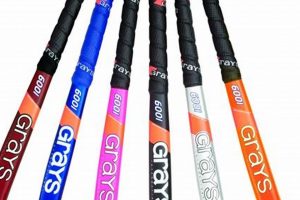
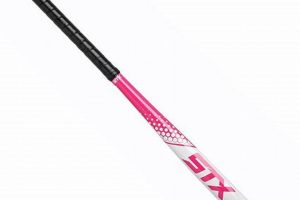
These sporting goods, designed for young female athletes, frequently feature lighter weights, smaller circumferences, and vibrant color schemes compared to standard equipment. These adaptations facilitate easier handling and control for smaller players, encouraging skill development and fostering a positive introduction to the sport. For instance, a child transitioning from recreational skating to organized play may benefit from the enhanced maneuverability offered by these specifically designed implements.
The appeal of these implements extends beyond mere functionality. They contribute to the player’s enjoyment and confidence, thereby promoting continued participation in physical activity. Historically, equipment was often standardized, potentially discouraging some from engaging in the sport due to challenges related to size and weight. These specialized designs address this issue, providing an accessible and encouraging entry point.
The subsequent sections will delve into the specific features of these implements, exploring material composition, size variations, and considerations for selecting the appropriate model to maximize performance and ensure player safety. Analysis will also cover the potential impact on skill acquisition and long-term engagement in ice hockey.
Guidance for Selection and Use
The following offers essential recommendations to ensure optimal performance and safety when utilizing hockey equipment specifically designed for young female players.
Tip 1: Size Appropriateness. Verify that the length of the stick aligns with the player’s height. A general guideline suggests that the top of the stick should reach the player’s nose or chin while standing in skates. This ensures adequate reach and control during gameplay.
Tip 2: Weight Considerations. Opt for a model with a lighter weight construction. This reduces fatigue and enhances maneuverability, facilitating improved stickhandling and shooting techniques.
Tip 3: Flex Assessment. Evaluate the stick’s flex rating. A lower flex rating indicates greater flexibility, which is generally more suitable for younger players who may lack the strength to effectively flex a stiffer stick. This assists in generating power behind shots.
Tip 4: Blade Curve Selection. Consider the blade curve that best complements the player’s playing style. A moderate curve is often recommended for beginners, while more advanced players may benefit from more pronounced curves that enhance puck lift and shot accuracy.
Tip 5: Grip Enhancement. Ensure the stick features a comfortable and secure grip. This is crucial for maintaining control and preventing slippage, particularly in wet or humid conditions. Re-taping the grip periodically can maintain optimal performance.
Tip 6: Regular Inspection. Routinely inspect the stick for signs of damage, such as cracks or splinters. Damaged equipment should be replaced immediately to prevent injury and maintain optimal performance characteristics.
Adhering to these guidelines will contribute significantly to improved skill development, enhanced safety, and a more enjoyable experience on the ice. Appropriate selection and maintenance of hockey equipment are paramount for the advancement of young athletes.
The final section will summarize the key findings and provide concluding remarks on the importance of specialized hockey equipment for youth players.
1. Sizing

Proper sizing is paramount when selecting sporting equipment designed for young female hockey players. Inappropriate dimensions can hinder skill development, increase the risk of injury, and diminish overall enjoyment of the sport. The following points outline critical considerations regarding equipment dimensions and their impact.
- Stick Length and Player Height
The length of the stick should correlate directly with the player’s height while wearing skates. A general guideline suggests that the top of the stick should reach the player’s nose or chin when standing upright. A stick that is too long reduces control, while one that is too short requires excessive bending, potentially leading to back strain. Selecting the right size fosters proper posture and balance on the ice.
- Grip Circumference and Hand Size
The circumference of the grip must be appropriate for the player’s hand size. A grip that is too thick can be difficult to hold securely, while one that is too thin may cause hand fatigue and reduce control. Manufacturers offer various grip sizes to accommodate different hand dimensions, ensuring a comfortable and secure hold.
- Blade Size and Skill Level
Blade size, referring to the length and curvature of the blade, should align with the player’s skill level and playing style. Smaller blades may be easier for beginners to control, while larger blades offer greater surface area for receiving passes and shooting. The blade’s curvature influences shot trajectory and puck handling characteristics, requiring careful consideration based on individual preferences.
- Overall Equipment Fit and Mobility
Beyond stick-specific dimensions, overall equipment fit significantly impacts player mobility. Shoulder pads, elbow pads, and gloves must allow for a full range of motion without restricting movement. Improperly sized protective gear can impede performance and increase the risk of injury. Prioritizing a snug yet comfortable fit is essential for optimal performance and safety.
These dimensional considerations contribute significantly to a young female hockey player’s ability to develop skills, maintain control, and avoid injury. Careful attention to equipment sizing ensures that the player can fully engage with the sport and maximize their potential on the ice. Investing time in selecting appropriately sized equipment is a fundamental step towards fostering a positive and rewarding experience.
2. Weight

The weight of a hockey stick, particularly one designed for young female athletes, directly influences maneuverability, fatigue levels, and overall performance. A lighter stick enables quicker reactions, faster stickhandling, and improved control, particularly beneficial for players with less developed upper body strength. The inverse is also true; a heavier stick can hinder agility, leading to premature fatigue and diminished skill execution. This impact is magnified in younger players whose physical development is still in progress. Selecting a stick with an appropriate weight is a critical factor in ensuring optimal performance and fostering a positive experience in the sport. For example, a young player struggling with a heavier stick might develop incorrect techniques to compensate, potentially leading to long-term disadvantages and even injury.
Manufacturers address weight considerations by utilizing lightweight materials such as carbon fiber and composite blends. These materials allow for the creation of sticks that are significantly lighter than traditional wooden models while maintaining structural integrity and durability. Moreover, variations in weight distribution within the stick design can further enhance performance. For instance, a stick with a balance point closer to the blade may improve puck feel and control, while a more centrally balanced stick might offer a more powerful shot. Recognizing these nuances enables players and coaches to make informed decisions that optimize equipment selection based on individual needs and preferences.
Ultimately, the weight of the stick is a primary factor affecting a young player’s ability to develop proper technique, maintain stamina, and experience success on the ice. Careful consideration of this aspect during equipment selection is essential for maximizing potential, preventing injury, and fostering a lasting engagement with the sport. Addressing this allows young players to effectively develop their skills and confidence.
3. Flexibility
Flexibility, often referred to as “flex,” is a critical characteristic of hockey sticks influencing shot power, puck control, and overall player performance, especially for young female athletes. The degree of flex dictates how much the shaft bends when force is applied during a shot or pass, impacting the energy transfer to the puck.
- Flex Rating and Player Strength
Flex rating, typically indicated by a number on the stick shaft, quantifies the amount of force required to bend the stick one inch. Lower flex ratings indicate greater flexibility and are generally more suitable for younger or smaller players who may lack the upper body strength to effectively bend a stiffer stick. Conversely, higher flex ratings are designed for stronger players who can generate more power by fully flexing the stick. Incorrect flex selection can lead to inefficient energy transfer and diminished shot velocity. For example, a young player using a stick with too high of a flex rating may struggle to load the stick properly, resulting in weaker and less accurate shots.
- Impact on Shot Types
Flexibility significantly impacts the type and effectiveness of shots a player can execute. A more flexible stick facilitates quick wrist shots and snapshots, as the player can easily load and release the stick with minimal effort. Stiffer sticks, on the other hand, are better suited for slapshots and powerful one-timers, requiring significant force to bend the stick and generate maximum energy. The optimal flex depends on the player’s playing style and the types of shots they frequently utilize. A versatile player may benefit from a moderate flex rating that allows for a variety of shot types.
- Influence on Puck Control and Feel
Beyond shot power, flexibility also affects puck control and feel. A more flexible stick can provide a softer feel for the puck, allowing for more precise handling and improved reception of passes. Stiffer sticks offer less feel but may provide greater stability and control when handling the puck at high speeds. The degree of flexibility influences the responsiveness of the stick to the player’s movements, impacting the ability to make quick adjustments and maintain control in tight spaces. Young players often benefit from a more flexible stick that enhances puck feel and improves their confidence in handling the puck.
- Material Composition and Flex Characteristics
The material composition of the stick significantly impacts its flexibility characteristics. Composite sticks, made from layers of carbon fiber and other materials, offer a wide range of flex options and can be engineered to provide specific performance characteristics. Wood sticks, while less common in high-performance models, typically have a more consistent flex profile. The manufacturing process and material properties determine the overall flexibility of the stick and its responsiveness to applied force. Selecting a stick made from high-quality materials and designed with specific flex characteristics in mind can optimize performance and enhance the player’s overall experience.
Therefore, selecting the appropriate flex rating for hockey equipment designed for young female players requires careful consideration of individual strength, playing style, and desired performance characteristics. Optimizing flexibility enables players to maximize shot power, enhance puck control, and develop confidence on the ice, contributing to their overall success and enjoyment of the sport.
4. Blade Curve
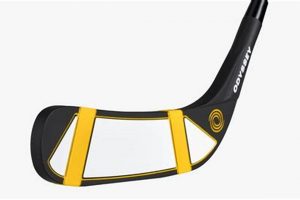
The blade curve on sporting equipment intended for young female hockey players significantly influences puck control, shot accuracy, and overall performance. Selecting the appropriate blade curve is a crucial aspect of equipment customization, aligning with individual playing styles and skill levels.
- Curve Depth and Puck Lift
Curve depth, measured by the maximum deviation of the blade from a straight line, affects the ease with which a player can lift the puck off the ice. Deeper curves facilitate quicker puck elevation, advantageous for shooting over defenders or goaltenders. However, excessive curve depth can hinder puck control during stickhandling and passing. A moderate curve depth often represents a balanced option for developing players, providing sufficient lift while maintaining control. For example, a beginner may find a shallow curve easier to manage when learning basic puck-handling skills.
- Face Angle and Shot Trajectory
The face angle, or the degree to which the blade face is open or closed, influences shot trajectory and direction. An open face angle promotes higher shots, suitable for scoring from close range or deflecting shots. A closed face angle produces lower, more direct shots, ideal for passing or shooting through traffic. The player’s shooting style and preferred shot trajectory should inform the selection of face angle. Consider that a more closed face angle allows for a controlled shot.
- Blade Length and Puck Reception
Blade length, measured from the heel to the toe of the blade, affects puck reception and control. Longer blades provide a larger surface area for receiving passes and maintaining possession of the puck. Shorter blades offer improved maneuverability and quicker stickhandling. The player’s position and playing style should guide the choice of blade length. For example, defense players are likely to benefit from longer blades to assist in blocking passes.
- Heel Curve vs. Toe Curve and Shot Release
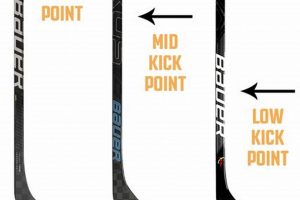
The location of the curve along the bladeeither closer to the heel or the toeimpacts shot release and accuracy. Heel curves facilitate quick, deceptive shots from close range, while toe curves allow for more powerful, sweeping shots from a distance. The player’s preferred shot release technique and playing style determine the optimal curve location. Understanding these attributes helps guide the implementation of “princess hockey sticks”.
Ultimately, the selection of blade curve represents a personalized decision, requiring careful consideration of individual playing style, skill level, and positional responsibilities. The nuances of curve depth, face angle, blade length, and curve location collectively contribute to enhancing puck control, shot accuracy, and overall performance on the ice. Choosing the proper blade curve is essential in maximizing a player’s potential.
5. Grip
The grip on a hockey stick serves as the primary interface between the player and the equipment, directly influencing control, maneuverability, and overall performance. In the context of sporting goods designed for young female athletes, optimizing grip characteristics is paramount for enhancing confidence and skill development. The correlation between a well-designed grip and performance stems from its direct impact on stick handling precision, shot accuracy, and the reduction of fatigue. For example, a grip with inadequate texture can cause slippage, especially in wet conditions, leading to a loss of control and potential errors in passing or shooting. Conversely, an appropriately textured grip ensures a secure hold, enabling the player to execute complex maneuvers with greater confidence and consistency.
The materials and design of the grip significantly contribute to its effectiveness. Common materials include specialized tapes, rubber compounds, and textured polymers, each offering varying degrees of tackiness, durability, and shock absorption. The selection of grip material should consider the player’s hand size, grip strength, and playing style. Furthermore, the grip’s shape and thickness can impact comfort and control. A contoured grip may provide better ergonomic support, while a thicker grip can enhance shock absorption and reduce hand fatigue during prolonged play. Consider a young player who is developing their stickhandling. A well-designed grip allows them to maintain control of the puck as they refine their technique. Conversely, a subpar grip will hinder their development.
In conclusion, grip characteristics are integral to the design and functionality of hockey equipment tailored for young female players. A well-executed grip design enhances stick control, shot accuracy, and overall comfort, promoting confidence and skill development. Conversely, a poorly designed grip can impede performance, increase fatigue, and potentially lead to injury. Prioritizing grip optimization is, therefore, essential for maximizing the player’s potential and fostering a positive experience on the ice. Further considerations should be given to the grips compatibility with gloves or protective gear.
6. Durability

The lifespan of hockey equipment, particularly implements designed for youth players, is a crucial consideration. Equipment must withstand rigorous use and potential impacts to ensure both safety and sustained performance. Durability, therefore, directly affects the value and effectiveness of these products.
- Material Composition and Impact Resistance
The composition of the stick significantly dictates its capacity to endure impacts from pucks, skates, and other players. Composite materials, such as carbon fiber and fiberglass blends, offer a balance between weight, flexibility, and impact resistance. Higher-quality composites, with denser weaves and reinforced layers, demonstrate superior durability compared to lower-grade alternatives. For example, a stick constructed with multiple layers of high-modulus carbon fiber is less likely to fracture upon impact than a stick with a single layer of lower-grade carbon fiber. The implications of this difference are evident in the stick’s longevity and its ability to consistently perform under stress.
- Bonding and Joint Integrity
The integrity of the joints and bonding between different components of the stick, such as the blade and shaft, is critical to its overall durability. Weak or poorly executed bonding can lead to premature failure, particularly at stress points. Advanced manufacturing techniques, including resin transfer molding and pressure molding, enhance the strength and consistency of these bonds. The result is a stick that maintains its structural integrity and resists separation even under intense force. An example of the importance of this is a stick with a poorly bonded blade, where consistent use may cause the blade to delaminate from the shaft, rendering the equipment unusable.
- Surface Treatment and Abrasion Resistance
The surface treatment applied to the stick provides a protective layer against abrasion and environmental factors. Durable coatings, such as epoxy resins and polyurethane finishes, resist scratches, chips, and moisture damage, prolonging the stick’s lifespan and preserving its performance characteristics. Surface treatments also contribute to the stick’s aesthetic appeal, maintaining its appearance over time. As an example, if a stick surface is untreated or poorly coated, it is prone to water damage. This degrades the stick’s integrity and its usability becomes limited.
- Stress Testing and Quality Control
Rigorous stress testing and quality control measures are essential for ensuring consistent durability across product lines. Manufacturers employ various testing methods, including impact testing, flex testing, and fatigue testing, to simulate real-world conditions and identify potential weaknesses. These tests help optimize the design and manufacturing processes, resulting in more durable and reliable sticks. Sticks that pass the rigorous tests translate to improved player safety. This also helps reduce premature replacements and enhances cost-effectiveness.
The aforementioned factors collectively determine the durability of hockey implements specifically for young female players. By prioritizing high-quality materials, advanced manufacturing techniques, and stringent quality control measures, manufacturers can create equipment that withstands the demands of the sport, ensuring both safety and sustained performance. These aspects are essential considerations for parents, coaches, and players when selecting equipment, ultimately influencing the value and longevity of the investment.
Frequently Asked Questions About Hockey Equipment
The following addresses common inquiries regarding selection and usage of specialized hockey equipment. This section provides clarifications and guidance to enhance understanding.
Question 1: What distinguishes implements designed for young female athletes from standard equipment?
Equipment tailored for this demographic often features lighter weight, smaller circumference grips, and modified flex profiles. These adjustments accommodate the physical characteristics and developmental needs of younger players, promoting improved control and skill acquisition.
Question 2: How critical is appropriate sizing when selecting hockey implements?
Appropriate sizing is paramount. Incorrect dimensions can hinder skill development, impede maneuverability, and increase the risk of injury. A stick that is too long or too short compromises control and balance.
Question 3: What role does flexibility (flex) play in performance?
Flex influences shot power and puck control. A lower flex rating is generally more suitable for younger players, enabling them to bend the stick more easily and generate adequate force. Stiffer sticks require greater strength and are better suited for more advanced players.
Question 4: How should the blade curve be selected?
Blade curve selection depends on playing style and desired shot trajectory. Deeper curves facilitate puck lift, while shallower curves enhance puck control. Experimentation and consultation with coaches can aid in identifying the optimal curve.
Question 5: What are the key considerations when evaluating grip quality?
Grip quality should be assessed based on tackiness, comfort, and durability. A secure grip prevents slippage, enhancing control and reducing fatigue. Regular re-taping may be necessary to maintain optimal grip performance.
Question 6: How can the durability of hockey implements be assessed?
Durability is determined by material composition, bonding integrity, and surface treatment. High-quality composite materials and robust construction contribute to increased resistance to impacts and abrasion. Regular inspection for signs of damage is recommended.
The answers provided offer a foundational understanding of key considerations in selecting and utilizing hockey equipment. Consulting with experienced coaches and equipment specialists is recommended for personalized guidance.
The next section will summarize the key takeaways from this article.
Conclusion
This exploration of “princess hockey sticks” has delineated the critical factors involved in selecting and utilizing equipment tailored for young female athletes. The analysis has underscored the importance of appropriate sizing, optimal weight, suitable flex characteristics, carefully considered blade curves, secure grips, and robust durability. Each element contributes to enhancing player performance, promoting safety, and fostering long-term engagement in the sport.
The implementation of these considerations is not merely a matter of preference, but a necessity for maximizing the potential of young athletes and ensuring their well-being on the ice. Continued research and development in equipment design, coupled with informed decision-making by coaches, parents, and players, will be pivotal in advancing the sport and empowering future generations of female hockey players. Therefore, responsible selection and utilization of appropriate equipment remains paramount.