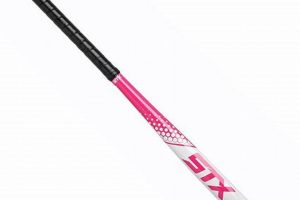
Equipment designed for players who predominantly use their left hand on the lower portion of the stick is a crucial element in ice and roller hockey. This design caters to the player’s dominant side, influencing puck control, shooting accuracy, and overall performance. For example, a player who shoots with the blade to the left of their body requires this specialized equipment.
Using equipment tailored to one’s handedness provides a significant advantage. It allows for more natural and powerful movements when handling the puck, facilitating quicker shots and improved passing. Historically, the availability of this specialized equipment has grown significantly, contributing to the development of more diverse playing styles and strategies within the sport. The correct handedness in hockey equipment is very important for play making.
The subsequent sections will delve into the selection criteria, material science, and performance considerations associated with this crucial piece of sporting equipment. Understanding these factors is paramount for both novice and experienced players seeking to optimize their on-ice capabilities.
Equipment Selection Guidance
The following guidelines are intended to aid in the proper selection and utilization of equipment designed for left-handed hockey players.
Tip 1: Determining Correct Handedness: Prior to purchase, ensure accurate identification of the player’s dominant hand. This is achieved by observing which hand is placed lower on the stick during typical shooting motions. A player whose left hand is consistently lower requires a left-handed stick.
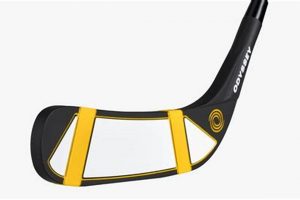
Tip 2: Blade Curve Considerations: Different blade curves influence puck lift and shot trajectory. A deeper curve facilitates higher shots, while a flatter curve promotes accuracy in passing and wrist shots. Select a curve appropriate for the intended playing style.
Tip 3: Lie Angle Selection: The lie angle, which refers to the angle between the blade and the shaft, must complement the player’s skating posture. A lie angle too low or too high results in inefficient energy transfer and reduced puck control. Observation of the blade’s position on the ice during a shooting stance is crucial for determining the optimal lie angle.
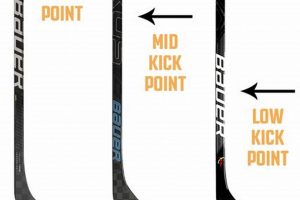
Tip 4: Flex Rating Adjustment: The flex rating denotes the stiffness of the shaft. A lower flex rating is suitable for younger or less powerful players, while a higher flex rating is appropriate for stronger individuals who can effectively bend the stick to generate power. Choose a flex rating that allows for optimal energy transfer without compromising control.
Tip 5: Material Composition Evaluation: The composition of the stick, whether wood, composite, or a hybrid, influences weight, durability, and feel. Composite sticks are generally lighter and more responsive, but wood sticks offer a more traditional feel. Select a material based on individual preferences and budget considerations.
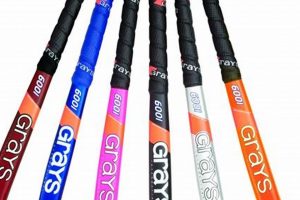
Tip 6: Grip Application and Maintenance: Proper grip application ensures secure handling. Regularly inspect and replace the grip tape to maintain optimal control, especially in wet or humid conditions.
Tip 7: Stick Length Adjustment: Correct stick length is critical. When standing on skates, the top of the stick should generally reach between the player’s chin and nose. Adjust stick length by cutting the shaft as needed, remembering that cutting the stick will also stiffen the flex.
Adherence to these guidelines enables players to make informed decisions when selecting and utilizing equipment optimized for their dominant handedness, promoting enhanced performance and skill development.
The following sections will address advanced techniques and customization options for optimizing playing capabilities further.
1. Handedness

Handedness dictates the side on which a hockey player’s dominant hand is positioned lower on the stick, significantly impacting puck control and shooting mechanics. For those with a preference for placing the left hand lower, a specialized stick configuration is required. Failure to correctly align equipment with the players natural handedness results in compromised technique and diminished performance. Real-world examples of professional players demonstrate this correlation; those using equipment corresponding to their handedness exhibit demonstrably superior puck handling and shooting accuracy.
The practical significance of understanding handedness extends beyond individual performance to injury prevention. Attempting to use equipment designed for the opposite hand induces unnatural movements, increasing the risk of strain and injury. Coaches and equipment managers bear the responsibility of ensuring that players are equipped with implements matching their handedness to optimize both skill development and safety. Furthermore, customization options exist to fine-tune equipment further, catering to individual preferences and biomechanical nuances within the broader framework of handedness.
In summary, handedness is a foundational element in hockey equipment selection. Its influence extends from basic puck control to advanced shooting techniques and player safety. While equipment manufacturers offer a range of options catering to different handedness preferences, accurate assessment and proper fitting are essential for realizing the full benefits. Misalignment can impede progress, while correct implementation unlocks potential. Proper guidance from coaches and informed decision-making by players are crucial components in this process.
2. Blade Curve

The blade curve on a hockey stick significantly influences puck control, shot trajectory, and overall playing style. For left-handed players, the curvature is specifically designed to complement their shooting motion. The blade’s concavity and lie angle work together to determine how easily a player can lift the puck, control passes, and execute various shots. Without the appropriate blade curve on the correctly oriented stick, a left-handed player will struggle to achieve consistent and accurate results. A real-world example can be seen in the preferences of professional players, where slight variations in blade curve are meticulously chosen based on individual shooting techniques and playing positions.
Different blade curve patterns cater to different playing styles. A more pronounced curve, often referred to as a “rocker” or “heel curve,” facilitates quick puck lift for snapshots and high-angle shots, making it suitable for players specializing in goal-scoring. Conversely, a flatter curve promotes accuracy in passing and wrist shots, benefiting playmakers who prioritize puck distribution and control. The choice of blade curve also impacts backhand shots; certain curves allow for more effective puck control and lift on the backhand side, increasing a player’s versatility. Customization of blade curve is often available, allowing players to fine-tune their equipment to match their specific needs.
In summary, the blade curve represents a critical component of a stick, particularly for left-handed players. Its influence on shot trajectory, puck control, and overall play style necessitates careful consideration during equipment selection. Challenges in finding the ideal curve can be mitigated through research, experimentation, and consultation with experienced coaches or equipment specialists. Optimizing this single attribute can substantially enhance a players ability to execute skill and score.
3. Lie Angle

Lie angle, the angle between the stick’s shaft and the blade when the blade is flat on the ice, is a crucial consideration when selecting equipment for left-handed hockey players. A properly selected lie angle ensures optimal blade contact with the ice surface during skating and shooting, directly impacting puck control and shot accuracy. An incorrect lie angle will lead to inefficient energy transfer and compromised performance.
- Effect on Shooting Mechanics
An improper lie angle forces a player to adjust posture unnaturally, tilting the blade upwards or downwards. For left-handed players, a lie angle that is too upright results in the heel of the blade being raised, reducing contact for accurate shots and passes. Conversely, a lie angle that is too flat causes the toe of the blade to lift off the ice, again compromising control and shooting accuracy. The correct lie angle allows for a flat blade position, maximizing puck contact and energy transfer during a shot. Real-world examples from professional hockey demonstrate that players often customize the lie angle on their equipment based on their individual skating style and shooting preference.
- Impact on Skating Posture
The lie angle must complement a player’s skating posture. Left-handed players with a more upright skating stance generally require a more upright lie angle. Those with a lower, more aggressive skating posture require a flatter lie angle. A mismatch between lie angle and skating posture forces the player to compensate, leading to fatigue and reduced efficiency. Coaches frequently observe this phenomenon, identifying suboptimal lie angles as a contributing factor to poor shooting performance in left-handed players. Selection of the correct lie angle promotes a more natural and balanced skating posture.
- Influence on Puck Control
Effective puck control requires consistent blade contact with the ice. For left-handed players, the lie angle determines the degree to which the blade remains in contact with the ice while stickhandling. An incorrect lie angle can result in the blade “skipping” over the ice, making it difficult to maintain control of the puck. Furthermore, an improper lie angle can negatively affect a player’s ability to receive passes cleanly, as the blade may not be properly positioned to absorb the puck. The ability to maintain close and consistent control of the puck while skating is vital for effective offensive play.
- Correlation with Stick Length
Stick length and lie angle are interrelated variables. Altering the length of the stick, whether by cutting or adding an extension, influences the effective lie angle. Shortening a stick will generally result in a more upright effective lie angle, while lengthening it will flatten the lie angle. Left-handed players adjusting stick length must therefore consider the impact on the lie angle and compensate accordingly. Some manufacturers offer equipment with adjustable lie angles to accommodate changes in stick length or skating style.
In summary, the lie angle is a critical parameter in selecting a hockey stick for left-handed players. Its impact on shooting mechanics, skating posture, puck control, and its correlation with stick length underscore the importance of careful consideration. Professional hockey players understand these relationships and fine-tune their equipment to maximize their on-ice effectiveness. A methodical approach to lie angle selection, guided by observation, experimentation, and coaching input, is vital for optimizing performance.
4. Flex Rating
Flex rating, a numerical representation of a hockey stick’s stiffness, is a pivotal factor in optimizing performance for left-handed players. The appropriate flex rating enables efficient energy transfer during shooting, allowing players to maximize power and accuracy based on their individual strength and shooting mechanics.
- Energy Transfer Efficiency
The flex rating directly influences the amount of energy transferred from the player to the puck. A stick with insufficient flex will not bend adequately during a shot, resulting in a loss of potential energy. Conversely, a stick with excessive flex will bend too much, leading to diminished control and reduced shot power. A left-handed player’s strength and shooting style must align with the flex rating to achieve optimal energy transfer. For example, a stronger player using a low-flex stick may find their shots lack accuracy due to excessive bending, while a weaker player using a high-flex stick may not be able to bend the stick sufficiently to generate power.
- Shooting Mechanics and Technique
Different shooting techniques require specific flex characteristics. Wrist shots, snap shots, and slap shots each benefit from different flex profiles. A lower flex rating is often preferred for wrist shots, enabling quick release and accurate placement. A higher flex rating is typically favored for slap shots, allowing players to load the stick and generate maximum power. Left-handed players need to select a flex rating that complements their preferred shooting style and playing position. Players who rely heavily on wrist shots for quick scoring may benefit from a lower flex. Those who utilize slap shots from the point need more stiffness to prevent over-flexing.
- Player Strength and Skill Level
Flex rating is directly correlated with a player’s strength and skill level. Younger, less experienced players require lower flex ratings to facilitate proper stick bending and shot development. As players gain strength and refine their technique, they typically transition to higher flex ratings. Left-handed players must consider their physical maturity and skill level when selecting equipment. A beginner using too stiff a stick will struggle to learn correct shooting mechanics, while an advanced player using too flexible a stick will limit their power and accuracy potential.
- Stick Length and Cut Adjustment
Altering the length of a stick affects its effective flex rating. Cutting a stick shortens its length, which increases its stiffness. Adding an extension lengthens the stick, which decreases its stiffness. Left-handed players adjusting their stick length must account for the corresponding change in flex. For instance, cutting a stick to achieve the correct length may necessitate selecting a slightly lower flex rating to compensate for the increased stiffness. Conversely, adding an extension might require a higher flex rating to maintain the desired performance characteristics.
In conclusion, flex rating is a critical element of hockey stick selection for left-handed players. The relationship between flex rating, player strength, shooting mechanics, and stick length dictates the efficiency of energy transfer and overall performance. Careful consideration of these interconnected factors, coupled with expert guidance and practical testing, is essential for optimizing equipment selection and maximizing a player’s potential on the ice.
5. Material
The selection of materials used in the construction of a hockey stick significantly impacts its performance characteristics, durability, and overall feel, particularly influencing the efficacy of equipment designed for left-handed players. The chosen materials dictate the stick’s weight, flex, and responsiveness, directly affecting puck control, shot power, and player comfort.
- Wood Construction
Historically, wooden sticks were the standard. Primarily constructed from ash or birch, these sticks offer a traditional feel and are generally more affordable. However, they tend to be heavier and less durable compared to modern composite sticks. For left-handed players, wooden sticks provide a consistent flex profile, but their susceptibility to moisture absorption and breakage limits their performance in contemporary play. While budget-friendly, wooden sticks are becoming less common in higher levels of the sport due to their limitations.
- Composite Construction
Composite sticks, made from layers of carbon fiber and fiberglass, offer a superior weight-to-strength ratio compared to wood. These sticks allow for customized flex profiles and enhanced responsiveness, leading to increased shot power and puck control for left-handed players. The layered construction enables manufacturers to fine-tune specific areas of the stick for optimal performance, providing a significant advantage. Composite sticks are prevalent in professional hockey, where performance is paramount.
- Hybrid Construction
Hybrid sticks combine elements of both wood and composite materials, aiming to balance cost and performance. Typically, these sticks feature a wooden core reinforced with composite layers. This design offers improved durability and responsiveness compared to traditional wood sticks while remaining more affordable than full composite models. Hybrid sticks represent a compromise suitable for recreational players or those transitioning from wood to composite equipment. For left-handed players, the hybrid approach can offer a blend of feel and performance enhancement.
- Grip Enhancement Materials
Beyond the primary construction, materials used for grip enhancement play a role in puck control. Textured grip tape, rubberized coatings, or integrated grip patterns on the stick shaft provide a secure hold, improving handling and shot accuracy. For left-handed players, a reliable grip is essential for maximizing puck control and executing precise movements. The choice of grip material is a matter of personal preference, but its importance in maintaining a secure connection with the stick cannot be overstated.
The selection of materials in a hockey stick, whether wood, composite, or a hybrid, directly influences its performance and durability, ultimately impacting the playing experience for left-handed users. Composite materials, while more expensive, provide superior performance and customization options, making them the preferred choice for competitive players. The interplay between material selection and grip enhancement further contributes to the overall control and feel of the stick, underscoring the importance of considering these factors when choosing equipment.
6. Stick Length

Stick length is a critical parameter directly influencing a left-handed hockey player’s ability to control the puck, execute passes, and generate effective shots. An improperly sized stick impairs these fundamental skills. The optimal length is determined by the player’s height, skating stance, and personal preference. A stick too long restricts close puck handling and quick movements, while one too short limits reach and power. The relationship between stick length and performance is evident at all levels of play, from youth leagues to professional arenas. Observing professional left-handed players reveals subtle variations in stick length tailored to their specific roles and playing styles.
The process of determining ideal stick length typically involves the player standing on skates. The top of the stick, when held vertically with the blade on the ice, should generally reach between the player’s chin and nose. However, this is a guideline, not an absolute rule. Players with a deeper skating stance may prefer a slightly shorter stick, while those who prioritize reach may opt for a longer one. Adjustments to stick length are common, often involving cutting the shaft and replacing the butt end. These modifications must be executed with precision, as altering the length also affects the stick’s flex and balance. Furthermore, changes to stick length change the lie angle of the stick.
In summary, stick length is a key component in optimizing a left-handed hockey player’s performance. The correct stick length enhances puck control, shooting accuracy, and overall agility on the ice. Challenges in finding the ideal length can be overcome through careful measurement, experimentation, and guidance from experienced coaches or equipment specialists. Regular evaluation of stick length as a player develops is also crucial, ensuring that the equipment remains aligned with their evolving physical attributes and playing style.
7. Grip
The grip on equipment designed for left-handed hockey players is a critical interface between the player and the stick, influencing puck control, shooting power, and overall maneuverability. A secure and comfortable grip enables the player to transmit force efficiently, maintain precise control, and react quickly to changing game situations. Without an effective grip, even the most advanced stick technology is rendered less impactful.
The grip’s composition, texture, and application technique directly affect performance. Commonly, hockey players utilize tape, either cloth or specialized grip tape, to customize the feel and thickness of the grip. The tape material influences the level of adhesion, moisture absorption, and durability. Some players prefer a thicker grip for enhanced shock absorption and control, while others opt for a thinner grip to maximize feel and responsiveness. Furthermore, the way the tape is appliedoverlap, spacing, and the use of knobs or rampscreates personalized ergonomic adaptations. The practical consequence of an inadequate grip includes slippage, reduced shot velocity, and diminished ability to handle the puck effectively under pressure.
Ultimately, the selection and maintenance of the grip component are integral to maximizing the potential of a left-handed hockey stick. Factors such as hand size, glove fit, and personal preference should guide the choice of grip material and application technique. A well-maintained grip enhances performance, while a neglected grip compromises it. This aspect highlights the importance of considering the grip not merely as an accessory, but as a fundamental element in the overall functionality of the equipment.
Frequently Asked Questions
The following questions address common inquiries regarding equipment optimized for left-handed hockey players, providing clarity on selection, maintenance, and performance considerations.
Question 1: How is handedness determined for equipment selection?
Handedness is determined by observing which hand is positioned lower on the stick during a typical shooting motion. A player whose left hand is consistently lower requires equipment designed for left-handed use.
Question 2: What is the significance of blade curve for left-handed equipment?
Blade curve influences puck lift, shot trajectory, and overall handling. Different curves cater to varying playing styles, such as quick shots or precise passing. Proper curve selection enhances performance.
Question 3: Why is lie angle important in equipment selection?
Lie angle, the angle between the stick shaft and blade, ensures proper blade contact with the ice. An incorrect lie angle compromises shooting accuracy and puck control. The lie angle must complement the skating posture.
Question 4: How does flex rating affect a player’s performance?
Flex rating, a measure of stick stiffness, affects energy transfer during shooting. A flex rating appropriate for the players strength and shooting style optimizes power and control. Inappropriate flex hampers performance.
Question 5: What materials are commonly used in hockey equipment, and how do they differ?
Equipment is commonly constructed from wood, composite materials, or a hybrid of the two. Composite equipment is lighter and more responsive, while wood offers a traditional feel. Material selection impacts weight, durability, and performance.
Question 6: How should the stick length be determined?
While on skates, the top of the stick should typically reach between the players chin and nose. Adjustments based on skating stance and personal preference are common. Correct length optimizes puck control and shooting mechanics.
These answers provide a foundation for understanding the nuances of equipment optimized for left-handed hockey players. Informed selection and proper utilization contribute significantly to on-ice performance.
The subsequent section delves into advanced techniques for equipment customization.
Conclusion
The preceding analysis has illuminated the multifaceted considerations involved in selecting and utilizing equipment optimized for left-handed hockey players. Factors ranging from handedness and blade curve to lie angle, flex rating, material composition, stick length, and grip contribute to a player’s ability to perform effectively on the ice. Each element interacts synergistically to influence puck control, shooting accuracy, and overall maneuverability.
Mastery of the nuances associated with “lefty hockey stick” selection and application is essential for achieving peak performance. Continued research, informed decision-making, and expert guidance are crucial for maximizing player potential and ensuring ongoing advancements within the sport.