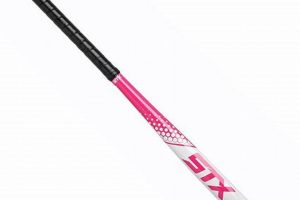
Equipment designed for younger participants in the sport of ice hockey, specifically tailored in size and weight for optimal performance and safety, allows developing players to handle and control the puck effectively. These implements facilitate proper technique development and contribute to a more enjoyable experience on the ice.
The utilization of appropriately sized and weighted gear is paramount for fostering skill acquisition and minimizing the risk of injury during the formative years of an athlete’s development. Historically, advancements in materials and manufacturing techniques have led to the production of increasingly sophisticated and player-specific equipment, catering to the unique needs of this demographic. This specialization enhances performance and contributes to the overall growth of youth hockey programs.
The subsequent sections will explore the crucial factors to consider when selecting these essential components, examining aspects such as length, flex, curve, and material composition to guide informed purchasing decisions and ensure optimal player development.
Selection and Maintenance Strategies
Choosing and maintaining hockey implements designed for junior players necessitates careful consideration to ensure optimal performance and longevity. The following guidelines offer practical advice for navigating this process.
Tip 1: Correct Length Assessment: Proper length is determined by standing the implement upright with the toe on the ground. The top should reach approximately to the player’s nose or chin while wearing skates. This ensures adequate leverage and control.
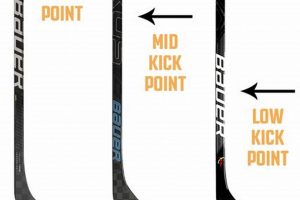
Tip 2: Appropriate Flex Selection: Flex rating, indicating shaft stiffness, should correlate with the player’s weight and strength. A flex rating too high can impede shot power, while a flex rating too low can compromise accuracy.
Tip 3: Blade Curve Considerations: Blade curve impacts shot trajectory and puck handling. Beginners often benefit from a neutral or slight curve, while more experienced players may opt for more aggressive curves to enhance puck lift and control.
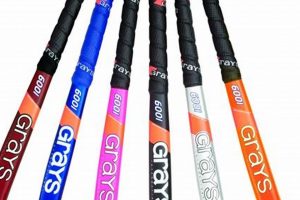
Tip 4: Material Composition Evaluation: Composite materials offer enhanced performance and durability compared to traditional wood models. However, composite implements generally require a higher initial investment.
Tip 5: Regular Inspection for Damage: Frequent inspection for cracks, splinters, or other damage is crucial for preventing breakage and ensuring player safety. Pay close attention to the blade and shaft connection point.
Tip 6: Proper Storage Practices: Store hockey implements in a dry environment, away from extreme temperatures and direct sunlight. This helps prevent warping and degradation of materials.
Tip 7: Grip Tape Maintenance: Regularly replace grip tape to maintain a secure and comfortable hold. Worn grip tape can lead to reduced control and increased risk of injury.
Adhering to these guidelines will contribute to maximizing performance, extending equipment lifespan, and ensuring a safe and enjoyable experience for young hockey players.
The following sections will delve into the various brands and models available, providing further insights to assist in making well-informed decisions.
1. Appropriate Length

The selection of hockey implements for junior players mandates precise length considerations. Implements that are either too long or too short impede skill development and can contribute to incorrect posture and inefficient skating mechanics. For instance, a model excessively long forces the player to hold the implement further out from the body, reducing control and increasing the likelihood of hooking penalties. Conversely, a model that is too short necessitates excessive bending at the waist, which inhibits skating speed and power generation.
Determining proper length involves having the player stand on skates, holding the implement vertically with the toe on the ground. The top should reach the player’s nose or chin. This benchmark allows for a comfortable stance and enables proper puck handling without requiring significant postural adjustments. Adjustment may be necessary based on player preference or playing style.
Therefore, selecting the correct length for these implements represents a foundational step in equipping young players. Improper length not only hinders performance but also sets the stage for potentially detrimental long-term biomechanical issues. Prioritizing correct length ensures a solid base for skill acquisition and promotes a more enjoyable and safe on-ice experience.
2. Flex Rating

Flex rating, a critical specification in hockey implements, directly influences a player’s ability to effectively load and release energy during a shot. This rating, typically expressed as a numerical value, quantifies the amount of force, measured in pounds, required to bend the shaft one inch. For junior players, selecting the appropriate flex rating is paramount to optimize performance and prevent injury.
A flex rating that is too stiff for a junior player’s strength and weight will impede their ability to properly load the implement, thereby reducing shot power and control. The player may struggle to bend the shaft sufficiently, resulting in a weak or inaccurate shot. Conversely, a flex rating that is too soft can cause the shaft to bend excessively, leading to inconsistent shot trajectories and diminished accuracy. For example, a smaller, lighter player using an implement with a senior-level flex rating will likely find it difficult to generate sufficient force to bend the shaft, negating any potential power benefits. Selecting the correct flex promotes proper technique, enabling players to develop efficient shooting mechanics.
In conclusion, careful consideration of the flex rating is essential when choosing hockey implements for junior players. The ideal flex should align with the player’s weight, strength, and shooting style. Failing to account for these factors can hinder skill development and potentially lead to injury. Therefore, proper flex selection represents a key component of ensuring optimal performance and safety for young hockey players.
3. Blade Curve

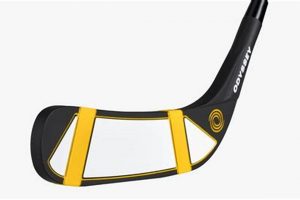
The blade curve on implements designed for junior ice hockey players significantly influences puck control, shot accuracy, and the overall development of fundamental skills. The curve, referring to the degree of bend along the blade’s surface, dictates the trajectory of the puck upon release. A deeper curve imparts greater lift, facilitating shots that elevate quickly. Conversely, a shallower curve offers more precise control on the ice, promoting accurate passing and stickhandling. The appropriate curve selection directly impacts the player’s ability to execute various maneuvers effectively.
The correlation between blade curve and a player’s skill level necessitates careful consideration. Beginners often benefit from a flatter blade or a slight curve, which encourages proper puck handling techniques and accurate passing. This allows the player to maintain control without the added complexity of managing a significant curve. As players progress, they may transition to deeper curves to enhance their shooting capabilities. For example, a forward specializing in wrist shots and quick releases may opt for a more pronounced curve to elevate the puck over goaltenders. Strategic selection based on playing style ensures optimal utilization of the equipment’s capabilities. Furthermore, using an overly aggressive curve before developing fundamental skills can impede progress and create poor habits.
Ultimately, the choice of blade curve for junior ice hockey implements represents a balance between skill development and performance enhancement. Selecting a curve that complements the player’s current abilities and playing style is crucial. As skills evolve, adjustments to the blade curve can unlock new possibilities and contribute to a more versatile and effective on-ice presence. Understanding the fundamental influence of this variable is paramount for coaches, parents, and players alike to foster a positive and productive hockey experience.
4. Material Composition

The materials used in manufacturing hockey implements significantly influence performance, durability, and player safety, especially in junior equipment where proper weight and flex are critical for developing skills.
- Wood Construction
Historically, wood, particularly ash and birch, was the primary material. Wood offers a traditional feel and affordability, making it a common entry-level option. However, wooden implements are heavier, less durable, and provide less consistent flex compared to modern alternatives. For example, frequent use can lead to warping or breakage, impacting shot accuracy and power. This necessitates more frequent replacements, adding to long-term costs.
- Composite Materials
Composite materials, such as carbon fiber and fiberglass, provide a lighter weight and customizable flex profiles. Carbon fiber, known for its strength-to-weight ratio, enhances shot velocity and responsiveness. Fiberglass, often used in combination with carbon fiber, adds durability and impact resistance. An example of this is a one-piece composite offering improved energy transfer during shots compared to traditional multi-piece construction, which loses energy at the joints. The manufacturing process enables precise control over weight distribution and balance, contributing to improved puck handling and overall performance.
- Hybrid Construction
Hybrid construction combines wood and composite materials to balance cost and performance. Typically, these models feature a wooden core reinforced with layers of fiberglass or carbon fiber. This approach provides improved durability and flex consistency compared to all-wood models, while remaining more affordable than full composite options. These are a common intermediate choice, offering a step up from entry-level models without the premium price of top-tier composite implements.
- Impact on Safety
The material composition also affects safety. Composite materials are generally designed to splinter less dangerously than wood upon breakage, reducing the risk of sharp edges causing injury. However, any broken implement poses a potential hazard, emphasizing the importance of regular inspection and proper maintenance. Manufacturers often incorporate vibration-dampening technologies in composite shafts to reduce sting and impact on the player’s hands and wrists, mitigating potential discomfort and long-term injury risks.
The material composition of hockey implements plays a pivotal role in optimizing performance, durability, and safety for junior players. Selection of the appropriate material depends on the player’s skill level, budget, and desired performance characteristics. A careful evaluation of these factors ensures the chosen equipment supports skill development while minimizing the risk of injury.
5. Grip Tape
Grip tape, applied to the handle of hockey implements, provides a crucial interface between the player and the equipment, significantly influencing control and handling. Its primary function is to enhance friction, preventing the player’s hands from slipping during gameplay. This is particularly pertinent for junior players, whose developing strength and coordination necessitate a secure grip to execute fundamental skills effectively. The absence of adequate grip can lead to compromised puck control, reduced shot accuracy, and an increased risk of injury due to uncontrolled movements. For instance, without sufficient grip, a young player may struggle to maintain control during a wrist shot, leading to missed targets or even a dropped implement, disrupting play and potentially causing a collision.
The application of grip tape also serves to customize the feel and thickness of the handle. Players often experiment with different wrapping techniques to achieve a preferred level of comfort and control. Some prefer a thick, cushioned grip to dampen vibrations and reduce hand fatigue, while others opt for a thinner application to maximize feel and responsiveness. Furthermore, grip tape provides a protective layer for the implement’s handle, preventing wear and tear from repeated use and exposure to moisture. Certain grip tape varieties also offer moisture-wicking properties, further enhancing grip stability during periods of intense physical exertion. Therefore, consistent and appropriate use and upkeep of grip tape is pivotal to maximize control, comfort, and longevity.
In summary, grip tape represents an indispensable component of these hockey implements, offering essential grip enhancement, customization options, and protective benefits. Its correct application and maintenance are crucial for fostering skill development, ensuring player comfort, and preventing potential injuries. By understanding its functional role and implementing appropriate usage practices, coaches, parents, and players can collectively optimize the performance and safety aspects of youth hockey.
6. Weight balance
Weight balance, a critical parameter in the design of junior ice hockey implements, directly affects a player’s puck-handling dexterity, shot power, and overall on-ice agility. The distribution of mass along the implement’s length dictates the perceived “feel” and responsiveness during gameplay. Improper weight balance can lead to compromised control, reduced shot velocity, and increased fatigue, particularly in younger players whose strength and coordination are still developing. For instance, an implement with excessive weight concentrated in the blade may feel unwieldy and difficult to control during quick stickhandling maneuvers, hindering the player’s ability to execute precise passes or dekes. Conversely, an implement that is too blade-light may lack the necessary mass to generate powerful shots, diminishing the player’s offensive capabilities.
Manufacturers meticulously engineer weight balance to optimize performance for specific player profiles. Implements designed for puck-handling specialists often feature a blade-light balance, facilitating quick stick movements and enhanced feel. Conversely, implements intended for powerful shooters may exhibit a more balanced or slightly blade-heavy profile, promoting efficient energy transfer during shots. Understanding these design principles allows coaches and parents to make informed decisions when selecting equipment, ensuring that the chosen implements complement the player’s skill set and playing style. An example illustrating this is the difference between a center’s implement, usually requiring a high degree of puck control, versus a defenseman’s, who may require greater shot power from the point.
In summary, weight balance represents a fundamental design element in junior ice hockey equipment, directly influencing puck control, shot power, and player fatigue. Selecting implements with a weight balance appropriate for the player’s skill level and playing style is crucial for maximizing performance and preventing potential injuries. The challenges associated with achieving optimal weight balance involve careful consideration of material selection, blade design, and shaft construction, requiring ongoing innovation and refinement within the hockey equipment industry. This ongoing refinement contributes to improving the overall performance and enjoyment of youth hockey participants.
7. Shaft shape

The shaft shape of junior ice hockey implements is a critical design element influencing grip comfort, stick handling control, and shooting performance. Variations in shaft geometry, ranging from traditional rounded shapes to more modern square or concave designs, directly impact the tactile interface between the player’s hands and the implement. For instance, a square shaft can provide a more secure grip, particularly for players with smaller hands, enabling improved control during rapid stick handling maneuvers. Conversely, a rounded shaft may offer greater comfort for players who prefer a more relaxed grip style. The selection of an appropriate shaft shape contributes significantly to the player’s overall confidence and effectiveness on the ice.
The effect of shaft shape extends beyond grip ergonomics to influence the implement’s flex characteristics. Certain shaft shapes promote specific bending profiles during a shot, impacting shot velocity and accuracy. For example, a tapered shaft design, narrower near the blade, may enhance torsional stiffness, resulting in a quicker release and more precise shot placement. Conversely, a shaft with a consistent diameter along its length may provide a more predictable and consistent flex, preferred by players who prioritize stability and control over raw power. These variations demonstrate how even subtle alterations in shaft shape can yield tangible differences in performance characteristics.
Ultimately, the ideal shaft shape for junior ice hockey implements depends on individual player preferences and playing styles. There is no universally “best” shape; rather, the optimal choice is contingent upon factors such as hand size, grip style, and desired performance attributes. Understanding the nuanced effects of different shaft shapes empowers players, parents, and coaches to make informed equipment selections that enhance skill development and maximize on-ice potential. Therefore, deliberate consideration of this often-overlooked design element represents a valuable component of the equipment selection process for young hockey players.
Frequently Asked Questions
This section addresses common inquiries regarding hockey implements designed for junior players, providing factual and objective information to assist in informed decision-making.
Question 1: What is the recommended length for junior hockey implements?
The appropriate length is determined by having the player stand on skates and holding the implement vertically. The top of the implement should reach approximately to the player’s nose or chin.
Question 2: How does flex rating influence performance for junior players?
Flex rating, the measure of an implements shaft stiffness, must correspond with the player’s weight and strength. A flex rating too high impedes shot power, while a rating too low compromises accuracy.
Question 3: What are the advantages of composite materials over wood in junior hockey implements?
Composite materials generally offer lighter weight, enhanced durability, and customizable flex profiles compared to traditional wood construction. These improvements contribute to better performance and longevity.
Question 4: How often should grip tape be replaced on hockey implements?
Grip tape should be replaced regularly, contingent upon usage frequency and wear. Worn grip tape reduces control and can increase the risk of injury. A fresh application ensures a secure and comfortable hold.
Question 5: What role does the blade curve play in a player’s shot trajectory?
The blade curve dictates the trajectory of the puck upon release. Deeper curves impart greater lift for elevated shots, while shallower curves promote more accurate passing and stickhandling.
Question 6: How does weight balance impact a junior player’s performance?
Weight balance, referring to the distribution of mass along the implements length, affects puck-handling, shot power, and overall agility. Proper weight balance enhances control and reduces fatigue.
Selecting suitable implements for junior hockey participants necessitates careful consideration of length, flex, material, and design features to optimize skill development and minimize injury risks.
The following section explores the prominent brands and models available in the market.
Conclusion
The preceding exploration underscores the critical importance of selecting appropriate junior ice hockey sticks. Aspects such as length, flex, blade curve, material composition, weight balance, and shaft shape collectively determine an implement’s suitability for a developing player. Each parameter warrants careful evaluation to maximize skill acquisition, enhance performance, and mitigate the risk of injury.
Continued advancements in materials and design promise further refinements in junior hockey equipment, potentially leading to enhanced performance and safety. The selection and maintenance of these critical tools warrant ongoing diligence from coaches, parents, and players to ensure a safe and productive environment conducive to the development of fundamental skills and a lifelong appreciation for the sport.