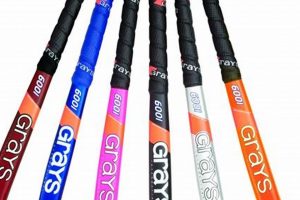
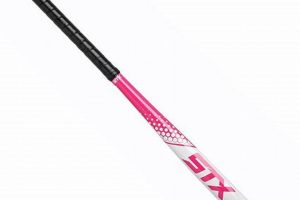
An overgrip or specialized tape applied to the handle of a hockey stick enhances a player’s control and comfort. This addition provides a more secure hold, preventing slippage during gameplay. For instance, a player might apply a textured grip to improve their handling of the stick in wet conditions.
The implementation of these grips or tapes is significant for several reasons. Improved handling translates to greater accuracy in shots and passes. Enhanced comfort reduces hand fatigue, allowing players to maintain focus and performance for extended periods. Historically, players used simple cloth tape, but modern materials offer superior grip, durability, and shock absorption.
The subsequent sections of this document will delve into the various types available, their respective advantages and disadvantages, and best practices for application and maintenance to maximize their effectiveness.
Maximizing Hockey Stick Control and Comfort
The following guidance aims to optimize the application and utilization of hockey stick handle enhancements, leading to improved performance and prolonged equipment lifespan.
Tip 1: Select the Appropriate Material: Grips are offered in various materials, each with distinct properties. Rubberized grips provide superior tackiness, while cloth tapes offer a more traditional feel. Assess playing conditions and personal preference to determine the most suitable option.
Tip 2: Ensure Proper Application: Overlapping each layer consistently ensures uniform thickness and prevents uneven wear. Maintain a firm, even pressure during application to avoid air pockets and potential slippage.
Tip 3: Account for Glove Thickness: Apply with gloves to factor the thickness of the gloves and optimize the size of the grip with the gloves on.
Tip 4: Customize Grip Thickness: Adjust the number of layers to achieve a desired thickness. Increased thickness can improve shock absorption and provide a more substantial feel for larger hands.
Tip 5: Maintain Cleanliness: Regularly clean the grip surface to remove dirt, sweat, and other debris that can compromise tackiness. Use a mild detergent and a damp cloth, ensuring the material is completely dry before use.
Tip 6: Inspect for Wear and Tear: Routinely examine the grip for signs of wear, such as tears, fraying, or loss of tackiness. Replace worn components promptly to maintain optimal performance.
Tip 7: Consider Taping the Blade: Extend the grip material slightly onto the blade to create a seamless transition and enhance puck feel. This technique is particularly useful for players who prefer a close connection with the puck.
Adhering to these guidelines promotes enhanced stick handling, reduced fatigue, and extended usability of the hockey stick.
The subsequent section will address frequently asked questions regarding material selection, application techniques, and maintenance practices.
1. Material Composition

The material composition of a hockey stick handle grip dictates its functional properties, directly influencing a player’s ability to maintain control and comfort during play. Understanding the characteristics of different materials is therefore essential for selecting a grip that meets individual needs and playing conditions.
- Polymer Blends and Tackiness
Many modern grips utilize polymer blends, often incorporating rubber or silicone, to achieve a high degree of tackiness. This tackiness minimizes slippage, particularly when hands are wet or gloved. The specific polymers used and their ratios within the blend determine the grip’s overall friction coefficient, influencing the force required to maintain a secure hold. For example, a grip with a high silicone content may offer superior wet grip compared to one with a predominantly rubber composition.
- Textile Weaves and Absorbency
Cloth tapes, a traditional alternative, rely on woven textiles, such as cotton or linen, for their grip. These materials offer varying degrees of absorbency, wicking away moisture to maintain a dry surface. The weave density and fiber type influence the tape’s absorbency rate and overall texture. A tightly woven cotton tape, for instance, will typically provide a smoother feel and higher absorbency compared to a loosely woven linen tape.
- Additives and Durability
Manufacturers often incorporate additives into grip materials to enhance their durability and resistance to wear. These additives may include UV stabilizers to prevent degradation from sunlight exposure or reinforcing agents to improve tear strength. The presence and concentration of these additives directly impact the grip’s lifespan and its ability to withstand the rigors of gameplay. For example, a grip containing a higher concentration of UV stabilizers will likely maintain its integrity for a longer period when used outdoors.
- Adhesive Properties and Residue
The adhesive used to secure the grip to the stick handle plays a crucial role in its overall performance. The adhesive must provide sufficient bonding strength to prevent slippage or detachment during play while also minimizing residue upon removal. Different adhesives, such as pressure-sensitive acrylics or rubber-based compounds, offer varying levels of adhesion and residue. A poorly formulated adhesive can leave a sticky residue on the stick handle, requiring additional cleaning efforts.
The interplay between these material properties dictates the overall effectiveness of a handle grip. Selecting a grip with a composition tailored to specific playing conditions and individual preferences is a key factor in maximizing performance and comfort on the ice.
2. Thickness Variation

The thickness of a hockey stick handle grip, influenced by both design and application, is a critical parameter affecting a players control, feel, and overall comfort. Variations in thickness cater to individual preferences and biomechanical requirements.
- Shock Absorption and Vibration Dampening
Increased grip thickness generally correlates with enhanced shock absorption. The additional material dampens vibrations transmitted from the stick upon impact with the puck or during stick-on-stick contact. This reduces fatigue in the hands and forearms, allowing players to maintain control and accuracy over longer periods. For instance, a defenseman who frequently blocks shots may benefit from a thicker grip to mitigate the impact forces.
- Hand Size Accommodation
Grip thickness can be adjusted to accommodate varying hand sizes. Players with larger hands may prefer a thicker grip to fill the space between their fingers and palm, providing a more secure and comfortable hold. Conversely, players with smaller hands may opt for a thinner grip to maintain dexterity and avoid feeling overwhelmed by the stick. This customization ensures optimal grip and control for all players, irrespective of hand size.
- Tactile Feedback and Puck Feel
While a thicker grip offers increased shock absorption, it can also reduce tactile feedback and puck feel. Some players prefer a thinner grip to maintain a direct connection with the stick, allowing them to sense the puck more acutely. This is particularly important for skilled players who rely on subtle stickhandling maneuvers. Striking a balance between comfort and feel is essential for optimizing individual performance.
- Application Techniques and Customization
Grip thickness can be easily modified through the application of multiple layers of tape or the use of specialized grip materials designed for variable thickness. Players can experiment with different layering techniques to achieve their preferred level of thickness and cushioning. This customization allows for a highly personalized fit that caters to individual playing styles and preferences.
Therefore, thickness variation in hockey stick handle grips presents a range of advantages and considerations. By carefully selecting or customizing the grip thickness, players can optimize their comfort, control, and overall performance on the ice, enhancing their connection with the stick and the puck.
3. Grip texture

The texture applied to a hockey stick handle grip directly influences the coefficient of friction between the player’s gloves and the stick, impacting control and maneuverability. A rougher texture generally provides a higher coefficient of friction, creating a more secure hold, particularly advantageous in wet or high-intensity situations where slippage is more likely. Conversely, a smoother texture may offer greater comfort but potentially compromises grip security. The selection of grip texture is, therefore, a critical factor in optimizing stick handling performance.
Consider, for example, the use of ribbed grips. The raised ribs create distinct contact points, enhancing friction and preventing the hand from sliding along the handle. This is particularly beneficial for players who generate significant force during shooting or passing. In contrast, a grip featuring a uniform, non-textured surface relies primarily on the inherent tackiness of the material to provide grip. These are favored by players seeking a more natural feel and greater sensitivity to the stick.
The understanding of grip texture’s impact informs equipment choices and modifications. Players often adjust the texture using tape or overgrips to suit their individual preferences and playing conditions. Ultimately, the optimal grip texture is a balance between friction, comfort, and individual playing style, directly contributing to improved stick control and overall performance.
4. Application method
The method of applying a hockey stick grip or tape is integral to its functionality and longevity. Improper application compromises grip effectiveness, potentially leading to slippage, discomfort, and reduced stick control. A carefully executed application ensures optimal adhesion, uniform thickness, and a secure feel.
- Surface Preparation and Cleaning
Prior to application, cleaning the stick handle with an appropriate solvent, such as isopropyl alcohol, is crucial. This removes dirt, grease, and residue from previous tape jobs, ensuring proper adhesion of the new grip. Failure to adequately clean the surface can result in a weak bond, causing the grip to loosen or peel prematurely. The selection of solvent should be compatible with the stick’s shaft material to avoid damage.
- Overlap Consistency and Tension
The degree of overlap when wrapping tape or applying a grip directly affects the overall thickness and uniformity. Consistent overlap, typically around one-quarter to one-half inch, creates a smooth, even surface. Maintaining proper tension during application is also vital. Excessive tension can stretch the material, leading to unevenness and potential tearing, while insufficient tension results in a loose, ineffective grip. Regular tension and overlap are key components.
- Adhesive Activation and Sealing
Certain grip materials require activation of the adhesive through pressure or heat. Applying firm, even pressure during and immediately after application ensures optimal bonding. Sealing the edges of the grip or tape with specialized tape or heat shrinking can prevent fraying and moisture penetration, extending its lifespan. Correct adhesive sealing is also crucial.
- Tailoring and Customization Techniques
The application method allows for tailoring the grip to individual preferences. Adjusting the grip’s length, thickness, and texture by varying the amount of tape used or incorporating specialized grip enhancers allows players to fine-tune their stick feel. For example, creating a thicker butt end or adding a ribbed texture for enhanced grip in the lower hand position is a common customization technique.
The application method represents more than a mere procedural step; it constitutes a personalized process directly influencing the performance characteristics of the handle grip. By adhering to best practices and tailoring the application to specific requirements, players optimize stick control and enhance their overall playing experience.
5. Durability Metrics

The durability metrics associated with hockey stick handle grips are central to evaluating their long-term performance and cost-effectiveness. These metrics quantify a grip’s resistance to wear and degradation under typical playing conditions, providing crucial information for both manufacturers and players.
- Abrasion Resistance
Abrasion resistance measures a grip’s ability to withstand surface wear from friction against gloves, equipment, and the ice. This is often quantified through laboratory testing involving controlled abrasion against standardized materials. A higher abrasion resistance translates to a longer lifespan, reducing the frequency of grip replacement and associated costs. For example, a grip with poor abrasion resistance may exhibit visible wear after only a few games, while a more durable grip can withstand an entire season.
- Tensile Strength and Tear Resistance
Tensile strength quantifies the force required to break or tear the grip material. High tensile strength and tear resistance are essential for withstanding the stresses of repeated use and preventing premature failure. These properties are particularly important in areas of high stress, such as the butt end of the stick or the section gripped by the dominant hand. A grip with low tear resistance may develop tears or splits during gameplay, compromising its functionality.
- UV Degradation Resistance
Exposure to ultraviolet (UV) radiation from sunlight can degrade certain grip materials, causing them to become brittle, discolored, or lose their tackiness. UV degradation resistance measures a grip’s ability to withstand prolonged exposure to UV light without significant deterioration. This is particularly relevant for outdoor hockey players. Grips lacking UV protection may exhibit accelerated wear and require more frequent replacement.
- Adhesive Bond Strength
For grips that rely on adhesive bonding, the strength of the adhesive bond is a critical durability metric. This quantifies the force required to separate the grip material from the stick handle. A strong adhesive bond prevents slippage and ensures the grip remains securely attached throughout its lifespan. Adhesive bond strength is often tested under varying temperature and humidity conditions to simulate real-world playing environments. Poor adhesion reduces the overall performance.
The aforementioned durability metrics provide a framework for assessing the quality and longevity of hockey stick handle grips. By considering these factors, players can make informed decisions when selecting grips, balancing performance characteristics with long-term durability and value. Manufacturers also rely on these metrics to develop improved grip materials and construction techniques.
6. Moisture Management

Effective moisture management in a hockey stick handle grip is paramount for maintaining control and preventing slippage during gameplay. Perspiration from the player’s hand, condensation due to temperature differences, and external moisture from ice or snow can compromise the grip’s tackiness, leading to diminished performance. Understanding the various facets of moisture management is thus crucial for selecting appropriate grip materials and implementing effective maintenance strategies.
- Material Hydrophobicity and Absorption
Grip materials exhibit varying degrees of hydrophobicity (water-repelling properties) and absorption capacity. Hydrophobic materials resist water penetration, maintaining a drier surface for longer periods. Conversely, absorbent materials wick away moisture, preventing pooling and slippage. The ideal balance between these properties depends on the player’s perspiration rate and the typical playing conditions. A player who perspires heavily may benefit from a grip with high absorbency, while a player in a humid environment may prefer a more hydrophobic grip.
- Ventilation and Evaporation
The grip’s design can promote ventilation and evaporation, facilitating the removal of moisture from the grip surface. Textured surfaces, perforations, or channeled designs enhance airflow, accelerating the evaporation process. The effectiveness of these features depends on the ambient temperature and humidity levels. In warmer conditions, ventilation becomes more critical for maintaining a dry grip. For example, a grip incorporating a mesh overlay may provide superior ventilation compared to a solid, non-porous grip.
- Surface Treatments and Coatings
Surface treatments or coatings can enhance a grip’s resistance to moisture penetration. These treatments often involve applying hydrophobic or water-repellent compounds to the grip surface, creating a barrier against moisture. The durability and effectiveness of these treatments vary depending on the specific compounds used and the application method. Regular reapplication may be necessary to maintain optimal performance, particularly in high-moisture environments.
- Glove Compatibility and Breathability
The interaction between the grip and the player’s gloves significantly impacts moisture management. Gloves constructed from breathable materials, such as synthetic fabrics with ventilation panels, allow moisture to escape, preventing excessive perspiration build-up within the glove. The compatibility between the grip material and the glove material is also a factor. Certain grip materials may react adversely with glove materials, leading to reduced grip or premature wear. The breathability of the gloves are just as important as a water repellent grip.
These facets of moisture management highlight the importance of selecting a hockey stick handle grip that effectively addresses the challenges posed by moisture. By considering material properties, design features, and glove compatibility, players can optimize their grip and maintain consistent control throughout the game.
Frequently Asked Questions
This section addresses common inquiries and clarifies misconceptions surrounding hockey stick handle enhancements, with the goal of fostering a deeper understanding of their selection, application, and maintenance.
Question 1: What is the typical lifespan of a hockey stick handle grip, and what factors influence its durability?
The lifespan varies based on material composition, playing frequency, and environmental conditions. Grips constructed from durable polymers, subjected to regular cleaning, and shielded from UV exposure will generally last longer. Conversely, frequent use, abrasive contact, and prolonged exposure to sunlight will accelerate wear.
Question 2: Are there specific grip textures recommended for different playing positions or styles?
Texture preferences are subjective, however, positions requiring enhanced stick handling, such as forwards, may benefit from more tactile grips. Defensemen emphasizing shot blocking may prefer grips with greater shock absorption. Experimentation is recommended to determine the optimal texture for individual play.
Question 3: How does grip thickness affect stick handling and shot power?
Thickness impacts tactile feedback and power transfer. Thicker grips may reduce sensitivity to the puck but can provide enhanced comfort and shock absorption. Thinner grips offer increased feel but may transmit more vibration. A balance between feel and comfort is ideal.
Question 4: What are the key considerations when selecting a grip for use in wet or humid conditions?
Moisture resistance and wicking properties are paramount. Materials with hydrophobic characteristics or those designed to absorb moisture are preferred. Regularly drying the grip surface can also mitigate the effects of moisture.
Question 5: Can using the incorrect solvent damage the composite materials in a hockey stick handle during grip replacement?
Yes, harsh solvents can degrade the resin matrix in composite sticks, compromising their structural integrity. Isopropyl alcohol is generally a safe and effective option for removing adhesive residue. Always consult the stick manufacturer’s recommendations prior to using any solvent.
Question 6: What is the recommended method for storing hockey sticks to prevent grip degradation?
Storing hockey sticks in a cool, dry environment away from direct sunlight and extreme temperature fluctuations is advised. This minimizes the risk of UV damage, moisture absorption, and material degradation. Upright storage can also prevent warping of the shaft.
These answers provide a foundation for informed decision-making regarding hockey stick handle grips, promoting enhanced performance and equipment longevity.
The subsequent section will present comparative analyses of different grip materials, highlighting their respective strengths and weaknesses.
Conclusion
This exploration has illuminated the multifaceted nature of the hockey stick gripper, encompassing material composition, thickness variation, grip texture, application method, durability metrics, and moisture management. Each element contributes significantly to a player’s performance by influencing stick control, comfort, and overall effectiveness on the ice.
Ultimately, the appropriate selection and maintenance of a hockey stick gripper represents a strategic investment in both equipment and personal performance. Consistent attention to these details can translate to improved gameplay and extended equipment life, reinforcing the vital role these often-overlooked components play in the sport.