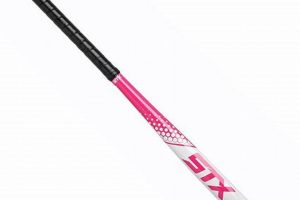
Equipment designed for players who typically hold the stick with their right hand and the upper part of the shaft with their left is specifically configured to optimize puck handling and shooting for this orientation. The curve of the blade is reversed compared to standard equipment, allowing for enhanced control when the puck is on the player’s left side.
Utilizing equipment suited to an individual’s handedness can significantly improve on-ice performance. It allows for a more natural and powerful shooting motion, enhanced puck control during stickhandling, and improved passing accuracy. Historically, the availability of specialized equipment facilitated increased participation and skill development among players with this preference, ensuring they could compete effectively alongside those using standard equipment.
The following sections will delve deeper into the selection criteria, features, and maintenance of equipment tailored for this specific playing style. This will include considerations for shaft flex, blade curve, and overall stick length, as well as tips for ensuring optimal performance and longevity of the equipment.
Optimizing Performance with Equipment Designed for a Left-Handed Grip
Selecting and maintaining equipment suited for a left-handed grip in hockey is crucial for maximizing on-ice performance and ensuring player safety. Adhering to the following tips will aid in making informed decisions and prolonging the lifespan of the equipment.
Tip 1: Correctly Determine Blade Curve. The blade curve is inverted compared to standard equipment. Ensure the curve facilitates comfortable puck handling and shooting from the left side. Experiment with various curves to identify the most suitable option.
Tip 2: Prioritize Proper Shaft Flex. Shaft flex directly impacts shooting power and accuracy. A flex rating too high for the players strength will hinder loading the stick properly, reducing shot velocity. Conversely, a flex rating too low may result in uncontrolled shots and decreased accuracy. Consult sizing charts and seek expert advice to determine optimal flex.
Tip 3: Consider Stick Length Relative to Height. Standard recommendations dictate the stick, when standing on its toe, should reach between the player’s nose and chin. However, individual preferences and playing styles should be considered. Taller players may benefit from slightly longer sticks for increased reach, while shorter players might prefer shorter sticks for improved puck control.
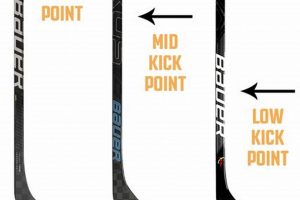
Tip 4: Evaluate the Kick Point. The kick point influences the release of a shot. Low kick points offer quicker releases, ideal for close-range shots. Mid or high kick points are better suited for powerful slapshots from further distances. Selection should align with the player’s typical shooting scenarios.
Tip 5: Inspect Blade Condition Regularly. The blade experiences significant wear and tear. Regular inspections should identify cracks, chips, or softening of the blade material. Addressing these issues promptly through repair or replacement prevents performance degradation and potential injury.
Tip 6: Properly Store the Equipment. Avoid storing the equipment in extremely hot or cold environments, as temperature fluctuations can compromise the structural integrity of the shaft and blade. Store it in a dry, temperature-controlled environment when not in use.
Tip 7: Maintain Grip Integrity. A worn or damaged grip affects stick control. Regularly inspect the grip tape and replace it as needed to ensure a secure and comfortable hold. Consider using specialized grip enhancements to improve tackiness and reduce slippage.
By carefully considering blade curve, shaft flex, stick length, kick point, and by maintaining the equipment properly, players using equipment designed for a left-handed grip can significantly improve their on-ice performance and safety.
The concluding section will summarize the key aspects discussed and offer final thoughts on the importance of properly selecting and maintaining hockey equipment.
1. Blade Curve Orientation
The blade curve orientation is a defining characteristic differentiating equipment designed for players using a left-handed grip from standard equipment. This feature dictates how effectively a player can receive passes, control the puck, and generate shots when favoring the left side of the body.
- Inverted Blade Profile
Equipment designed for a left-handed grip features a blade curved in the opposite direction compared to standard equipment. This inversion positions the concavity of the blade on the left side when held in the playing position. This orientation optimizes the blade’s ability to cradle the puck and facilitate shots and passes originating from the left.
- Enhanced Puck Reception
The blade curve allows for improved puck reception. When a pass is received, the curve acts as a natural pocket, helping to secure the puck on the blade and prevent it from rolling off. This is especially beneficial for players handling the puck primarily on their left side.
- Optimized Shooting Mechanics
The inverted curve enhances shooting mechanics for players using a left-handed grip. It allows for a more natural and powerful loading of the stick during the shooting motion. The curve facilitates directing the puck towards the target with greater accuracy, especially when shooting off the left foot.
- Specialized Puck Handling
The blade curve assists specialized puck handling techniques. It aids in performing moves like toe drags and dekes, allowing players to maintain control of the puck while maneuvering around opponents. This is crucial for offensive players who rely on agility and puck skills.
The inverted blade curve of equipment designed for a left-handed grip is an essential element, enabling players to maximize their potential and utilize their preferred playing style effectively. Without this specialized design, these players would be at a significant disadvantage in puck control, passing accuracy, and shot power.
2. Shaft Flex Adaptation

Shaft flex adaptation is a critical element in optimizing equipment performance. Selecting the appropriate shaft flex significantly influences a player’s ability to effectively load and release energy, impacting shot power, accuracy, and overall puck control.
- Energy Transfer Efficiency
The correct flex rating enables efficient energy transfer from the player’s body to the puck. A shaft with insufficient flex may not load properly, diminishing shot power. Conversely, excessive flex can lead to uncontrolled shots and reduced accuracy. Therefore, aligning shaft flex with a player’s strength and weight is crucial for maximizing energy transfer efficiency.
- Shooting Technique Enhancement
Shaft flex directly affects shooting technique. An appropriate flex allows for proper bending of the shaft during the shooting motion, facilitating the release of stored energy. This enhances a player’s ability to generate a powerful and accurate shot. Conversely, an ill-suited flex can hinder proper technique, leading to diminished shooting performance.
- Puck Control Improvement
While primarily associated with shooting, shaft flex also influences puck control. A shaft with adequate flex provides a more responsive feel for the puck, allowing for precise stickhandling and passing. The flex acts as a dampener, absorbing vibrations and enhancing the player’s ability to control the puck in various situations.
- Injury Prevention
Selecting the appropriate shaft flex can contribute to injury prevention. Using a shaft that is too stiff can place undue stress on the wrists and shoulders, increasing the risk of injury. A shaft that is too flexible may not provide adequate support, leading to awkward movements and potential strain. Proper flex ensures that the forces generated during gameplay are distributed evenly, reducing the risk of musculoskeletal injuries.
Considering these facets of shaft flex adaptation is paramount. The correct selection optimizes performance, enhances technique, and contributes to the overall playing experience. The relationship between player strength, weight, and playing style and shaft flex dictates equipment performance.
3. Grip Hand Dominance

Grip hand dominance, in the context of equipment design, dictates the hand positioning on the shaft and subsequently influences a player’s control, power transfer, and overall handling proficiency. For equipment tailored to a left-handed grip, this consideration is paramount.
- Upper Hand Control
In equipment configurations for a left-handed grip, the left hand assumes the position of the upper, or control, hand. This placement allows for refined stickhandling, nuanced puck control, and precise directional adjustments. The left hand’s proximity to the blade enables immediate response to puck movements, crucial for maintaining possession and executing quick plays.
- Lower Hand Power
The right hand, serving as the lower hand, primarily governs power generation. This hand placement is optimized for leveraging the body’s strength during shooting and passing. The right hand’s positioning facilitates the transfer of energy from the core and legs into the stick, maximizing shot velocity and pass accuracy.
- Optimized Grip Placement
Manufacturers incorporate specific grip designs and materials to enhance the connection between the hands and the stick. These features often include textured surfaces, ergonomic contours, and strategically placed grip tape, all intended to maximize comfort, control, and power transfer. Proper grip placement ensures the upper hand can effectively maneuver the stick while the lower hand provides the necessary force.
- Dominant Hand Reflexes
The dominant hands reflexes are leveraged for enhanced reaction time and puck control. A left-handed players left hand is typically more adept at responding to rapid changes in puck direction and velocity. Equipment designs capitalize on this advantage by optimizing the shafts responsiveness and tactile feedback in the upper hand grip zone.
The interplay between grip hand dominance and equipment configuration directly influences a player’s on-ice capabilities. The strategic placement of the control and power hands, facilitated by specialized grip designs, ensures that individuals utilizing equipment designed for a left-handed grip can maximize their skill set and compete effectively.
4. Stick Length Optimization

Stick length optimization is a crucial aspect of equipment selection, particularly for players using equipment designed for a left-handed grip. The correct stick length directly impacts a player’s posture, reach, and ability to effectively handle the puck, shoot, and pass.
- Skating Posture and Balance
An appropriately sized stick promotes a balanced skating posture. A stick that is too long forces the player to stand upright, hindering agility and speed. Conversely, a stick that is too short compels the player to bend excessively at the waist, leading to fatigue and reduced mobility. The ideal length allows for a comfortable, athletic stance that facilitates efficient skating.
- Reach and Puck Protection
Optimal stick length maximizes a player’s reach, enabling them to intercept passes and maintain puck possession more effectively. A longer stick provides a greater defensive radius, allowing the player to disrupt opponents and protect the puck from pressure. However, excessive length can hinder close-quarters puck handling. The correct balance between reach and control is essential.
- Shooting Power and Accuracy
Stick length influences both the power and accuracy of a player’s shot. A properly sized stick allows for optimal leverage and energy transfer during the shooting motion. It facilitates a full range of motion and allows the player to generate maximum force. An ill-fitting stick can diminish shot power and make it difficult to control the trajectory of the puck.
- Stickhandling Efficiency
Appropriate stick length promotes efficient stickhandling. A stick that is too long can be cumbersome and difficult to maneuver in tight spaces. A stick that is too short may require the player to hunch over, compromising their balance and reducing their ability to control the puck. The ideal length allows for quick, precise movements and facilitates smooth puck handling at various speeds.
Ultimately, the selection of stick length, specifically for a left-handed player, demands careful consideration of individual body mechanics, playing style, and on-ice positioning. The interplay between these factors and the optimization of stick length greatly impacts the effectiveness and overall performance. Players using equipment designed for a left-handed grip should experiment to find the stick length that best complements their individual attributes.
5. Kick Point Preference
Kick point preference is an integral design feature directly influencing the performance of equipment tailored for a left-handed grip. The kick point, the area on the shaft where the equipment bends most during a shot, dictates the speed and trajectory of the puck release. Choosing the appropriate kick point can significantly enhance a player’s shooting accuracy and power, maximizing the benefit of using equipment specialized for a left-handed grip. For example, a player who frequently takes quick snapshots in close proximity to the net may benefit from a low kick point, allowing for a rapid release. In contrast, a player who prefers to take powerful slapshots from the blue line may opt for a high kick point to maximize energy transfer and shot velocity.
Practical applications of understanding kick point preference extend to player development and game strategy. Coaches can guide players using equipment designed for a left-handed grip in selecting equipment with kick points that align with their shooting style and on-ice positioning. This personalized approach can improve a player’s shooting percentage and offensive contribution. Furthermore, strategically selecting equipment based on kick point can provide a competitive advantage. A team that utilizes players with varying kick point preferences can create more diverse offensive threats and keep opposing defenses off balance. Real-world examples include professional players who have fine-tuned their equipment selection over years to match their evolving playing styles, showcasing the impact of kick point preference.
In summary, kick point preference represents a critical component of equipment designed for a left-handed grip, impacting shot characteristics and overall offensive effectiveness. Properly aligning kick point with a player’s shooting style and on-ice role is crucial for maximizing individual performance and contributing to team success. Challenges remain in accurately assessing and quantifying the ideal kick point for each player, but ongoing research and equipment innovations continue to refine the understanding and application of this key feature.
Frequently Asked Questions
This section addresses common inquiries regarding equipment tailored for individuals using a left-handed grip, offering detailed and authoritative answers to enhance comprehension and inform equipment selection.
Question 1: Is the blade curve simply inverted for equipment designed for a left-handed grip, or are there other structural differences?
While the inverted blade curve is the most apparent difference, subtle variations in blade lie and overall geometry may also be present to optimize puck handling and shooting for this orientation. The specific modifications depend on the manufacturer and the intended performance characteristics of the equipment.
Question 2: How does shaft flex selection differ for equipment designed for a left-handed grip compared to standard equipment?
The principles of shaft flex selection remain consistent regardless of grip orientation. Proper flex depends on player weight, strength, and shooting style. Consult sizing charts and professional guidance to determine the appropriate flex rating for individual needs.
Question 3: Can an individual simply use standard equipment and adapt their technique, or is specialized equipment truly necessary?
While adaptation is possible, specialized equipment offers significant advantages in puck control, shooting power, and overall comfort. Using standard equipment may hinder skill development and lead to inefficient technique.
Question 4: How does stick length impact shot accuracy when using equipment designed for a left-handed grip?
Optimal stick length promotes a balanced stance and allows for proper loading of the stick during the shooting motion. An inappropriate length can compromise balance and reduce the player’s ability to accurately direct the puck.
Question 5: Are there specific grip tape application techniques recommended for equipment designed for a left-handed grip?
Grip tape application is largely a matter of personal preference, but ensuring a secure and comfortable grip is paramount. Experiment with different patterns and thicknesses to find the optimal configuration for individual hand size and grip style.
Question 6: How frequently should the blade be inspected for damage, and what types of damage are cause for concern?
The blade should be inspected regularly for cracks, chips, and softening of the material. Any significant damage can compromise performance and potentially lead to injury. Promptly repair or replace damaged blades to ensure optimal safety and performance.
In conclusion, comprehending the nuances of equipment designed for a left-handed grip is essential for maximizing player potential and ensuring a safe and enjoyable experience. Seeking expert advice and experimenting with different equipment configurations are encouraged.
The following section will explore the history of this equipment and it’s evolution.
Conclusion
The preceding discussion has thoroughly explored the nuances associated with selecting and maintaining equipment tailored for a left-handed grip. Emphasis has been placed on the critical elements of blade curve, shaft flex, stick length, kick point, and hand dominance, as each contributes significantly to a player’s performance and safety. The information presented underscores the necessity of informed equipment selection based on individual playing style and physical attributes.
As hockey continues to evolve, a deeper understanding of the specific requirements of all players, including those who utilize equipment designed for a left-handed grip, is paramount. The principles outlined serve as a foundation for ongoing research, development, and innovation in equipment design, with the ultimate goal of enhancing the playing experience and maximizing the potential of every athlete. Continued refinement and adaptation of equipment remain vital to ensuring equitable access and opportunity within the sport.