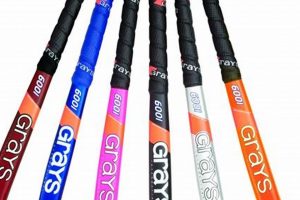
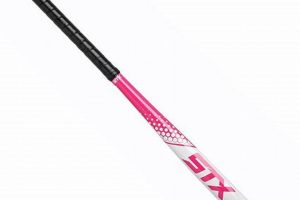
Equipment employed in the sport of field hockey, specifically those implements manufactured by the brand “Ritual,” are designed to facilitate ball control, striking, and overall player performance. These items are crafted from composite materials, often incorporating carbon fiber, fiberglass, and aramid, to optimize strength, weight distribution, and responsiveness. For example, advanced models feature precisely engineered head shapes and shaft curvatures intended to enhance specific playing techniques.
The significance of selecting appropriate hockey equipment lies in its direct impact on a player’s ability to execute skills effectively and safely. High-quality implements contribute to improved striking power, enhanced ball handling, and reduced risk of injury. The brand’s positioning within the market reflects a commitment to innovation and performance enhancement, often seen in endorsements by elite athletes and integration of cutting-edge materials. Historically, advancements in equipment technology have consistently pushed the boundaries of athletic achievement in the sport.
The following discussion will delve into the specific features of this equipment, examining aspects such as material composition, performance characteristics, and considerations for selecting the optimal implement for individual playing styles and skill levels. This will provide a deeper understanding of how these tools contribute to the overall performance of field hockey players.
Optimizing Performance with High-Performance Field Hockey Implements
This section outlines key considerations for maximizing performance through the proper selection and utilization of advanced field hockey equipment. Focusing on features found in high-performance equipment, the following tips provide guidance for players seeking a competitive edge.
Tip 1: Assess the Carbon Content: Higher carbon fiber content generally translates to increased power and stiffness. However, this may also result in reduced feel and control. Players should balance power requirements with their need for precise ball handling. For example, a forward focused on powerful shots may prioritize a model with higher carbon content, while a midfielder emphasizing distribution may opt for a more balanced composition.
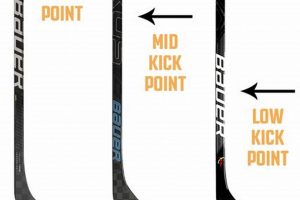
Tip 2: Consider the Bow Profile: The bow, or curvature, of the shaft influences the player’s ability to lift the ball, execute drag flicks, and perform aerial passes. Mid-bow designs offer versatility, while low-bow designs are specifically engineered for drag flicking. Choose a bow profile that complements the player’s preferred playing style and tactical role.
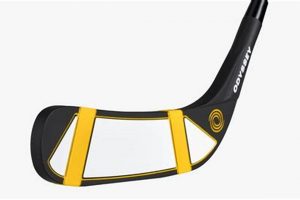
Tip 3: Evaluate Head Shape: Head shape impacts ball control and hitting surface area. Maxi heads offer a larger surface area, promoting easier trapping and hitting, while shorter heads enhance maneuverability. Select a head shape that aligns with the player’s strengths and the demands of their position.
Tip 4: Prioritize Grip Quality: A secure and comfortable grip is crucial for maintaining control and preventing slippage, especially in wet conditions. Opt for grips with moisture-wicking properties and a texture that provides adequate tackiness. Regularly inspect and replace grips as needed to ensure optimal performance.
Tip 5: Maintain Equipment Regularly: Consistent maintenance extends the lifespan and preserves the performance characteristics of field hockey equipment. Clean the stick after each use to remove dirt and debris, and store it in a dry environment to prevent moisture damage. Inspect the head and shaft for signs of wear or damage, and address any issues promptly.
Tip 6: Seek Expert Advice: Consult with experienced coaches or equipment specialists to gain personalized recommendations based on individual playing styles, skill levels, and positional requirements. Their expertise can help players make informed decisions and select equipment that optimally supports their development.
By carefully considering these factors and prioritizing regular maintenance, players can leverage the advanced technology incorporated into modern field hockey equipment to enhance their performance and achieve their athletic goals. The selection of appropriate equipment is a critical component of player development and competitive success.
The next section will address the historical evolution of field hockey equipment and explore emerging trends in materials science and manufacturing processes.
1. Compositional Materials

The performance characteristics of field hockey sticks, particularly those marketed under the “Ritual” brand, are intrinsically linked to their constituent materials. The selection and arrangement of these materials dictate the implement’s power output, feel, and overall durability, impacting player performance across various skill sets.
- Carbon Fiber Content
Carbon fiber, a high-strength, low-weight material, is a primary component in advanced field hockey stick construction. Increased carbon fiber content generally correlates with heightened stiffness and power, enabling more forceful strikes. However, it can also reduce the “feel” of the ball, making precise touch more challenging. Manufacturers strategically vary carbon fiber percentages to achieve a balance between power and control, catering to diverse playing styles. For instance, a stick designed for drag-flicking might prioritize high carbon content for maximum power output, while a midfield-oriented model may incorporate a lower percentage for enhanced ball control.
- Fiberglass Reinforcement
Fiberglass is commonly incorporated to enhance the overall durability and impact resistance of the stick. It provides a degree of flexibility that complements the stiffness of carbon fiber, reducing the likelihood of catastrophic failure upon impact. Additionally, fiberglass contributes to improved shock absorption, mitigating vibrations transmitted to the player’s hands. The specific type and layering of fiberglass can be adjusted to fine-tune the stick’s flex characteristics, influencing its responsiveness and feel.
- Aramid Fibers (Kevlar)
Aramid fibers, such as Kevlar, are often strategically placed in areas prone to high stress, such as the head and handle of the stick. These fibers offer exceptional abrasion resistance and impact strength, further enhancing the implement’s longevity. The inclusion of aramid fibers contributes to a more robust construction, capable of withstanding the rigors of competitive play and prolonged use.
- Resin Matrix
The resin system serves as the binding agent that holds the reinforcing fibers together, forming a cohesive composite structure. The type of resin used significantly impacts the stick’s overall stiffness, damping properties, and resistance to environmental factors like moisture and temperature fluctuations. Advanced resin formulations are designed to optimize the bond between fibers, maximizing the structural integrity and performance of the composite material.
The interplay between these constituent materials determines the unique performance profile of each “Ritual” field hockey stick model. The precise composition is carefully engineered to cater to the demands of specific playing positions and skill sets, underscoring the importance of material selection in optimizing player performance.
2. Bow shape variants

The curvature, or “bow,” along the shaft significantly influences the performance characteristics of field hockey sticks. Different bow shapes facilitate various playing techniques, making the selection of an appropriate bow a critical consideration for players. “Ritual” field hockey sticks offer a range of bow profiles, each designed to optimize specific skills. For instance, a low bow, with the maximum curvature positioned closer to the head, is advantageous for executing drag flicks. The lower center of gravity facilitates lifting the ball quickly and accurately. Conversely, a mid bow, featuring the curvature closer to the center of the shaft, provides a more versatile option suitable for general ball control, passing, and striking. The shape dictates the player’s capacity to lift the ball and influence the shot’s trajectory.
The implementation of varied bow shapes within the “Ritual” product line directly caters to the diverse roles and responsibilities within a field hockey team. Strikers, who frequently engage in penalty corner routines requiring drag flicks, often benefit from the low bow profile. Midfielders, tasked with distributing the ball and maintaining possession, typically opt for the versatility of a mid bow. The selection process demands careful assessment of the player’s strengths and weaknesses, alongside the tactical demands of their position. Consider, for example, a defender who prioritizes aerial passes to bypass opponents; a deeper bow could prove beneficial for generating the necessary lift and distance. Moreover, adaptive bow shapes are emerging, blurring the lines between traditional categories and affording players hybrid functionalities. These designs offer a blend of drag-flicking proficiency and general ball-handling capability.
Understanding the nuances of bow shape variants and their interplay with playing styles is crucial for maximizing individual performance. Challenges arise in selecting the most suitable bow profile, given the subjective nature of player preference and the evolving tactical landscape of the sport. Manufacturers continuously refine their designs through research and development, aiming to optimize bow shapes for enhanced performance and adaptability. The ongoing exploration of bow technology promises to further enhance the precision and dynamism of field hockey gameplay.
3. Weight distribution optimization.

Weight distribution optimization is a critical design parameter in the manufacture of high-performance field hockey sticks, particularly those branded as “Ritual.” The location of mass along the longitudinal axis of the stick directly affects its balance, swing speed, and feel, thereby influencing a player’s ability to control the ball, execute passes, and generate power in shots. Alterations to weight distribution are achieved through manipulation of material density and geometry within the stick’s construction. A stick with a higher concentration of weight towards the head, for example, will typically exhibit increased power potential due to a greater moment of inertia. Conversely, a more balanced weight distribution, or one favoring the handle, can enhance maneuverability and control, facilitating quicker stick movements and more precise ball handling. Consequently, “Ritual” offers variations in weight distribution to cater to diverse playing styles and positional requirements. A forward seeking maximum shot power might prefer a head-weighted stick, while a midfielder prioritizing close control would benefit from a more balanced or handle-weighted model.
The optimization process considers the trade-offs inherent in weight distribution. While a head-weighted stick may offer increased power, it can also feel heavier and less responsive, potentially hindering quick movements and close-quarters ball control. Manufacturers employ sophisticated engineering techniques, including finite element analysis, to simulate the effects of different weight distributions on stick performance. Data from these simulations, combined with feedback from professional players, informs the design and refinement of “Ritual” sticks. This data-driven approach ensures that each model offers a specific balance of power, control, and feel, optimized for its intended use. An example is the implementation of hollow core technologies in certain “Ritual” models. These designs reduce overall weight while allowing for strategic redistribution of mass to achieve desired performance characteristics. The practical significance of this understanding lies in the ability of players and coaches to make informed equipment choices. By considering the impact of weight distribution on their playing style and positional demands, athletes can select a stick that maximizes their potential on the field.
In summary, weight distribution optimization is a fundamental aspect of field hockey stick design that profoundly impacts player performance. Manufacturers such as “Ritual” leverage advanced engineering techniques and player feedback to fine-tune weight distribution in their products, catering to the diverse needs of field hockey players. Understanding the principles of weight distribution and its effects on stick handling, power generation, and overall feel is essential for making informed equipment choices. A key challenge remains in quantifying the subjective aspects of “feel” and translating them into objective design parameters. Continuous research and development in materials science and manufacturing processes promise to further refine weight distribution optimization, leading to even more specialized and performance-enhancing field hockey sticks in the future.
4. Grip Technology
Grip technology constitutes a critical element in the design and performance of field hockey sticks, influencing player control, comfort, and overall effectiveness. In the context of “Ritual” field hockey sticks, grip technology represents a focused area of innovation aimed at enhancing the player’s connection with the implement, ultimately optimizing on-field performance.
- Material Composition and Texture
The materials employed in constructing the grip, often a blend of synthetic polymers and elastomers, dictate its tackiness, shock absorption, and durability. Textured surfaces, such as raised patterns or micro-grooves, enhance friction between the player’s hand and the stick, ensuring a secure hold even under wet or demanding conditions. “Ritual” grips commonly incorporate moisture-wicking properties to prevent slippage due to perspiration, crucial for maintaining control during intense gameplay.
- Grip Thickness and Profile
Grip thickness impacts the overall feel and handling characteristics of the stick. Thicker grips can provide enhanced cushioning and shock absorption, reducing hand fatigue during prolonged use. Conversely, thinner grips offer a more direct connection with the stick, facilitating precise ball control and feel. The grip profile, whether round, oval, or contoured, influences the ergonomics of the handle, accommodating diverse hand sizes and grip preferences. “Ritual” often provides a range of grip thickness options to suit individual player requirements.
- Layering and Cushioning
Advanced grip designs may incorporate multiple layers of materials to optimize performance characteristics. An inner layer of foam or gel cushioning can enhance shock absorption, reducing vibrations transmitted to the hand upon impact. An outer layer of durable, high-friction material ensures a secure and long-lasting grip. The strategic layering of these materials allows “Ritual” to fine-tune the grip’s feel and performance, providing a balance of comfort, control, and durability.
- Adhesive Technology
The adhesive used to secure the grip to the stick handle plays a vital role in preventing slippage and ensuring long-term durability. High-quality adhesives maintain a strong bond between the grip and the handle, even under extreme temperature fluctuations and moisture exposure. Poorly adhered grips can become loose and uncomfortable, compromising player control and potentially leading to injury. “Ritual” implements industry-standard adhesives to secure long lasting experience.
The multifaceted nature of grip technology underscores its importance in maximizing the performance potential of “Ritual” field hockey sticks. The careful selection of materials, textures, and construction techniques results in grips that enhance player control, comfort, and overall confidence on the field. Continuous innovation in grip technology reflects a commitment to providing players with the tools necessary to excel in the sport.
5. Durability assessment.

Durability assessment constitutes a fundamental aspect of product engineering for “ritual field hockey sticks.” Rigorous evaluation procedures are essential to ensure that these implements withstand the stresses of competitive play and maintain performance characteristics over an extended lifespan. The implementation of thorough testing protocols informs design decisions and material selection, ultimately influencing the value proposition of the product.
- Impact Resistance Testing
Impact resistance testing involves subjecting the field hockey stick to controlled impacts using specialized equipment. This simulates the forces encountered during gameplay, such as striking the ball or colliding with another stick. The testing assesses the stick’s ability to withstand these impacts without fracturing or suffering significant structural damage. Data collected from these tests is used to identify weak points in the design and to optimize material composition for enhanced impact resistance. For example, increased carbon fiber content in high-stress areas may be implemented to improve impact performance. These tests are conducted under controlled laboratory conditions, adhering to industry standards to ensure consistency and repeatability.
- Fatigue Testing
Fatigue testing evaluates the stick’s ability to withstand repeated stress cycles over an extended period. This simulates the cumulative effect of numerous impacts and stresses encountered during training and competition. The stick is subjected to cyclical bending or twisting forces, and its performance is monitored for signs of fatigue failure, such as crack initiation or delamination. The results of fatigue testing provide valuable insights into the long-term durability of the stick and inform decisions regarding material selection and manufacturing processes. Specifically, the layering and orientation of composite materials are optimized to minimize fatigue-related degradation. This is crucial for maintaining consistent performance throughout the stick’s lifespan.
- Environmental Resistance Testing
Environmental resistance testing assesses the stick’s ability to withstand exposure to various environmental conditions, such as temperature extremes, humidity, and ultraviolet (UV) radiation. These conditions can degrade the materials used in the stick’s construction, leading to reduced performance and shortened lifespan. The testing involves subjecting the stick to controlled environmental conditions and monitoring its performance for signs of degradation, such as changes in stiffness or impact resistance. Data from these tests informs decisions regarding the selection of UV-resistant coatings and moisture-resistant materials. This ensures that the stick maintains its performance characteristics even under adverse environmental conditions. An example of this is using specific resin systems with increased resistance to moisture absorption to prevent structural weakening.
- Material Analysis
Material analysis involves examining the properties of the materials used in the stick’s construction, such as tensile strength, flexural modulus, and impact resistance. This analysis provides a detailed understanding of the material’s behavior under stress and informs decisions regarding material selection and processing techniques. Techniques such as microscopy and spectroscopy are employed to characterize the microstructure and chemical composition of the materials. This ensures that the materials meet the required specifications and contribute to the overall durability of the stick. Material analysis is conducted throughout the manufacturing process to ensure consistent quality and performance.
The integrated approach to durability assessment, encompassing impact resistance, fatigue, environmental resistance, and material analysis, is crucial for ensuring the long-term performance and reliability of “ritual field hockey sticks.” The data generated from these assessments is utilized to drive continuous improvement in design and manufacturing processes, ultimately providing players with equipment that meets the demanding requirements of the sport.
Frequently Asked Questions
This section addresses common inquiries regarding the selection, maintenance, and performance of field hockey sticks manufactured by “Ritual.” The information provided aims to clarify key aspects relevant to player performance and equipment longevity.
Question 1: What distinguishes “Ritual” field hockey sticks from other brands?
The distinguishing factors reside in the proprietary composite material blends, meticulously engineered bow shapes, and optimized weight distribution. “Ritual” integrates advanced materials, such as high-modulus carbon fiber and aramid fibers, to maximize power transfer and impact resistance. The bow profiles are designed to facilitate specific playing techniques, and the weight distribution is optimized for enhanced balance and maneuverability.
Question 2: How does carbon fiber content impact the performance of a “Ritual” field hockey stick?
A higher percentage of carbon fiber typically correlates with increased stiffness and power, enabling more forceful strikes. However, it may also reduce the “feel” of the ball, affecting precise touch. A balanced composition, incorporating fiberglass, is designed to provide increased flexibility and ball control. Consider the style of play when evaluating the carbon content of field hockey implements.
Question 3: What considerations should inform the selection of a specific bow shape on a “Ritual” field hockey stick?
The bow shape should align with the player’s preferred techniques and positional requirements. A low bow is advantageous for drag-flicking, while a mid bow offers greater versatility for general ball control and striking. The choice hinges on the frequency with which the player will use specific skills such as overhead passes and shooting accuracy.
Question 4: How can the lifespan of a “Ritual” field hockey stick be maximized?
Regular maintenance is essential. Clean the stick after each use to remove dirt and debris. Store it in a dry environment to prevent moisture damage. Inspect the head and shaft for signs of wear or damage, addressing any issues promptly. Replacing the grip as needed will also maintain control.
Question 5: What role does grip technology play in the overall performance of a “Ritual” field hockey stick?
Grip technology enhances player control and comfort by providing a secure and ergonomic interface between the hand and the stick. Moisture-wicking materials and textured surfaces prevent slippage, while appropriate grip thickness and profile accommodate diverse hand sizes and preferences. Proper grip thickness can influence wrist fatigue and long term arm strain.
Question 6: Are “Ritual” field hockey sticks suitable for all skill levels?
While “Ritual” offers a range of models catering to diverse skill levels, it’s essential to select a stick that aligns with the player’s current abilities and playing style. Novice players may benefit from more forgiving models with balanced weight distribution, while advanced players may prefer high-performance sticks with optimized power transfer. It is always a good idea to consult with a coach.
The selection of appropriate equipment necessitates careful consideration of individual playing styles, skill levels, and positional requirements. Prioritizing regular maintenance and adhering to recommended usage guidelines will contribute to maximizing the performance and longevity of the implement.
The following section will explore case studies illustrating the impact of “Ritual” field hockey sticks on player performance in competitive settings.
Concluding Remarks on Ritual Field Hockey Sticks
This exploration has illuminated the multifaceted aspects of implements manufactured under the “Ritual” brand. The analysis encompassed compositional materials, bow shape variants, weight distribution optimization, grip technology, and durability assessment. Each element contributes significantly to the overall performance and longevity of the equipment, influencing a player’s capacity to execute skills effectively.
The selection of appropriate field hockey implements represents a crucial decision point for athletes seeking to maximize their potential. Continued advancements in materials science and manufacturing processes hold the promise of further refinement, driving innovation and enhancing the tools available to players at all skill levels. Ongoing research will define the future of competitive field hockey.