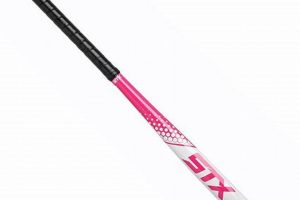
The physical dimension of the implement used to propel the ball in field hockey is a critical factor influencing a player’s control, posture, and striking power. Selecting the correct size is essential for optimal performance and injury prevention. For example, an improperly sized stick can lead to poor technique and increased strain on the back and shoulders.
Appropriate sizing directly impacts a player’s ability to maintain a proper stance, execute skills effectively, and generate power efficiently. Historically, players often relied on general guidelines, but modern approaches emphasize personalized fitting based on height and playing style. This personalized fit contributes to enhanced ball control, improved passing accuracy, and a more powerful shot.
The following sections will delve into specific methods for determining the correct dimension, the impact of this dimension on various aspects of the game, and considerations for different player positions and skill levels. Understanding these factors is paramount for athletes and coaches seeking to maximize performance and minimize the risk of injury.
Guidance on Selecting a Field Hockey Implement
The following provides actionable advice on choosing the appropriate equipment to optimize performance and safety in field hockey.
Tip 1: Measure Player Height Accurately: Utilize a tape measure to determine the player’s precise height. Stand straight with feet flat on the floor, and measure from the floor to the top of the head. This measurement serves as the foundation for subsequent sizing decisions.
Tip 2: Employ the Upright Test: Have the player stand upright with the stick held vertically. The top of the equipment should reach approximately the player’s hip bone. This provides a preliminary gauge for general appropriateness.
Tip 3: Consider Playing Position: Different positions often benefit from specific dimensions. Defenders may prefer slightly longer equipment for extended reach, while forwards might favor shorter equipment for enhanced close control.
Tip 4: Factor in Skill Level: Beginners may find it easier to control a shorter implement, while more experienced players can manage longer options for increased power and reach. Adjustments may be necessary as proficiency increases.
Tip 5: Prioritize Ball Control: Ensure that the selected equipment allows for comfortable and effective ball control. The player should be able to dribble, pass, and receive the ball with confidence and precision.
Tip 6: Evaluate Posture and Comfort: Observe the player’s posture while using the equipment. The player should maintain a comfortable, athletic stance without excessive bending or strain. A stick that forces unnatural posture should be avoided.
Tip 7: Consult with Experienced Professionals: Seek guidance from coaches, experienced players, or sporting goods retailers. Their expertise can provide valuable insights and personalized recommendations based on individual needs and playing style.
Selecting the appropriate equipment is crucial for maximizing athletic potential and minimizing the risk of injury. Careful consideration of the above factors will contribute to a more positive and productive playing experience.
The subsequent section will address the impact of material composition on equipment performance and durability.
1. Player Height
Player height serves as the primary determinant for selecting equipment. The correlation is based on biomechanical principles that aim to optimize posture, balance, and striking mechanics. Deviation from the recommended length range can lead to compromised performance and increased risk of injury.
- Optimal Stance and Posture
An adequately sized implement allows players to maintain a comfortable, athletic stance with a slight bend at the knees and a straight back. This posture facilitates efficient energy transfer during strikes and improves overall agility. A stick that is too long may force the player to overreach, while one that is too short can cause excessive bending, both leading to reduced power and potential strain.
- Reach and Ball Control
The length influences a player’s reach, impacting their ability to intercept passes and maintain possession. Taller players generally require longer equipment to effectively cover more ground. However, excessive length can hinder close control and quick maneuvering in confined spaces. Therefore, a balanced approach considering both reach and control is necessary.
- Striking Mechanics and Power Generation
Proper length facilitates optimal leverage and force generation during striking. The equipment should allow the player to comfortably swing the stick with a full range of motion without compromising balance. An incorrectly sized implement can result in inefficient energy transfer and reduced striking power, negatively affecting shot accuracy and distance.
- Injury Prevention
Using equipment that aligns with player height is crucial for minimizing the risk of musculoskeletal injuries. An improperly sized implement can place undue stress on the back, shoulders, and wrists, leading to strains, sprains, or chronic conditions. Selecting the appropriate length promotes proper biomechanics and reduces the likelihood of injury during gameplay.
In summary, player height establishes a fundamental guideline for selecting appropriate equipment. Fine-tuning this selection requires consideration of playing position, skill level, and individual preferences to ensure optimal performance and injury prevention.
2. Playing Position
The designated role a player assumes on the field significantly influences the optimal equipment specifications. Position-specific requirements necessitate varying degrees of reach, control, and striking power, impacting the selection of the equipment dimensions.
- Defenders: Extended Reach and Interception
Defensive players prioritize extended reach to intercept passes, clear the ball from the defensive zone, and disrupt opponent attacks. A slightly longer implement can provide a greater reach, facilitating these defensive actions. This extended reach can be particularly advantageous when contesting aerial balls or making last-ditch tackles. However, it is imperative to balance the increased reach with adequate control to maintain defensive stability.
- Midfielders: Versatility and All-Around Performance
Midfielders require a balance of both reach and close control to effectively contribute to both offensive and defensive plays. They engage in a variety of tasks, including passing, receiving, tackling, and shooting. As such, their equipment often falls within a middle range, balancing reach for passing and interception with the control needed for intricate dribbling and quick transitions. The midfield position emphasizes adaptability, requiring equipment that supports a versatile skill set.
- Forwards: Close Control and Quick Maneuvering
Offensive players typically benefit from a shorter implement that enhances close control and facilitates quick maneuvering in the attacking zone. Smaller equipment enables rapid changes in direction and allows for more precise dribbling in tight spaces around the goal. While forwards still need to be able to pass and strike effectively, the emphasis is often on maximizing their ability to create scoring opportunities through intricate ball handling.
- Goalkeepers: N/A (Specialized Equipment)
The goalkeeper’s equipment is distinctly different and not directly related to the dimensions discussed for field players. Goalkeepers use specialized padding and a different style of implement that is designed for blocking shots rather than striking or controlling the ball in the same manner as field players. Therefore, the concept of equipment length does not apply in the same way to this specialized role.
The interplay between playing position and dimension underscores the importance of a nuanced approach to equipment selection. While general guidelines based on height provide a starting point, tailoring the equipment to the specific demands of each position can optimize player performance and contribution to the team’s overall strategy.
3. Skill Level

Proficiency directly influences the appropriateness of equipment size. As players develop their skills, their ability to manage and leverage varying equipment dimensions evolves, impacting both control and power.
- Beginner Phase: Emphasis on Control and Manageability
Novice players typically benefit from shorter equipment. The reduced length enhances ball control and simplifies fundamental techniques. Lighter weight and increased maneuverability are prioritized to foster confidence and facilitate skill development. An emphasis on proper technique over power is crucial in the initial stages.
- Intermediate Stage: Transition to Enhanced Power and Reach
As proficiency increases, players may gradually transition to slightly longer equipment. This allows for increased striking power and improved reach without sacrificing excessive control. Mid-length equipment facilitates more advanced techniques and tactical maneuvers. The transition should be gradual, ensuring continued comfort and effective ball handling.
- Advanced Level: Optimization for Specialized Roles and Power Generation
Experienced players often exhibit a more refined understanding of equipment specifications that best suit their playing style and position. They may opt for longer equipment to maximize striking power, particularly when positioned as a striker or midfielder. Defenders might choose a specific length to optimize reach for interceptions and clearances. Advanced players are better equipped to handle the nuances of longer equipment without compromising control.
- Adaptive Equipment Selection: Continuous Adjustment and Refinement
The relationship between skill level and equipment size is not static. Players may need to adjust their equipment preferences as they develop new skills, change positions, or adapt to evolving tactical strategies. Regular assessment of performance and comfort is essential to ensure equipment remains aligned with the player’s capabilities and requirements. Adaptive equipment selection fosters continuous improvement and maximizes athletic potential.
The selection of equipment based on skill level demands a holistic approach. Beginners prioritize control with shorter implements, while advanced players leverage longer options for power and specialized roles. The transition between these phases should be gradual, adaptive, and informed by continuous assessment and refinement.
4. Control and Balance
The physical dimension of the implement utilized in field hockey significantly affects a player’s control and balance. These two elements are interdependent and critical for executing fundamental skills, making tactical decisions, and maintaining stability under pressure. Incorrect sizing can lead to compromised ball manipulation, reduced agility, and increased susceptibility to losing equilibrium. For instance, an excessively long stick may impede quick changes of direction, while a stick that is too short might necessitate an awkward posture, thus destabilizing the player.
Effective control and balance facilitate precise ball handling, enabling players to maintain possession, execute accurate passes, and deliver powerful shots. Consider a forward dribbling through defenders; the ability to keep the ball close to the body while maintaining balance allows for rapid changes in direction and evasion of tackles. Similarly, a defender requires solid balance to execute effective tackles and clear the ball under pressure. The appropriate implement, paired with developed core strength and technique, empowers players to perform these actions consistently and effectively. A practical example is a player executing a 3D skill; this requires exceptional balance and control, directly influenced by the equipment dimensions.
Ultimately, the optimal equipment size fosters a synergistic relationship between control and balance. This relationship enhances a player’s overall performance, contributing to improved decision-making, tactical awareness, and physical resilience. The selection process should therefore prioritize the establishment of this synergistic relationship, considering individual biomechanics and playing style, while adhering to general guidelines based on height and position. Challenges remain in achieving a truly personalized fit due to variations in body type and skill level, but a thorough assessment and consultation with experienced professionals can mitigate these challenges, ensuring equipment supports optimal performance.
5. Injury Prevention
The correlation between equipment dimensions and injury mitigation in field hockey is significant. Equipment that does not align with the player’s anthropometry and skill level can contribute to both acute and chronic injuries. The selection of appropriate equipment is a crucial element in safeguarding player well-being. For example, using an implement that is too long can lead to altered body mechanics, increasing the risk of lower back strain and shoulder impingement due to excessive forward bending and overextension during play. Conversely, equipment that is too short may force a player into an overly flexed posture, predisposing them to hip and knee injuries. The consequences of improper equipment extend beyond immediate trauma to potentially longer-term musculoskeletal issues.
Proper equipment fosters optimal biomechanics, reducing stress on joints and muscles. A suitable implement enables the maintenance of a balanced and athletic stance, allowing for efficient transfer of energy during strikes and passes. This, in turn, minimizes compensatory movements that can lead to overuse injuries. Furthermore, the equipment should allow for a full range of motion without restriction or discomfort. Real-world scenarios demonstrate the implications of improper selection: youth players using hand-me-down equipment that is too large frequently exhibit compromised technique and report discomfort, highlighting the need for age- and size-appropriate equipment. Injury prevention, therefore, is not merely a consideration but an intrinsic component of optimal equipment selection.
The understanding of this correlation is paramount for coaches, athletes, and equipment providers. A proactive approach involving accurate measurements, consideration of playing position, and regular assessment of equipment fit can significantly reduce the incidence of injuries. While equipment selection alone cannot eliminate all risks, its contribution to player safety is undeniable. Embracing evidence-based guidelines and promoting awareness regarding the importance of proper equipment dimensions are essential steps in cultivating a safer and more sustainable field hockey environment.
Frequently Asked Questions
The following addresses common inquiries regarding the selection and application of appropriately sized equipment in field hockey, promoting informed decision-making and optimized player performance.
Question 1: What is the definitive method for determining appropriate equipment sizing?
While player height serves as the primary determinant, the “upright test,” where the top of the equipment reaches the hip bone, offers a practical initial assessment. Playing position, skill level, and individual preferences should also be considered to fine-tune the selection process.
Question 2: How does playing position impact equipment specifications?
Defenders may benefit from slightly longer equipment for extended reach, while forwards might favor shorter implements for enhanced close control. Midfielders generally require a balance, selecting equipment of moderate dimensions that facilitates both reach and control.
Question 3: What role does skill level play in equipment selection?
Beginners often benefit from shorter, more manageable equipment, while experienced players may opt for longer options to maximize power and reach. The transition between sizes should be gradual and aligned with the player’s development.
Question 4: Is there a specific age at which players should transition to a longer equipment?
Age is not the primary factor. The transition should be based on the player’s height, skill level, and playing position, not solely on chronological age. Monitor the player’s posture, control, and striking mechanics to determine the optimal timing.
Question 5: Can improperly sized equipment contribute to injuries?
Yes, equipment that is too long or too short can lead to altered body mechanics, increasing the risk of back strain, shoulder impingement, and other musculoskeletal issues. Proper sizing minimizes stress on joints and muscles.
Question 6: Where can reliable equipment sizing recommendations be found?
Consult with experienced coaches, sporting goods retailers specializing in field hockey equipment, or qualified athletic trainers. These professionals can provide personalized recommendations based on individual needs and playing style.
Appropriate equipment sizing constitutes a fundamental aspect of player development and safety. Adherence to recommended guidelines, coupled with individualized assessment, optimizes performance and minimizes the potential for injury.
The subsequent section will address the materials used in constructing this equipment and their impact on performance.
Conclusion
The preceding exploration has underscored the multifaceted importance of dimension selection in field hockey. Height, playing position, and skill level all contribute to determining the optimal size. Properly fitted equipment maximizes control, balance, and power, while simultaneously minimizing the risk of injury. Deviation from recommended guidelines compromises performance and jeopardizes player well-being.
Therefore, a thorough understanding of the principles governing equipment size is essential for coaches, players, and equipment providers. Prioritizing accurate measurements and considering individual needs ensures that athletes are equipped to perform at their best while mitigating the potential for harm. Continued research and innovation in equipment design and fitting techniques will further refine the selection process, contributing to the advancement and safety of the sport.