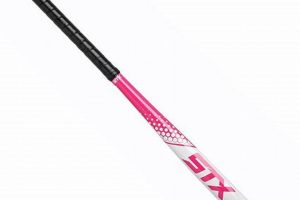
This tool assists individuals in selecting an appropriate piece of sports equipment based on various criteria. These criteria often include playing style, skill level, position, physical attributes such as height and weight, and personal preferences. For example, a novice player might utilize this resource to determine the optimal length and flex of a composite stick for improved puck control and shooting accuracy.
The significance of such a selection method lies in its potential to enhance player performance, minimize the risk of injury, and foster greater enjoyment of the sport. Historically, this process relied heavily on expert advice from coaches or experienced players. However, advancements in technology and data analysis have led to the development of more sophisticated systems that provide personalized recommendations based on objective measurements and algorithms.
The subsequent sections will delve into the specific factors considered during equipment selection, examining the technologies and methodologies employed in these systems, and discussing the long-term impact of precise equipment fitting on player development and competitive success.
Guidance for Optimal Equipment Selection
The following guidelines offer assistance in identifying suitable equipment, enhancing performance and mitigating potential injury risks.
Tip 1: Assess Skill Level: A beginner requires equipment tailored for learning fundamental skills, prioritizing ease of use and control. More experienced players may benefit from equipment designed for advanced techniques and power.
Tip 2: Determine Playing Position: Different positions demand distinct equipment characteristics. Defensemen often favor longer sticks for extended reach and defensive coverage, while forwards might prefer shorter sticks for enhanced puck handling in tight spaces.
Tip 3: Consider Physical Attributes: Height and weight significantly influence stick length and flex selection. Taller individuals typically require longer sticks, while heavier players may necessitate stiffer flexes to maximize energy transfer during shots.
Tip 4: Evaluate Flex Profile: Flex refers to the amount a stick bends under pressure. A lower flex allows for easier loading and release, suitable for players with less strength, whereas a higher flex provides increased power for stronger players.
Tip 5: Analyze Curve Pattern: The blade’s curve affects shot trajectory and puck control. A closed face curve facilitates quick releases and accurate shots, while an open face curve aids in lifting the puck and elevating shots.
Tip 6: Prioritize Comfort: The grip and overall feel of the equipment are crucial for player comfort and confidence. Experiment with different grip textures and shaft shapes to find the most ergonomic fit.
Tip 7: Seek Expert Consultation: Consulting with experienced coaches or equipment specialists can provide valuable insights and personalized recommendations based on individual needs and playing style.
Adhering to these recommendations will contribute to a more efficient and enjoyable experience, optimizing player development and minimizing the likelihood of discomfort or injury.
The subsequent section will examine the various technologies and data-driven approaches used in modern equipment selection methodologies.
1. Player Skill Assessment

Player skill assessment forms a foundational element in the effective use of a resource for identifying appropriate equipment. The accurate evaluation of a player’s capabilities directly influences the recommended equipment specifications, ensuring that the selected equipment aligns with their current skill level and facilitates further development.
- Beginner Proficiency
At the beginner level, the assessment focuses on fundamental skills such as basic skating, puck handling, and shooting. Equipment recommendations prioritize ease of use and control. For example, a softer flex stick is often advised for beginners to facilitate easier puck loading and release, even with limited strength and technique. This promotes skill development without overexertion.
- Intermediate Competence
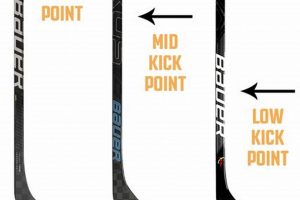
Intermediate players exhibit improved skating, puck control, and shooting accuracy. The assessment identifies strengths and weaknesses in these areas, informing equipment choices that address specific needs. A player with a strong wrist shot but weaker slap shot might benefit from a stick with a mid-kick point, providing versatility for both shot types.
- Advanced Expertise
Advanced players demonstrate a high level of proficiency in all fundamental skills and possess specialized techniques and strategies. Skill assessment at this level involves analyzing playing style, identifying positional requirements, and evaluating specific shot preferences. For instance, a defenseman known for powerful slap shots might require a stiffer flex stick with a high-kick point to maximize power transfer.
- Adaptability and Learning Curve
Beyond assessing current skill, the evaluation considers a player’s adaptability and learning curve. A player who demonstrates rapid improvement might benefit from equipment that anticipates future skill development. For instance, selecting a stick with a slightly higher flex than currently optimal can encourage strength development and prepare the player for more advanced techniques.
These facets of skill assessment are critical inputs. When the information is accurately obtained and analyzed, the guidance produced are more precise, leading to more effective equipment choices that ultimately enhance player performance and enjoyment.
2. Position-Specific Needs

The connection between position-specific needs and equipment selection, particularly using a hockey stick selection tool, is crucial for optimizing player performance. Different positions on the ice impose distinct demands on players, necessitating variations in equipment characteristics. For example, defensemen, tasked primarily with preventing goals and initiating breakouts, often require sticks with longer shafts to increase reach and facilitate effective poke checks and clearing attempts. The tool analyzes these positional requirements, prompting users to identify their primary playing position to filter equipment options appropriately. Conversely, forwards, who focus on scoring and puck possession, might benefit from shorter sticks that enhance puck handling and quick release shots in close proximity to the net. Disregarding these positional needs can lead to suboptimal performance, as a forward using a stick designed for a defenseman may experience difficulty with puck control, while a defenseman using a forward’s stick might struggle with defensive zone coverage.
A practical example illustrates the importance of understanding these needs. Consider a defenseman known for taking slap shots from the point. A selection process that fails to account for this player’s position and preferred shot type may recommend a stick with a lower flex and a closed face curve, which are more suitable for forwards taking wrist shots. Consequently, the defenseman would not be able to maximize the power and accuracy of slap shots, limiting their effectiveness in generating offensive opportunities. Similarly, a smaller, skilled center iceman often needs help in selecting the flex best fit to his style of play.
In conclusion, accurate consideration of position-specific needs is fundamental to effective equipment selection. Failing to acknowledge these needs results in equipment that is ill-suited to the player’s role, hindering their performance and potentially increasing the risk of injury. A well-designed selector will integrate position-specific requirements as a primary filtering criterion, ensuring that players receive equipment recommendations tailored to the demands of their playing position.
3. Physical Attribute Matching

Physical attribute matching represents a critical component in determining the optimal equipment specifications when utilizing a selection tool. The correlation between a player’s physical characteristics and their equipment directly impacts performance, comfort, and injury prevention.
- Height and Length Correlation
Height is a primary determinant of stick length. A selection tool often uses height as an initial data point to narrow down the range of appropriate lengths. For example, a taller player typically requires a longer stick to maintain proper posture and puck handling position. Conversely, a shorter player would benefit from a shorter stick for enhanced control. Incorrect stick length can lead to poor skating posture, reduced puck control, and increased fatigue.
- Weight and Flex Relationship
Weight influences the optimal stick flex. A heavier player generally requires a stiffer flex to effectively transfer power during shots, while a lighter player may benefit from a more flexible stick. The tool integrates weight information to determine the appropriate flex range. Failure to match weight to flex can result in either inadequate power transfer (too soft a flex) or difficulty in loading the stick (too stiff a flex), both of which negatively impact shot velocity and accuracy.
- Hand Size and Grip Dimensions
Hand size contributes to proper grip selection. While not always explicitly integrated into selection interfaces, hand size affects the preferred grip thickness and shape. Players with larger hands may prefer thicker grips for enhanced control and comfort, whereas those with smaller hands might opt for thinner grips. A grip that is too large or too small can lead to discomfort, reduced control, and potential hand fatigue during gameplay.
- Skating Style and Balance Point Considerations
A player’s skating style and typical balance point can influence the optimal stick length and balance point. A player who skates with a more upright posture may prefer a slightly longer stick, while a player with a lower center of gravity might opt for a shorter stick. Additionally, the balance point of the stick, influenced by its construction and weight distribution, can affect puck handling and overall feel. An appropriate tool may consider these factors, even if indirectly, by allowing players to refine their preferences based on experience and feedback.
These interconnected elements highlight the significance of physical attribute matching. By accurately inputting and considering these characteristics, the provided guidance is more likely to result in equipment choices that maximize performance, enhance comfort, and minimize the risk of injury.
4. Performance Enhancement Tools

Performance enhancement tools are integral to maximizing the effectiveness of a hockey stick selection system. The selection process, when augmented by analytical tools, transcends simple matching of physical attributes and player preferences. Instead, it leverages data-driven insights to identify equipment specifications that measurably improve on-ice performance. For example, motion capture technology can analyze a player’s shooting mechanics to determine the optimal flex profile for maximizing shot velocity and accuracy. Similarly, sensors embedded within sticks can provide real-time feedback on puck handling efficiency, allowing players to fine-tune their technique and equipment choices. These tools transform the selection process from a subjective exercise into an objective, evidence-based approach, with the ultimate goal of optimizing player performance.
Consider the practical application of such tools in player development. A junior hockey player struggling with puck control might utilize a system that incorporates video analysis and sensor data. The video analysis could identify inefficiencies in the player’s stick handling technique, while the sensor data could quantify the frequency and intensity of puck contact. Armed with this information, a coach or equipment specialist could recommend adjustments to the player’s technique and stick specifications, such as a different blade curve or grip texture, to improve puck control. This iterative process of analysis, adjustment, and re-evaluation allows players to progressively refine their equipment setup and playing style, leading to tangible improvements in on-ice performance. The combination of data collection tools and a refined selection mechanism offers a significant advantage over traditional, trial-and-error methods.
In summary, performance enhancement tools represent a significant advancement in equipment selection. By integrating data-driven insights and objective performance metrics, these tools empower players and coaches to make more informed equipment choices that optimize performance and accelerate player development. The challenge lies in ensuring the accessibility and affordability of these technologies, as well as in developing robust analytical frameworks for interpreting the data they generate. However, the potential benefits of this approach are undeniable, positioning performance enhancement tools as an indispensable component of the future landscape.
5. Injury Prevention Measures

Injury prevention is inextricably linked to the judicious selection of equipment. The selection of an appropriately sized and configured hockey stick directly mitigates the potential for various musculoskeletal injuries, emphasizing the importance of a tool designed to facilitate informed choices.
- Stick Length and Posture-Related Injuries
Inadequate stick length compels players to adopt compromised postures, increasing the risk of back strain and shoulder impingement. A hockey stick selection instrument should prioritize stick length recommendations based on player height, ensuring that the chosen stick promotes proper posture and minimizes the likelihood of repetitive strain injuries. Proper length supports a more natural and balanced stance, reducing undue stress on the spine and upper extremities.
- Flex and Upper Extremity Strain
Incorrect flex can lead to overuse injuries in the wrists and elbows. A flex that is too stiff requires excessive force to load, increasing stress on the upper limbs. Conversely, a flex that is too soft can result in inefficient power transfer and compensatory movements that strain the joints. A selection tool should incorporate weight and skill level data to determine the optimal flex, thereby minimizing the risk of wrist sprains, elbow tendinitis, and other upper extremity injuries.
- Grip Size and Hand/Finger Injuries
Improper grip size can contribute to hand and finger injuries, including blisters, calluses, and even more severe conditions like carpal tunnel syndrome. A hockey stick selection aid might incorporate grip size recommendations based on hand measurements, ensuring that the selected grip promotes comfortable and secure handling. Appropriate grip dimensions reduce friction and pressure points, minimizing the risk of hand-related injuries.
- Balance Point and Overall Fatigue
Suboptimal balance point contributes to premature fatigue, increasing the susceptibility to injuries. A stick with an unfavorable balance point requires greater effort to control, leading to muscle fatigue and reduced reaction time. While a standard selection system may not directly address balance point, awareness of this factor underscores the importance of considering overall stick characteristics and seeking expert guidance to identify equipment that promotes efficient and controlled movements, thereby mitigating the risk of fatigue-related injuries.
These considerations highlight the proactive role in injury prevention. The use of a selection tool, informed by accurate data and biomechanical principles, contributes to equipment choices that minimize the risk of musculoskeletal injuries, promoting player safety and well-being.
Frequently Asked Questions
The following section addresses common inquiries regarding the selection process, providing clarification and guidance for informed decision-making.
Question 1: How significantly does equipment choice impact on-ice performance?
Appropriate equipment enhances performance by optimizing energy transfer, improving puck control, and minimizing fatigue. Ill-suited equipment can hinder skill execution and increase the risk of injury, underscoring the importance of informed selection.
Question 2: What are the primary factors influencing stick length selection?
Player height is a primary factor, with taller individuals generally requiring longer sticks. Playing position also influences length, as defensemen often benefit from longer sticks for extended reach, while forwards might prefer shorter sticks for enhanced puck handling.
Question 3: How does stick flex affect shot performance?
Stick flex determines the amount of bend under pressure. Lower flexes are suitable for players with less strength, facilitating easier loading and release. Higher flexes provide increased power for stronger players, enabling more forceful shots.
Question 4: Is professional fitting necessary for all players?
While professional fitting offers personalized recommendations, it is not strictly necessary for all players. However, beginners and those experiencing performance limitations may benefit from expert guidance to ensure optimal equipment selection.
Question 5: How frequently should equipment be replaced?
Equipment replacement frequency depends on usage intensity and wear. Sticks should be replaced if cracked or damaged. Protective gear should be replaced when showing signs of wear or reduced effectiveness.
Question 6: Can selecting equipment actually decrease injury risks?
Yes, selecting the right equipment is crucial to preventing injury. For instance, the improper flex rating of a stick may result in a sprained wrist or elbow. Similarly, a helmet that is too large or small would not correctly protect against concussions.
In summary, diligent consideration of various factors, including player skill, physical attributes, and positional requirements, is essential for selecting equipment that optimizes performance and minimizes the risk of injury.
The subsequent article will provide a detailed summary of findings.
Conclusion
This exploration has demonstrated the critical function of a hockey stick finder. The preceding analysis has underscored how the appropriate selection of sports equipment impacts player performance, mitigates potential injury risks, and enhances overall enjoyment of the sport. Accurate assessments of player skill, consideration of position-specific needs, matching physical attributes, and integration of performance enhancement tools are all crucial components of effective equipment identification.
The future of equipment selection will likely involve increased reliance on data-driven insights and personalized recommendations. Utilizing technological advancements contributes to more precise, evidence-based decision-making that ultimately optimizes athletic potential. A continued emphasis on education and access to robust selection methodologies is paramount for fostering player development and promoting safety within the sport. Players and coaches are encouraged to adopt this rigorous approach to equip selection, fostering continued improvement and safety on the ice.