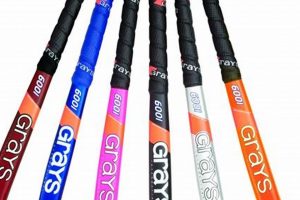
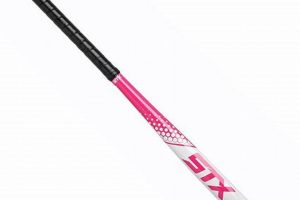
Adhesive fabric applied to a hockey stick blade and shaft serves multiple purposes. This application, often customized aesthetically, enhances grip, protects the stick from wear, and can improve puck control. The visual element, achieved through varied colors, patterns, and techniques, allows players to express individuality or team affiliation.
The careful application of this protective layer is crucial for performance and longevity of the equipment. Historically, simple functional applications were standard. Modern players utilize a wide array of techniques to optimize grip, cushion impact, and provide an advantage in puck handling. The tape also acts as a barrier against moisture and ice, extending the life of the stick.
Further examination will focus on the different types of adhesive fabrics utilized, the diverse methods of application, and the impact of such personalization on player performance and stick durability. Subsequent sections will also consider the aesthetic trends prevalent within the sport and the cultural significance of individual expression on the ice.
Techniques for Optimal Hockey Stick Preparation
The following guidelines offer insights into maximizing performance and extending equipment lifespan through effective application of protective and enhancing adhesive fabrics on hockey sticks.
Tip 1: Surface Preparation: Prior to application, ensure the stick surface is clean and dry. Remove any existing adhesive residue or debris with appropriate solvents to promote optimal adhesion.
Tip 2: Blade Coverage Strategy: Consider the style of play when determining blade coverage. Full coverage enhances puck control, while partial coverage reduces weight and drag. Experiment to determine the optimal configuration.
Tip 3: Overlap Consistency: Maintain a consistent overlap, typically between one-quarter and one-half inch, when wrapping the blade. This ensures uniform thickness and avoids ridges that can disrupt puck handling.
Tip 4: Heel-to-Toe Direction: Always wrap the blade from the heel towards the toe. This direction minimizes puck lift and improves shooting accuracy.
Tip 5: Shaft Grip Optimization: Vary the application on the shaft to achieve desired grip levels. Tighter wraps increase grip, while looser wraps allow for greater hand movement. Consider using knob configurations at the top of the shaft for added control.
Tip 6: Material Selection: Choose material appropriate for playing conditions. Cloth varieties offer superior grip in dry conditions, while synthetic materials resist moisture and ice buildup.
Tip 7: Reinforcement Techniques: Reinforce high-wear areas, such as the bottom edge of the blade and the lower shaft, with additional layers. This extends the lifespan and maintains performance characteristics.
Tip 8: Secure the Ends: Secure both the start and end with additional layers to prevent unraveling during gameplay. Burnishing the edges can further enhance adhesion and durability.
Adhering to these guidelines allows for a customized configuration optimized for individual playing style and stick protection.
The subsequent sections will further examine the aesthetic trends and cultural significance within the sport.
1. Aesthetic Customization

Aesthetic customization, in the context of hockey stick adhesive fabric application, goes beyond mere visual appeal. It represents a confluence of personal expression, team identity, and performance psychology on the ice.
- Individual Identity Expression
Players often use colors, patterns, and personalized designs to reflect their individual personalities and playing styles. This can range from simple color choices that match team uniforms to intricate patterns that represent personal symbols or beliefs. The customization serves as a visual declaration of self on the ice, potentially boosting confidence and presence.
- Team Affiliation and Unity
Uniformity in color schemes and patterns across team members’ sticks fosters a sense of collective identity and solidarity. Standardized applications, incorporating team colors and logos, visually reinforce team cohesion and project a unified image to opponents and spectators alike. This element extends beyond the aesthetic, impacting team morale and psychological impact on the game.
- Visual Communication and Signaling
While less common, adhesive fabric can subtly incorporate visual cues used for in-game communication. Distinct color combinations or patterns, agreed upon by teammates, may serve as silent signals for specific plays or strategies. This functionality introduces a tactical dimension to customization, providing a non-verbal method for conveying information during fast-paced gameplay.
- Historical and Commemorative Designs
Adhesive fabric application offers a medium for commemorating significant events or figures within the sport. Special designs may celebrate team anniversaries, honor past players, or support charitable causes. These commemorative applications transform the stick into a visual tribute, reflecting the history and values associated with the game.
These varied applications of aesthetic customization underscore its multifaceted role in the sport. They extend beyond superficial design, impacting player psychology, team dynamics, and the visual narrative of the game. While functionality remains paramount, the integration of aesthetic elements adds a layer of depth and meaning to the practice of adhesive fabric application.
2. Grip enhancement

Adhesive fabric application on a hockey stick shaft directly correlates with grip enhancement. The application alters the shaft’s surface characteristics, transitioning it from a smooth, slippery texture to one offering increased friction. This increased friction provides the player with superior control over the stick, enabling more precise movements and adjustments during gameplay. Improper or absent application leads to reduced control, negatively affecting stickhandling, shooting accuracy, and overall performance. Professional players, for example, often customize the thickness and texture of their adhesive fabric application to match their individual grip preferences, demonstrating the critical link between the two.
The configuration extends beyond simple adhesion. Players strategically adjust the layer thickness and overlap to create distinct zones of tactile feedback. A thicker application near the top of the shaft provides a secure anchor for the upper hand, facilitating powerful shots and efficient puck protection. Conversely, a thinner or textured application lower on the shaft allows for greater dexterity and faster hand movements during stickhandling maneuvers. Material selection also contributes; cloth variants offer a more pronounced grip, whereas synthetic materials may prioritize moisture resistance.
In conclusion, grip enhancement represents a critical, functionally-driven component. While aesthetic elements may contribute to player confidence, the tactile advantage afforded by a carefully considered configuration provides measurable benefits. Challenges remain in optimizing applications for varying environmental conditions, such as extreme humidity or cold, which can impact the integrity of the adhesive bond. Continued refinement of materials and application techniques will further enhance the performance-enhancing capabilities of adhesive fabric in hockey.
3. Blade Protection
Adhesive fabric application on a hockey stick blade is primarily implemented to mitigate wear and tear. The blade, being the point of contact with the ice and the puck, is susceptible to abrasion from both surfaces. The fabric layer acts as a sacrificial barrier, absorbing impact and friction that would otherwise damage the composite or wooden structure of the blade. Without this protective layer, blades would degrade rapidly, leading to reduced performance, altered feel, and premature breakage. The choice of adhesive fabric and the method of its application are critical factors in determining the level of protection afforded to the blade. For instance, players who frequently engage in puck battles or play on abrasive ice surfaces may opt for thicker fabrics or multiple layers to enhance resistance to damage.
Effective blade protection via adhesive fabric extends the lifespan of the stick, thereby reducing equipment costs. The economic benefit is substantial, especially for players at higher levels who subject their equipment to intense use. Beyond the financial aspect, consistent blade protection maintains the stick’s performance characteristics over a longer period. This consistency allows players to develop a more predictable feel for the stick, improving their ability to control the puck and execute shots accurately. A worn or damaged blade can exhibit unpredictable behavior, leading to misdirected shots and reduced puck handling proficiency. Therefore, the relationship between adhesive fabric application and blade protection is directly tied to both economic and performance considerations.
In summary, adhesive fabric application provides a crucial line of defense against the constant physical stresses experienced by hockey stick blades. This protection translates directly to prolonged equipment lifespan, consistent performance, and reduced replacement costs. While aesthetic customization and grip enhancement are often emphasized, the primary function of blade protection underscores the fundamental importance of this practice within the sport. The selection of appropriate adhesive fabric and proper application techniques are paramount in maximizing this protective effect.
4. Performance Optimization

Performance optimization, within the context of hockey stick adhesive fabric application, represents a multifaceted pursuit of enhanced gameplay through meticulous customization. Adhesive fabric strategically applied influences various performance parameters, including shot velocity, puck control, and overall stick handling efficiency. Variations in fabric type, application pattern, and layering techniques directly impact the frictional coefficient between the blade and the puck. Optimal configuration minimizes energy loss during puck contact, thereby maximizing shot power. Conversely, inadequate adhesive fabric application compromises energy transfer, resulting in diminished shot velocity and accuracy. Professional players frequently experiment with diverse configurations to identify optimal performance parameters tailored to their specific playing style and stick characteristics.
The location of adhesive fabric on the stick shaft, as a component of grip optimization, contributes directly to performance metrics. Properly placed, the adhesive fabric enhances the players ability to maintain a secure grip, facilitating quicker hand movements and improved stick handling control. Consider, for example, a defenseman who relies heavily on poke checks and quick defensive plays. This player might opt for a grip configuration that allows for rapid hand adjustments along the shaft, maximizing their ability to disrupt opposing players. Similarly, a forward prioritizing wrist shots and deking maneuvers might select a configuration that emphasizes control and tactile feedback. These adjustments illustrate how performance objectives drive specific customization choices.
In summary, performance optimization constitutes a critical element within this specific area of athletic equipment customization. It transcends mere aesthetic considerations, directly influencing fundamental aspects of player performance. Understanding the interrelationship between adhesive fabric application and performance optimization allows players to fine-tune their equipment for maximum effectiveness. Further research into novel materials and application techniques holds the potential to unlock even greater performance gains, fostering continued innovation in this domain.
5. Durability Extension
Adhesive fabric application onto hockey sticks significantly contributes to prolonging the equipment’s usable lifespan. The protective barrier created by this application mitigates wear from abrasive contact with ice, pucks, and other players, thus delaying structural degradation and extending the stick’s overall utility.
- Abrasion Resistance Enhancement
The primary mechanism through which adhesive fabric extends durability involves increasing the stick’s resistance to abrasion. The fabric layer acts as a sacrificial surface, absorbing friction that would otherwise directly impact the stick’s composite or wooden structure. This is particularly relevant in areas of high contact, such as the blade’s bottom edge and the lower portion of the shaft.
- Impact Force Dissipation
Beyond abrasion, adhesive fabric aids in dissipating impact forces generated during gameplay. Collisions with pucks, boards, and other players exert significant stress on the stick. The fabric layer, especially when applied with strategic layering techniques, distributes these forces across a larger area, reducing the risk of localized stress concentrations and subsequent fractures.
- Moisture Barrier Formation
Moisture, particularly in the form of ice and water, can compromise the structural integrity of hockey sticks, especially those constructed from wood or certain composite materials. Adhesive fabric provides a barrier against moisture ingress, preventing water absorption that can lead to warping, weakening, and eventual failure. Certain synthetic fabrics are inherently more water-resistant and offer enhanced protection in wet conditions.
- Preventative Maintenance Facilitation
The application of adhesive fabric simplifies preventative maintenance efforts. Damaged or worn sections of fabric can be readily replaced, preserving the underlying stick structure. This allows for targeted repairs and extends the lifespan of the stick without requiring complete replacement. Consistent application and regular inspection enable proactive identification and remediation of potential problem areas.
In summation, strategic application techniques and suitable material selection directly correlate with the degree to which adhesive fabric contributes to durability extension. While other factors, such as playing style and stick handling, influence equipment longevity, proper application provides a tangible measure of protection and increases the overall value derived from the equipment.
Frequently Asked Questions
This section addresses common inquiries regarding adhesive fabric application on hockey sticks, providing detailed explanations based on technical and practical considerations.
Question 1: What types of adhesive fabrics are most suitable for hockey stick blades?
Cloth adhesive fabrics offer excellent grip and puck control, particularly in dry conditions. Synthetic fabrics provide superior resistance to moisture and ice buildup, making them suitable for humid or wet playing environments. Hybrid fabrics combine the properties of both, offering a balance of grip and moisture resistance. The optimal choice depends on individual player preferences and playing conditions.
Question 2: How does the color of adhesive fabric impact on-ice performance?
While color primarily serves aesthetic purposes, it can subtly influence player visibility. White fabric provides high contrast against the ice, potentially aiding in puck tracking. Black fabric reduces glare, which some players find advantageous. Brightly colored fabrics can enhance team identity and visibility in crowded areas. However, empirical evidence supporting a direct performance benefit based solely on color is limited.
Question 3: Is there a correct method for wrapping a hockey stick blade?
The optimal method involves starting at the heel of the blade and wrapping towards the toe, overlapping each layer by approximately one-quarter to one-half inch. This ensures uniform thickness and avoids ridges that can disrupt puck handling. The tightness of the wrap influences grip; tighter wraps provide more control, while looser wraps allow for greater puck feel. Individual preference and playing style dictate the ideal configuration.
Question 4: How often should adhesive fabric be reapplied?
The frequency of reapplication depends on playing intensity, ice conditions, and the quality of the adhesive fabric. Visual inspection of the fabric for wear and tear is crucial. Indications of reapplication need include fraying edges, reduced grip, and exposure of the underlying blade material. Regular replacement, typically after several games or practices, ensures consistent performance and protection.
Question 5: Does adding more layers of adhesive fabric increase blade protection?
While additional layers do provide enhanced protection, they also increase the weight of the blade, potentially impacting stick handling speed and balance. Strategic reinforcement of high-wear areas, such as the bottom edge of the blade, is more effective than uniformly applying multiple layers. The optimal balance between protection and weight management is essential.
Question 6: Can adhesive fabric application improve shot accuracy?
Indirectly, yes. Proper application enhances grip and puck control, which can contribute to improved shot accuracy. A consistent and reliable grip allows for more precise stick handling and puck placement during the shooting motion. However, shot accuracy is primarily determined by technique, practice, and skill, with adhesive fabric application serving as a supporting element.
In conclusion, adhesive fabric application is a customizable practice that balances aesthetic preferences with functional requirements. Understanding the properties of different fabrics and application techniques allows for optimized equipment performance and protection.
The subsequent section will explore the cultural and historical context surrounding this area of hockey equipment customization.
Conclusion
This examination of hockey stick tape designs reveals that the practice extends beyond mere aesthetic customization. It involves a complex interplay of performance enhancement, equipment protection, and individual expression. Careful consideration of material selection, application techniques, and intended functionality is paramount in maximizing the benefits derived from this widespread practice.
Continued innovation in adhesive fabric technology and application methodologies holds the potential to further refine equipment performance and durability. Future research should focus on developing sustainable materials and optimizing application processes to meet the evolving demands of the sport, ensuring that the application remains an integral component of player preparation and equipment maintenance.