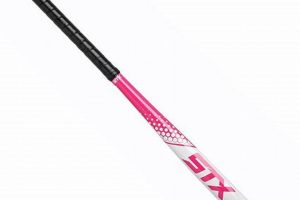
The modification of a composite or wooden shaft’s length to better suit an individual player’s height and playing style is a common practice. This process typically involves measuring the desired length, marking the shaft, and using a saw to remove the excess material. The resulting end is often smoothed or capped to ensure player safety and optimal grip.
Altering the implement’s dimensions can significantly impact a player’s performance and comfort. A correctly sized tool promotes proper posture, allows for more efficient puck handling, and contributes to improved shot accuracy and power. This adjustment has been practiced for many decades, evolving from simple adjustments on wooden models to more complex considerations for modern composite constructions. The ability to customize this equipment allows players to fine-tune their gear to their unique needs.
The following sections will detail the tools required for this alteration, provide a step-by-step guide to the process, offer safety precautions, and discuss factors that should influence the decision-making process when considering a shaft modification.
Tips
Optimal performance is closely related to equipment fit. Adjusting the length is a critical step in customizing equipment for enhanced control and comfort.
Tip 1: Measure Accurately. Prior to any modification, precise measurement from heel to the desired top is crucial. Account for height while on skates and the preferred hand position. Inaccurate measurements can lead to an unusable implement.
Tip 2: Use the Correct Tools. For composite shafts, a fine-toothed saw, ideally designed for carbon fiber, minimizes splintering and provides a clean edge. For wooden shafts, a standard wood saw is sufficient.
Tip 3: Secure the Shaft. Clamping the shaft firmly in a vise or using a stable cutting platform prevents movement during the process, ensuring a straight and safe cut.
Tip 4: Cut Straight and Evenly. Maintaining a consistent cutting angle is imperative. Rushing the process can result in an uneven cut that affects the overall balance and feel.
Tip 5: Sand the Edges. After the material has been removed, sanding the raw edge smooths out any imperfections and prevents splinters. This step enhances comfort and prevents potential injuries.
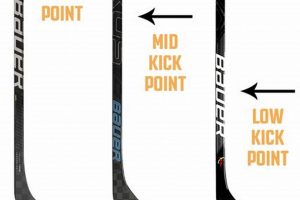
Tip 6: Consider the Kick Point. Altering the length can affect the flex profile. Understand how shortening the shaft impacts the kick point and overall feel. Shorter length typically increases stiffness.
Tip 7: Preserve Balance. Be mindful of the balance point after modifying the shaft. While precise adjustments might require specialized equipment, understanding the overall impact on feel is important.
Proper execution of these tips ensures a customized fit, leading to better performance and increased enjoyment.
The following section will discuss the risks involved.
1. Measurement Precision

Measurement precision forms the bedrock of successful hockey stick length modification. Accurate measurements directly dictate the final usability and performance of the adjusted implement. Any deviation from the intended dimensions can compromise the player’s posture, handling capabilities, and shot mechanics.
- Determining Baseline Height
Establishing a correct baseline height is the first critical step. This involves assessing the player’s height while on skates, which inherently alters their stance compared to standing on flat ground. Failing to account for the height gained from skates results in either an excessively long or short shaft, negating the benefits of customization. This step determines the subsequent modifications for optimal performance.
- Accounting for Hand Position
Player preference regarding hand placement along the stick further refines measurement precision. Some players favor a higher hand position for increased leverage, while others prefer a lower position for enhanced puck control. These preferences require a corresponding adjustment to the overall length. Ignoring the preferred hand placement leads to an uncomfortable and less effective grip.
- Considering Blade Curve and Lie
The blade’s curve and lie also interact with the ideal shaft length. A deeper curve might necessitate a slightly shorter shaft to maintain proper puck-handling posture. The lie, which represents the angle between the blade and the shaft, affects how the blade sits on the ice. Integrating these factors into the measurement process contributes to a fully optimized stick that complements individual playing style.
- Verifying Measurements Before Cutting
Prior to committing to any modification, it is vital to double-check all measurements and, ideally, perform a “mock-up” test. This involves using a tape measure to simulate the new length and grip position to ensure it aligns with the player’s expectations. This verification step minimizes the risk of errors and prevents irreversible alterations that can render the equipment unusable.
These facets collectively highlight that precise measurement is not merely a preliminary step but an integral component of achieving optimal hockey stick customization. Failure to adhere to accurate procedures undermines the very purpose of modification, potentially leading to diminished performance and player dissatisfaction.
2. Blade Heel

The blade heel serves as the foundational reference point when determining the appropriate length reduction. Measurements invariably originate from this junction between the blade and the shaft. The distance from the blade heel to the desired upper extent of the shaft dictates the amount of material to be removed. Without accurate placement of the measuring device against the heel, any subsequent adjustments will be skewed, potentially rendering the implement unusable or ergonomically unsuitable for the player. An example of inaccurate measurement from the blade heel would involve inadvertently placing the tape measure slightly above or below the true heel position. Even a minor error, such as a quarter of an inch, can translate into a noticeable difference in stick feel and player performance.
The significance of the blade heel’s role extends beyond initial measurement. It is also a critical factor in maintaining structural integrity during and after the cutting process. Improper support or excessive pressure applied near the heel during material removal can compromise the bond between the blade and the shaft, particularly in composite models. Furthermore, if the cut is not perfectly perpendicular to the shaft axis, it can create an uneven transition near the heel, leading to stress concentration and potential failure during gameplay. Consider instances where players have experienced blade separation shortly after modifying their sticks. Often, this can be traced back to compromised integrity resulting from poor cutting techniques in proximity to the blade heel.
Therefore, understanding the intimate relationship between the blade heel and the shaft alteration process is paramount. Accurate measurement from this precise point is non-negotiable for achieving the desired length. Careful handling and appropriate support during cutting are essential for preserving the integrity of the entire structure. By meticulously attending to these details, users can mitigate risks and maximize the benefits of a customized hockey implement.
3. Saw Type

The selection of an appropriate saw directly influences the outcome of a hockey stick length adjustment. The properties of the shaft materialtypically wood or compositenecessitate specific blade characteristics to ensure a clean, safe, and structurally sound alteration. Using an incorrect saw type can result in splintering, cracking, or delamination of the shaft, thereby compromising its performance and durability. For instance, employing a coarse-toothed wood saw on a composite shaft often leads to significant fiber fraying, weakening the material’s integrity. Conversely, attempting to cut a wooden shaft with a blade designed for composite materials can result in inefficient cutting and a rough, uneven edge. The saw directly impacts the quality of the cut and ultimately affects the implement.
Different blade types cater to varying material properties. Fine-toothed saws, particularly those designed for carbon fiber or other composites, minimize chipping and produce a smoother surface. These blades often feature specialized tooth geometries and coatings that reduce friction and prevent heat buildup, both of which can damage the composite matrix. A practical example can be seen in dedicated composite-cutting saws found in professional equipment rooms or custom hockey shops. These tools prioritize precision and clean cuts, minimizing the risk of structural damage. For wooden shafts, a standard wood saw with appropriately sized teeth offers efficient material removal without excessive splintering. However, even with a wood saw, attention to technique, such as using a backing board to support the material, remains crucial to minimize chipping at the cut’s exit point. Improper tools can cause catastrophic damages.
In summary, the appropriate saw type is a critical component of the cutting process. Choosing the correct blade mitigates the risk of material damage, ensures a cleaner and more precise cut, and ultimately contributes to a successful and safe hockey stick length adjustment. The tool should complement material properties, proper technique is essential for optimal outcome and preserving the shaft’s integrity. Disregarding the correct tool is equivalent to sabotaging the implement itself.
4. Consistent Angle

Maintaining a consistent cutting angle is paramount for ensuring the structural integrity and performance of a modified hockey stick. Deviations from perpendicularity can introduce stress points and weaken the shaft, potentially leading to premature failure. Attention to the cutting angle directly influences the final quality of the implement.
- Structural Integrity
A cut performed at an inconsistent angle introduces uneven stress distribution throughout the shaft material. This asymmetry can create weak points susceptible to cracking or breakage, particularly under the high-impact conditions of gameplay. A perpendicular cut, conversely, ensures an even distribution of force, preserving the overall strength of the implement. Failure to maintain a proper angle is a direct invitation to structural instability.
- Blade Alignment
When the cut is not perpendicular, the subsequent attachment of an extension or end cap will likely result in misalignment. This skewed alignment can negatively impact puck handling and shooting accuracy. The blade will no longer sit flush against the ice, altering the stick’s lie and affecting the player’s control. Consistent execution is critical to ensure seamless alignment.
- Ergonomic Considerations
An angled cut can create an uncomfortable or awkward grip. The top of the shaft will no longer be flush, potentially causing discomfort or pressure points on the player’s hands. This discomfort can distract the player and hinder their performance. A smooth, perpendicular cut ensures a comfortable and natural feel.
- Durability and Longevity
An inconsistent cutting angle can accelerate wear and tear on the shaft. The uneven surface can catch on equipment or boards, leading to chipping and fraying of the material. Over time, this damage can compromise the shaft’s overall durability, shortening its lifespan. Proper technique is essential for maintaining the implement.
These considerations underscore the critical role of maintaining a consistent cutting angle when adjusting the length of a hockey stick. Deviation from a perpendicular cut introduces a cascade of potential problems, ranging from structural weakness to ergonomic discomfort. Adherence to proper technique is therefore essential for preserving the integrity and performance of the customized implement.
5. Sanding Edges
Sanding edges, a crucial post-cutting step, directly impacts player safety and the longevity of the modified hockey stick. Removing material inherently creates a raw edge characterized by sharp splinters or jagged composite fibers. Failure to mitigate this hazard poses a significant risk of lacerations, splinters, and general discomfort during gameplay. Comprehensive smoothing of the cut edge eliminates this risk, ensuring a safe and comfortable grip for the player. Without proper sanding, the modification process remains incomplete, leaving a potentially dangerous piece of equipment.
The act of smoothing the edge also contributes to the stick’s overall durability. Unaddressed irregularities can catch on gloves, boards, or other equipment, accelerating wear and tear on the shaft. Fiber fraying, in particular, can propagate along the shaft, weakening its structure over time. Proper sanding seals the exposed material, preventing further degradation and extending the usable life of the implement. A well-sanded edge minimizes stress points and reduces the likelihood of premature failure. This seemingly minor step significantly affects the long-term structural integrity. For example, compare two sticks: one with a properly sanded edge and another with a rough-cut edge. The latter will exhibit signs of wear and tear much earlier, increasing the chance of breakage.
In summation, sanding edges is not merely a cosmetic refinement but an indispensable component of hockey stick modification. It ensures player safety by removing hazardous imperfections and enhances the stick’s lifespan by preventing premature wear. Neglecting this final step undermines the benefits of the entire customization process, potentially compromising both player well-being and equipment performance. Sanding after cutting, is the important steps that should be followed as per safety. Without sanding, the process remains incomplete.
6. Flex Profile
The flex profile of a hockey stick, defining the manner in which it bends under load, is intrinsically linked to its overall length. Altering a stick’s length through the cutting process inevitably influences its flex characteristics, necessitating careful consideration to maintain or optimize desired performance attributes.
- Kick Point Migration
Reducing the length of a hockey stick generally results in an upward migration of the kick point. The kick point is the location on the shaft where the majority of bending occurs. Shortening the shaft stiffens the lower portion, effectively shifting the flex point higher up the stick. For example, a mid-kick stick shortened significantly might behave more like a high-kick stick, impacting shot release and power transfer. An understanding of this migration is paramount for preserving the stick’s intended feel.
- Stiffness Amplification
Shortening a shaft increases its overall stiffness. A shorter lever requires more force to bend to the same degree as a longer one. Consequently, a stick labeled as having a specific flex rating will effectively become stiffer after material removal. A player accustomed to a particular flex might find the modified stick requires significantly more effort to load properly, impacting shot power and accuracy. Therefore, players must consider this amplification effect when determining the extent of length reduction.
- Impact on Shot Mechanics
The flex profile directly affects a player’s shot mechanics, influencing shot velocity, accuracy, and release time. A stick that is too stiff or too soft due to improper length modification can hinder a player’s ability to load the shaft effectively, compromising the energy transfer from the body to the puck. For instance, a player relying on a quick wrist shot might find a stiffened shaft inhibits their ability to generate the necessary flex for a rapid release. Correct modification techniques maintain a balanced feel.
- Adjustment Strategies
To mitigate the unintended consequences of length reduction on flex profile, several strategies can be employed. Selecting a stick with a slightly softer flex rating prior to modification can compensate for the stiffening effect. Alternatively, carefully monitoring the amount of material removed and periodically testing the flex during the cutting process can help maintain the desired feel. Experimentation and careful measurement are key components in achieving a customized fit without sacrificing performance characteristics. The goal is customized fit while mainting stick qualities.
These interconnected facets demonstrate the nuanced relationship between length alteration and flex characteristics. Cutting a hockey stick is not merely a matter of dimensional adjustment but a process that demands an informed understanding of how these modifications influence performance attributes. Proper assessment and strategic adjustments are essential for realizing the benefits of customization without compromising the stick’s intended flex profile.
7. Balance Point

The balance point, representing the point at which a hockey stick rests evenly when suspended, is a critical factor that significantly influences a player’s feel and control. Adjusting a stick’s length directly affects its balance, potentially altering its handling characteristics and overall performance. The relocation of mass stemming from material removal fundamentally reshapes the weight distribution, thereby necessitating careful consideration of the resulting balance point.
- Shift in Mass Distribution
Removing material from the upper portion of the shaft shifts the balance point downwards, closer to the blade. This can create a more blade-heavy feel, potentially enhancing puck control and quick stick handling. Conversely, leaving the stick too long retains more mass towards the top, resulting in a more top-heavy feel, which may favor powerful shots but compromise finesse. Precise modifications optimize mass distribution. For example, players who prefer close-quarters stick handling tend to prefer a blade-heavy balance for improved dexterity.
- Impact on Swing Weight
The swing weight, or the perceived weight during stick handling and shooting motions, is intimately tied to the balance point. A stick with a balance point further from the hands feels heavier and requires more effort to swing. Conversely, a stick with a balance point closer to the hands feels lighter and more responsive. Cutting the shaft can significantly alter the swing weight, influencing a player’s fatigue level and shot velocity. A balanced swing optimizes performance.
- Influence on Stick Handling
The balance point significantly impacts a player’s ability to maneuver the puck effectively. A stick that is properly balanced allows for quick and precise stick handling, enabling swift changes in direction and rapid puck movement. An imbalanced stick, on the other hand, can feel cumbersome and unresponsive, hindering a player’s agility and control. Precise balance creates optimal control.
- Compensation Strategies
Players can employ various strategies to compensate for changes in the balance point resulting from length modifications. Adding weight to the butt end of the stick can counterbalance a blade-heavy feel, while using lighter grip tape can reduce weight at the top of the shaft. Experimentation with different weighting configurations allows players to fine-tune the balance point to match their individual preferences and playing style. Weighting adjustments achieve personalized balance.
In conclusion, the balance point serves as a critical determinant of a hockey stick’s handling characteristics. Altering a stick’s length directly influences its balance, necessitating careful consideration of these changes to maintain or optimize performance. Through strategic modifications and compensation techniques, players can achieve a customized balance point that complements their individual playing style and enhances their overall effectiveness on the ice. Proper attention to balance unlocks enhanced control.
Frequently Asked Questions
The following section addresses common inquiries regarding modifying hockey implement dimensions, providing clarity on various aspects of the process.
Question 1: Does altering the shaft’s length invalidate the manufacturer’s warranty?
Modifying equipment typically voids the original warranty. Manufacturers generally do not cover damage or performance issues arising from alterations made after purchase. It is prudent to review the warranty terms prior to any modifications.
Question 2: What is the recommended tool for shortening a composite hockey stick?
A fine-toothed saw specifically designed for cutting carbon fiber or composite materials is advised. This type of saw minimizes splintering and ensures a clean cut, preserving the structural integrity of the shaft.
Question 3: How significantly does shortening a shaft affect its flex?
Reducing the length increases the overall stiffness of the shaft. A shorter shaft requires greater force to bend to the same degree as a longer shaft, effectively altering the flex profile.
Question 4: Is it necessary to re-cap the end after the modification?
Replacing the end cap is crucial for player safety and grip integrity. The cap provides a smooth, finished surface, preventing injury and ensuring a secure grip.
Question 5: What is the best method for measuring the appropriate length?
Measurements should be taken while the player is wearing skates, accounting for the altered stance. Measure from the heel of the blade to the desired upper extent of the shaft, factoring in preferred hand placement.
Question 6: Can an extension be added after shortening the shaft?
Yes, extensions can be used to restore or increase the overall length. Extensions are typically inserted into the hollow shaft and secured with adhesive, allowing for further customization.
Modifying equipment requires careful consideration and adherence to proper techniques. Understanding the implications of these adjustments is crucial for optimizing performance and ensuring player safety.
The subsequent section will delve into the potential risks associated with this process.
Concluding Remarks
This exploration of adjusting hockey stick length has illuminated the critical factors influencing performance and safety. From accurate measurement initiated at the blade heel to the selection of appropriate cutting tools and techniques, each step contributes to the overall success or failure of the modification. The discussion underscored the nuanced relationship between length, flex profile, and balance point, emphasizing the need for informed decision-making.
Ultimately, modifying this essential piece of equipment is not a trivial undertaking. It demands meticulous attention to detail and a comprehensive understanding of the inherent trade-offs. The potential for enhanced performance and personalized comfort hinges on a commitment to precise execution and a thorough awareness of the implications. Any modification, whether shortening, should be approached with diligence to ensure optimal outcome and prevent damage.