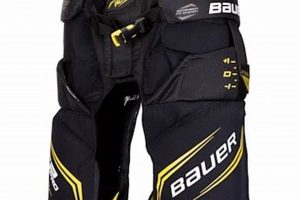
Protective equipment worn on the lower legs during ice hockey, designed to mitigate impacts from pucks, sticks, and collisions. These leg guards typically consist of a hard plastic or composite shell with interior padding for shock absorption and comfort. They are secured to the leg using straps or tape to ensure a snug and protective fit.
Essential for injury prevention in a high-impact sport. They shield the vulnerable bones and soft tissues of the lower leg from fractures, contusions, and lacerations. Their evolution reflects advancements in materials science and design, leading to improved protection and mobility for players at all skill levels. The implementation of mandatory usage rules underscores their vital role in player safety.
The subsequent sections will delve into the construction materials, fit and sizing considerations, maintenance procedures, and the regulatory standards governing these crucial pieces of hockey equipment.
Protective Lower Leg Equipment
The following points provide essential guidance for the selection, use, and care of protective lower leg equipment, maximizing its effectiveness and lifespan.
Tip 1: Selection Based on Skill Level and Position: Evaluate the player’s skill and on-ice role. Higher skill levels and more physically demanding positions typically require equipment offering enhanced impact resistance and coverage.
Tip 2: Proper Fit Assessment: Ensure a snug but comfortable fit. The equipment should cover the area between the hockey skate and the lower portion of the hockey pants, minimizing exposed skin. Straps should be adjusted to secure the equipment without restricting movement.
Tip 3: Regular Inspection for Damage: Conduct routine inspections for cracks, tears, or wear in the shell and padding. Compromised equipment should be replaced immediately to maintain protective integrity.
Tip 4: Cleaning and Drying After Each Use: Remove equipment from the hockey bag immediately after use. Wipe down the exterior and interior with a damp cloth and allow to air dry thoroughly. This minimizes odor and inhibits bacterial growth.
Tip 5: Secure Storage: Store the equipment in a well-ventilated area, away from direct sunlight and extreme temperatures. Avoid stacking heavy items on top, which can deform the protective shell.
Tip 6: Replacement Frequency: Even with proper care, protective equipment degrades over time. Consider replacing it every two to three seasons, or more frequently based on usage and signs of wear.
Tip 7: Adherence to League Regulations: Always comply with the specific rules and regulations of the relevant hockey league or governing body regarding equipment standards and usage.
Adhering to these recommendations ensures optimal protection, extends the equipment’s longevity, and contributes to player safety on the ice.
The concluding section will provide information on available resources for further learning and product comparisons.
1. Impact Resistance

Impact resistance is a foundational characteristic of protective lower leg equipment. Its effectiveness dictates the degree to which the equipment mitigates injury from various forces encountered during gameplay.
- Material Composition and Energy Absorption
The material selection is crucial for impact absorption. High-density polyethylene (HDPE) and polypropylene (PP) are commonly used for the outer shell due to their inherent hardness and ability to disperse force. Interior padding, often comprising foams like ethylene-vinyl acetate (EVA) or specialized viscoelastic polymers, absorbs and dissipates energy upon impact, reducing the force transmitted to the tibia and fibula. Different foam densities and thicknesses are employed to tailor the level of protection.
- Shell Design and Structural Integrity
The shell’s design contributes significantly to impact resistance. Contoured shapes and reinforced ridges can deflect impacts away from vulnerable areas. Ribbing and strategically placed structural supports enhance overall rigidity and prevent deformation under stress. The design should aim for optimal weight distribution, balancing protection with minimal added bulk or encumbrance.
- Testing Standards and Certification
Standardized testing protocols are used to evaluate impact resistance. Organizations like ASTM International and CSA Group establish performance criteria and testing methods. Certification marks from these bodies indicate that the equipment meets specified minimum standards for impact absorption. These standards typically involve measuring the force transmitted through the equipment during controlled impact tests.
- Influence of Fit and Securement
Proper fit and securement directly impact the effectiveness of impact resistance. Equipment that is too loose or improperly fastened may shift upon impact, leaving areas exposed or reducing the protective capacity. A snug and secure fit ensures that the equipment remains properly positioned to absorb and distribute force across the intended area. Adjustable straps and attachment systems are essential for achieving a personalized and reliable fit.
The interplay between material composition, design, testing, and fit determines the overall impact resistance. Advanced materials and construction techniques continually improve the protective capabilities, while proper fit ensures that these capabilities are fully realized, minimizing the risk of lower leg injuries in ice hockey.
2. Anatomical Fit
The effectiveness of ice hockey protective gear, specifically shin pads, is inextricably linked to its anatomical fit. This fit, defined by the congruence between the equipment’s design and the lower leg’s contours, dictates the extent to which the equipment provides optimal protection and facilitates performance. Improper fit, as a direct consequence of neglecting anatomical considerations, results in compromised protection, mobility restriction, and increased potential for injury. A shin pad designed without accounting for the tibial crest’s curvature, for instance, may leave this vulnerable area exposed or experience frequent shifting during gameplay, increasing the risk of contusions or fractures.
The anatomical design ensures that the equipment remains properly aligned during dynamic movements, maintaining consistent protection. The human tibia has a slightly curved profile and expands near the knee and ankle. If the equipment is straight or of a non-flexible material, it will cause discomfort and potentially restrict blood flow after prolonged activity. This will ultimately lead to injury. An anatomically correct shin pad accommodates these variations, providing secure coverage without impeding circulation. Furthermore, a precise fit minimizes the need for excessive strapping, which can restrict range of motion and reduce agility. Consequently, an anatomically sound design not only enhances safety but also allows for unrestricted movement, contributing to the player’s overall performance.
In summary, the anatomical fit is more than a comfort consideration; it’s a fundamental aspect of the protective function of ice hockey shin pads. Challenges in achieving this fit include accommodating variations in individual leg shapes and ensuring consistent manufacturing tolerances. Understanding the interplay between anatomical design and protective efficacy is essential for players, coaches, and equipment manufacturers alike, leading to safer and more effective protective equipment for the sport.
3. Mobility Facilitation

Mobility facilitation, in the context of ice hockey protective equipment, refers to the design attributes that allow for an unhindered range of motion. With lower leg equipment, the relationship is that protective elements must not restrict a player’s skating stride, turning radius, or general agility. A direct cause-and-effect relationship exists: poorly designed equipment impedes movement, while optimized equipment allows for fluid, natural motion. Mobility is not merely an ancillary benefit, but rather an intrinsic component. A player who cannot move freely due to restrictive equipment is at a disadvantage, potentially hindering performance and increasing the risk of injury from overcompensation or awkward movements.
Examples of mobility-facilitating design elements include articulated shell construction, which allows for independent movement of upper and lower sections. Strategic placement of flex zones, often incorporating pliable materials, permits bending and extension of the leg without resistance. The utilization of lightweight materials reduces the overall burden on the player, minimizing fatigue and optimizing maneuverability. The integration of these features is not arbitrary but results from careful consideration of biomechanical principles and the specific demands of ice hockey. Furthermore, the equipment’s strapping system plays a crucial role; it must provide a secure fit without unduly compressing muscles or restricting joint articulation. An over-tightened strap, for instance, can impair circulation and compromise muscle function, directly impacting mobility.
The practical significance of understanding the role of mobility facilitation lies in informed equipment selection and usage. Players and equipment managers should prioritize equipment that balances protection with freedom of movement. Over-emphasizing protection at the expense of mobility is counterproductive. The ongoing challenge resides in striking this balance, continually innovating with materials and designs that maximize both safety and agility. In conclusion, mobility facilitation is an indispensable aspect of ice hockey protective gear, directly influencing a player’s performance, safety, and overall experience on the ice.
4. Moisture management

Moisture management within ice hockey protective gear, particularly lower leg protection, is a crucial aspect of player comfort and hygiene. The accumulation of sweat during strenuous activity creates an environment conducive to bacterial growth, odor development, and skin irritation, directly impacting performance and overall well-being. Efficient moisture management mitigates these issues, enhancing comfort and maintaining the integrity of the protective equipment.
- Material Selection for Wicking and Breathability
The selection of materials with wicking properties is fundamental. Fabrics engineered to draw moisture away from the skin, such as synthetic blends like polyester or polypropylene, promote evaporation and reduce the sensation of dampness. Breathable materials, often incorporated into the liner or ventilation channels, facilitate airflow, accelerating the drying process. For instance, a liner constructed from a micro-mesh fabric allows air to circulate, reducing the build-up of moisture and heat inside the equipment.
- Antimicrobial Treatments and Odor Control
Antimicrobial treatments are frequently applied to the inner linings to inhibit the growth of bacteria and fungi. These treatments, often involving silver ions or other biocidal agents, reduce the formation of unpleasant odors and help prevent skin infections. A study of hockey equipment treated with antimicrobial agents demonstrated a significant reduction in bacterial load compared to untreated equipment, highlighting the efficacy of these treatments in promoting hygiene.
- Ventilation Systems and Airflow Design
Design elements that promote airflow contribute significantly to moisture management. Ventilation ports strategically located on the shell allow for the circulation of air, facilitating the evaporation of sweat. Some designs incorporate channels or grooves within the padding to further enhance airflow, creating a microclimate that minimizes moisture build-up. For example, shin guards with strategically placed vents can significantly reduce the internal temperature and humidity during gameplay.
- Maintenance Protocols and Drying Practices
Proper maintenance protocols are essential for sustained moisture management. Equipment should be removed from the hockey bag immediately after use to allow for air drying. Wiping down the interior with a damp cloth and allowing the equipment to air dry thoroughly minimizes odor and inhibits bacterial growth. Regularly washing or disinfecting the liners, according to manufacturer instructions, further enhances hygiene and prolongs the lifespan of the equipment. Neglecting these practices can lead to the accumulation of moisture, compromising both comfort and hygiene.
Effective moisture management directly influences player comfort, hygiene, and equipment longevity. Prioritizing equipment with advanced moisture-wicking materials, antimicrobial treatments, and ventilation systems, coupled with diligent maintenance practices, contributes to a more comfortable and hygienic playing experience, reducing the risk of skin irritation and odor development.
5. Adjustability
Adjustability in ice hockey shin pads is a critical design element that directly influences both protection and player performance. Effective adjustability ensures a secure, personalized fit, maximizing the equipment’s protective capabilities and optimizing comfort during gameplay.
- Strap Systems and Securement Mechanisms
The strap system is the primary mechanism for adjustability. Typically, shin pads incorporate multiple straps, often constructed from elastic or nylon webbing, positioned to secure the pad around the calf and lower leg. The adjustability of these straps, through buckles, hook-and-loop fasteners, or other closure systems, allows the player to customize the fit according to their individual leg size and shape. Example: A player with larger calf muscles would require a strap system that offers sufficient length and adjustability to accommodate the increased circumference. Insufficient strap adjustability compromises the pad’s position, potentially exposing vulnerable areas of the leg.
- Padding Configuration and Customization Options
Some higher-end shin pads incorporate adjustable padding elements. These may include removable or repositionable foam inserts that allow the player to fine-tune the fit and optimize comfort. These customization options can address pressure points or anatomical variations, enhancing the overall fit and feel of the equipment. Example: A player experiencing discomfort along the tibial crest may benefit from a shin pad with adjustable padding in that area. These options help to enhance protective coverage.
- Length and Height Adjustments
Certain models offer length or height adjustments, allowing the player to modify the overall dimensions of the shin pad. This is particularly beneficial for younger players or those in a transitional phase of growth, as it enables the equipment to accommodate changes in leg length. Example: A youth player experiencing a growth spurt can extend the length of the shin pad to maintain adequate coverage without requiring a complete equipment replacement.
- Impact on Protection and Mobility
The adjustability of shin pads directly impacts their protective capability and the player’s mobility. A properly adjusted shin pad remains securely in place during dynamic movements, providing consistent coverage and preventing slippage that could expose the leg to impact. Conversely, an ill-fitting or poorly adjusted shin pad can restrict movement, hinder agility, and increase the risk of injury. Example: Overly tight straps can impede circulation and restrict muscle function, while loose straps compromise the pad’s position, leaving areas vulnerable to impact.
The level of adjustability directly correlates with the effectiveness of the lower leg equipment. The capacity to modify the fit based on leg anatomy and preference ensures maximum protection during impact with minimal constraint.
6. Coverage Area

The coverage area of ice hockey shin pads is a critical determinant of their protective efficacy. This area, encompassing the span from just above the skate boot to the lower thigh, must adequately shield the tibia, fibula, and surrounding soft tissues from impacts. A deficient coverage area leaves portions of the lower leg vulnerable to pucks, sticks, and collisions with the boards or other players. The impact of a puck, traveling at significant velocity, directly to an unprotected area can result in fractures, contusions, or severe lacerations. The relationship is causal: inadequate coverage area directly elevates the risk of lower leg injuries.
The design of effective ice hockey shin pads prioritizes comprehensive coverage. This is achieved through extended side wings that protect the lateral aspects of the calf and lower leg, and a contoured upper portion that integrates with hockey pants to minimize gaps. Examples of inadequate coverage leading to injury are documented throughout hockey history, with players sustaining leg fractures from impacts just above or below the protective gear. Manufacturers continually refine their designs to address these vulnerabilities, incorporating advanced materials and ergonomic shapes to maximize protection without compromising mobility. Furthermore, regulatory bodies often set minimum coverage standards to ensure a baseline level of safety across all equipment.
The practical significance of understanding coverage area lies in informed equipment selection. Players, coaches, and equipment managers must ensure that shin pads offer complete and secure protection of the lower leg. Evaluating the fit and adjusting the equipment properly is paramount to maintaining the intended coverage. By prioritizing equipment with adequate coverage, the risk of lower leg injuries can be substantially reduced, contributing to a safer playing environment. The challenge resides in balancing comprehensive coverage with the need for mobility and comfort, a balance that drives ongoing innovation in protective equipment design.
7. Durability
Durability, defined as the capacity to withstand wear, pressure, or damage, is a paramount consideration in the selection and evaluation of ice hockey shin pads. These protective components are subjected to significant stresses during gameplay, necessitating robust construction and resilient materials to maintain their protective integrity over time.
- Material Selection and Construction Techniques
The longevity of shin pads is directly tied to the materials used in their construction and the techniques employed to assemble them. High-density polyethylene (HDPE), polypropylene, and composite materials are frequently utilized for the outer shell due to their impact resistance and abrasion resistance. Reinforced stitching, durable rivets, and secure bonding methods are essential for preventing separation or failure of the various components. The use of substandard materials or inadequate construction practices can lead to premature wear, compromising the protective capabilities of the equipment.
- Resistance to Impact and Abrasion
Ice hockey shin pads are designed to absorb and disperse impacts from pucks, sticks, and collisions. Repeated impacts can gradually degrade the materials, reducing their capacity to absorb energy. Similarly, abrasion from contact with the ice, boards, and other equipment can wear down the outer shell. The choice of materials and the design of the shell must account for these stresses to ensure long-term protection. Example: A shin pad with a thin or brittle shell may crack or fracture under repeated impacts, while a shin pad with a reinforced shell can withstand sustained abuse.
- Degradation from Environmental Factors
Environmental factors, such as moisture, temperature fluctuations, and ultraviolet (UV) radiation, can contribute to the degradation of shin pads. Exposure to moisture can lead to the growth of mold and bacteria, weakening the materials and causing unpleasant odors. Extreme temperatures can cause materials to become brittle or deform. UV radiation can break down the chemical bonds in plastic and rubber components, leading to discoloration and reduced strength. The incorporation of moisture-resistant materials, UV inhibitors, and proper storage practices can mitigate these effects.
- Maintenance and Longevity
Proper maintenance practices play a crucial role in extending the lifespan of ice hockey shin pads. Regularly cleaning the equipment to remove sweat and debris prevents the buildup of bacteria and odors. Allowing the equipment to air dry thoroughly after each use minimizes moisture-related degradation. Inspecting the equipment for signs of wear, damage, or loose components allows for timely repairs or replacements. By adhering to proper maintenance protocols, players can maximize the longevity of their shin pads and ensure that they continue to provide adequate protection.
The correlation between the “Durability” of shin pads and their continued usage is critical for any ice hockey player. Investing in higher quality components yields a higher return on investment in terms of safety and equipment longevity. It ensures that they are protected at all times during games and/or practice.
Frequently Asked Questions
The subsequent section addresses common inquiries regarding the selection, usage, and maintenance of ice hockey lower leg protection.
Question 1: How does one determine the correct size for ice hockey shin pads?
Proper sizing involves measuring the distance between the center of the kneecap and the top of the skate boot while the player is in a seated position with the knee bent at a 90-degree angle. This measurement, typically expressed in inches, corresponds to the recommended shin pad size. It is imperative to consult the manufacturer’s sizing chart to ensure an accurate fit.
Question 2: What materials are commonly used in the construction of ice hockey shin pads?
Common materials include high-density polyethylene (HDPE) for the outer shell, providing impact resistance, and ethylene-vinyl acetate (EVA) foam for the interior padding, offering cushioning and shock absorption. Higher-end models may incorporate composite materials, such as carbon fiber or Kevlar, for enhanced protection.
Question 3: How frequently should ice hockey shin pads be replaced?
The replacement frequency depends on the intensity of use, the player’s skill level, and the condition of the equipment. As a general guideline, shin pads should be replaced every two to three seasons, or more frequently if there are signs of significant wear, damage, or compromised protective integrity.
Question 4: How does one properly clean and maintain ice hockey shin pads?
After each use, remove the shin pads from the hockey bag and allow them to air dry thoroughly. Periodically wipe down the interior and exterior with a damp cloth and a mild detergent to remove sweat and debris. Antimicrobial sprays can be used to inhibit bacterial growth and odor. Avoid using harsh chemicals or placing the shin pads in direct sunlight, as this can degrade the materials.
Question 5: Are there specific regulations governing the use of ice hockey shin pads in organized leagues?
Most organized ice hockey leagues mandate the use of certified shin pads that meet specific safety standards. These standards, often established by organizations such as ASTM International or CSA Group, ensure a minimum level of protection. Players must comply with league regulations regarding equipment standards and usage.
Question 6: How can one assess whether ice hockey shin pads provide adequate protection?
Adequate protection is indicated by a snug and secure fit that covers the entire area between the skate boot and the lower portion of the hockey pants. The shin pads should not restrict movement or cause discomfort. Regularly inspect the equipment for signs of wear or damage. If there is any doubt about the protective capability, the shin pads should be replaced.
The above answers provide guidance on proper selection and care. Understanding these facets is paramount for safety.
The following section will delve into brand comparisons and market trends in lower leg protection.
Conclusion
This exploration of ice hockey shin pads has highlighted their critical role in mitigating lower leg injuries. The discussion encompassed material science, design considerations, proper fitting, maintenance practices, and regulatory standards. The importance of understanding anatomical fit, mobility facilitation, moisture management, adjustability, coverage area, and durability was emphasized to ensure optimal protection.
Given the inherent risks of ice hockey, the selection and conscientious use of appropriate lower leg protection are non-negotiable aspects of player safety. Continued advancements in materials and design will undoubtedly enhance protective capabilities. However, the ultimate responsibility for injury prevention rests with the individual player, coaches, and equipment managers who must prioritize safety by adopting informed equipment selection and usage practices.