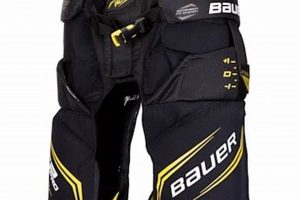
Garments worn beneath protective hockey equipment that provide a close, supportive fit are essential for player comfort and performance. These specialized undergarments, often constructed from materials like spandex or nylon blends, are designed to wick away moisture and maintain a comfortable body temperature. They typically feature a snug fit around the thighs and groin area.
The use of these items offers several advantages to athletes participating in ice hockey. The snug fit aids in muscle stabilization, which can potentially reduce fatigue and the risk of injury. Moisture-wicking properties help keep players dry, preventing chafing and discomfort caused by sweat buildup. Furthermore, some designs incorporate pockets for holding protective cups, adding an extra layer of safeguarding.
This discussion will explore the specific features, materials, and considerations involved in selecting appropriate supportive undergarments for ice hockey, focusing on how these choices impact a player’s overall experience and safety on the ice.
Considerations for Selecting Supportive Hockey Undergarments
Selecting appropriate undergarments for ice hockey requires careful consideration of several factors to ensure optimal comfort, protection, and performance.
Tip 1: Material Composition: Prioritize garments constructed from moisture-wicking fabrics like polyester or nylon blends. These materials effectively draw sweat away from the skin, helping to maintain a dry and comfortable feel throughout intense physical activity. Avoid cotton, as it retains moisture and can lead to discomfort and chilling.
Tip 2: Snug Fit: The garment should provide a close, supportive fit without restricting movement. A snug fit aids in muscle stabilization, which can reduce fatigue and minimize the risk of strains or injuries. Ensure the fit is not overly tight, which can impede circulation.
Tip 3: Cup Pocket Integration: If required, select a design that incorporates a secure pocket for holding a protective athletic cup. The pocket should hold the cup firmly in place to prevent shifting during play, maximizing its protective effectiveness.
Tip 4: Seam Construction: Look for flatlock seams or seamless designs to minimize friction against the skin. This feature helps to prevent chafing and irritation, especially during prolonged periods of wear.
Tip 5: Padding and Protection: Some specialized garments offer additional padding in key areas, such as the hips or tailbone. This added protection can be beneficial for players who are prone to falls or collisions.
Tip 6: Durability: Choose a garment made from high-quality, durable materials that can withstand the rigors of frequent use and washing. Reinforcements in high-wear areas, such as the seams and cup pocket, can extend the lifespan of the garment.
Tip 7: Proper Sizing: Refer to the manufacturer’s sizing chart to ensure an accurate fit. A garment that is too small will be constricting, while one that is too large will not provide adequate support.
Careful attention to these details will contribute to a more comfortable and protected experience on the ice, allowing players to focus on their performance without being distracted by discomfort or inadequate protection.
With these tips in mind, the subsequent sections will delve deeper into specific material properties and their impact on player comfort and performance.
1. Muscle Stabilization

Muscle stabilization, facilitated by specialized undergarments, plays a crucial role in ice hockey performance. The design of these garments can impact an athlete’s ability to maintain balance, generate power, and endure the physical demands of the sport.
- Proprioceptive Feedback Enhancement
The form-fitting nature of specialized undergarments provides enhanced proprioceptive feedback to the athlete. This heightened awareness of joint position and movement allows for more precise muscle activation and improved coordination. For example, a player wearing these garments may exhibit greater control during rapid skating maneuvers or when absorbing body checks. The improved feedback loop can contribute to enhanced stability and reduced risk of injury.
- Reduced Muscle Vibration
During high-intensity activities like skating and physical contact, muscles experience vibration, which can lead to fatigue. The compressive force exerted by the undergarment reduces this vibration, minimizing the energy expenditure required to stabilize the muscles. Consequently, the player may experience less fatigue and improved endurance over the course of a game. Research suggests that reduced muscle vibration can lead to more efficient muscle function and improved overall performance.
- Support for Core Engagement
While primarily focused on the lower body, these undergarments can also indirectly support core engagement. The compressive effect encourages activation of the core muscles, which are essential for maintaining balance and generating power in hockey. A stronger core translates to improved stability during skating, shooting, and checking. The undergarment serves as a subtle reminder for the athlete to maintain proper core alignment, enhancing overall body control.
- Minimization of Muscle Strain
By providing external support to the muscles of the legs and groin, the garment helps to minimize strain during explosive movements and sudden changes in direction. This support can be particularly beneficial for preventing muscle pulls and tears, common injuries in ice hockey. The consistent compression helps to distribute force more evenly across the muscles, reducing the likelihood of localized stress and potential injury.
The combined effect of enhanced proprioception, reduced muscle vibration, core engagement support, and minimized muscle strain underscores the significant role of specialized undergarments in muscle stabilization for ice hockey players. These benefits contribute to improved performance, reduced fatigue, and a decreased risk of injury, making them a valuable component of an athlete’s protective equipment.
2. Moisture Management

Effective moisture management is critical for athletes participating in ice hockey. The intense physical exertion associated with the sport leads to significant perspiration, which, if not properly managed, can negatively impact performance, comfort, and even increase the risk of injury. Specialized undergarments play a vital role in maintaining a dry and comfortable environment for the player.
- Wicking Action and Fabric Technology
The primary mechanism of moisture management in these garments lies in the wicking action of the fabric. Materials like polyester and nylon blends are engineered to draw moisture away from the skin’s surface. Capillary action within the fabric fibers transports perspiration to the outer layer, where it can evaporate more readily. This process helps to maintain a dry microclimate next to the skin, reducing the discomfort and potential for chafing associated with prolonged exposure to sweat. The effectiveness of wicking action depends on the fiber type, weave pattern, and any applied finishes.
- Impact on Body Temperature Regulation
Evaporation of sweat is a key mechanism for thermoregulation during physical activity. When moisture accumulates against the skin, it impairs the body’s ability to cool itself efficiently. Undergarments that effectively wick away moisture facilitate evaporative cooling, helping to maintain a stable core body temperature. This is particularly important in ice hockey, where players are subjected to both intense physical exertion and a cold environment. Proper temperature regulation can improve endurance and reduce the risk of overheating or chilling.
- Chafe Reduction and Skin Health
Prolonged exposure to moisture can soften the skin, making it more susceptible to chafing and irritation. The constant friction between skin and equipment, combined with the presence of sweat, can lead to discomfort and even skin breakdown. By keeping the skin dry, these garments minimize the risk of chafing, blisters, and other skin irritations. This promotes overall skin health and allows players to focus on their performance without distraction.
- Odor Control and Hygiene
Sweat provides a breeding ground for bacteria, which can lead to unpleasant odors. Some specialized undergarments incorporate antimicrobial treatments that inhibit bacterial growth, reducing odor buildup. These treatments can improve hygiene and prolong the freshness of the garment. Maintaining a clean and hygienic environment is essential for preventing skin infections and promoting overall well-being.
In summary, effective moisture management, facilitated by the fabric technology and design of specialized undergarments, is crucial for ice hockey players. By wicking away sweat, regulating body temperature, reducing chafe, and controlling odor, these garments contribute significantly to player comfort, performance, and overall hygiene on the ice.
3. Protective Cup Support

The integration of protective cup support into specialized undergarments designed for ice hockey represents a critical safety feature. These garments, often referred to as supportive shorts, incorporate a designated pocket, typically constructed from stretchable and durable fabric, to securely house an athletic cup. The proper placement and retention of the cup within this pocket are paramount for mitigating the risk of blunt force trauma to the groin area, a vulnerable region susceptible to injury from errant pucks, collisions, or falls. The shorts, therefore, serve not only as a base layer for comfort and moisture management but also as a vital component of protective equipment. For instance, a player struck by a puck travelling at high speed relies on the cup and its secure placement within the shorts to absorb and distribute the impact force, minimizing potential injury severity.
The design and material characteristics of the pocket are crucial for optimal cup support. The fabric must be sufficiently resilient to prevent tearing or stretching during impact, ensuring that the cup remains in its intended position. Furthermore, the pocket’s construction should minimize shifting or movement of the cup during periods of intense activity. Some designs incorporate features such as elastic straps or reinforced stitching to enhance cup retention and stability. Consider the case of a hockey player engaged in a board battle; the protective shorts are relied upon to maintain the correct positioning of the protective athletic cup. Proper engineering here is critical in protecting from significant injury.
In conclusion, the synergistic relationship between specialized undergarments and protective cup support is essential for player safety in ice hockey. The shorts provide a secure and stable platform for the cup, enabling it to function effectively in absorbing and distributing impact forces. Understanding the design considerations and material properties that contribute to optimal cup support is paramount for ensuring the integrity and effectiveness of this crucial piece of protective equipment. Failure to provide sufficient cup support can result in serious injury, underscoring the importance of selecting high-quality supportive shorts that prioritize both comfort and safety.
4. Chafe Prevention

Chafing, a common dermatological issue among athletes, arises from repetitive friction between skin and clothing, or skin against skin, often exacerbated by moisture. In ice hockey, the combination of rigorous physical activity, bulky equipment, and accumulated perspiration creates a prime environment for chafing. The friction generated by protective gear rubbing against the skin, particularly in the groin and thigh areas, can lead to irritation, discomfort, and even open sores. Therefore, effective chafe prevention measures are crucial for maintaining player comfort and performance. Specialized undergarments play a significant role in mitigating this risk.
Specialized undergarments designed for ice hockey often incorporate features specifically aimed at reducing friction. Compression fabrics, typically composed of materials like nylon or spandex blends, provide a close, supportive fit that minimizes movement between the garment and the skin. Flatlock seams, a construction technique that eliminates bulky ridges, further reduce the potential for friction. Moisture-wicking properties of the fabric are also essential, as they help to keep the skin dry, thereby reducing the lubricating effect of sweat that can intensify chafing. An athlete who uses a specialized undergarment specifically helps reduce risk of chafing, while focusing and dedicating their full attention to the sport. Without the specialized material, constant discomfort could potentially cause the player to perform poorly.
In summary, chafe prevention is a critical design consideration for specialized ice hockey undergarments. By providing a snug fit, employing flatlock seams, and utilizing moisture-wicking fabrics, these garments minimize friction and maintain a dry environment, reducing the risk of chafing and ensuring player comfort and performance. Understanding the mechanisms of chafing and the design features that address this issue is essential for selecting appropriate undergarments that support athletes’ well-being on the ice.
5. Thermal Regulation

Thermal regulation is a critical function of specialized undergarments designed for ice hockey, directly influencing player performance and comfort. Ice hockey presents a unique thermal challenge: intense physical exertion generates substantial heat, while the cold rink environment promotes heat loss. Imbalances in thermal regulation can lead to decreased performance, discomfort, and potentially increase the risk of hypothermia or overheating. Specialized undergarments, therefore, must effectively manage body temperature to maintain optimal physiological function. For example, during a high-intensity shift, a player’s core temperature rises. Undergarments with superior thermal regulation properties facilitate the efficient removal of excess heat, preventing overheating and allowing the player to maintain peak performance longer.
The capacity for effective thermal regulation in ice hockey compression shorts relies on specific material properties and design features. Moisture-wicking fabrics, such as polyester or nylon blends, play a crucial role by drawing perspiration away from the skin’s surface, facilitating evaporative cooling. The garment’s fit also contributes; a snug, but not constrictive, fit allows for efficient heat transfer from the skin to the fabric. Furthermore, some designs incorporate ventilation panels strategically placed in areas prone to high heat buildup, such as the back and sides. These panels enhance airflow and promote further cooling. Consider a scenario where a player is inactive on the bench; specialized shorts need to prevent a drastic drop in body temperature.
In conclusion, thermal regulation is an indispensable attribute of ice hockey compression shorts. By effectively managing heat and moisture, these garments contribute significantly to player comfort, performance, and safety. The interplay between material properties, design features, and the unique thermal demands of ice hockey underscores the importance of selecting specialized undergarments that prioritize thermal regulation. A player who utilizes effective compression shorts with optimized thermal regulation will be able to maintain a more consistent core temperature which will help the players stamina and endurance on the ice.
Frequently Asked Questions
This section addresses common inquiries regarding the function, selection, and maintenance of specialized undergarments designed for ice hockey players.
Question 1: What is the primary function of specialized undergarments in ice hockey?
The primary functions include moisture management, muscle stabilization, protective cup support (if applicable), chafe prevention, and thermal regulation. These garments contribute to player comfort, performance, and safety.
Question 2: How should one select the appropriate size?
Refer to the manufacturer’s sizing chart. Measurements are typically based on waist circumference or inseam length. A snug, but not constricting, fit is desirable.
Question 3: What materials are most suitable for ice hockey undergarments?
Moisture-wicking synthetic fabrics, such as polyester or nylon blends, are preferred. These materials efficiently draw sweat away from the skin.
Question 4: How should compression shorts be properly cleaned?
Follow the manufacturer’s instructions. Generally, machine washing in cold water with a mild detergent and air drying is recommended. Avoid using bleach or fabric softeners.
Question 5: Are supportive shorts essential for all ice hockey players?
While not mandatory, they are highly recommended. The benefits they provide in terms of comfort, support, and protection can enhance the playing experience.
Question 6: How often should compression shorts be replaced?
Replacement frequency depends on usage and care. Inspect the garment regularly for signs of wear and tear, such as loss of elasticity or damaged seams. Replace when performance is compromised.
In conclusion, specialized undergarments represent a valuable investment for ice hockey players seeking enhanced comfort, performance, and safety.
The next section will explore the long-term benefits and maintenance practices to further extend the lifespan of these valuable garments.
Conclusion
The preceding discussion has thoroughly examined the multifaceted role of ice hockey compression shorts in enhancing player performance, safety, and comfort. Key benefits, including muscle stabilization, effective moisture management, reliable protective cup support, chafe prevention, and thermal regulation, have been explored in detail. These attributes collectively contribute to an improved athletic experience by minimizing distractions and optimizing physiological function on the ice.
Given the demonstrated advantages, a considered evaluation of these supportive undergarments is warranted for any serious ice hockey player. Prioritizing garments that emphasize quality materials, proper fit, and diligent maintenance practices will yield long-term benefits, ensuring sustained performance and protection throughout the demands of the sport. Making an informed decision contributes to a safer and more effective athletic pursuit.