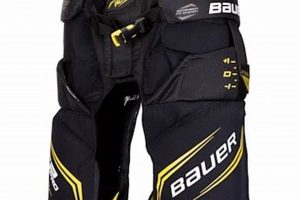
A guide outlining recommended dimensions for equipment used in the sport of ice hockey is essential for proper fit and player safety. These charts typically provide measurements for items such as skates, helmets, shoulder pads, and other protective gear, correlating physical attributes like height, weight, chest size, and foot length with specific product sizes. As an example, a player with a chest circumference of 38 inches would consult the chart to determine the appropriate size for shoulder pads, commonly a medium.
The use of such standardized sizing is paramount for ensuring players wear gear that provides adequate protection and allows for optimal performance. Properly fitting equipment minimizes the risk of injury resulting from impacts or falls during gameplay. Historically, inconsistencies in equipment sizing created challenges for athletes and equipment managers; standardized charts brought a level of consistency to alleviate that issue. It also assists individuals in making informed purchasing decisions, particularly when ordering equipment online or from retailers without immediate access to fitting rooms.
The subsequent sections will delve into specific areas covered by these sizing resources, including detailed explanations of how to accurately measure different body parts, understand various sizing conventions employed by different manufacturers, and interpret the information provided within the charts to select the most appropriate ice hockey equipment.
Ice Hockey Equipment Sizing Guidance
The following recommendations provide instruction on the accurate interpretation and application of sizing resources for ice hockey gear. Proper use of these guidelines will enhance safety and performance on the ice.
Tip 1: Accurate Measurement is Essential. Prior to consulting any sizing resource, ensure all body measurements are taken accurately. Use a flexible measuring tape and record measurements in both inches and centimeters, when possible. Seek assistance from another individual to ensure the tape is level and measurements are precise.
Tip 2: Consider the Manufacturer’s Specifics. Equipment sizing can vary between manufacturers. Always consult the size chart provided by the specific brand of equipment being considered. Do not assume a size from one brand will automatically translate to the same size in another.
Tip 3: Prioritize Protection over Comfort. While comfort is important, the primary function of hockey equipment is protection. If a measurement falls between two sizes, opt for the larger size to ensure adequate coverage and protection. Adjustments can be made to improve fit.
Tip 4: Understand the Different Measurement Points. Equipment sizing resources often require multiple measurements, such as chest circumference, height, weight, and foot length. Consult the chart’s instructions to identify the exact location for each measurement to ensure accuracy.
Tip 5: Account for Layering. When measuring for equipment, particularly shoulder pads or pants, consider the clothing that will be worn underneath. Wear typical base layers during measurement to ensure an accurate fit when fully equipped.
Tip 6: Focus on Key Measurement. when it comes to skate the foot lenght can make the differences. This can affect the play on ice, so double check the measure to have a better result.
Tip 7: When buying online, compare the measure to your body size. Online purchase is a great way to buy equipment, but be aware that size may vary for the different manufacturers.
Adherence to these tips will facilitate the selection of ice hockey equipment that offers optimal protection, comfort, and performance. Accurate application of sizing resources is a critical component of player safety.
The subsequent discussion will address the specific equipment categories and their corresponding sizing considerations.
1. Measurements standardization

The foundation of any effective “ice hockey size chart” lies in measurements standardization. Without standardized measurements, the charts would be rendered inconsistent and unreliable, making it difficult for players to select properly fitting equipment. Standardization establishes a common language between manufacturers, retailers, and consumers, allowing for comparisons across different brands and product lines. For example, if a chart indicates that a player with a chest size of 40 inches requires a size large shoulder pad, that designation should hold true regardless of the specific manufacturer, although minor variations must be considered and verified by the consumer.
The lack of standardization in the past resulted in significant challenges for players and equipment managers, with varying size designations leading to ill-fitting equipment and increased risk of injury. Measurement standardization helps to mitigate this risk by providing a consistent reference point. The development and adoption of industry-wide sizing standards has contributed to safer and more comfortable gameplay. Standardized measurements also facilitate online purchases, allowing consumers to make more informed decisions without the ability to physically try on equipment.
In conclusion, measurement standardization is a critical component of a functional and effective “ice hockey size chart.” It promotes consistency, facilitates informed purchasing decisions, and ultimately contributes to enhanced player safety. While variations between manufacturers still exist, adherence to standardized measurement principles provides a crucial framework for navigating the equipment selection process.
2. Equipment Categories

The application of an “ice hockey size chart” is inherently dependent upon the categorization of equipment. Each category necessitates a distinct approach to measurement and sizing due to variations in protective function, anatomical fit, and range of motion requirements. Therefore, a clear understanding of equipment categories is crucial for the effective use of any sizing resource.
- Skates
Skate sizing is determined primarily by foot length and width. Unlike other equipment, skate sizes do not directly correspond to standard shoe sizes. The chart will provide measurements for foot length in inches or centimeters and cross-reference those measurements with specific skate sizes. Properly sized skates are essential for agility, balance, and power transfer during skating.
- Helmets
Helmet sizing is based on head circumference. Measurements are typically taken around the forehead, just above the eyebrows. Charts correlate head circumference with helmet sizes, often expressed in inches or centimeters. A correctly sized helmet should fit snugly without being overly tight and should not shift during head movements. Ensuring proper helmet fit is crucial for head protection.
- Shoulder Pads
Shoulder pad sizing relies on chest circumference and, in some cases, height. Charts provide ranges for chest measurements that correspond to small, medium, large, and extra-large sizes. The shoulder pads should cover the shoulders, collarbone, and sternum adequately without restricting arm movement. Proper fit ensures upper body protection from impacts.
- Pants
Ice hockey pants are sized primarily based on waist circumference and height. Sizing resources outline appropriate waist measurement ranges for each size designation. The pants should cover the thighs and kidneys adequately while allowing for unrestricted hip and leg movement. Adequate coverage is paramount for lower body protection during falls or collisions.
These equipment categories exemplify the diverse measurement requirements presented by ice hockey equipment. Effective utilization of a size chart requires a clear understanding of which measurements apply to each specific equipment type. The manufacturer’s specifications should always be consulted to ensure accurate sizing, as minor variations may exist between brands. Prioritizing correct size selection in each category is essential for ensuring player safety and optimizing on-ice performance.
3. Manufacturer Variance

Manufacturer variance represents a significant factor in the effective application of ice hockey size charts. While size charts aim to standardize equipment sizing, variations in design, construction, and materials across different manufacturers introduce inconsistencies. These variations mean that a “medium” size in one brand might not correspond precisely to a “medium” size in another. This discrepancy arises from differing interpretations of standard measurements, proprietary design choices, and the utilization of varying materials that can affect the final fit of the equipment.
The effect of manufacturer variance necessitates a cautious approach to equipment selection. Players and equipment managers must recognize that relying solely on generic size designations can lead to improperly fitting gear. Instead, consulting the specific size chart provided by each manufacturer is critical. For instance, a player who consistently wears a size 9 skate from one brand should not automatically assume that a size 9 from another brand will provide the same fit. Real-world examples demonstrate that ignoring these variances can result in discomfort, impaired performance, and an increased risk of injury due to inadequate protection. Therefore, understanding manufacturer variance is a vital component of the proper and safe use of ice hockey equipment.
In conclusion, manufacturer variance introduces a layer of complexity to ice hockey equipment sizing. While size charts provide a general guideline, the specific nuances of each brand must be considered. This requires careful attention to individual manufacturer charts and, ideally, a physical fitting to ensure optimal comfort and safety. Recognizing and accounting for these variances helps mitigate the risk of ill-fitting equipment and ultimately contributes to a safer playing experience. The challenge is to balance the convenience of standardized charts with the reality of brand-specific sizing differences.
4. Protection priority

The primary imperative when utilizing any ice hockey size chart is the protection priority. Equipment’s fundamental purpose is to mitigate the risk of injury, and selecting the correct size is inextricably linked to achieving this objective. A size chart acts as a guide, but the ultimate decision regarding equipment size must prioritize protective coverage over mere comfort or aesthetic preference. For instance, when a player’s measurements fall between two sizes, the larger size should generally be selected to ensure comprehensive protection, even if it feels slightly less streamlined. This is particularly crucial for equipment such as helmets and shoulder pads, where even a small size discrepancy can significantly compromise their ability to absorb and distribute impact forces effectively during a collision. Instances of severe injuries occurring due to ill-fitting protective gear underscore the importance of adhering to this principle. A youth player using an adult-sized helmet may not get proper protection for their head and neck.
This focus on protection priority extends to all equipment categories. Skates that are too large can hinder agility and balance, increasing the likelihood of falls and subsequent injuries. Shoulder pads that are too small may leave vital areas of the upper body exposed to direct impact. Pants that are too tight can restrict movement, impeding performance and potentially leading to muscle strains. The size chart serves as a tool for identifying the range of appropriate sizes, but the player must always consider the specific anatomical fit and range of motion needed to ensure maximum protection without sacrificing mobility. Consideration should be given to the specific type of hockey being played; contact or non-contact leagues will influence the acceptable trade-off between mobility and maximum coverage.
In summary, the protection priority is not merely a suggestion but a foundational principle in the proper application of ice hockey size charts. It necessitates a deliberate decision-making process that prioritizes safety above all other considerations. While comfort and performance are important aspects of equipment selection, they should never supersede the fundamental need for adequate protective coverage. By adhering to this principle, players can minimize their risk of injury and maximize their safety on the ice. There are some cases to consider when buying a used equipment, even more attention is needed.
5. Accurate body assessment

The efficacy of any ice hockey size chart is directly contingent upon the precision of the initial body assessment. Erroneous measurements render the chart virtually useless, leading to improperly sized equipment and a compromise of player safety. Therefore, meticulous body assessment constitutes the foundational step in leveraging the benefits of sizing resources.
- Measurement Tools and Techniques
The employment of appropriate measuring tools and standardized techniques is paramount. A flexible measuring tape is required for circumference measurements, while a rigid ruler or measuring device is necessary for linear dimensions such as foot length. All measurements should be taken while wearing minimal clothing to avoid artificially inflating the values. Proper technique involves maintaining a level measuring plane and ensuring the tape is snug but not constricting. Inaccurate tools or improper techniques inevitably lead to flawed measurements and subsequent sizing errors.
- Key Measurement Points
Each equipment category requires measurement at specific anatomical points. For helmets, head circumference is measured horizontally around the forehead, just above the eyebrows. Shoulder pad sizing relies on chest circumference, taken at the widest point of the chest. Pant sizing is determined by waist circumference, measured at the natural waistline. Skates require accurate foot length and width measurements. Neglecting these prescribed measurement points will result in inaccurate readings and inappropriate equipment selection. For example, measuring chest circumference too high will reduce the accuracy.
- Consistency and Repetition
To minimize the impact of human error, measurements should be taken multiple times and averaged. This process helps identify and correct any inconsistencies in the initial readings. Furthermore, measurements should be repeated periodically, particularly for growing children, as body dimensions can change rapidly. Regular reassessment ensures the equipment continues to fit properly and provide adequate protection. Consistency in measurement practices helps to maintain the integrity of the sizing process over time.
- Consideration of Layering
While the primary body measurements are taken with minimal clothing, it is crucial to account for the layering of apparel typically worn beneath protective equipment. Base layers and undergarments can add bulk and affect the fit of certain items, such as shoulder pads and pants. Therefore, measurements should ideally be taken while wearing the anticipated base layers to ensure accurate sizing in real-world conditions. Failure to consider layering can result in equipment that is too tight or restrictive, compromising both comfort and performance.
In conclusion, accurate body assessment is the cornerstone of effective equipment sizing in ice hockey. Precise measurement techniques, adherence to prescribed measurement points, consistency in practice, and consideration of layering are all essential components of this process. When accurate body assessment is combined with the size chart, the results can give the player the peace of mind. The subsequent application of a size chart based on flawed body assessment is a futile exercise that jeopardizes player safety and diminishes on-ice performance. Therefore, investing time and effort in meticulous body assessment is a prerequisite for maximizing the benefits of available sizing resources.
6. Layering consideration

Layering consideration is an integral component of effectively utilizing ice hockey size charts. The undergarments and base layers worn beneath protective equipment directly impact its fit. Measurements taken without accounting for these layers may result in equipment that is too tight, restricting movement, or too loose, compromising protection. This necessitates an adjustment to the sizing process to ensure the final equipment selection accommodates the cumulative effect of all worn garments. For example, when measuring for shoulder pads, the chest circumference should be assessed with the base layer worn beneath to avoid selecting pads that constrict the player’s range of motion on the ice.
The practical application of layering consideration involves either taking measurements while wearing the typical base layer or adjusting the selected equipment size based on the thickness and compression of the undergarments. For instance, a player wearing a thick base layer may require a pant size one increment larger than indicated by the size chart based on bare waist measurements. Conversely, a highly compressive base layer might have a negligible impact on sizing. Consideration must also be given to the type of base layer fabric; moisture-wicking materials are designed to minimize bulk and may have less of an impact on sizing compared to traditional cotton undergarments. This adjustment process demands a degree of experience and judgment, highlighting the value of seeking guidance from experienced equipment managers or retailers.
In summary, proper layering consideration is not merely a supplementary step but a critical adjustment to ensure ice hockey equipment provides both optimal protection and unrestricted movement. Failing to account for layering can negate the value of the size chart and compromise player safety and performance. Addressing this variable requires a deliberate approach to measurement and equipment selection, often involving minor adjustments to account for the cumulative effect of base layers and undergarments. This focus on detail is essential for maximizing the effectiveness of size charts and ensuring the well-being of players.
Frequently Asked Questions
The following addresses common inquiries regarding the proper application and interpretation of sizing resources for ice hockey equipment.
Question 1: Why is consulting an ice hockey size chart necessary?
Properly fitting ice hockey equipment is paramount for player safety. Size charts provide guidelines for selecting equipment that offers adequate protection and allows for optimal performance. Utilizing these charts helps minimize the risk of injury from impacts or falls.
Question 2: How frequently should body measurements be taken for ice hockey equipment?
Body measurements should be taken at least annually, and more frequently for growing children. Significant changes in height, weight, or body circumference necessitate reassessment to ensure equipment continues to fit appropriately.
Question 3: What factors contribute to size variance among different ice hockey equipment manufacturers?
Size variance arises from differences in design, construction techniques, and materials used by various manufacturers. Consulting each brand’s specific size chart is essential to mitigate the impact of these variations.
Question 4: If measurements fall between two sizes on an ice hockey size chart, which size should be selected?
In most cases, the larger size should be selected to ensure adequate protection. Adjustments can then be made to improve comfort and mobility without compromising protective coverage.
Question 5: How does layering affect the accuracy of an ice hockey size chart?
Base layers worn beneath equipment can add bulk and impact fit. Measurements should be taken while wearing the intended base layers, or the selected equipment size should be adjusted accordingly to accommodate layering.
Question 6: Where can reliable ice hockey size charts be found?
Reliable charts are typically available on equipment manufacturers’ websites, at authorized retailers, and from reputable hockey equipment suppliers. Consulting multiple sources can provide a more comprehensive sizing assessment.
Accurate interpretation and application of an ice hockey size chart requires careful attention to detail and a prioritization of player safety. These FAQs serve as a starting point for understanding key considerations in the equipment sizing process.
The subsequent section will explore advanced topics related to equipment fitting and customization.
Conclusion
This discussion has emphasized the critical role of the “ice hockey size chart” in ensuring player safety and optimizing performance. The meticulous application of sizing guidelines, coupled with an understanding of manufacturer variances and the prioritization of protection, is paramount. Accurate body assessment and the careful consideration of layering effects further contribute to the effective selection of appropriately sized equipment.
The proper utilization of an “ice hockey size chart” represents a fundamental responsibility for players, parents, and equipment managers. Diligence in this process can significantly reduce the risk of injury and enhance the overall playing experience. Continued adherence to and refinement of sizing standards will contribute to a safer and more consistent environment for athletes at all levels of the sport. The availability and adoption of digital sizing tools and augmented reality experiences may further streamline equipment selection in the future, but these innovations must remain grounded in the core principles of accurate measurement and protective coverage.