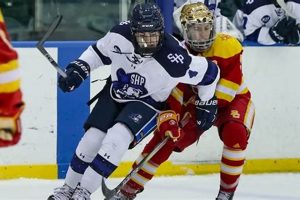
Categorization by age is a fundamental aspect of organized ice hockey. These defined brackets ensure fair competition and player safety by grouping individuals of similar physical maturity and skill levels. For example, players aged nine and ten typically participate in a specific division designed for their developmental stage, distinct from those aged eleven and twelve.
Age-based divisions are important for several reasons. They foster a more equitable playing field, mitigating the risks associated with significant size and strength disparities. Moreover, they enable coaches and trainers to implement age-appropriate training regimes, maximizing player development and minimizing the potential for injury. Historically, these groupings have evolved to reflect advances in sports science and a deeper understanding of child and adolescent development.
The following sections will delve into the specific age categories commonly found in youth ice hockey, the rules and regulations governing each division, and the pathways available for players as they progress through these developmental stages toward higher levels of competition.
Effective management of a young player’s involvement within specific age ranges is crucial for their development and overall experience. The following points offer guidance for parents, coaches, and administrators.
Tip 1: Understand the Age Cut-Off Dates: Familiarize yourself with the precise dates used to determine eligibility for each division. These dates vary between organizations and leagues, impacting player placement.
Tip 2: Prioritize Skill Development Over Division Advancement: Encourage a focus on fundamental skill development rather than prematurely pushing for advancement to higher divisions. Sound fundamentals are essential for long-term success.
Tip 3: Consider the Player’s Physical Maturity: Recognize that players mature at different rates. A player who is chronologically eligible for a higher division may benefit from remaining in their current group if they are not physically ready.
Tip 4: Emphasize Player Safety: Ensure that the chosen league or organization prioritizes player safety through proper coaching techniques, equipment standards, and enforcement of fair play rules.
Tip 5: Communicate with Coaches and League Officials: Maintain open communication with coaches and league administrators to address any concerns regarding player development, safety, or division placement.
Tip 6: Focus on Enjoyment and Sportsmanship: Remember that youth sports should be a positive and enjoyable experience. Encourage good sportsmanship and teamwork among players.
Adhering to these guidelines contributes to a more positive and productive youth hockey experience, maximizing player development and fostering a lifelong love of the sport.
The subsequent sections will explore the various pathways available to players as they progress beyond youth hockey and pursue higher levels of competition.
1. Player Development

Player development within the framework of organized ice hockey is intrinsically linked to age-appropriate divisions. These divisions provide a structured environment designed to foster skill acquisition, physical conditioning, and tactical understanding, all tailored to the specific developmental stage of the individual athlete. This systematic approach aims to maximize each player’s potential while minimizing the risk of injury and burnout.
- Skill-Specific Training
Age groups allow for focused skill development tailored to cognitive and physical capabilities. For instance, the emphasis in younger divisions may be on fundamental skating techniques and puck control, while older divisions introduce more complex strategies and positional play. The transition from one division to another presents opportunities to progressively build upon established skills, creating a cohesive learning pathway.
- Age-Appropriate Competition
Divisional play ensures that players compete against individuals of similar physical size, strength, and experience. This reduces the likelihood of mismatches that could lead to injury or hinder development. The level of competition within each division should be challenging enough to promote growth but not so overwhelming as to discourage participation.
- Progressive Tactical Instruction
The sophistication of tactical instruction increases with age. Younger players are introduced to basic concepts of team play, such as passing and positional awareness. As players advance, they are exposed to more complex offensive and defensive systems, power-play and penalty-kill strategies, and game management principles. This gradual introduction of tactical concepts allows players to develop a deeper understanding of the game.
- Safe and Supportive Environment
Age divisions promote a safer environment by allowing organizations to implement specific rules and guidelines that address the physical capabilities of the players involved. Modified checking rules in younger divisions, for example, minimize the risk of serious injury. The presence of qualified coaches and referees who understand the unique challenges of each age group contributes to a supportive and positive learning environment.
The careful alignment of age-based divisions with targeted developmental objectives is critical to the long-term success of youth hockey programs. By providing age-appropriate instruction, competition, and safety measures, these divisions lay the foundation for players to reach their full potential and cultivate a lifelong passion for the sport.
2. Safety Regulations

The establishment and enforcement of safety regulations within youth ice hockey are fundamentally intertwined with the structure of divisional categories based on age. These regulations are not uniformly applied; rather, they are carefully calibrated to address the specific physical and cognitive development of players in each age bracket. The objective is to minimize the risk of injury while fostering a safe and supportive environment for skill acquisition.
- Modified Checking Rules
Body checking regulations are frequently modified or entirely prohibited in the younger age groups. This is predicated on the understanding that younger players may lack the physical maturity, coordination, and awareness necessary to safely engage in body checking. Implementing restrictions reduces the likelihood of serious collisions and concussions. As players progress to older divisions, body checking may be introduced gradually under strict supervision, with an emphasis on proper technique and respect for opponents.
- Equipment Standards
Mandatory equipment requirements are strictly enforced across all age divisions, but the specific standards may vary based on the anticipated level of contact and the evolving protective technologies available. Helmets, facial protection, shoulder pads, elbow pads, gloves, and other protective gear are essential. Regulations specify the certification standards that equipment must meet, ensuring that players are adequately protected from potential injuries. Regular inspections are conducted to verify compliance with these standards.
- Concussion Protocols
Comprehensive concussion protocols are implemented in all age divisions, outlining procedures for identifying, evaluating, and managing suspected concussions. These protocols emphasize the importance of removing players from play immediately if they exhibit any signs or symptoms of a concussion. Players are required to undergo a medical evaluation before returning to the ice, and a gradual return-to-play protocol is followed to minimize the risk of further injury. Coaches, referees, and parents receive training on concussion awareness and prevention.
- Fair Play Enforcement
Fair play regulations are critical to promoting a safe and respectful playing environment. These regulations prohibit dangerous plays, such as high-sticking, slashing, and boarding, that could result in injury. Referees are responsible for enforcing these rules consistently and impartially. Emphasis is placed on sportsmanship and respect for opponents, coaches, and officials. Penalties are assessed for violations, and repeat offenders may face disciplinary action.
The adaptive nature of safety regulations, tailored to the physical and cognitive capabilities of players in each ice hockey age divisions, underscores a commitment to prioritizing player well-being. By implementing age-appropriate rules, equipment standards, concussion protocols, and fair play enforcement, organizations aim to create a safe and supportive environment where young athletes can develop their skills and passion for the sport without undue risk of injury.
3. Competitive Balance

The existence of defined divisional categories based on age is a cornerstone of competitive balance in youth ice hockey. These divisions mitigate the inherent advantages that would arise from significant disparities in physical size, strength, and developmental maturity. Without such stratification, older or more physically advanced players would disproportionately dominate, leading to a less engaging and potentially unsafe environment for all participants. The implementation of these divisions creates a more equitable playing field where individuals compete against peers of comparable abilities, fostering greater participation and a more positive overall experience. A league without age divisions would likely see a decline in participation from younger or less physically developed players, hindering the long-term growth of the sport.
The benefits of competitive balance extend beyond simply leveling the playing field. When athletes are challenged by appropriately matched opponents, they are motivated to improve their skills and strategies. This fosters a culture of continuous development and encourages players to strive for excellence. Furthermore, close games and tightly contested matches are inherently more exciting and engaging for both players and spectators. This heightened level of engagement translates into a stronger sense of community and a greater appreciation for the sport. Conversely, leagues where skill disparities are rampant often lead to lopsided scores and decreased player morale, which can ultimately lead to attrition.
In conclusion, age divisions within youth ice hockey are indispensable for maintaining competitive balance. This balance, in turn, promotes increased participation, improved player development, and a more engaging experience for all stakeholders. Challenges remain in ensuring that divisions are consistently structured and effectively managed across different leagues and organizations, but the fundamental principle of age-based stratification remains a critical element in fostering a thriving and equitable youth ice hockey environment.
4. Skill Progression

Skill progression in ice hockey is intricately linked to age groupings, serving as both a cause and an effect within the developmental framework of the sport. The structure of divisions based on age ensures that players are exposed to challenges appropriate for their cognitive and physical maturity, thereby facilitating the acquisition and refinement of necessary skills. Without this age-based categorization, skill development would be hampered by mismatched competition, where individuals might face opponents too advanced or too inexperienced, stifling their progress.
The importance of skill progression within age divisions manifests in several practical ways. For example, the transition from initiation programs, which emphasize basic skating and puck handling, to more structured league play in younger age groups allows for the incremental introduction of tactical concepts and positional awareness. This staged approach prevents players from being overwhelmed and allows them to build a solid foundation of fundamental skills. Similarly, the implementation of progressive body checking rules in older age divisions requires players to develop both the physical strength and strategic awareness necessary to engage safely and effectively in this aspect of the game. This illustrates how age groupings are not merely administrative conveniences but are integral to the planned advancement of player capabilities.
The practical significance of understanding the relationship between skill progression and age groups lies in its impact on coaching methodologies and player development strategies. Coaches must tailor their training programs to the specific developmental needs and skill levels of players within each division, ensuring that athletes are challenged but not overburdened. Recognizing this connection allows for the creation of a more effective and rewarding learning environment, fostering a lifelong passion for the sport and maximizing each player’s potential. The challenges associated with this approach include ensuring consistent coaching standards and adapting to the varying levels of talent and physical maturity within each age group. However, the overall benefits of aligning skill progression with age divisions far outweigh these challenges, contributing to the sustained growth and competitiveness of ice hockey at all levels.
5. Fair Play

Fair play principles are paramount in organized ice hockey, particularly within age-defined divisions. These principles extend beyond simply adhering to rules; they embody ethical conduct, respect for opponents, and a commitment to sportsmanship, all of which are crucial for creating a positive developmental environment.
- Enforcement of Age-Appropriate Rules
Fair play necessitates consistent enforcement of regulations tailored to each age division. For instance, modified checking rules in younger divisions aim to prevent injuries, while strict penalties for dangerous plays, such as high-sticking or boarding, are uniformly applied to protect players. The consistent and impartial application of these rules is essential for maintaining a fair and safe competitive environment.
- Respect for Opponents and Officials
Fair play mandates that players, coaches, and spectators treat opponents, referees, and other officials with respect. This includes refraining from taunting, abusive language, or actions intended to intimidate or harass others. Emphasizing respect promotes a positive and sportsmanlike atmosphere, fostering camaraderie and mutual appreciation among participants.
- Adherence to the Spirit of the Game
Fair play requires that participants abide by not only the letter but also the spirit of the rules. This means avoiding tactics that exploit loopholes or technicalities to gain an unfair advantage. Instead, players and coaches should prioritize ethical conduct and a commitment to playing the game with integrity, regardless of the score or the stakes.
- Promoting a Positive Youth Hockey Culture
Fair play is integral to cultivating a positive youth hockey culture that emphasizes development, enjoyment, and sportsmanship. Organizations and leagues should actively promote these values through educational programs, codes of conduct, and disciplinary measures for violations of fair play principles. By fostering a culture of respect, integrity, and ethical conduct, youth ice hockey can serve as a valuable learning experience that extends far beyond the rink.
The commitment to fair play within ice hockey age groups not only ensures a level playing field but also cultivates essential life skills, such as respect, integrity, and ethical decision-making. These principles contribute to the overall development of young athletes, preparing them for success both on and off the ice.
6. Organizational Structure
The organizational structure of ice hockey directly dictates the implementation and management of divisional categories based on age. This structure, encompassing national governing bodies, regional associations, and local leagues, provides the framework for defining age eligibility, establishing rules and regulations, and ensuring consistent standards across all levels of play. Without a well-defined organizational structure, the effectiveness of age divisions would be compromised, leading to inconsistencies in competition, player safety, and developmental opportunities. For example, USA Hockey and Hockey Canada, as national governing bodies, establish the age classifications used throughout their respective countries. These classifications serve as the foundation for regional and local leagues to organize their programs and ensure compliance with national standards.
The importance of a robust organizational structure is further exemplified by its role in enforcing safety regulations within specific age groups. National governing bodies develop guidelines for equipment standards, concussion protocols, and body checking rules, which are then disseminated and enforced by regional associations and local leagues. This hierarchical approach ensures that all players, regardless of their location or affiliation, are subject to the same minimum safety standards. Furthermore, the organizational structure facilitates the administration of player registration, insurance coverage, and background checks for coaches and volunteers, contributing to a safer and more accountable youth hockey environment. Instances where organizational structures are weak or poorly defined often result in inconsistencies in rule enforcement, inadequate safety measures, and a compromised player experience.
In conclusion, the organizational structure is an indispensable component of divisional categories based on age in ice hockey. It provides the necessary framework for establishing, implementing, and enforcing standards related to player eligibility, safety, and development. While challenges remain in ensuring consistent application across diverse organizational landscapes, a strong and well-defined structure is essential for fostering a fair, safe, and enriching experience for all young hockey players. This interconnectedness highlights the need for continued collaboration and communication among national governing bodies, regional associations, and local leagues to maintain the integrity of the sport.
Frequently Asked Questions
The following section addresses common inquiries regarding age-based divisional structures in organized ice hockey, providing clarity on eligibility, regulations, and developmental considerations.
Question 1: What is the determining factor for placement within a specific age division?
Player placement is typically determined by birth year. Leagues and associations establish cut-off dates, often in late December or early January, to delineate age eligibility for each division. Players born within the specified timeframe are assigned to the corresponding group.
Question 2: Are exceptions ever made to the age cut-off rules?
Exceptions are rare and typically require formal petitions. Factors such as documented medical conditions, significant developmental delays, or previous participation in a different league with a varying age structure may be considered. However, waivers are not routinely granted.
Question 3: What are the typical age ranges for youth hockey divisions?
Common classifications include Mites (8 and under), Squirts (9-10), Peewees (11-12), Bantams (13-14), and Midgets (15-18). These ranges may vary slightly depending on the specific organization or league.
Question 4: How do rules and regulations differ across various age groups?
Rule modifications are common to address developmental considerations. Younger divisions may have restrictions on body checking or offside rules, while older divisions implement standard ice hockey regulations. This progression aims to promote player safety and skill development.
Question 5: Can a player “play up” in a higher age division?
Playing up is generally discouraged, particularly at younger ages. The focus should be on skill development within the appropriate age group. However, in some cases, exceptionally skilled players may be granted permission to play up, subject to evaluation and approval by league officials.
Question 6: What are the potential benefits of remaining in the designated age division rather than seeking to advance prematurely?
Remaining within the designated division allows players to develop fundamental skills, build confidence, and maintain a positive experience. Premature advancement can lead to frustration, decreased playing time, and potential safety concerns if the player is not physically or mentally prepared for the higher level of competition.
Understanding age group classifications is essential for ensuring fair competition, promoting player safety, and fostering optimal skill development within the framework of organized ice hockey.
The following sections will explore strategies for optimizing player development within each age group, focusing on training methodologies, coaching techniques, and parent involvement.
Ice Hockey Age Groups
This exploration has elucidated the critical role that classifications based on age play within organized ice hockey. From ensuring fair competition and prioritizing player safety to facilitating progressive skill development, the structured framework of these divisions shapes the youth hockey experience. Understanding the nuances of age eligibility, rule adaptations, and developmental considerations is paramount for players, parents, coaches, and administrators alike.
As youth hockey continues to evolve, a sustained commitment to refining and adapting these age-based structures remains essential. Prioritizing ethical conduct, fostering a positive playing environment, and ensuring equitable opportunities for all participants will contribute to the long-term growth and integrity of the sport. Future research and innovation should focus on optimizing player development within each age group, ultimately enhancing the overall quality and experience for young athletes pursuing their passion on the ice.