These specialized equipment carriers are designed for younger ice or inline hockey players, providing a convenient solution for transporting gear. These bags typically feature a durable construction, a spacious main compartment for equipment, and often include smaller pockets for accessories. The integration of wheels and a telescoping handle enables easy maneuverability, reducing the physical strain of carrying heavy loads.
The advent of wheeled hockey bags has significantly eased the burden on young athletes and their families. Prior to their widespread adoption, carrying heavy hockey equipment was a common source of discomfort and potential injury. These rolling carriers promote independence for young players, allowing them to manage their own equipment more easily. They also help to protect the equipment itself, minimizing wear and tear during transportation.
The subsequent sections will delve into the specific features and considerations for selecting the appropriate size and type of equipment hauler, alongside a discussion of durability, storage solutions, and maintenance tips to ensure longevity. The various storage compartments will also be looked at, to maximize the storage space for various items, from skates, helmets, protective padding to hockey sticks.
Tips on Selecting and Maintaining Equipment Carriers for Young Hockey Players
This section provides guidelines for choosing and caring for the equipment carrying solution that best suits a young hockey players needs, focusing on durability, size, and maintenance.
Tip 1: Size and Capacity: Assess the volume of equipment required. A model too small will necessitate carrying additional items separately, while an excessively large one can be unwieldy for a younger individual. Measure the dimensions of the player’s largest piece of equipment (e.g., shin guards) to ensure compatibility with the bag’s internal dimensions.
Tip 2: Wheel Quality: Prioritize robust wheels constructed from high-quality materials. Inadequate wheels will fail prematurely, especially when used on rough surfaces such as parking lots or sidewalks. Inspect the wheel bearings for smooth rotation before purchase.
Tip 3: Handle Durability: Examine the telescoping handle mechanism. It should extend and retract smoothly and lock securely into place. A loose or wobbly handle indicates inferior construction and potential failure.
Tip 4: Material Strength: Opt for bags constructed from heavy-duty, tear-resistant nylon or polyester. Reinforcements at stress points, such as corners and seams, will prolong the bag’s lifespan. Consider a water-resistant or waterproof material to protect equipment from moisture.
Tip 5: Ventilation: Adequate ventilation is crucial to prevent the buildup of moisture and odor. Look for models with strategically placed ventilation panels or mesh inserts to promote airflow.
Tip 6: Cleaning and Maintenance: Regularly clean the interior of the bag to remove dirt, debris, and moisture. Use a mild detergent and allow the bag to air dry completely. Lubricate wheel bearings periodically with a dry lubricant to maintain smooth rolling.
Tip 7: Storage Considerations: When not in use, store the equipment carrier in a dry, well-ventilated area to prevent mold and mildew growth. Avoid storing the bag in direct sunlight, which can cause the material to fade and degrade.
Adhering to these guidelines ensures the equipment carrier chosen will provide years of reliable service, simplifying the transportation of gear and protecting the investment in hockey equipment. Proper care and maintenance are essential for maximizing the bag’s lifespan and performance.
The next section will provide a conclusion of the entire article.
1. Appropriate Size

The concept of “appropriate size” is a critical factor in the context of rolling hockey equipment carriers intended for youth players. A bag that is either too large or too small can negate the intended benefits of such a carrier, impacting usability, safety, and the overall effectiveness of the equipment hauling solution. An oversized bag, while offering ample space, becomes unwieldy for a younger athlete to maneuver, especially when navigating crowded spaces or uneven terrain. Conversely, an undersized bag necessitates carrying additional items separately, defeating the purpose of a consolidated carrying solution. The correct size ensures the equipment is securely contained without being excessively heavy or cumbersome.
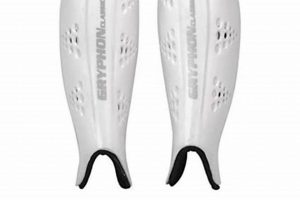
The correlation between size and usability directly affects the physical well-being of the user. For example, a child struggling with an over-sized, heavily laden carrier risks back strain and other musculoskeletal injuries. Conversely, if essential equipment is carried separately due to insufficient space, this defeats the purpose of wheeled bag’s ability to consolidate items. Manufacturers often provide size guidelines based on age or height, but a practical assessment, considering the dimensions of the player’s equipment, is crucial. A practical example is finding bags that can specifically hold Youth Shin Guards. Ensuring the bag’s compartment can hold this, prevents players from having to carry them on their own.
In conclusion, the principle of “appropriate size” is not merely a matter of convenience but a fundamental aspect of the overall functionality and safety of wheeled hockey equipment carriers for youth. A properly sized bag contributes to ease of use, reduces the risk of injury, and ensures all necessary equipment is transported efficiently. Therefore, careful consideration of size, relative to the user’s physical capabilities and the volume of equipment, is paramount when selecting such a product. This aligns with the broader goal of providing equipment that enhances the hockey experience for young players.
2. Wheel Durability
Wheel durability is a critical factor influencing the longevity and usability of equipment transport solutions designed for young hockey players. The wheels are subjected to diverse and often harsh conditions, necessitating robust construction to ensure sustained functionality. Their reliability directly impacts the ease with which young athletes can transport their gear, and their capacity to withstand the demands of frequent use is paramount.
- Material Composition and Abrasion Resistance
The materials used in wheel construction significantly influence their ability to withstand abrasion from various surfaces, including asphalt, concrete, and indoor flooring. High-density polymers or rubber compounds are frequently employed due to their inherent abrasion resistance. Inferior materials degrade rapidly, leading to reduced diameter, uneven rolling, and eventual failure. Real-world examples include situations where a wheel encounters a rough surface, such as a parking lot filled with pebbles. Low-quality wheels would quickly become damaged, potentially rendering the bag unusable. The implication of this failure directly impacts the youth players ability to get to their practice sessions.
- Bearing Quality and Load Capacity
The bearings within the wheel assembly play a crucial role in facilitating smooth and efficient rotation under load. High-quality bearings minimize friction, enabling easier pulling and reducing the strain on the user. The load capacity of the bearings must be sufficient to support the weight of the hockey equipment without premature wear or seizure. A low load capacity limits the gear that a player is able to carry. An example is low quality bearings which can cause a wheel to lock up mid stride, and result in the equipment carrier flipping over. This can also cause injuries as well.
- Wheel Size and Contact Surface Area
The diameter of the wheel and the width of its contact surface area influence its ability to traverse obstacles and maintain stability. Larger diameter wheels generally roll more easily over uneven surfaces, while a wider contact surface area provides increased stability and reduces the likelihood of tipping. If a wheel is too small, then traversing obstacles on a path becomes tedious or impossible. Consider a rough outdoor path with rocks and debris. A smaller wheel has a high risk of being stopped by these obstacles, while a larger wheel would more easily roll over the obstacles.
- Attachment Mechanism and Structural Integrity
The method by which the wheels are attached to the equipment carrier is critical to their long-term durability. A secure and robust attachment mechanism prevents wheels from detaching or becoming loose under load. Additionally, the structural integrity of the wheel housing must be sufficient to withstand impacts and prevent cracking or deformation. The structural intergrity of the wheel is key to maintaining smooth and consistent operation. For example, if the wheel is only connected by a single bolt, then any load that isn’t balanced will eventually cause a failure of the assembly. A more robust assembly would have multiple bolts and a wider base, to more evenly distribute the load.
In conclusion, the durability of wheels on equipment carriers significantly affects their usability and longevity. Using high-quality materials and durable construction in the wheel assembly ensures the carriers can perform their duty to bear the weight of hockey gear from point A to point B, without failure.
3. Handle Ergonomics

Handle ergonomics is a critical design element directly impacting the usability and effectiveness of wheeled hockey equipment carriers intended for youth athletes. A poorly designed handle can lead to discomfort, strain, and reduced maneuverability, negating the convenience offered by the wheeled design. This section explores key facets of handle ergonomics in the context of hockey bags for young players.
- Adjustability and Height Range
An adjustable handle, accommodating a range of heights, is essential for ensuring a comfortable posture and minimizing strain. A handle fixed at an inappropriate height forces the user to stoop or overextend, leading to back and shoulder discomfort. An example of this would be a telescoping handle, with multiple locking positions to allow the handle to be changed to the appropriate height. If a handle cannot be set to the correct height, the player will be forced to hunch over or hold their arm in an unnatural way.
- Grip Design and Material
The grip should offer a secure and comfortable hold, even with gloved hands or in wet conditions. Contoured grips, textured surfaces, and materials that provide adequate friction are crucial. Hard, smooth plastic grips can cause hand fatigue and slippage, especially when pulling a heavily loaded bag. Grips made of rubber or foam padding would minimize the stress on a player’s hand. A small, hard grip would cause the player to have to squeeze their hand too hard, causing strain in their arm. A larger grip would more evenly distribute the force on the user’s hand and forearm.
- Handle Angle and Orientation
The angle at which the handle extends from the bag and its orientation relative to the user’s body influence posture and pulling efficiency. A handle angled too sharply can cause wrist strain, while one positioned too far from the body can require excessive reaching. A more vertical handle reduces the amount of bend in the arm. An example would be a ‘T’ handle, which would keep the wrist in a neutral position. The angle of the handle would be perpendicular to the players arm, and allow for them to hold the handle in a more ergonomic way.
- Weight Distribution and Balance
The handle design contributes to the overall weight distribution and balance of the loaded bag. A handle positioned optimally can help distribute the weight evenly, reducing the perceived effort required to pull the bag. Poor weight distribution can cause the bag to tip easily or require constant stabilization. Correct distribution of weight would allow a child to easily maneuver the wheeled hockey bag, and prevent it from tipping over. With proper planning, the center of gravity would be located between the wheels, which would minimize tipping.
These ergonomic facets collectively determine the comfort, efficiency, and safety of wheeled hockey bags for young players. Prioritizing these design elements ensures that the carrier enhances, rather than detracts from, the overall hockey experience. Optimizing all aspects of these bag will result in a product that is enjoyable for its users.
4. Material Strength

Material strength, within the context of wheeled hockey equipment carriers for youth, constitutes a primary determinant of the product’s longevity and functional utility. The correlation between material strength and the real-world performance of these bags is direct and significant. A bag constructed from materials of inadequate tensile strength or abrasion resistance will prematurely exhibit signs of wear and tear, including tears, punctures, and seam failures. This degradation compromises the bag’s structural integrity, rendering it less capable of protecting valuable hockey equipment and necessitating frequent replacement. For example, a bag made from a thin, non-ripstop nylon is susceptible to tearing when exposed to sharp skate blades or the abrasive surfaces commonly encountered in locker rooms and parking lots. Conversely, a bag crafted from reinforced ballistic nylon or high-denier polyester exhibits superior resistance to these types of damage, extending its useful lifespan.
The importance of material strength extends beyond simple durability. It directly impacts the safety and convenience of the young athlete using the bag. A compromised bag may fail catastrophically while being transported, resulting in scattered equipment, potential injuries, and inconvenience. Furthermore, material strength influences the bag’s ability to maintain its shape and structural integrity over time, which affects the ease of loading and unloading equipment. A bag that sags or collapses due to weak materials is more difficult to pack efficiently and securely. From an engineering standpoint, the stitching, zippers, and handles all have a part of overall material strength of the design. A bag that is made of strong material but the stitching is weak will still easily fail.
In summary, material strength is not merely a desirable attribute in wheeled hockey equipment carriers for youth; it is a fundamental prerequisite for reliable performance and extended product life. Understanding the relationship between material properties, design considerations, and real-world usage scenarios enables informed purchasing decisions, ensuring that young athletes are equipped with durable, safe, and convenient solutions for transporting their essential hockey gear. The challenge is the balance of affordability and quality. A bag that is ‘over-engineered’ for strength, may be prohibitively expensive. The market needs to find bags that offer the best compromise between strength, and value.
5. Ventilation

Ventilation, as a design consideration, plays a critical role in the functionality and hygiene of equipment carriers for young hockey players. These bags, by their nature, are often repositories for damp, soiled gear, creating an environment conducive to bacterial growth and unpleasant odors. The presence of adequate ventilation mitigates these issues, contributing to equipment preservation and user comfort.
- Moisture Dissipation
Effective ventilation facilitates the evaporation of moisture accumulated from sweat-soaked padding and apparel. This process prevents the prolonged exposure of equipment to moisture, which can lead to material degradation, rust formation on metallic components (e.g., skate blades), and the proliferation of odor-causing bacteria. An example is air circulating and drying the hockey pads, which helps to reduce the presence of mold or mildew. Without ventilation, the moisture would be stuck within the enclosed container.
- Odor Control
Stagnant air within an enclosed space fosters the concentration of volatile organic compounds (VOCs) produced by bacterial metabolism. Ventilation promotes the exchange of stale, odor-laden air with fresh air, reducing the intensity of unpleasant smells. This is especially important when equipment is used everyday. An example would be hockey equipment left to dry out over night, which promotes air circulation.
- Mold and Mildew Prevention
The damp, dark environment within a poorly ventilated hockey bag is ideal for the growth of mold and mildew. These microorganisms can damage equipment, produce allergens, and pose health risks. Adequate ventilation inhibits mold and mildew growth by reducing humidity levels and promoting airflow. The key here is to prevent mold or mildew from forming in the first place. Once they start to grow, it is hard to remove them and requires time consuming cleaning of the entire bag.
- Equipment Longevity
By mitigating the detrimental effects of moisture, odors, and microbial growth, ventilation contributes to the extended lifespan of hockey equipment. This results in a reduction of costs associated with frequent replacement and promotes the sustainable use of resources. All of these factors promote the longevity of the materials, as well as improve comfort for the player.
These facets underscore the significance of ventilation in equipment carriers for young hockey players. A well-ventilated bag not only enhances the user experience by minimizing unpleasant odors and promoting hygiene but also contributes to the longevity and performance of the equipment it contains.
Frequently Asked Questions
This section addresses common inquiries regarding wheeled hockey bags designed for young players. The information is presented to provide clarity and assist in making informed decisions.
Question 1: What is the typical size range for wheeled hockey bags intended for youth players?
The dimensions vary depending on the manufacturer, but these bags generally range from 28 to 36 inches in length, 14 to 18 inches in width, and 12 to 16 inches in height. This size range accommodates the equipment typically used by players aged 8-14 years.
Question 2: What materials are most commonly used in the construction of these bags, and what are their relative advantages?
Durable nylon and polyester fabrics are prevalent. Nylon offers superior abrasion resistance, while polyester provides better water resistance. Reinforcements at stress points, such as corners and seams, are also common. The materials used directly affects the amount of weight that can safely be carried.
Question 3: What type of wheel system is most reliable for these bags, and what maintenance is required?
In-line skate-style wheels with sealed bearings are generally considered the most durable and offer the smoothest rolling action. Periodic cleaning and lubrication of the bearings are recommended to maintain optimal performance. In general, look for wheels that can easily be replaced if needed.
Question 4: How important is ventilation in a wheeled hockey bag, and what features should be considered?
Adequate ventilation is crucial for minimizing moisture and odor buildup. Look for bags with mesh panels or ventilation grommets strategically placed to promote airflow. This aids with reducing the build up of bacteria, and improving sanitation.
Question 5: What are the key considerations when evaluating the handle system on a wheeled hockey bag?
The handle should be telescoping and adjustable to accommodate different heights. It should also be constructed from a durable material and feature a comfortable grip. A loose handle is more susceptible to failure.
Question 6: What is the average lifespan of a wheeled hockey bag used by a youth player, and what factors can affect its longevity?
With proper care, a quality wheeled hockey bag can last for several seasons. Factors affecting longevity include the frequency of use, the weight of the equipment, and the conditions under which it is used and stored. Make sure all zippers, straps and clasps are durable and high quality.
The information presented addresses common concerns and should provide a basis for informed decision-making when purchasing a wheeled hockey bag for a young player.
The subsequent section will provide the article conclusion.
Conclusion
This exploration of wheeled hockey bag youth has underscored several critical aspects. The features, including size, wheel durability, handle ergonomics, material strength, and ventilation, collectively determine the functionality, longevity, and user experience. Choosing a product that adequately addresses these factors is essential for ensuring young athletes have a reliable and convenient means of transporting their equipment. Furthermore, the financial aspect of purchasing replacement bags can be avoided by focusing on higher build quality.
Given the investment in hockey equipment and the physical demands placed on young players, the wheeled hockey bag youth represents a practical and valuable asset. Future product development should prioritize enhanced durability, improved ergonomic designs, and sustainable material choices to further optimize the utility and value proposition of these essential pieces of sporting equipment. A player will be able to have a more efficient commute to the rink when these bags are reliable and built to last.