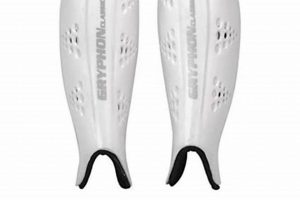
Protective garments and attire designed specifically for young ice hockey participants constitute a specialized segment within the broader sporting goods market. This category encompasses items such as padded undergarments, jerseys, socks, and outerwear, all tailored to fit the unique physical dimensions and safety requirements of younger players. An example would be a set of shoulder pads, sized for a child between the ages of 8 and 10, offering impact protection during gameplay.
Proper equipment plays a crucial role in mitigating the risk of injury during practices and games. Appropriate sizing and fit are paramount to ensuring both safety and comfort, thereby enhancing performance and promoting a positive experience. Historically, the evolution of protective gear has paralleled advancements in materials science, leading to lighter, more durable, and more effective options. This evolution has significantly contributed to reducing the incidence of severe injuries on the ice.
The following sections will delve into the specific types of equipment required for youth hockey, explore the factors to consider when selecting appropriate gear, and offer guidance on proper fitting and maintenance procedures. This detailed information aims to provide a comprehensive understanding of the essentials for ensuring young athletes are adequately protected while participating in this demanding sport.
Selecting Appropriate Youth Hockey Apparel
The following guidance offers key considerations for choosing appropriate apparel for young ice hockey players, ensuring safety, comfort, and optimal performance on the ice.
Tip 1: Prioritize Safety Certifications: Ensure all protective gear, such as helmets and shoulder pads, meets recognized safety standards (e.g., HECC, CSA). Certified equipment has undergone rigorous testing to provide a specific level of impact protection.
Tip 2: Emphasize Proper Fit: Clothing should fit snugly but not restrict movement. Ill-fitting equipment can compromise protection and hinder agility. For example, excessively large shoulder pads may shift during play, exposing vulnerable areas.
Tip 3: Layer Strategically: Employ moisture-wicking base layers to manage perspiration and maintain body temperature. This helps prevent chills and discomfort, especially during intense activity. Avoid cotton fabrics, which retain moisture and can lead to rapid cooling.
Tip 4: Consider Material Durability: Opt for durable, abrasion-resistant materials for outer layers, such as jerseys and pants. Ice hockey involves physical contact, and robust materials will withstand wear and tear.
Tip 5: Choose Breathable Fabrics: Look for breathable materials that allow for adequate ventilation. This is especially important for undergarments and jerseys, as it helps regulate body temperature and prevent overheating.
Tip 6: Account for Growth: When purchasing equipment, factor in the child’s growth rate. While purchasing oversized equipment is not recommended for safety reasons, consider adjustable features or modular designs that allow for some degree of size modification.
Tip 7: Inspect Regularly for Wear and Tear: Regularly inspect all clothing and equipment for signs of damage, such as rips, tears, or broken straps. Promptly repair or replace damaged items to maintain optimal protection.
Adhering to these guidelines will ensure young hockey players are appropriately equipped, fostering a safer and more enjoyable experience on the ice. Prioritizing safety and comfort from the outset establishes good habits and promotes long-term participation in the sport.
The subsequent sections will explore maintenance procedures to extend the life of youth hockey apparel and further enhance its protective capabilities.
1. Protection

In the context of ice hockey, protective equipment is paramount, especially for young participants. Apparel designed for this demographic must prioritize impact absorption and injury prevention to ensure a safe playing environment.
- Helmet Integrity
Helmets form a primary line of defense against head injuries. Constructed with impact-resistant materials and internal padding, helmets must meet specific safety standards (e.g., HECC certification). A properly fitted helmet should remain securely in place during impact and distribute force effectively, minimizing the risk of concussion or skull fracture. Examples include multi-density foam liners that attenuate impact energy and reinforced shells that resist penetration.
- Shoulder and Body Padding
Shoulder pads, chest protectors, and back protectors shield vulnerable areas from collisions with other players, the boards, or the ice. These items typically incorporate layered foam padding and hard plastic shells to dissipate impact forces. Design considerations include range of motion and breathability to ensure comfort and unrestricted movement. An example is the use of segmented padding that conforms to the body while providing targeted protection to key areas such as the sternum and spine.
- Elbow and Knee Protection
Elbow and knee pads are crucial for mitigating injuries resulting from falls or direct contact with surfaces. These pads often feature hinged designs that allow for flexibility while providing substantial impact resistance. Hard plastic caps and dense foam padding safeguard the joints and surrounding tissues. Examples include reinforced stitching and durable outer materials that withstand abrasion during gameplay.
- Lower Body Protection
Hockey pants provide comprehensive protection for the hips, thighs, and tailbone. These pants typically incorporate dense foam padding and hard plastic inserts to absorb impact forces. A properly fitted pair of hockey pants should offer full coverage without restricting movement or impeding skating ability. Examples include adjustable belt systems that ensure a secure and comfortable fit and strategically placed padding that targets high-impact areas.
The integration of these protective elements into youth hockey garments represents a critical investment in player safety. Adherence to safety standards, proper fitting procedures, and regular inspection of equipment are essential practices for minimizing the risk of injury and fostering a positive and safe playing environment for young athletes.
2. Fit

The correlation between proper fit and effective protective function in apparel for young ice hockey participants is demonstrably significant. Ill-fitting equipment, regardless of its inherent protective capabilities, compromises safety. Oversized garments may shift during play, exposing vulnerable areas to impact. Conversely, excessively tight clothing can restrict movement, hindering agility and potentially leading to discomfort or injury. For example, shoulder pads that are too large may ride up, leaving the collarbone unprotected, while overly snug pants can impede skating stride, increasing the risk of falls.
Achieving an optimal fit requires careful attention to sizing charts and, ideally, professional fitting assistance. Measurements should be taken with the player wearing typical base layers to ensure accurate sizing. Adjustments, such as strap tightening or pad repositioning, are often necessary to achieve a secure and comfortable fit that allows for a full range of motion without compromising protection. Consider the case of a young player wearing a helmet that is too large; upon impact, the helmet may rotate excessively, increasing the likelihood of a concussion despite the helmet meeting safety standards.
Therefore, understanding the relationship between fit and protection is crucial for selecting appropriate apparel. The emphasis on proper fit transcends mere comfort; it directly contributes to the equipment’s ability to perform its intended function. Addressing fit-related challenges through meticulous sizing, adjustment, and informed purchasing decisions enhances safety and promotes a more positive and productive experience for young athletes participating in ice hockey. The subsequent discussion will examine the material and structural properties that determine durability in apparel for this demographic.
3. Durability
The lifespan of youth hockey equipment, directly related to its construction and materials, constitutes a critical consideration for parents and organizations. Youth hockey participants subject their protective gear and apparel to significant wear and tear. Frequent practices, games involving physical contact, and the abrasive nature of ice surfaces contribute to the degradation of fabrics, padding, and fastening systems. Substandard materials or inadequate construction techniques result in premature failure of the equipment, necessitating frequent replacements. For instance, improperly stitched seams on pants or jerseys may separate after only a few uses, while low-density foam padding in shoulder pads can compress and lose its protective properties relatively quickly. This leads to increased expenditure and potentially compromises player safety due to diminished protective capabilities.
The selection of robust materials, such as high-denier nylon or reinforced polyester for outer layers, plays a pivotal role in enhancing garment longevity. Similarly, the use of durable zippers, reinforced stitching, and impact-resistant plastics in protective elements extends the usable life of the equipment. Consider the difference between a jersey constructed from thin, single-layer polyester and one made from a double-layered, abrasion-resistant fabric. The latter will withstand considerably more wear and tear from skate blades, stick checks, and falls, reducing the likelihood of rips and tears. Furthermore, regularly cleaning and maintaining the equipment, as outlined in manufacturer guidelines, contributes to prolonging its durability and preserving its protective qualities.
Ultimately, the durability of youth hockey equipment directly impacts cost-effectiveness and, more importantly, the long-term safety of young athletes. Investing in higher-quality, more durable apparel, even at a higher initial cost, often proves more economical over time due to reduced replacement frequency. The enhanced protection afforded by well-constructed, durable gear translates directly into a reduced risk of injury, allowing young hockey players to participate safely and confidently. The subsequent sections will explore the importance of breathability in youth hockey apparel and its contribution to player comfort and performance.
4. Breathability
Breathability represents a critical performance characteristic of apparel designed for youth ice hockey. The intense physical exertion associated with the sport generates significant body heat and perspiration. Inadequate ventilation can lead to overheating, discomfort, and a reduction in athletic performance. Therefore, the capacity of garments to facilitate moisture transport and airflow directly influences a player’s comfort, endurance, and overall safety on the ice.
- Moisture Wicking Fabrics
Moisture-wicking fabrics actively draw sweat away from the skin, facilitating evaporation and promoting a cooling effect. Materials such as polyester and microfiber are commonly utilized in base layers and undergarments to manage perspiration effectively. An example includes a polyester base layer that transports sweat away from the skin, preventing the accumulation of moisture and subsequent chilling. This ensures the player remains dry and comfortable, even during periods of intense activity.
- Ventilation Zones
Strategic placement of ventilation zones enhances airflow within the garment. Mesh panels or perforated sections incorporated into jerseys and pants promote the circulation of air, facilitating heat dissipation and reducing the risk of overheating. An example of this is a jersey with mesh inserts located in the underarm and back regions, enabling the release of excess heat and moisture. This design feature improves breathability without compromising protection or durability.
- Material Porosity
The inherent porosity of the fabric influences its ability to allow air to pass through. Loosely woven or knitted materials offer greater breathability compared to tightly woven fabrics. However, this must be balanced against the need for durability and protection. An example is the use of a lightweight, breathable mesh for the lining of hockey pants, which allows for airflow while providing a comfortable barrier between the player’s skin and the protective padding.
- Layering System Compatibility
Breathability extends to the entire layering system. Each layer, from base layers to outer garments, should contribute to moisture management and airflow. Incompatible layers can trap moisture and impede ventilation, negating the benefits of breathable materials. An example is using a moisture-wicking base layer in conjunction with a breathable outer jersey. The base layer draws sweat away from the skin, and the breathable jersey allows the moisture to evaporate, preventing accumulation and maintaining a comfortable body temperature.
These facets of breathability collectively contribute to the overall effectiveness of youth hockey apparel. Careful material selection, strategic design, and compatibility within the layering system are crucial for ensuring optimal moisture management, temperature regulation, and player comfort. The following sections will discuss layering systems and how they work in more detail.
5. Layering
Layering constitutes a fundamental principle in managing thermal regulation and moisture control for young ice hockey participants. Effective layering strategies mitigate the risks associated with both overheating during periods of intense activity and chilling during periods of relative inactivity. The proper application of layering principles enhances comfort, improves performance, and contributes to overall player safety.
- Base Layer Functionality
The base layer, worn directly against the skin, serves as the primary moisture management component. Materials such as polyester or merino wool are employed for their inherent moisture-wicking properties, drawing perspiration away from the skin and facilitating evaporation. For example, a properly fitted polyester base layer underneath protective gear prevents the build-up of moisture, reducing the risk of discomfort and chilling during breaks in play. Inadequate base layers, such as those made of cotton, retain moisture, leading to rapid cooling and potential hypothermia in cold environments.
- Mid-Layer Insulation
The mid-layer provides thermal insulation, trapping air and retaining body heat. Fleece or lightweight synthetic materials are commonly used for this purpose. The specific thickness and composition of the mid-layer are adjusted based on the ambient temperature and the individual player’s thermal needs. Consider the case of a player participating in an outdoor rink on a cold day; an additional fleece mid-layer provides critical insulation, preventing excessive heat loss. Conversely, in an indoor arena with a moderate temperature, a lighter mid-layer or the omission of this layer altogether may be appropriate to prevent overheating.
- Outer Layer Protection
The outer layer primarily provides protection from external elements such as wind and moisture. While much of the outer layer protection for hockey comes from the gear itself, garments underneath also need protection. Wind-resistant materials prevent chilling caused by wind exposure, while water-resistant or waterproof fabrics shield against snow or rain. Outer layers should be sufficiently durable to withstand the abrasive forces encountered during gameplay. For example, robust hockey pants constructed with reinforced nylon effectively block wind and resist wear and tear from skate blades, while also providing a degree of water resistance. The absence of a suitable outer layer exposes the player to the elements, increasing the risk of discomfort, hypothermia, and reduced performance.
- Strategic Adjustment
The most effective layering systems allow for dynamic adjustments based on changing conditions and individual needs. Players should be able to easily add or remove layers to maintain optimal thermal comfort. This requires careful consideration of garment design, ease of access, and the ability to stow removed layers without impeding movement. The ability to quickly add or remove layers is critical, for example, in changing from a dryland training environment to an ice rink.
The successful implementation of layering principles directly contributes to the comfort, safety, and performance of young ice hockey players. Selecting appropriate base, mid, and outer layers, coupled with the ability to adjust these layers strategically, allows players to maintain optimal thermal regulation regardless of environmental conditions or activity levels. The subsequent sections will explore proper sizing considerations.
6. Maintenance

Proper maintenance of apparel significantly influences the longevity, safety, and hygienic condition of items used by young ice hockey participants. Regular cleaning and inspection are crucial, not merely for aesthetic purposes, but to preserve the integrity of protective elements and mitigate the risk of bacterial or fungal growth. The cause-and-effect relationship is evident: neglect of proper care accelerates the degradation of fabrics and padding, directly impacting the equipment’s ability to provide adequate protection. For instance, sweat-soaked padding, if left uncleaned, fosters the proliferation of bacteria, leading to unpleasant odors and potentially causing skin irritations or infections. Regular washing and drying, following manufacturer guidelines, remove accumulated sweat and contaminants, preserving fabric integrity and minimizing health risks.
Maintenance extends beyond routine cleaning to include diligent inspection for wear and tear. Seams, fasteners, and padding should be regularly examined for damage. Rips, tears, or broken straps compromise the garment’s ability to provide adequate protection, necessitating timely repairs or replacements. For example, a helmet strap with a frayed buckle may fail during a collision, rendering the helmet ineffective. Similarly, worn padding in shoulder pads diminishes their ability to absorb impact forces, increasing the risk of injury. Prompt identification and correction of these issues are paramount to maintaining the protective function of the equipment. Failure to perform regular inspections increases the risk of equipment failure during critical moments.
In summary, a proactive maintenance regimen is an indispensable component of ensuring the safety and hygiene of clothing. Regular cleaning mitigates the risk of bacterial growth and odors, while diligent inspection and timely repairs preserve the protective capabilities of the equipment. Neglecting maintenance compromises the gear’s performance, increases health risks, and reduces its lifespan. Adhering to recommended care procedures is a vital investment in the well-being and safety of young athletes, ensuring they can participate in ice hockey with confidence and minimized risk.
7. Sizing

Appropriate sizing forms a cornerstone of effective protective apparel for young ice hockey participants. The relationship between correct measurements and garment performance constitutes a critical aspect of player safety. Ill-fitting clothing, regardless of its inherent protective materials, fails to deliver the intended level of safeguard. Oversized gear impairs mobility and may shift during impact, exposing vulnerable body regions. Conversely, excessively tight garments restrict movement, hindering agility and potentially causing discomfort, thus affecting performance. For example, consider a young athlete equipped with a helmet sized improperly; the helmet might wobble during a collision, reducing its ability to absorb and distribute impact forces effectively, thereby increasing the risk of head injury. This highlights the need for precise measurements and adherence to manufacturer sizing charts to secure a well-fitted ensemble.
Practical applications of sizing awareness extend to the purchasing process. Parents and coaches must prioritize accurate measurements of height, weight, chest circumference, and other relevant dimensions before selecting appropriate sizes. Consulting sizing charts provided by reputable manufacturers becomes essential. Furthermore, trial fittings, whenever feasible, provide invaluable opportunities to assess comfort and range of motion. A proper fit allows the player to move freely while ensuring protective elements remain securely positioned. For instance, shoulder pads should cover the entire shoulder and upper arm area without impeding arm movement. Similarly, hockey pants ought to provide ample coverage of the hips, thighs, and tailbone without restricting the skating stride. These practical applications of proper size selection contribute significantly to both safety and athletic performance on the ice.
In summary, sizing represents a non-negotiable factor in the selection of garments. A properly sized ensemble enhances player comfort, optimizes protective capabilities, and promotes unrestricted movement. While challenges may arise in navigating varied sizing standards across different manufacturers, the understanding of this critical relationship is paramount. Prioritizing accurate measurements, consulting sizing charts, and conducting trial fittings collectively contribute to ensuring that young ice hockey players are equipped with garments that provide optimal protection and performance. This underscores the significance of informed decision-making in the context of youth hockey equipment acquisition.
Frequently Asked Questions
This section addresses common inquiries regarding appropriate garments and protective gear for young ice hockey participants, providing clarity on key considerations for parents and coaches.
Question 1: What are the essential items of protective equipment required for participation in youth ice hockey?
The mandatory equipment typically includes a helmet (HECC certified), facial protection (cage or shield), shoulder pads, elbow pads, gloves, hockey pants, a protective cup/jill, shin guards, skates, and a mouthguard. Specific requirements may vary based on league regulations.
Question 2: How should one determine the correct size for protective apparel?
Accurate measurements of height, weight, chest circumference, and other relevant dimensions are crucial. Refer to manufacturer sizing charts for guidance. Trial fittings are recommended to ensure a snug yet unrestrictive fit that allows for a full range of motion.
Question 3: What are the key factors to consider when selecting a hockey helmet?
Ensure the helmet meets HECC certification standards. The helmet should fit snugly and securely, covering the forehead and temples. A properly adjusted chin strap is essential to prevent the helmet from shifting during impact. Regularly inspect for cracks or damage.
Question 4: What are the benefits of wearing moisture-wicking base layers under protective equipment?
Moisture-wicking fabrics draw sweat away from the skin, promoting evaporation and maintaining a dry and comfortable environment. This helps prevent chilling during breaks in play and reduces the risk of skin irritation.
Question 5: How frequently should youth hockey equipment be cleaned and inspected?
Equipment should be cleaned and aired out after each use to prevent the buildup of bacteria and odors. Conduct thorough inspections regularly, checking for rips, tears, broken straps, and worn padding. Promptly repair or replace damaged items.
Question 6: Is it acceptable to purchase used hockey equipment for youth players?
Purchasing used equipment can be a cost-effective option, but caution is advised. Thoroughly inspect used items for damage or wear that may compromise their protective capabilities. Ensure that used helmets meet current safety standards and have not sustained prior impacts.
In summary, selecting and maintaining appropriate apparel demands careful attention to sizing, safety certifications, and hygiene. Prioritizing these factors ensures optimal protection, comfort, and performance for young athletes.
The following section will explore resources for purchasing and fitting youth hockey equipment, offering guidance on finding qualified retailers and fitting specialists.
Conclusion
This exploration of youth hockey clothing has underscored the critical role of appropriate attire and protective gear in safeguarding young athletes. Key points addressed encompassed the importance of safety certifications, proper fit, material durability, breathability, and effective layering strategies. Furthermore, the significance of regular maintenance and accurate sizing has been emphasized to ensure sustained performance and protection.
The information presented provides a framework for informed decision-making regarding the selection and upkeep of apparel. Prioritizing the safety and well-being of young participants through diligent attention to equipment standards is paramount. Continued advancements in materials science and garment design hold the potential to further enhance the protective capabilities and comfort of garments, contributing to a safer and more enjoyable experience for young hockey players. Investment in quality gear reflects a commitment to fostering a secure environment conducive to athletic development.