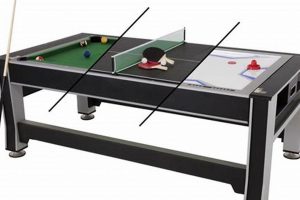
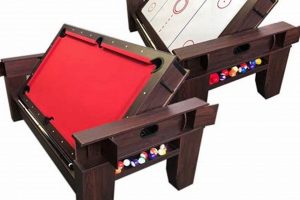
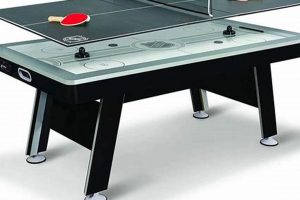
Multi-game tables offering pool, table tennis, and air hockey within a single unit provide recreational variety for homes, game rooms, and recreational facilities. These adaptable pieces of furniture are designed to maximize entertainment options in limited spaces. For example, a homeowner with a small basement can enjoy three different games without the need for three separate tables.
The integration of multiple games into one structure offers several advantages. It saves space, reduces overall cost compared to purchasing individual tables, and promotes diverse forms of interactive amusement. Historically, the demand for multi-functional furniture has increased as living spaces become smaller, leading to innovations like these combination tables. This trend reflects a desire for efficient and versatile leisure solutions.
This article will delve into the construction, functionality, and selection criteria for these versatile gaming units. Factors such as table size, game transition mechanisms, material quality, and storage considerations will be discussed. Furthermore, the maintenance and care needed to preserve the longevity of these multi-purpose recreational items will be explored.
Selection and Maintenance Considerations
Choosing and caring for a combination gaming unit requires careful consideration to ensure longevity and optimal performance across all game modes. The following guidelines are essential for making informed decisions.
Tip 1: Size and Space Assessment: Before purchase, accurately measure the available space. Combination tables require sufficient clearance for gameplay around all sides. Failure to account for this can result in restricted movement and reduced enjoyment.
Tip 2: Conversion Mechanism Evaluation: Examine the ease and security of game conversion. Ideally, transitions between pool, table tennis, and air hockey should be seamless and require minimal physical exertion. A poorly designed system can lead to frustration and potential damage.
Tip 3: Material Quality Inspection: Scrutinize the materials used in construction. A robust frame, durable playing surfaces, and quality accessories are critical for long-term use. Particleboard or flimsy plastic components are indicative of lower-quality products.
Tip 4: Leveling System Verification: Confirm the presence and effectiveness of adjustable levelers. Uneven surfaces compromise gameplay accuracy, particularly in pool and air hockey. Precise leveling is crucial for fair and enjoyable competition.
Tip 5: Air Hockey Blower Power: Assess the strength of the air hockey blower. Insufficient airflow results in sluggish puck movement, diminishing the overall experience. A powerful, evenly distributed airflow is paramount for engaging gameplay.
Tip 6: Felt and Surface Care: Protect the pool table felt and other playing surfaces from damage. Using a protective cover when not in use and regularly brushing the felt will extend its lifespan and maintain its playability. Avoid placing drinks or food directly on the table.
Tip 7: Storage of Accessories: Implement a designated storage solution for accessories such as paddles, balls, and cues. This prevents loss or damage and ensures easy access when needed. Wall-mounted racks or integrated storage compartments are ideal options.
Adhering to these selection and maintenance practices maximizes the value and enjoyment derived from a multi-game table. Careful evaluation and diligent care contribute to a lasting recreational investment.
The following section explores common issues encountered with combination gaming units and outlines troubleshooting techniques.
1. Space Optimization

Space optimization represents a core driver in the adoption of multi-game tables. As residential footprints shrink and recreational spaces become more constrained, the ability to house multiple forms of entertainment within a single unit offers a significant advantage. This section details critical facets of space optimization in the context of these versatile gaming platforms.
- Reduced Footprint
The fundamental benefit is a decrease in the overall area required to accommodate pool, table tennis, and air hockey. Instead of needing dedicated rooms or large game rooms for each activity, a single, adaptable unit occupies a fraction of the space. This is especially relevant in apartments, townhouses, and smaller homes where square footage is at a premium.
- Multi-Functionality
The inherent multi-functionality of the unit transforms a single space into a dynamic recreation zone. A room can transition from hosting a pool tournament to an air hockey competition with minimal effort. This adaptability maximizes the utility of the designated area, preventing it from being single-use and underutilized. This function saves additional space, as a result, it’s very popular with users who has limited space.
- Storage Considerations
Integrated storage solutions within these combination tables further contribute to space efficiency. Accessory compartments and concealed storage areas eliminate the need for separate storage units for cues, paddles, and other game-specific items. This streamlined organization maintains a clutter-free environment and maximizes available surface area.
- Vertical Space Potential
Some designs incorporate vertical storage components or foldable configurations. For example, a table tennis top can be stored vertically when not in use, freeing up floor space for other activities. This strategic utilization of vertical space enhances the overall space-saving capabilities of the unit.
These facets of space optimization collectively underscore the appeal of combination gaming tables. By minimizing footprint, maximizing functionality, integrating storage, and leveraging vertical space, these units provide a practical solution for homeowners seeking to enhance their recreational options without compromising valuable living space. A clear understanding of these elements enables informed decision-making when selecting a suitable multi-game table.
2. Cost Efficiency

Acquiring individual pool, table tennis, and air hockey setups involves significant capital outlay. Purchasing separate, high-quality tables and associated accessories can easily exceed the cost of a well-constructed combination unit. The initial investment in a single multi-game table presents a demonstrable saving, particularly for individuals or families on a budget. For example, a mid-range pool table might cost $1500, a decent ping pong table $500, and an air hockey table $800, totaling $2800. A comparable combination table offering acceptable quality across all three games could be obtained for significantly less. This upfront cost reduction constitutes the primary economic advantage.
Beyond the initial purchase, long-term cost efficiency stems from reduced maintenance and upkeep. Instead of managing the condition of three separate playing surfaces and three sets of accessories, attention is focused on a single unit. This simplification translates to lower expenses for replacement parts, cleaning supplies, and professional servicing. Furthermore, the consolidated footprint minimizes the need for climate-controlled storage, potentially reducing energy bills. For example, a recreation center with limited funds might opt for a combination table to offer diverse activities without exceeding its budgetary constraints. These cost efficiencies allow those funds to be allocated to other important operating costs.
However, the cost efficiency argument hinges on the quality of the combination table. A cheaply constructed unit may require frequent repairs or replacements, negating the initial savings. Therefore, careful consideration must be given to material quality, construction techniques, and warranty provisions. Investing in a durable, well-engineered combination table ensures long-term cost effectiveness by minimizing the risk of premature failure and associated expenses. In conclusion, while the initial cost saving is evident, the long-term economic benefit of a multi-game table depends on the quality of the product and responsible maintenance practices, which requires thorough research prior to purchase.
3. Game Versatility

The intrinsic appeal of integrated gaming tables resides significantly in their game versatility. This characteristic, the ability to offer multiple distinct recreational activities within a single unit, directly addresses the diverse entertainment preferences of users. A primary consequence of this versatility is enhanced user engagement. Individuals or families with varied interests are more likely to utilize a combination table than a single-purpose gaming device, as it caters to a broader spectrum of recreational inclinations. For instance, a group containing both avid pool players and table tennis enthusiasts can simultaneously indulge in their preferred activities without the need for separate equipment or spaces.
Game versatility also contributes to the sustained relevance of these combination tables over time. As user preferences evolve, the availability of alternative gaming options ensures that the unit remains a valued source of entertainment. Furthermore, the ability to easily transition between games promotes social interaction and family bonding. A game night, for example, can incorporate multiple rounds of pool, followed by a spirited air hockey tournament, and concluded with a table tennis competition. This variety prevents monotony and encourages participants to engage in different types of physical and mental challenges, this also encourage users to invite new players to participate in the game and further enjoy the fun. A local community recreation center can use game versatility to encourage people to attend the recreation center.
The practical significance of understanding the link between game versatility and combination tables lies in informed purchasing decisions. Consumers can prioritize models that offer a seamless transition between games and cater to the specific interests of their household or user group. However, the pursuit of game versatility should not compromise the quality of individual game experiences. A combination table that poorly executes each game is ultimately less desirable than a dedicated unit that excels in a single activity. While game versatility is a strong selling point, the combination of quality and diversity leads to higher levels of satisfaction. Understanding that a variety of games in single unit is not the only requirement leads to a high level of overall satisfaction.
4. Material Durability

The longevity and sustained performance of combination gaming tables are directly contingent upon the durability of the materials employed in their construction. This parameter dictates the unit’s ability to withstand repeated use, resist wear and tear, and maintain its structural integrity over time. Inferior materials will inevitably lead to premature failure, compromising the functionality of one or more game modes and diminishing the overall value proposition. For instance, a table constructed with a low-density particleboard frame is susceptible to warping, cracking, and joint failure, particularly under the stress of frequent game conversions. This can result in uneven playing surfaces, unreliable leveling, and ultimately, an unplayable unit. In contrast, a combination table featuring a solid wood or reinforced metal frame exhibits superior resistance to deformation and damage, ensuring a stable and reliable gaming platform for years to come.
The playing surfaces themselves are equally susceptible to material-related degradation. A thin, easily scratched veneer on the pool table surface, or a brittle plastic air hockey bed, will quickly exhibit signs of wear, impacting gameplay and diminishing aesthetic appeal. High-quality felt, resilient laminate, and impact-resistant plastic components are essential for maintaining optimal playing conditions across all game modes. For example, consider a combination table used in a recreation center: the table experiences constant use from various individuals and age groups. A table made with flimsy material will quickly deteriorate under high-stress, while a table made from high-quality material can handle the daily stress without significantly effecting it’s integrity.
In summation, material durability represents a critical determinant of the long-term viability and user satisfaction associated with combination gaming tables. The selection of robust, high-quality materials translates to a more resilient, reliable, and ultimately, a more cost-effective recreational investment. Neglecting this aspect can result in a diminished gaming experience and premature replacement costs. Therefore, a comprehensive evaluation of material composition and construction techniques is paramount when considering the purchase of a multi-game table.
5. Conversion Ease
Conversion ease represents a pivotal characteristic defining the user experience of combined gaming tables. The inherent functionality of such units hinges on the ability to transition seamlessly between pool, table tennis, and air hockey configurations. Difficulty or cumbersomeness in this transition directly diminishes the value proposition, negating the convenience and versatility the tables are designed to provide. For instance, a combination table requiring significant physical effort, multiple tools, or intricate disassembly procedures for game conversion undermines its practicality. This directly impacts user engagement, as individuals are less likely to utilize all available game modes if the process of switching between them is overly complex or time-consuming.
Conversely, a combination table engineered for effortless conversion enhances user satisfaction and promotes greater utilization. Mechanisms such as rotating playing surfaces, drop-in inserts, or easily detachable components facilitate rapid and straightforward transitions between games. A practical example involves a family game night: if converting from pool to table tennis is a swift and simple process, the family is more likely to engage in both activities. However, if the conversion process takes excessive time or requires considerable effort, the likelihood of playing both games decreases significantly. Furthermore, poorly designed conversion mechanisms can lead to damage of the table or its components over time. Repeatedly forcing ill-fitting inserts or struggling with clunky rotating systems can cause wear and tear, ultimately shortening the lifespan of the unit.
In summary, conversion ease directly correlates with the overall utility and enjoyment derived from combination gaming tables. A smooth and intuitive transition between game modes maximizes user engagement, promotes greater versatility, and minimizes the risk of damage. Manufacturers who prioritize ergonomic design and user-friendly conversion mechanisms contribute significantly to the value and appeal of their products. Purchasers should carefully evaluate the conversion process before making a decision, as it is a critical factor in determining the long-term satisfaction with a combined gaming unit.
6. Leveling Precision
Leveling precision is a critical factor governing the gameplay quality and overall enjoyment derived from multi-game tables integrating pool, table tennis, and air hockey. An accurately leveled playing surface ensures consistent and predictable ball or puck behavior across all game modes. Deviations from level can introduce bias, skew trajectories, and diminish the competitive integrity of each game.
- Pool Ball Trajectory
In pool, even slight inclines on the playing surface can significantly alter ball trajectories, causing them to deviate from intended paths. A level playing field is essential for accurate shot execution, strategic planning, and fair competition. Unlevelness is less noticeable for novice players but becomes increasingly frustrating for experienced players who rely on precise angles and consistent ball behavior. The impact to the balls also effect the other two games, since a lack of stability on the table can cause the balls to bounce out of range.
- Table Tennis Bounce Consistency
For table tennis, a level surface is crucial for consistent ball bounce. Unevenness can lead to unpredictable ball behavior, making it difficult to control shots and maintain a rally. This can be frustrating for players of all skill levels, disrupting the flow of the game and reducing its competitive appeal. For instance, imagine trying to complete a rally on a table that has a noticeable unevenness; the shots are hard to track and this leads to frustration.
- Air Hockey Puck Movement
Leveling is paramount in air hockey to ensure even puck distribution and consistent speed across the playing surface. An unlevel table will cause the puck to drift towards the lower side, creating an unfair advantage for one player and disrupting the flow of the game. Proper leveling ensures that the puck glides freely and predictably, promoting balanced competition and engaging gameplay. Uneven movement on the puck will make the game predictable and remove a layer of skill.
- Structural Stability and Longevity
Beyond gameplay considerations, proper leveling contributes to the structural stability and longevity of the combination table. An unlevel table places undue stress on the frame and joints, potentially leading to warping, cracking, or other forms of damage over time. Maintaining a level foundation distributes weight evenly, minimizing stress and prolonging the life of the unit.
The interrelationship of these facets underscores the importance of leveling precision in the context of multi-game tables. Accurate leveling not only enhances the gameplay experience for each individual game but also contributes to the structural integrity and long-term value of the unit. Careful attention to leveling during installation and periodic adjustments as needed are essential for maximizing the enjoyment and lifespan of such versatile recreational devices.
Frequently Asked Questions about Combo Pool Table Ping Pong Air Hockey
The following section addresses common inquiries concerning multi-game tables combining pool, table tennis, and air hockey functionalities. These questions aim to provide clarity on various aspects of these versatile recreational units.
Question 1: What is the typical lifespan of a multi-game table?
The lifespan of these tables varies significantly depending on construction quality, materials, and usage frequency. A well-maintained unit constructed with durable materials can last for many years, while a poorly constructed table may require frequent repairs or replacement within a shorter timeframe. Regular cleaning and proper storage are crucial for maximizing longevity.
Question 2: Are combination tables suitable for serious pool players?
While multi-game tables offer convenience, they may not fully replicate the playing experience of a dedicated pool table. The playing surface may not be as smooth or the rails as responsive as those found on professional-grade equipment. However, for casual players or those with limited space, they can provide a satisfactory alternative.
Question 3: How difficult is it to switch between games?
The ease of transitioning between games varies depending on the design of the table. Some models feature simple flip-over or insert systems for quick conversions, while others may require more complex disassembly and reassembly procedures. Potential buyers should carefully evaluate the conversion process before making a purchase.
Question 4: Do these tables require special maintenance?
Multi-game tables require regular cleaning to remove dust and debris from the playing surfaces. The pool table felt should be brushed regularly, and the air hockey surface may need occasional polishing to maintain smooth puck movement. It is also essential to protect the table from moisture and extreme temperatures.
Question 5: What size combination table is appropriate for a standard game room?
The appropriate size depends on the dimensions of the room and the desired level of playing space. It is crucial to measure the available space and allow for sufficient clearance around the table for players to move freely. Smaller combination tables are available for rooms with limited space.
Question 6: Can the air hockey blower be replaced if it fails?
In many cases, the air hockey blower can be replaced if it malfunctions. Replacement parts are often available from the manufacturer or aftermarket suppliers. However, the difficulty of the replacement process may vary depending on the design of the table.
These FAQs offer a foundational understanding of key considerations related to combo gaming units. Understanding these aspects allows for informed decision-making.
The next section summarizes the core benefits and drawbacks of integrated gaming tables.
Concluding Thoughts on Multi-Game Tables
This exploration has illuminated the multifaceted nature of the “combo pool table ping pong air hockey” phenomenon. The analysis has extended across critical domains, encompassing space optimization, cost efficiencies, game versatility, material durability, conversion ease, and leveling precision. These elements collectively define the value proposition inherent in combining multiple recreational activities into a single unit. The discussion has underscored the importance of balancing these factors to maximize user satisfaction and ensure the long-term viability of the investment.
Ultimately, the decision to acquire a “combo pool table ping pong air hockey” unit necessitates a thorough assessment of individual needs and constraints. Careful consideration should be given to the available space, budget limitations, desired level of gameplay quality, and the anticipated frequency of use. By meticulously evaluating these factors, potential purchasers can make informed choices that align with their specific circumstances and realize the full potential of these versatile gaming platforms.
![Best Table Tennis Air Hockey Table [Deals!] | Your Ultimate Source for Hockey Updates, Training Guides, and Equipment Recommendations](https://ssachockey.com/wp-content/uploads/2026/03/th-549-300x200.jpg "Best Table Tennis Air Hockey Table [Deals!] Your Ultimate Source for Hockey Updates, Training Guides, and Equipment Recommendations")
![Best Air Hockey Table Tennis Table [Review & Guide] | Your Ultimate Source for Hockey Updates, Training Guides, and Equipment Recommendations](https://ssachockey.com/wp-content/uploads/2026/03/th-529-300x200.jpg "Best Air Hockey Table Tennis Table [Review & Guide] Your Ultimate Source for Hockey Updates, Training Guides, and Equipment Recommendations")