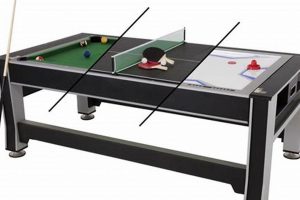
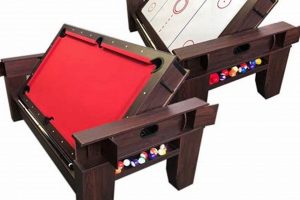
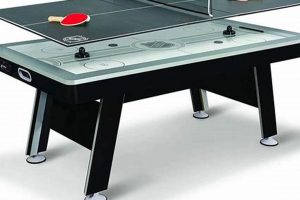
A multi-game table integrating air hockey, table tennis, and billiards provides a space-saving solution for recreational activities. This type of equipment allows users to switch between different games without requiring separate, dedicated tables for each. For example, a user might finish a game of air hockey, then, by changing the tabletop, immediately begin a game of ping pong or pool.
The appeal of such a setup lies in its versatility and efficient use of space, particularly in environments where space is limited, such as apartments, game rooms, or community centers. Historically, recreational spaces often necessitated a significant allocation of room for each individual game. Combination tables consolidate these needs, offering a cost-effective and practical alternative. The integration of these games promotes diverse forms of entertainment and social interaction within a single unit.
The following sections will delve into the specifics of choosing a suitable model, considering factors like build quality, playing surface characteristics, conversion mechanisms, and storage solutions, all of which contribute to the overall user experience and long-term value of these versatile recreational units.
Essential Considerations for Multi-Game Table Selection
Selecting a multi-game table requires careful evaluation to ensure it meets intended usage and durability expectations. The following points offer guidance in making an informed purchase.
Tip 1: Prioritize Build Quality. A robust frame constructed from solid wood or reinforced metal is crucial. Particleboard construction, while more affordable, is susceptible to damage and may not withstand frequent game transitions. Inspect joints and fasteners for stability.
Tip 2: Evaluate Playing Surface Uniformity. For optimal game play, the air hockey surface should be consistently smooth and have evenly distributed air holes. The ping pong table surface must be level and free of warps or imperfections. The pool table should feature a consistent cloth nap and precise leveling.
Tip 3: Examine Conversion Mechanism Security. The mechanism used to switch between games should be secure, locking the table tops firmly in place to prevent accidental dislodging during play. Ease of conversion is also important, reducing downtime between games.
Tip 4: Assess Included Accessories Quality. Evaluate the quality of included paddles, pucks, balls, and cues. Low-quality accessories can detract from the playing experience and require immediate replacement, increasing the overall cost.
Tip 5: Consider Storage Solutions. Determine if the table offers integrated storage for accessories. Efficient storage prevents loss and damage to game components, contributing to the longevity of the unit.
Tip 6: Verify Dimensional Compatibility. Confirm the table’s dimensions are suitable for the intended space, allowing ample room for players to maneuver around the table without obstruction. Account for cue length when assessing pool table space requirements.
These considerations emphasize the importance of balancing cost with long-term value and usability. Investing in a higher-quality unit initially can prevent costly repairs or replacements in the future.
The subsequent section will address common maintenance procedures to maximize the lifespan and performance of the multi-game table.
1. Space Optimization

The inherent design of the air hockey, ping pong, pool table combination inherently addresses the challenge of space optimization in recreational environments. The integration of multiple game surfaces onto a single platform directly reduces the footprint required compared to housing individual, dedicated tables for each activity. This efficient use of space is a primary driver for consumers in residential settings with limited square footage, such as apartments, townhouses, or smaller homes where dedicating individual rooms solely for game-playing is not feasible. The multi-game table allows for recreational diversity without sacrificing living space.
Consider, for instance, a family residing in a typical two-bedroom apartment. Purchasing separate air hockey, ping pong, and pool tables would likely be impractical, necessitating significant rearrangement of furniture or precluding the possibility altogether. A combination table, however, offers a viable alternative, providing access to these games within a manageable footprint, often occupying the space of a single dining table when not in use. Community centers, schools, and smaller recreational facilities also benefit from this spatial efficiency, maximizing the utility of their limited resources.
In summary, the space optimization aspect of the multi-game table represents a pragmatic solution for individuals and organizations facing spatial constraints. It enables the enjoyment of diverse recreational activities without the logistical challenges of accommodating multiple full-sized game tables. The ability to consolidate entertainment options into a single, compact unit underscores the practical significance of this design feature.
2. Game Variety

The inherent value proposition of the air hockey ping pong pool table combination stems directly from its game variety. This feature addresses the diverse recreational interests of potential users, transforming a single piece of furniture into a multifaceted entertainment hub. The ability to seamlessly transition between air hockey’s fast-paced action, the strategic volleys of ping pong, and the precision-based gameplay of pool broadens its appeal across age groups and skill levels. This variety mitigates the risk of boredom and encourages sustained engagement with the equipment. For example, a family gathering can easily accommodate varying preferences, with some members enjoying a competitive air hockey match while others prefer a more relaxed game of pool.
The importance of game variety is further amplified in settings like community centers or corporate break rooms. In such environments, the multi-game table serves as a central point for social interaction, offering options that cater to different tastes and physical capabilities. This inclusivity fosters a more vibrant and engaging atmosphere. Moreover, the availability of multiple games can indirectly promote cognitive development, as each game engages different skills such as hand-eye coordination, strategic thinking, and spatial reasoning. The flexibility to choose between games also allows users to adapt the activity to their physical condition, making it accessible to individuals with varying levels of mobility.
In conclusion, the game variety inherent in the air hockey ping pong pool table combination is not merely a superficial feature but a fundamental aspect that drives its utility and widespread appeal. It fosters inclusivity, encourages sustained engagement, and promotes cognitive development, making it a versatile and valuable addition to any recreational space. The ability to offer a diverse range of entertainment options within a single unit represents a significant advantage over single-purpose game tables.
3. Durability

Durability is a critical attribute of a multi-game table, directly impacting its long-term value and user satisfaction. The ability of the unit to withstand frequent use and game transitions determines its lifespan and overall cost-effectiveness. Given the investment involved, potential buyers must carefully consider the construction materials and design features that contribute to its robustness.
- Frame Material Integrity
The frame material dictates the structural stability of the entire table. Solid hardwood frames, while more expensive, provide superior resistance to warping and breakage compared to composite materials such as particleboard or MDF. Steel frames offer exceptional strength but may be susceptible to rust if not properly treated. The choice of frame material directly correlates with the table’s ability to withstand the stresses of repeated game play and component changes. For instance, a table with a solid hardwood frame is more likely to retain its structural integrity over time, even under heavy use, than a comparable model with a particleboard frame.
- Surface Material Resistance
The playing surfaces of the air hockey, ping pong, and pool components are subject to constant wear and tear. The air hockey surface must resist scratches and abrasions from pucks, while the ping pong table surface must maintain its flatness and coating integrity. The pool table cloth should be durable enough to withstand repeated cue strokes and ball impacts without tearing or pilling. Surface material choice directly impacts the longevity and playability of each game. A high-quality laminate on the ping pong surface, for instance, will resist warping and maintain consistent ball bounce better than a cheaper, less durable alternative.
- Joint and Fastener Strength
The joints connecting the various components of the table are critical stress points. Weak joints or inadequate fasteners can lead to instability and eventual failure, particularly in tables that are frequently converted between games. High-quality screws, bolts, and adhesive materials are essential for maintaining the structural integrity of these connections. For example, dovetail joints or reinforced metal brackets used to connect the table legs to the frame offer superior strength and stability compared to simple butt joints held together with staples.
- Component Interchange Mechanism Robustness
The mechanism used to switch between the various games is a key factor in determining durability. A poorly designed or constructed mechanism can be prone to failure, rendering the table unusable for certain games. The mechanism must be able to withstand repeated use and maintain its alignment over time. Heavy-duty hinges, locking mechanisms, and slide rails are essential for ensuring a smooth and reliable transition between games. For instance, a table with a robust locking mechanism will prevent the ping pong top from shifting during play, enhancing safety and game enjoyment.
The various facets of durability discussed highlight its central role in determining the overall value and longevity of an air hockey ping pong pool table combination. Investing in a unit constructed from high-quality materials and featuring robust construction techniques translates directly into a longer lifespan, reduced maintenance costs, and enhanced user satisfaction. Ignoring durability considerations can lead to premature failure and a diminished recreational experience.
4. Conversion Ease
Conversion ease is a pivotal factor in the usability and overall satisfaction derived from a multi-game table integrating air hockey, ping pong, and pool functionalities. The efficiency and simplicity of transitioning between games directly influences the frequency of use and the enjoyment experienced by users. A cumbersome or time-consuming conversion process diminishes the table’s versatility and may deter users from fully utilizing its capabilities.
- Locking Mechanism Design
The design of the locking mechanism dictates the security and stability of each game surface during play. Effective mechanisms ensure the chosen surface is firmly secured, preventing movement or instability that could compromise gameplay. For example, a lever-activated locking system allows for quick and secure surface changes compared to screw-based systems requiring tools and increased time. The selection of an appropriate locking mechanism directly impacts the ease and speed of conversion.
- Weight and Handling of Components
The weight and ergonomic design of the table tops and components used for each game influence the physical effort required for conversion. Lightweight materials and strategically placed handles facilitate easier lifting and maneuvering, reducing the risk of strain or injury. A table featuring heavy, unwieldy components will inevitably lead to a less frequent and more laborious conversion process. For instance, using lighter composite materials rather than solid wood for the ping pong top can significantly reduce the physical demand during setup.
- Storage Integration and Accessibility
The availability of integrated storage solutions for game-specific accessories directly affects conversion efficiency. Accessible storage compartments for paddles, pucks, balls, and cues streamline the conversion process by minimizing the time spent searching for necessary equipment. A table lacking such storage may necessitate separate storage arrangements, increasing the time and effort required for each game transition. The presence of dedicated, easily accessible storage directly contributes to a more seamless and user-friendly experience.
- Instructional Clarity and Simplicity
The clarity and simplicity of the conversion instructions provided by the manufacturer contribute significantly to the overall ease of use. Clear, concise instructions, ideally accompanied by visual aids, minimize confusion and prevent potential damage to the table during the conversion process. Ambiguous or poorly written instructions can lead to frustration and improper setup, ultimately detracting from the overall user experience. Therefore, the availability of readily understandable instructions is crucial for ensuring a smooth and efficient game transition.
The preceding facets underscore the importance of conversion ease in maximizing the utility and enjoyment derived from a multi-game table. Streamlined locking mechanisms, manageable component weight, integrated storage, and clear instructions are all essential elements that contribute to a positive user experience. Prioritizing these aspects during the selection process will ensure that the table remains a versatile and frequently utilized recreational asset.
5. Cost-Effectiveness

The economic advantage of a multi-game table, combining air hockey, ping pong, and pool, resides in its ability to consolidate recreational options within a single purchase. This consolidation translates into cost savings compared to acquiring individual dedicated tables for each activity. The initial investment must be weighed against the long-term economic benefits derived from reduced space requirements and minimized equipment expenses.
- Reduced Initial Outlay
Acquiring three separate game tables incurs significantly higher costs than purchasing a single multi-game unit. The expenses associated with manufacturing, distribution, and retail markups are multiplied when buying individual tables. A combination table streamlines these costs, offering a consolidated price point that is often more accessible to consumers. For example, the cost of purchasing a standalone air hockey table, a ping pong table, and a pool table can easily exceed the price of a well-constructed combination unit by several hundred dollars. The initial investment is therefore a primary factor in evaluating cost-effectiveness.
- Minimized Space Utilization Costs
The spatial efficiency of a multi-game table indirectly reduces costs associated with housing and maintenance. Dedicated game rooms or large recreational areas are not necessary, as the combination table occupies a significantly smaller footprint than three individual tables. This space saving translates into reduced rental expenses or property taxes, particularly relevant in urban environments where space is at a premium. The cost of heating, cooling, and cleaning a dedicated game room is also eliminated, further contributing to long-term cost savings.
- Decreased Maintenance Expenses
Maintaining three separate game tables requires more resources and time than maintaining a single combination unit. Each table requires individual cleaning, repair, and occasional replacement of parts. A combination table consolidates these maintenance needs, reducing the frequency of repairs and the cost of replacement components. For example, the cost of replacing the felt on a pool table is significantly reduced when only one table requires attention, rather than three. This streamlining of maintenance activities contributes to long-term cost savings.
- Enhanced Resale Value Retention
A well-maintained multi-game table often retains a higher resale value compared to individual game tables of comparable age and condition. The versatility of the combination unit appeals to a broader range of potential buyers, increasing its marketability and resale potential. The consolidated nature of the product simplifies the resale process, eliminating the need to market and sell three separate items. This enhanced resale value provides a financial safeguard, allowing owners to recoup a portion of their initial investment should they choose to upgrade or downsize in the future.
The cumulative effect of reduced initial outlay, minimized space utilization costs, decreased maintenance expenses, and enhanced resale value retention positions the air hockey ping pong pool table combination as a cost-effective alternative to purchasing individual game tables. The economic advantages extend beyond the initial purchase price, encompassing long-term savings related to space, maintenance, and potential resale value, solidifying its position as a fiscally prudent recreational investment.
Frequently Asked Questions
The following questions address common inquiries regarding the acquisition, maintenance, and operational considerations of multi-game tables combining air hockey, table tennis, and billiards functionalities.
Question 1: What are the primary factors influencing the overall quality of a multi-game table?
The primary factors influencing quality include the materials used in construction (e.g., solid wood vs. particleboard frame), the uniformity and durability of the playing surfaces, the robustness of the game conversion mechanism, and the quality of included accessories. Superior materials and construction generally correlate with enhanced durability and performance.
Question 2: How does the space requirement of a combination table compare to that of individual game tables?
A multi-game table requires significantly less space than housing three separate, full-sized game tables. The combination unit consolidates recreational activities into a single footprint, making it suitable for environments with limited square footage. Precise dimensions vary by model, necessitating careful measurement prior to purchase.
Question 3: What are the common maintenance procedures for a multi-game table?
Common maintenance procedures include regular cleaning of playing surfaces to remove dust and debris, periodic lubrication of moving parts in the conversion mechanism, and prompt repair of any damage to the table frame or playing surfaces. Specific maintenance requirements vary depending on the materials used in construction.
Question 4: What is the typical lifespan of a multi-game table?
The lifespan of a multi-game table is contingent upon factors such as the quality of construction, the frequency of use, and the adherence to recommended maintenance procedures. Higher-quality tables, properly maintained, can last for several years. Tables constructed from less durable materials or subjected to heavy use may have a shorter lifespan.
Question 5: Are conversion kits available to add additional games to an existing table?
Conversion kits allowing the addition of games to an existing table are generally not available. The design and construction of a multi-game table are typically integrated, making it impractical to retrofit additional functionalities. Purchasing a dedicated multi-game table is the most reliable means of acquiring multiple game options.
Question 6: How does the playing experience on a multi-game table compare to that on a dedicated game table?
While multi-game tables offer versatility, dedicated game tables generally provide a superior playing experience due to their specialized design and construction. Combination units may compromise on certain aspects of game play, such as puck speed on air hockey or ball bounce on ping pong, to accommodate multiple functionalities. This represents a trade-off between versatility and specialized performance.
In summary, the acquisition of a multi-game table represents a balance between cost-effectiveness, space optimization, and recreational versatility. Careful consideration of build quality, maintenance requirements, and performance trade-offs is essential for maximizing user satisfaction.
The following section provides guidance on selecting the appropriate accessories to complement a multi-game table.
Air Hockey Ping Pong Pool Table Combo
This exploration has outlined the multifaceted nature of the “air hockey ping pong pool table combo,” emphasizing its space-saving benefits, game variety, durability considerations, conversion ease, and overall cost-effectiveness. The analysis underscores the importance of evaluating build quality, playing surface characteristics, and conversion mechanisms to ensure a satisfactory user experience. The multi-game table presents a pragmatic solution for individuals and organizations seeking diverse recreational options within limited spatial constraints.
The decision to invest in such a unit warrants careful consideration of the trade-offs between versatility and specialized game performance. As recreational spaces evolve, the demand for multi-functional equipment is likely to persist. Potential purchasers are encouraged to weigh their specific needs and budgetary constraints against the available options to determine the optimal solution for their individual circumstances. The long-term value of the “air hockey ping pong pool table combo” is contingent upon informed decision-making and diligent maintenance practices.
![Best Table Tennis Air Hockey Table [Deals!] | Your Ultimate Source for Hockey Updates, Training Guides, and Equipment Recommendations](https://ssachockey.com/wp-content/uploads/2026/03/th-549-300x200.jpg "Best Table Tennis Air Hockey Table [Deals!] Your Ultimate Source for Hockey Updates, Training Guides, and Equipment Recommendations")
![Best Air Hockey Table Tennis Table [Review & Guide] | Your Ultimate Source for Hockey Updates, Training Guides, and Equipment Recommendations](https://ssachockey.com/wp-content/uploads/2026/03/th-529-300x200.jpg "Best Air Hockey Table Tennis Table [Review & Guide] Your Ultimate Source for Hockey Updates, Training Guides, and Equipment Recommendations")