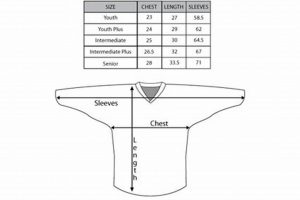
The process of determining the appropriate dimensions for protective equipment worn on the lower extremities by ice hockey goaltenders is critical. This measurement ensures optimal coverage of the legs while allowing for sufficient mobility within the net. An example includes measuring from the center of the knee to the top of the skate boot, then adding a specified number of inches to account for thigh rise.
Accurate fitting of this essential gear is paramount for athlete safety and performance. Properly sized equipment minimizes the risk of injury from high-impact shots and enables the goaltender to execute necessary movements without restriction. Historically, the evolution of this sizing methodology has mirrored advancements in equipment design and the increasing demands of the sport.
This article will delve into the specific techniques used for measurement, the factors influencing size selection, and the potential consequences of incorrect fit. Furthermore, it will examine the role of manufacturer specifications and offer practical guidance for selecting the most suitable equipment.
Practical Considerations for Leg Pad Selection
The following recommendations offer guidance for optimal equipment procurement, prioritizing protection and maneuverability.
Tip 1: Conduct Precise Measurements: Utilizing a tape measure, obtain accurate measurements from the mid-point of the knee to the apex of the skate boot. Record this value as the primary reference point.
Tip 2: Account for Thigh Rise: Add a designated increment, typically between one and two inches, to the initial measurement. This addition accommodates the upper leg extension above the knee and ensures adequate coverage.
Tip 3: Consult Manufacturer Specifications: Refer to the sizing charts provided by the equipment manufacturer. Note that dimensional variations may exist across different brands and product lines.
Tip 4: Prioritize Mobility: Evaluate the flexibility of the equipment during simulated in-game movements. Restricted range of motion can impede performance and increase fatigue.
Tip 5: Simulate Game-Like Positioning: While trying on the equipment, adopt a standard goaltending stance. Observe the degree of overlap between the upper portion of the leg protection and the torso protection. Insufficient overlap may expose vulnerable areas.
Tip 6: Consider Experience Level: Beginner goaltenders may benefit from slightly larger equipment, prioritizing coverage over absolute mobility. Experienced goaltenders may opt for a more streamlined fit to enhance agility.
Tip 7: Inspect Strapping Systems: Evaluate the adjustability and durability of the strapping mechanisms. Secure and reliable straps are crucial for maintaining proper equipment positioning during intense activity.
Adherence to these guidelines promotes informed decision-making, enhancing both protection and on-ice effectiveness. Proper selection contributes directly to reduced injury risk and improved performance metrics.
The subsequent sections of this article will explore advanced fitting techniques and address common troubleshooting scenarios related to equipment selection.
1. Measurement Precision

Measurement precision is fundamental to determining appropriate equipment dimensions. Inadequate precision during the measurement process can result in poorly fitting leg pads, compromising protection and hindering athletic performance.
- Anatomical Landmarks
Accurate identification of anatomical landmarks, such as the center of the knee and the top of the skate boot, is crucial. Inconsistent identification of these points introduces error into the measurement process, resulting in pads that are either too long or too short. For example, if the knee is measured incorrectly, the equipment might not adequately cover the lower thigh, leaving it vulnerable to injury.
- Tool Calibration
The measuring tool itself must be calibrated. A stretched or damaged tape measure will produce inaccurate readings, leading to incorrect equipment selection. For instance, a tape measure that is off by even a quarter of an inch can accumulate over the total length, resulting in a noticeable discrepancy in pad fit.
- Measurement Units
Consistency in the use of measurement units is essential. Converting between inches and centimeters introduces opportunities for error. Manufacturers’ sizing charts typically specify measurements in inches; therefore, it is advisable to maintain this unit throughout the process. A conversion mistake can easily lead to the selection of the wrong size equipment.
- Technique Standardization
A standardized measurement technique ensures consistent results across multiple measurements. Variations in technique, such as applying different amounts of tension to the tape measure or measuring at different angles, can introduce variability. Standardizing the technique minimizes these variations and improves the reliability of the measurement process.
These aspects of measurement precision directly impact the effectiveness of equipment selection. Inaccurate measurements inevitably result in suboptimal protection and hindered performance, underscoring the critical role of meticulous attention to detail in the process of determining appropriate equipment dimensions.
2. Coverage Area

The extent of surface area protected by the equipment is a critical factor directly influenced by the leg pad dimensions. Adequate coverage mitigates the risk of injury from puck impacts, impacting a goalie’s confidence and performance. A correctly sized leg pad ensures complete protection of the lower extremities within the confines of the goaltending stance.
- Medial and Lateral Coverage
The dimensions of the equipment must extend sufficiently around the sides of the legs, providing protection from shots directed towards the inner and outer aspects. Insufficient medial or lateral coverage exposes vulnerable areas, increasing the risk of bruising or more severe injuries. For instance, a shot deflecting off the side of the pad, due to inadequate coverage, can cause significant discomfort and potentially affect a goaltender’s ability to move laterally.
- Overlap with Thigh Protection
Proper sizing requires sufficient overlap between the upper edge of the leg pad and the goaltender’s thigh protection. This overlap eliminates gaps where pucks could penetrate, maximizing protection across the entire lower body. A noticeable gap between the leg pads and thigh guards is a significant vulnerability that can be easily exploited by skilled players.
- Knee Stack Position and Coverage
The placement of the knee within the knee stack is directly influenced by the selected equipment dimensions. The knee must be properly centered within the stack to ensure optimal impact absorption and maintain consistent leg positioning. Incorrect knee placement, due to improper equipment dimensions, compromises the protective capabilities of the equipment and can lead to discomfort or injury. If the knee is positioned too high or too low within the stack, it will not effectively cushion the impact of shots.
- Ankle and Foot Protection
The lower portion of the equipment should extend far enough to adequately shield the ankles and feet from puck impacts and skate blades. Insufficient ankle or foot protection increases the risk of lacerations or fractures. Goalies who use smaller than the ideal equipment size might risk injury to the lower leg and ankle area. The bottom part of the pads should cover that vulnerable area.
These facets of coverage area are intrinsically linked to the process of determining equipment dimensions. The selection of appropriate equipment must prioritize comprehensive protection, ensuring that all vulnerable areas of the lower extremities are adequately shielded without sacrificing mobility or comfort. Proper coverage bolsters confidence and enables the goaltender to focus on performance, minimizing the risk of injury and maximizing effectiveness within the net.
3. Mobility Impact

The agility and range of motion afforded to an ice hockey goaltender are intrinsically linked to the dimensions of leg protection. Equipment dimensions directly influence the goaltender’s ability to execute critical movements, including butterfly drops, lateral slides, and recoveries. Selection of appropriate equipment must, therefore, carefully balance protective requirements with the need for unrestricted movement.
- Pad Weight and Rotational Speed
The mass of the equipment directly affects the speed at which a goaltender can rotate their legs. Heavier equipment necessitates greater exertion to initiate and sustain rotational movements, potentially delaying reactions and increasing fatigue. For example, oversized or excessively padded equipment increases inertia, making it more difficult to transition from a standing position to the butterfly stance.
- Strap Configuration and Flexibility
The design and adjustment of strapping systems significantly impact equipment flexibility. Straps that are too tight or poorly positioned can restrict movement, limiting the goaltender’s ability to achieve optimal positioning. Conversely, overly loose straps compromise stability, reducing the effectiveness of the protective equipment. Examples include restricting ankle flexion, limiting the ability to execute a controlled slide.
- Boot Channel Design and Skate Interaction
The boot channel, the recessed area at the base of the leg pad that accommodates the skate, must be properly sized to allow for unrestricted ankle movement. An ill-fitting boot channel can interfere with skate blade angle, impeding lateral pushes and affecting overall balance. A channel that is too narrow, for example, prevents the skate from seating properly, diminishing control during butterfly movements.
- Pad Profile and Ice Surface Contact
The overall profile of the leg pad, including its curvature and thickness, influences its interaction with the ice surface. A pad with excessive surface area can create drag, slowing down lateral slides and reducing the goaltender’s ability to cover the net effectively. Conversely, a pad that is too narrow may not provide adequate coverage during butterfly movements, exposing gaps in coverage.
These individual facets underscore the interconnectedness of equipment dimensions and goaltender mobility. The selection process must prioritize a holistic assessment, ensuring that the equipment not only provides adequate protection but also facilitates the unrestricted execution of essential goaltending techniques. Ineffective matching of equipment to the goaltender’s size and style can lead to compromised performance and increased vulnerability.
4. Strap Adjustability

Strap adjustability represents a critical yet often underestimated component of ice hockey goalie leg pad sizing. While overall dimensions establish the foundational fit, the adjustability of straps dictates the fine-tuning necessary for optimal performance and protection. The cause-and-effect relationship is evident: incorrect strap adjustment stemming from poor sizing can negate the intended protective benefits, leading to instability and potential injury. For example, if leg pads are generally the correct size but the calf straps cannot be tightened sufficiently, the pad may shift during lateral movements, exposing the lower leg to puck impacts. The ability to customize the fit through adjustable straps compensates for individual anatomical variations and allows for layering adjustments based on preference or game conditions.
Furthermore, strap adjustability influences the responsiveness of the leg pads. A properly secured pad translates into more efficient energy transfer during movements. Conversely, loose straps create a lag between the goaltender’s intended action and the pad’s reaction, hindering agility and potentially causing delays in save execution. Real-world implications include a goalie experiencing difficulty sealing the five-hole due to pads that are too loose, or struggling to maintain balance during post-to-post transitions because the pads are not securely anchored. Understanding how strap adjustments affect pad rotation, knee positioning, and overall stability is fundamental to achieving a customized fit that optimizes performance.
In conclusion, strap adjustability acts as the crucial bridge connecting general sizing with individualized fit and function. Challenges in this area may arise from poorly designed strapping systems or a lack of understanding among users about optimal adjustment techniques. However, recognizing the profound impact of strap adjustability on leg pad performance elevates its importance beyond mere convenience. Emphasizing strap adjustability as an integral aspect of overall sizing not only contributes to enhanced performance and increased protection but also promotes greater confidence and control in the goaltending position.
5. Skate Compatibility
The interplay between skate design and leg pad dimensions directly influences a goaltender’s mobility and protection. Skate compatibility, therefore, constitutes an essential consideration within leg pad sizing. Specifically, the height and shape of the skate boot, combined with the design of the pad’s boot channel, dictates the degree of interference between the equipment. Incompatibility can manifest as restricted ankle flexion, hindering butterfly techniques, or as instability during lateral movements due to improper skate positioning within the pad. For example, a pad designed for a taller skate boot, when paired with a lower-profile skate, may result in insufficient coverage of the lower shin or an unnatural angle of the skate blade on the ice. The cause-and-effect relationship is clear: mismatched skate and pad interfaces negatively affect the goaltender’s ability to perform fundamental movements and maintain a stable stance.
Practical implications of inadequate skate compatibility include reduced efficiency and increased fatigue. The energy required to compensate for restricted ankle movement or an unstable base translates into diminished performance over the course of a game or practice. Furthermore, incorrect skate placement within the pad can alter the goaltender’s center of gravity, impacting balance and responsiveness. Real-world scenarios involve goaltenders struggling to maintain their edges during lateral pushes, or experiencing difficulty sealing the five-hole due to hindered ankle mobility. Manufacturers often design their equipment with specific skate profiles in mind, underscoring the importance of considering compatibility during the sizing process. Analyzing the height of the skate, the angle of the blade, and the overall shape of the boot in relation to the pad’s boot channel dimensions is crucial for ensuring a cohesive and functional equipment setup.
In summary, skate compatibility is not merely a peripheral concern but rather an integral component of effective leg pad sizing. The interaction between skate and pad directly influences mobility, stability, and protection, ultimately impacting a goaltender’s performance and safety. Addressing challenges in skate-pad integration requires careful attention to detail, including thorough evaluation of equipment specifications and, ideally, on-ice testing to assess functionality. Considering this aspect ensures that the equipment functions as a unified system, optimizing the goaltender’s effectiveness and mitigating the risk of injury related to equipment mismatch.
6. Manufacturer Variations
The concept of manufacturer variations is significant within the context of ice hockey goalie leg pad sizing, as dimensions are not universally standardized across different brands. Discrepancies in sizing conventions and design philosophies can influence the selection process and the ultimate fit of the equipment.
- Sizing Chart Discrepancies
Each manufacturer develops its own sizing charts, which may correlate height and leg measurements to different equipment sizes. A size “34” pad from one manufacturer may not be dimensionally equivalent to a size “34” pad from another. Example: A goaltender measuring 5’10” might be recommended a size 33 by Company A but a size 34 by Company B.
- Internal Pad Construction
Internal construction methodologies, including foam density and strapping placement, affect how the pad sits on the leg. Different construction techniques can alter perceived size and flexibility, even if the overall length is consistent. Some manufacturers may prioritize a stiffer pad with a more rigid internal frame, while others focus on a softer, more pliable design. This results in a variance in perceived size.
- Boot Channel Configuration
The boot channel design, where the skate sits, varies between manufacturers and significantly impacts the fit. A deeper or wider channel can accommodate different skate profiles, influencing the overall balance and mobility of the goaltender. A narrow channel may restrict movement for goaltenders with larger skate boots, while a wider channel may result in instability for those with smaller boots.
- Thigh Rise Design
The thigh rise component, the section extending above the knee, is subject to considerable design variation. Some manufacturers feature a taller, more rigid thigh rise for greater coverage, while others prioritize a lower profile for enhanced mobility. This component also impacts the overall length needed to ensure adequate coverage.
These dimensional and design variations necessitate a careful evaluation of manufacturer-specific sizing information and a consideration of individual preferences and playing styles. The lack of standardization underscores the importance of trying on equipment whenever possible and consulting with experienced equipment specialists to ensure optimal fit and performance.
Frequently Asked Questions
The following section addresses common inquiries regarding the selection and fitting of lower extremity protective equipment for ice hockey goaltenders. The aim is to provide clarity and guidance on this crucial aspect of player safety and performance.
Question 1: Why is accurate determination of ice hockey goalie leg pad sizing essential?
Accurate sizing ensures optimal protection of the lower extremities, enabling goaltenders to perform necessary movements without restriction while minimizing the risk of injury from high-impact shots.
Question 2: What are the primary measurements required to determine appropriate ice hockey goalie leg pad sizing?
The primary measurement is the distance from the center of the knee to the top of the skate boot. An additional measurement, accounting for thigh rise, is also necessary.
Question 3: How do manufacturer variations impact ice hockey goalie leg pad sizing?
Dimensional inconsistencies exist across different brands and product lines. Sizing charts and specifications should be consulted to account for these variations.
Question 4: How does ice hockey goalie leg pad sizing influence mobility?
Equipment dimensions directly affect a goaltender’s range of motion and agility. An appropriate balance between protection and mobility is crucial for optimal performance.
Question 5: What role does strap adjustability play in ice hockey goalie leg pad sizing?
Strap adjustability allows for fine-tuning of the fit, compensating for individual anatomical variations and ensuring secure positioning of the equipment during play.
Question 6: How does skate compatibility factor into ice hockey goalie leg pad sizing?
The interaction between skate design and leg pad dimensions influences mobility and stability. Proper integration of these components is essential for unrestricted movement and overall balance.
In summary, accurate measurement, consideration of manufacturer specifications, and attention to mobility and skate compatibility are paramount when selecting lower extremity protective equipment. Prioritizing these factors enhances safety and promotes peak performance.
The next section will examine advanced fitting techniques and troubleshooting scenarios related to equipment selection.
Conclusion
This article has explored the multifaceted nature of ice hockey goalie leg pad sizing, underscoring its critical influence on both player safety and on-ice performance. Key aspects include precise measurement techniques, an understanding of manufacturer variations, and the consideration of skate compatibility and strap adjustability. Each of these factors contributes to ensuring optimal coverage, protection, and mobility for the goaltender.
Proper attention to ice hockey goalie leg pad sizing is not merely a matter of preference, but rather a fundamental element of responsible equipment selection. The continued evolution of equipment design and manufacturing underscores the need for ongoing education and vigilance in this area. Players, coaches, and equipment managers must prioritize accurate fitting procedures to mitigate the risk of injury and maximize performance capabilities within the increasingly demanding landscape of competitive ice hockey.
![Best Hockey Goalie Hats: [Brand] & More! | Your Ultimate Source for Hockey Updates, Training Guides, and Equipment Recommendations](https://ssachockey.com/wp-content/uploads/2026/02/th-262-300x200.jpg "Best Hockey Goalie Hats: [Brand] & More! Your Ultimate Source for Hockey Updates, Training Guides, and Equipment Recommendations")