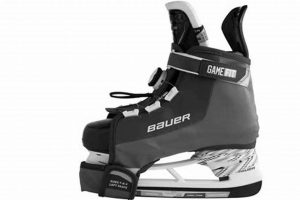
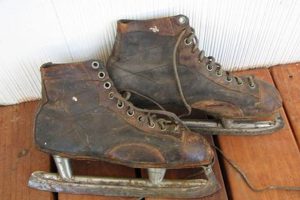
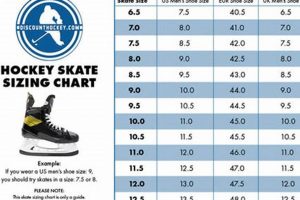
Individual components contribute to the overall functionality of specialized footwear designed for ice hockey. These elements, working in concert, provide support, protection, and maneuverability for the wearer. Understanding the construction of this equipment is crucial for maintenance, repair, and selecting the appropriate model for performance and safety.
Properly functioning equipment enhances a player’s ability to execute complex movements and reduces the risk of injury. Throughout the sport’s history, advancements in materials and design have continuously improved the comfort, durability, and performance characteristics of this essential gear. These improvements reflect a commitment to optimizing athletic capability while prioritizing player well-being.
The subsequent sections will examine the specific constituents, detailing their purpose and impact on the overall skating experience. From the outer shell to the internal liner, each section plays a vital role in enabling players to perform at their best.
Maintenance and Optimization
Proper upkeep and informed selection are essential for maximizing performance and longevity. Attention to detail in these areas contributes significantly to a player’s comfort, safety, and overall skating experience.
Tip 1: Regular Blade Sharpening: Consistent sharpening is crucial for maintaining edge control on the ice. The frequency depends on usage but should be performed by a skilled technician.
Tip 2: Drying After Each Use: Thoroughly dry the liners and blades to prevent rust and bacteria growth. This extends the lifespan of the boot and reduces odor.
Tip 3: Proper Lacing Technique: Lace boots firmly but not too tightly, ensuring ankle support without restricting circulation. Experiment with different lacing patterns to find the optimal fit.
Tip 4: Inspecting the Chassis: Regularly check the chassis for loose screws or damage. Promptly address any issues to maintain structural integrity and prevent injuries.
Tip 5: Replacing Worn Liners: Replace worn liners to maintain comfort and prevent blisters. Consider aftermarket liners for enhanced customization and fit.
Tip 6: Guard Usage: Always use guards when walking off the ice to protect the blades from damage. Choose durable guards that fit securely.
Tip 7: Proper Storage: Store in a dry, well-ventilated area away from direct sunlight. This helps prevent degradation of materials and reduces odor buildup.
Adhering to these maintenance and optimization practices will ensure peak performance and extend the lifespan of the skating equipment. Prioritizing these steps contributes directly to a safer and more enjoyable experience on the ice.
The following section will summarize the key aspects discussed and offer concluding remarks on the importance of understanding the equipment utilized in ice hockey.
1. Boot

The boot is a primary structural element, forming the foundation of hockey footwear. It encases the foot and ankle, providing critical support and protection against impacts from pucks, sticks, and collisions. As a central constituent, its design and materials directly influence a player’s stability, agility, and overall performance on the ice. A properly fitted and constructed boot translates to efficient energy transfer during skating strides and reduced risk of ankle injuries. For instance, a rigid outer shell constructed from composite materials can effectively deflect high-velocity impacts, mitigating potential bone fractures or soft tissue damage. Similarly, a well-contoured heel cup and supportive ankle padding enhance stability and prevent excessive pronation or supination, crucial for maintaining balance during rapid movements.
Material selection in boot construction significantly impacts performance characteristics. Thermoplastic materials allow for heat molding, enabling a customized fit that conforms precisely to the individual’s foot shape. This personalized fit minimizes slippage within the boot, maximizing energy transfer and responsiveness. Conversely, inadequately supportive boots can lead to energy loss, reduced maneuverability, and increased fatigue. Consider the example of a professional player transitioning to a boot with superior stiffness and heat-moldable properties; this can result in noticeable improvements in skating speed, agility, and overall comfort, allowing for longer periods of peak performance without discomfort or fatigue. The boots design also dictates compatibility with the blade holder, which attaches directly to the boots sole.
In summary, the boot is an indispensable element. Its construction, materials, and fit are paramount to performance and safety. Understanding its role helps players, coaches, and equipment managers make informed decisions regarding selection, maintenance, and customization, ensuring that the hockey footwear functions optimally to meet the demands of the sport. The integration of various other components with the boot amplifies its benefits, reinforcing its position as the cornerstone of hockey footwear functionality and longevity.
2. Blade

The blade is a critical component of hockey footwear, directly influencing a skater’s ability to glide, maneuver, and generate speed on the ice surface. As the point of contact between the boot and the ice, its design, material composition, and sharpness determine the efficiency of movement and control. The blade is secured to the boot via the holder, which represents another essential element, working in conjunction with the blade to transmit force and maintain stability. A blade’s profile, which dictates the curvature and length of the running surface, impacts turning radius and overall skating style. For example, a blade with a deeper radius allows for tighter turns but may sacrifice top-end speed, while a flatter profile favors straight-line speed but reduces agility in confined spaces. This interplay between blade design and skating performance underscores the blade’s integral role within the overall footwear system.
The material properties of the blade, typically hardened steel, contribute to its durability and edge retention. Consistent sharpening is essential for maintaining the blade’s edge, which allows the skater to grip the ice during pushes and turns. A dull blade results in slippage, reduced power transfer, and decreased control, increasing the risk of falls and impacting overall performance. Professional players often undergo blade sharpening before each game to ensure optimal grip and responsiveness. This meticulous attention to blade maintenance highlights its importance as a performance-determining factor. Furthermore, the blade’s construction must withstand the rigors of ice hockey, including impacts from pucks, sticks, and other players. Its secure attachment to the holder is paramount, as a loose or damaged connection compromises stability and poses a significant safety hazard.
In conclusion, the blade is an indispensable component within the broader context of hockey footwear. Its design, material, and maintenance directly influence a player’s skating ability and safety on the ice. Understanding the connection between the blade and the other integrated components, such as the holder and the boot, is crucial for optimizing performance and ensuring the longevity of the equipment. Challenges associated with blade selection and maintenance are best addressed through informed decision-making, emphasizing the significance of expert guidance and proper equipment care.
3. Holder

The holder is a critical structural component within hockey footwear, serving as the interface between the boot and the blade. Its primary function is to securely affix the blade to the boot, facilitating the transfer of force from the skater’s body to the ice. The holder’s design and material composition directly impact stability, responsiveness, and overall skating performance. Understanding its role within the complete footwear assembly is essential for proper maintenance and optimal functionality.
- Material Composition and Durability
Holders are typically constructed from high-impact resistant plastics or composite materials. The material selection directly influences the holder’s ability to withstand the forces generated during skating, including impacts from pucks, sticks, and collisions with other players or the boards. A durable holder ensures the blade remains securely attached to the boot, preventing potential injuries resulting from blade detachment. For instance, professional-grade holders often incorporate reinforced structures or advanced composite materials to enhance impact resistance and prolong lifespan.
- Blade Attachment Mechanisms
Various mechanisms are employed to attach the blade to the holder, including rivets, screws, and quick-release systems. Rivets provide a permanent and robust connection, while screws allow for blade replacement or adjustment. Quick-release systems enable rapid blade changes, particularly beneficial in competitive situations where damaged blades must be replaced swiftly. The effectiveness of the attachment mechanism is paramount for maintaining blade stability and preventing slippage, which can compromise skating performance and increase the risk of injury. The selection of the appropriate attachment method depends on the level of play, desired maintenance flexibility, and personal preference.
- Holder Height and Blade Offset
The height of the holder influences the skater’s center of gravity and turning radius. A taller holder generally enhances agility and maneuverability, allowing for tighter turns, while a lower holder provides greater stability and power transfer for straight-line skating. Similarly, blade offset, the position of the blade relative to the center of the boot, impacts balance and skating style. Some holders offer adjustable blade offset, enabling skaters to fine-tune their skating posture and optimize performance. For example, a forward-leaning offset may benefit players who prioritize speed and acceleration, while a more centered offset may suit those seeking enhanced balance and control. These design considerations highlight the holder’s significance in shaping a skater’s on-ice capabilities.
- Compatibility and Replacement
Holders are not universally interchangeable between different boot models. Proper compatibility must be ensured when replacing a damaged holder to maintain the correct fit and functionality. Manufacturers typically provide specific compatibility charts or guidelines to assist in the selection process. Using an incompatible holder can compromise stability, alter the intended skating characteristics, and potentially damage the boot. Furthermore, the replacement process often requires specialized tools and expertise, underscoring the importance of seeking professional assistance when performing holder replacements. Understanding compatibility and adhering to proper replacement procedures are critical for ensuring the safety and performance of the complete hockey footwear system.
The design and functionality of the holder are intrinsically linked to the overall performance and safety of ice hockey footwear. Its role in securing the blade, influencing skating dynamics, and withstanding impacts necessitates careful consideration of its construction, attachment mechanisms, and compatibility. Prioritizing proper maintenance and replacement procedures ensures that the holder continues to perform its critical function, contributing to a safe and effective skating experience.
4. Liner
The liner, an integral component of hockey footwear, serves several crucial functions affecting comfort, performance, and hygiene. As a direct interface with the foot, the liner’s material properties and design influence moisture management, fit customization, and impact absorption. An ill-fitting or poorly constructed liner can lead to discomfort, blisters, and reduced energy transfer, negatively impacting skating efficiency. Conversely, a well-designed liner enhances the skating experience by providing a snug, supportive fit, wicking away moisture, and cushioning impacts. For instance, a professional skater experiencing discomfort due to an inadequate liner may opt for a custom-molded liner to improve fit, reduce friction, and enhance overall comfort, thereby optimizing performance.
The materials employed in liner construction significantly impact its effectiveness. Moisture-wicking fabrics, such as microfiber or specialized synthetic blends, are commonly used to draw sweat away from the foot, preventing moisture buildup and minimizing the risk of blisters. Thermal liners, often incorporating insulating materials, provide warmth in cold rink environments, while antimicrobial treatments help inhibit the growth of bacteria and reduce odor. The liner’s construction also influences the boot’s overall fit and responsiveness. Liners with thicker padding can provide increased cushioning but may reduce sensitivity and tactile feedback. Heat-moldable liners offer a customizable fit, conforming to the individual’s foot shape for enhanced comfort and support. The choice of liner material and construction is therefore a critical consideration in optimizing hockey footwear performance and comfort.
In conclusion, the liner is a vital element within the ensemble of ice hockey equipment. Its role in providing comfort, managing moisture, and enhancing fit is fundamental to the skater’s experience. An understanding of liner materials, construction techniques, and customization options enables informed decision-making, contributing to improved performance, reduced discomfort, and enhanced equipment longevity. Challenges in selecting and maintaining liners can be mitigated through expert consultation and adherence to proper care practices. Proper selection and care of the liner contributes to an enhanced skating experience.
5. Eyelets

Eyelets are essential hardware components integrated into hockey footwear, facilitating the secure lacing of the boot. Their robust design and strategic placement distribute lacing pressure evenly across the instep, contributing to ankle support, fit customization, and overall performance. Eyelets provide a critical mechanical function, influencing the stability and responsiveness of the skate.
- Material Composition and Durability
Eyelets are typically fabricated from metal alloys, such as brass or steel, to withstand the tensile forces exerted during lacing. The material selection ensures resistance to corrosion and deformation, maintaining the integrity of the lacing system over prolonged use. Reinforcement around the eyelet aperture prevents tearing of the boot material, enhancing the lifespan of the footwear. For instance, high-end models often feature stainless steel eyelets with enhanced corrosion resistance, particularly beneficial in environments with high moisture exposure.
- Lacing Pattern Influence
The configuration and spacing of eyelets dictate the available lacing patterns, influencing the degree of ankle flexion and support. Tightly spaced eyelets in the ankle region enhance stability, restricting excessive movement, while wider spacing promotes greater flexibility. Skaters may customize lacing patterns to accommodate individual preferences, addressing specific needs such as pronation or supination. This adaptability underscores the eyelet’s role in facilitating personalized fit adjustments.
- Lacing Pressure Distribution
Eyelets ensure uniform pressure distribution from the laces across the instep and ankle, minimizing pressure points that can cause discomfort or impede circulation. By providing a smooth, low-friction interface for the laces, eyelets prevent abrasion and premature wear. Properly functioning eyelets are essential for achieving a snug, supportive fit without compromising comfort. Skaters who experience lace bite, a condition caused by excessive pressure on the anterior ankle, may benefit from alternative lacing patterns or padded tongues to mitigate the problem.
- Integration with Boot Structure
Eyelets are integrated directly into the boot’s structural layers, reinforcing the lacing area and preventing distortion under tension. The secure attachment of eyelets to the boot material is paramount for maintaining the integrity of the lacing system. Damaged or detached eyelets compromise the boot’s structural integrity and can lead to premature failure of the lacing system. Regular inspection and timely repair of damaged eyelets are essential for preserving the functionality of the footwear.
Eyelets, though often overlooked, are essential components contributing to the fit, support, and longevity of hockey footwear. Their robust construction, strategic placement, and influence on lacing patterns underscore their importance within the overall footwear system. Challenges associated with eyelet durability and lacing pressure distribution are best addressed through informed selection and regular maintenance, ensuring a secure and comfortable fit for optimal performance.
6. Tongue
The tongue, an essential component of hockey footwear, serves a protective and functional role, significantly impacting a skater’s comfort and performance. Positioned beneath the laces, it shields the anterior ankle and lower shin from lace bite, a painful condition caused by concentrated pressure from the lacing system. Furthermore, the tongue contributes to overall fit, stability, and impact absorption, acting as a critical interface between the skater’s leg and the rigid boot structure. A well-designed tongue enhances comfort and enables a more secure and responsive connection with the skate.
Material composition is paramount to the tongue’s effectiveness. High-density foams and felt padding provide cushioning and impact protection, mitigating the force transmitted from pucks, sticks, and collisions. The tongue’s stiffness also influences ankle flexion and support. A stiffer tongue restricts forward flexion, enhancing stability during powerful strides and sharp turns, while a more flexible tongue allows for greater range of motion and agility. For instance, goalies often prefer stiffer tongues to provide enhanced protection and stability when reacting to shots, while forwards may opt for more flexible tongues to maximize agility and maneuverability. The tongue’s design also influences breathability and moisture management. Perforations or breathable fabrics can help dissipate heat and moisture, preventing discomfort and odor buildup. Furthermore, some tongues incorporate removable inserts to allow for customized fit adjustments, accommodating variations in ankle shape and volume. Examples include aftermarket gel pads and foam inserts used by skaters to reduce lace bite and improve overall comfort.
In conclusion, the tongue is more than a simple pad; it is a carefully engineered component that directly affects a skater’s comfort, protection, and performance. Understanding the relationship between tongue design, material properties, and its interaction with other parts of hockey footwear enables informed decision-making regarding equipment selection and customization. Improperly fitted or poorly designed tongues can lead to discomfort and impact skating performance. Regular inspection and proper maintenance, including addressing wear and tear, are essential for ensuring the tongue continues to provide optimal protection and comfort. Challenges related to selecting a tongue that balances protection, flexibility, and breathability are best addressed through expert consultation and careful consideration of individual skating style and preferences. By paying attention to the tongue, skaters can significantly enhance their overall skating experience and maintain peak performance on the ice.
Frequently Asked Questions
The following section addresses frequently asked questions regarding the various structural and functional components of ice hockey footwear. Understanding these components is crucial for maintenance, selection, and performance optimization.
Question 1: What is the function of the boot in hockey footwear?
The boot provides ankle support, protection against impacts, and a rigid structure for energy transfer during skating strides. Its design influences stability, agility, and overall performance.
Question 2: Why is blade sharpness crucial in hockey skates?
Blade sharpness enables the skater to grip the ice, facilitating efficient pushes and turns. Dull blades compromise control, reduce power transfer, and increase the risk of falls.
Question 3: How does the holder contribute to hockey skate performance?
The holder securely attaches the blade to the boot, transmitting force from the skater to the ice. Its design impacts stability, responsiveness, and turning radius.
Question 4: What is the purpose of the liner in hockey footwear?
The liner provides comfort, cushioning, and moisture management, influencing fit, performance, and hygiene. It minimizes friction and helps prevent blisters.
Question 5: How do eyelets affect the fit and function of hockey skates?
Eyelets distribute lacing pressure evenly, contributing to ankle support, fit customization, and secure closure. They reinforce the lacing area and prevent distortion under tension.
Question 6: What role does the tongue play in hockey footwear?
The tongue protects the anterior ankle and lower shin from lace bite, cushions impacts, and contributes to overall fit and stability.
This FAQ section provides a concise overview of the roles played by various constituents. A thorough understanding of these components is essential for informed decision-making regarding equipment maintenance and selection.
The subsequent section will provide concluding remarks regarding the comprehensive understanding of footwear components.
Conclusion
This exploration has detailed the individual components of ice hockey footwear, outlining their respective functions and contributions to overall performance and safety. From the protective boot to the ice-contacting blade, each constituent plays a vital role in enabling efficient skating and mitigating the risk of injury. Understanding the interplay between these elements is crucial for proper maintenance, informed equipment selection, and optimizing athletic capability.
Given the complex interplay between its constituent parts and their collective impact on performance and safety, the information is paramount. Continual advancements in materials and design will likely further refine hockey footwear, underscoring the need for ongoing education and informed decision-making within the sport. The insights gained here should serve as a foundation for athletes, coaches, and equipment managers seeking to maximize performance and ensure the long-term well-being of players.