The selection of appropriate equipment is critical for optimal performance and safety in the sport of roller hockey. Footwear designed specifically for this activity provides the necessary support, maneuverability, and protection to execute skills effectively on a hard, smooth surface. These skates are distinguished by features such as reinforced ankle support, durable chassis construction, and specialized wheel configurations optimized for grip and speed.
Using properly designed roller hockey skates enhances an athlete’s agility, allowing for quick turns, stops, and starts. This translates to improved gameplay, greater control of the puck, and a reduced risk of injury. Historically, the evolution of these skates has mirrored the increasing popularity and sophistication of the sport itself, with manufacturers continually innovating to provide athletes with superior equipment.
The following sections will delve into the key aspects of selecting suitable roller hockey skates, including factors such as fit, wheel characteristics, frame material, and boot construction. The aim is to furnish readers with a comprehensive understanding of these elements to make informed decisions regarding their equipment choices.
Essential Considerations for Roller Hockey Footwear
Selecting the correct skates for roller hockey involves careful evaluation of several factors to ensure optimal performance and safety.
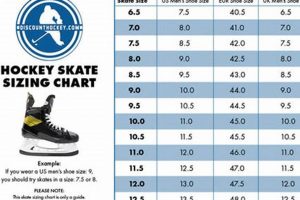
Tip 1: Prioritize Proper Fit: A snug yet comfortable fit is paramount. Excess space within the boot can lead to instability and blisters. Ensure the heel is securely locked in place to prevent slippage during dynamic movements.
Tip 2: Evaluate Wheel Hardness: Wheel durometer, measured on the A scale, determines grip and speed. Softer wheels (74A-78A) provide superior grip on smooth surfaces but wear faster. Harder wheels (80A-84A) offer increased speed and durability but may sacrifice grip. The playing surface should inform this decision.
Tip 3: Consider Frame Material: Aluminum frames offer excellent power transfer and durability but can be heavier. Composite frames are lighter and provide more flex but may not be as robust. Assess individual playing style and level of intensity when selecting a frame material.
Tip 4: Assess Boot Construction: Stiffer boots offer greater ankle support, which is beneficial for powerful skating styles. More flexible boots allow for increased agility and maneuverability. Consider individual skating technique and preference.
Tip 5: Inspect Bearing Quality: Higher-quality bearings (ABEC 5 or higher) reduce friction and improve rolling efficiency. Regular maintenance and lubrication are crucial for preserving bearing performance.
Tip 6: Account for Ventilation: Adequate ventilation helps to prevent excessive sweating and discomfort. Boots with breathable linings and ventilation ports can improve comfort during extended periods of play.
Tip 7: Research Reputable Brands: Established manufacturers typically offer superior quality, durability, and warranty support. Investigate brand reputation and read reviews before making a purchase.
Adhering to these guidelines will significantly enhance on-rink experience and minimize the risk of injury. Careful consideration of these factors leads to the selection of suitable roller hockey skates, contributing to improved performance and enjoyment of the sport.
The subsequent sections will address specific aspects of skate maintenance and advanced customization options.
1. Ankle Support

Adequate ankle support is a critical determinant of performance and safety in roller hockey. Insufficient support can lead to instability, increasing the risk of ankle sprains and other lower extremity injuries. Conversely, robust ankle support enhances an athlete’s ability to execute rapid turns, stops, and starts with greater precision and control. This directly impacts the agility and overall effectiveness of a player on the rink. For instance, during aggressive maneuvers such as crossovers or sharp cuts, the ankle joint is subjected to significant lateral forces. A skate lacking sufficient support will allow excessive ankle roll, compromising balance and potentially leading to injury. The degree of support required often correlates with the player’s skill level and intensity of play.
The design of the skate boot directly influences the level of ankle support provided. Stiffer materials, such as reinforced polymers or carbon fiber, offer greater rigidity and resistance to lateral movement. Lace systems that extend higher up the ankle, coupled with power straps or buckles, further augment stability. Professional-grade roller hockey skates typically incorporate these features to meet the demands of competitive play. Consider the example of a seasoned player executing a quick direction change to evade a defender; effective ankle support allows them to maintain balance and control, translating to a successful offensive maneuver. Choosing the appropriate level of ankle support necessitates careful consideration of individual needs and playing style.
Ultimately, the selection of roller hockey skates must prioritize a balance between ankle support, comfort, and range of motion. While maximizing stability is paramount, excessive rigidity can restrict mobility and hinder performance. An informed decision, incorporating considerations of playing style, skill level, and injury history, is crucial. Furthermore, regular maintenance and proper lacing techniques are vital to ensuring that the ankle support system functions optimally throughout the skate’s lifespan, contributing to long-term performance and safety on the rink.
2. Wheel Durometer
Wheel durometer, a measurement of hardness, is a critical factor in determining the performance characteristics of roller hockey skates. Its influence on grip, speed, and durability directly impacts a player’s agility, control, and overall effectiveness on the rink, playing a pivotal role in defining the qualities of hockey skates. Thus durometer impacts quality of best inline skates hockey.
- Grip and Surface Adhesion
Lower durometer wheels (typically 74A-78A) offer increased grip, particularly on smooth indoor surfaces. This enhanced adhesion allows for quicker stops, sharper turns, and more confident puck handling. For example, a player attempting a sudden direction change will benefit from the increased grip of softer wheels, minimizing the risk of slippage and maximizing responsiveness. However, the increased friction also leads to greater wear and tear. The resulting quality is more of best inline skates hockey.
- Speed and Rolling Resistance
Higher durometer wheels (typically 80A-84A) exhibit reduced rolling resistance, translating to increased speed and longer glide. This is advantageous for players covering large distances or seeking to maintain momentum. A player skating down the wing will benefit from the greater speed afforded by harder wheels, potentially creating scoring opportunities. However, harder wheels offer less grip, particularly on less-than-ideal surfaces, which is not qualities of best inline skates hockey.
- Durability and Wear Rate
Softer wheels wear down more rapidly than harder wheels, requiring more frequent replacement. This is a significant consideration for players who train or compete frequently. Harder wheels, while more durable, may transmit more vibration to the skater’s feet and ankles, potentially leading to fatigue over extended periods of use. The impact on lifespan influence best inline skates hockey, whether it’s value, or waste of money.
- Playing Surface Compatibility
The ideal wheel durometer is highly dependent on the playing surface. Smooth, polished surfaces generally benefit from softer wheels that maximize grip. Rougher surfaces, such as outdoor rinks, typically require harder wheels that can withstand abrasion and maintain speed. Selecting the appropriate durometer for the intended playing surface is crucial for optimizing performance and extending wheel lifespan. Using wrong durometer impacts best inline skates hockey rating
The interplay between grip, speed, durability, and surface compatibility dictates the optimal wheel durometer for roller hockey skates. While softer wheels provide superior grip and maneuverability, harder wheels offer increased speed and longevity. The ideal choice depends on individual playing style, rink conditions, and performance priorities. Achieving the right balance in selecting wheel durometer contributes significantly to enhancing a player’s overall skating experience, hence selecting of wheels is key of best inline skates hockey
3. Frame Material
The frame material of inline skates significantly impacts performance in roller hockey, influencing attributes that determine the overall quality of equipment. The selection of frame material directly affects factors such as power transfer, weight, durability, and responsiveness, all critical aspects contributing to a skaters agility and control. Aluminum alloys are frequently employed due to their high strength-to-weight ratio, providing efficient energy transfer during strides and sharp turns. Conversely, composite materials, often a blend of carbon fiber and polymers, offer a lighter alternative, potentially enhancing maneuverability, but often with a trade-off in rigidity and power transfer. The choice between these materials is thus a crucial decision when selecting skates for roller hockey.
Consider, for example, a competitive roller hockey player requiring maximum energy transfer for explosive acceleration. An aluminum frame would likely be preferred, as its stiffness minimizes energy loss during each stride, translating into greater speed and power. Conversely, a player prioritizing agility and quick changes of direction might favor a composite frame for its lighter weight, even if it means sacrificing some power in straight-line speed. Further, the playing environment influences frame material choice. For instance, outdoor rinks or environments prone to impact require durable frames to withstand damage, making aluminum alloys a more suitable choice. Composite materials can be susceptible to cracking or deformation under heavy impact.
In conclusion, the selection of frame material for roller hockey skates is a nuanced decision that necessitates careful evaluation of playing style, skill level, and rink conditions. Aluminum frames provide superior power transfer and durability, while composite frames offer weight advantages and enhanced agility. Understanding the properties of each material and their impact on performance is essential for making an informed decision that optimizes on-rink capabilities. Skates with appropriate frame materials provide the foundation for enhanced performance and safety, exemplifying the intersection of equipment selection and athletic achievement in the sport of roller hockey.
4. Bearing Precision
Bearing precision plays a critical, albeit often overlooked, role in determining the quality and performance of inline skates used in roller hockey. The precision rating, typically denoted by the ABEC (Annular Bearing Engineers’ Committee) scale, directly correlates with the smoothness and efficiency of wheel rotation. Higher ABEC ratings (e.g., ABEC 7, ABEC 9) indicate tighter tolerances and smoother surfaces within the bearing, resulting in reduced friction and increased speed. This directly impacts a skater’s ability to generate and maintain momentum, conserve energy, and execute rapid movements essential for success in roller hockey. For instance, a skater relying on low-precision bearings will experience increased resistance, requiring greater effort to achieve the same speed and agility as one utilizing high-precision bearings. This difference, while seemingly minor, accumulates over the course of a game, potentially leading to fatigue and diminished performance.
The practical significance of bearing precision extends beyond simply achieving higher speeds. It also impacts control and maneuverability. Smoother wheel rotation translates into more predictable and responsive handling, allowing skaters to execute precise turns, stops, and starts. In roller hockey, where split-second decisions and agile movements are paramount, this enhanced control can be the difference between successfully evading a defender and losing possession of the puck. Furthermore, high-precision bearings contribute to the longevity of the skates themselves. Reduced friction minimizes wear and tear on the wheels and axles, extending the lifespan of these components. Regular maintenance, including cleaning and lubrication, is essential for preserving the precision and performance of bearings over time. Failing to maintain bearings can negate the benefits of high precision, leading to decreased performance and potential damage.
In summary, bearing precision is an integral component of high-quality inline skates used in roller hockey. Its impact on speed, control, energy efficiency, and equipment longevity cannot be overstated. While the initial investment in high-precision bearings may be higher, the long-term benefits in terms of performance, reduced fatigue, and increased equipment lifespan make it a worthwhile consideration for serious roller hockey players. Challenges remain in accurately assessing bearing quality without specialized equipment, highlighting the importance of relying on reputable manufacturers and user reviews when making purchasing decisions. Ultimately, understanding the relationship between bearing precision and skate performance contributes to a more informed selection process, leading to enhanced on-rink experiences.
5. Boot Fit
Boot fit is a non-negotiable aspect of achieving optimal performance and minimizing the risk of injury in roller hockey. An ill-fitting boot directly undermines the skater’s ability to effectively transfer power, maintain balance, and execute the precise movements required in the sport. A boot that is too large allows for excessive foot movement, leading to instability and reduced control. Conversely, a boot that is too small restricts circulation and creates pressure points, resulting in discomfort, blisters, and potential long-term foot problems. Therefore, the correct boot fit is paramount for realizing the full potential of skating abilities in roller hockey.
The relationship between boot fit and skate performance can be illustrated through various scenarios. For instance, a player attempting a quick direction change in a boot that is too large will experience a delay in response time as the foot shifts within the boot. This delay can be the difference between successfully evading an opponent and losing possession of the puck. Similarly, a player enduring the discomfort of a too-tight boot will inevitably experience a decline in performance due to distraction and pain. Professional athletes often undergo custom boot fitting processes to ensure a precise match, recognizing the critical link between boot fit and competitive success. Proper boot selection depends on heel lock, avoiding heel lift as well as a snug instep and toe box.
In conclusion, achieving an ideal boot fit is a cornerstone of selecting appropriate roller hockey skates. While other factors such as wheel durometer, frame material, and bearing precision contribute to overall performance, a compromised boot fit will invariably diminish the benefits of these features. Careful attention to boot size, shape, and lacing techniques is essential for maximizing performance, minimizing discomfort, and preventing injuries. The pursuit of “best inline skates hockey” intrinsically includes prioritizing the attainment of a proper and comfortable boot fit.
Frequently Asked Questions
The following section addresses common inquiries regarding the selection, maintenance, and performance aspects of inline skates designed for roller hockey.
Question 1: How does wheel durometer influence performance on different rink surfaces?
Wheel durometer, measured on the A scale, dictates grip and speed. Softer wheels (74A-78A) offer superior grip on smooth indoor surfaces but wear faster. Harder wheels (80A-84A) provide increased speed and durability on rougher outdoor surfaces but may sacrifice grip.
Question 2: What is the significance of ABEC rating in skate bearings?
ABEC rating indicates the precision and tolerance of skate bearings. Higher ABEC ratings (e.g., ABEC 7, ABEC 9) generally correlate with smoother rolling and reduced friction, leading to increased speed and efficiency. However, higher ABEC ratings do not necessarily guarantee greater durability.
Question 3: How should roller hockey skates fit properly?
Roller hockey skates should fit snugly but comfortably. The heel should be securely locked in place to prevent slippage. Toes should have minimal room for movement to maximize control and prevent blisters.
Question 4: What are the advantages and disadvantages of aluminum versus composite skate frames?
Aluminum frames offer excellent power transfer and durability but can be heavier. Composite frames are lighter and provide more flex but may not be as robust, potentially impacting power transfer and responsiveness.
Question 5: How often should roller hockey skate wheels be rotated or replaced?
Wheel rotation frequency depends on usage and wear patterns. Rotate wheels regularly to ensure even wear. Replace wheels when they become excessively worn, exhibit significant cracking, or compromise grip and performance.
Question 6: What are essential maintenance practices for roller hockey skates?
Essential maintenance includes cleaning bearings regularly, lubricating axles, inspecting frames for damage, and replacing worn wheels and laces. Proper maintenance extends the lifespan and maintains the performance of roller hockey skates.
Understanding these factors enhances the user’s ability to make informed decisions regarding roller hockey skate selection and maintenance, maximizing performance and safety.
The subsequent sections will focus on comparing specific brands and models of roller hockey skates currently available on the market.
Conclusion
The foregoing analysis has elucidated the multifaceted aspects contributing to the selection of optimal roller hockey skates. Factors encompassing ankle support, wheel durometer, frame material, bearing precision, and boot fit are demonstrably crucial in determining on-rink performance and mitigating the risk of injury. A comprehensive understanding of these variables empowers athletes to make informed equipment choices aligned with their individual playing styles and performance objectives. Prioritizing a meticulous evaluation of these elements is essential for achieving peak performance.
The pursuit of superior roller hockey equipment remains an ongoing endeavor, with manufacturers continually innovating to enhance performance and durability. Prospective buyers are encouraged to apply the principles outlined herein to critically assess available options and prioritize equipment that demonstrably optimizes their capabilities. Continued investment in well-designed and properly maintained equipment represents a strategic imperative for maximizing athletic potential within the sport.