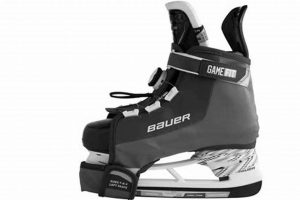
Equipment designed to accommodate broader than average foot dimensions is essential for ice hockey players. This specialized gear addresses the unique fit requirements of individuals whose feet possess a greater width, ensuring comfort and optimal performance on the ice. An example includes skates constructed with a wider chassis and expanded toe box, providing ample space and preventing discomfort during play.
Properly fitted equipment contributes significantly to an athlete’s well-being and their ability to execute techniques effectively. The selection of such specialized equipment allows for enhanced comfort, reduced risk of blisters and other foot-related injuries, and improved power transfer during skating. Historically, advancements in materials and manufacturing have led to a wider range of options to cater to varying foot shapes and sizes.
Understanding the specific needs of individuals requiring such equipment, and the features to seek when purchasing, is crucial for ensuring a positive and productive experience on the ice. Considerations such as boot construction, blade placement, and lacing systems all play a role in achieving a secure and comfortable fit. This discussion will now address the essential aspects to examine when selecting appropriate ice hockey skates.
Selection Guidance
Careful consideration during the selection process is paramount to ensure optimal performance and comfort. A poorly fitted skate can hinder agility and increase the risk of injury.
Tip 1: Measurement is Essential: Professional fitting at a reputable sporting goods store is the recommended first step. Utilizing a Brannock device provides accurate measurements of both foot length and width, serving as a baseline for skate size selection.
Tip 2: Identify Foot Volume: Beyond width, foot volume (height of the instep) impacts fit. Some skates are designed with greater depth to accommodate higher insteps; assessing this is crucial for overall comfort.
Tip 3: Focus on Boot Construction: Seek skates with wider chassis construction and a voluminous toe box. These design elements directly address the needs of wider feet, preventing constriction and discomfort.
Tip 4: Explore Heat Molding Options: Many modern skates offer heat-moldable features. This process allows the boot to be custom-fitted to the specific contours of the foot, further optimizing fit and comfort.
Tip 5: Evaluate Lacing Systems: The lacing system significantly influences foot security and stability within the skate. Experiment with different lacing techniques to achieve a secure, comfortable fit without excessive pressure.
Tip 6: Consider Aftermarket Solutions: If off-the-shelf skates do not provide an adequate fit, explore custom skate options or aftermarket solutions such as orthotics or boot stretching, performed by qualified professionals.
Tip 7: Seek Professional Advice: Consult with experienced skate technicians or hockey equipment specialists. Their expertise can provide valuable insights and guidance throughout the selection process.
Proper selection, involving thorough assessment and expert guidance, ensures a secure, comfortable, and performance-enhancing fit. Prioritizing these considerations will maximize comfort and minimize the risk of discomfort during play.
The next section will delve into the proper maintenance and care protocols for optimal longevity and continued performance of selected equipment.
1. Proper Width Measurement

The accurate determination of foot width is paramount in the selection of ice hockey skates, particularly for individuals requiring models designed for broader feet. Inadequate measurement leads to discomfort, impaired performance, and potential injury. Precise width assessment forms the foundational step in identifying skates that accommodate the foot’s natural dimensions.
- Brannock Device Utilization
The Brannock device offers standardized measurement of foot length and width. Consistent use of this tool across different retail environments allows for comparable data. For individuals needing specialized skates, it provides a quantifiable baseline for assessing the degree of additional width required in the skate boot.
- Accounting for Foot Volume
Width measurement alone is insufficient; foot volume, encompassing instep height, influences skate fit. While a skate may possess adequate width, insufficient volume can result in excessive pressure and discomfort. Proper measurement accounts for both dimensions, guiding selection towards skates designed for corresponding foot profiles.
- Impact on Performance Metrics
A skate that constricts the foot’s width impedes circulation and restricts natural foot movement. This directly affects balance, agility, and power transfer during skating. Accurate width measurement, therefore, contributes to optimized performance, enabling fluid movements and efficient energy expenditure.
- Injury Prevention
Consistent pressure points caused by ill-fitting skates contribute to blisters, neuromas, and other foot-related injuries. Precise width assessment minimizes the likelihood of these issues by ensuring uniform pressure distribution throughout the boot. This proactive approach is critical for preventing both acute and chronic foot conditions.
The outlined facets highlight the interconnectedness of accurate foot width measurement and the appropriate selection of ice hockey skates tailored for broader feet. Neglecting proper measurement precipitates a cascade of negative consequences, ranging from diminished performance to heightened injury risk. Emphasizing accurate assessment is thus essential for maximizing comfort, performance, and long-term foot health for those requiring specialized equipment.
2. Boot Volume Consideration

Boot volume, in the context of ice hockey skate selection, represents the internal vertical space within the skate boot, encompassing the instep height and overall depth. For individuals requiring wider skates, boot volume becomes a critical factor because a skate possessing adequate width may still prove unsuitable if it lacks sufficient vertical space. The interplay between width and volume directly affects comfort and performance, as inadequate volume can cause pressure points, impede circulation, and restrict ankle mobility. For instance, an athlete with a wide foot and a high instep will experience discomfort and reduced performance in a skate with insufficient boot volume, even if the width is appropriate. The practical significance lies in recognizing that a two-dimensional assessment of width is insufficient; a three-dimensional understanding of foot size, including volume, is essential for proper skate fitting.
Real-world examples illustrate the importance of considering boot volume. A player experiencing persistent lace bite, despite having a skate of appropriate width, may benefit from a skate with a deeper boot profile. Similarly, individuals with orthotics require skates with greater volume to accommodate the additional insole without compromising fit. Ignoring boot volume can lead to compensatory adjustments, such as excessively loose lacing, which negatively impacts ankle support and stability. Professional skate fitters routinely assess boot volume as part of a comprehensive fitting process, employing techniques such as visual inspection and palpation to determine whether a skate provides adequate vertical space.
In summary, boot volume is an integral, yet often overlooked, component of selecting ice hockey skates, particularly for those requiring wider models. Addressing boot volume considerations mitigates discomfort, optimizes performance, and reduces the risk of foot-related issues. Challenges arise in accurately assessing boot volume without professional guidance, underscoring the importance of consulting with experienced skate fitters. The interplay of width and volume highlights the complexities of skate fitting and emphasizes the need for a holistic approach to ensure optimal comfort and performance on the ice.
3. Toe Box Dimensions

Toe box dimensions in ice hockey skates directly correlate with the comfort and performance of players with wider feet. The internal space within the skate boot, specifically the area accommodating the toes, dictates the degree to which the foot can rest naturally without constriction. Inadequate toe box dimensions impede circulation, restrict toe movement, and contribute to discomfort and potential injury.
- Width and Height Considerations
The toe box must provide sufficient width and height to accommodate the toes without compression. Skates designed for narrow feet typically feature a tapered toe box, unsuitable for wider foot profiles. The height of the toe box prevents vertical compression of the toes, avoiding conditions such as hammer toe or claw toe. These dimensional considerations directly affect the player’s ability to maintain balance and execute skating techniques effectively.
- Impact on Circulation and Nerve Function
A constricted toe box impedes blood flow to the toes, leading to numbness and discomfort, particularly during extended periods of skating. Nerve compression within a cramped toe box can cause tingling or pain, further hindering performance. Adequate toe box dimensions promote healthy circulation and nerve function, contributing to sustained comfort and optimal foot health.
- Material Flexibility and Construction
The materials used in the construction of the toe box influence its flexibility and ability to conform to the shape of the foot. Softer, more pliable materials offer greater accommodation for wider feet, while rigid materials provide less give and can exacerbate discomfort. The overall construction of the skate, including the stitching and seams in the toe box area, must minimize potential pressure points.
- Relationship to Skate Size and Fit
Selecting the correct skate size is essential, but even with the proper length, inadequate toe box dimensions can compromise overall fit. Wider skates often feature a more generously proportioned toe box, but this is not always guaranteed. Evaluation of the toe box dimensions, independent of overall skate size, is crucial for ensuring a comfortable and performance-enhancing fit for individuals with broader feet. This often requires professional assessment and skate fitting.
The interconnectedness of toe box dimensions with comfort, circulation, and performance is evident in the context of ice hockey skates for wider feet. A properly dimensioned toe box facilitates natural foot movement, promotes circulation, and minimizes the risk of injury. Careful consideration of these factors during the skate selection process is essential for optimizing the player’s experience on the ice.
4. Heat Molding Adaptability
Heat molding adaptability represents a significant factor in the customization of ice hockey skates, offering individuals with wider feet a means to achieve a more precise and comfortable fit. This process allows the skate boot to conform more closely to the unique contours of the foot, mitigating pressure points and enhancing overall performance. The following facets detail how heat molding adaptability is used for specialized skate fitting.
- Customization of Boot Shape
Heat molding involves heating the skate boot to a pliable state, enabling it to mold around the foot’s specific shape as it cools. This is particularly beneficial for individuals requiring wider skates, as it allows for localized adjustments in the forefoot and midfoot areas, addressing common fit issues such as excessive tightness or pressure. For example, a player experiencing discomfort on the lateral side of the foot can have the skate heated and molded to create additional space in that area.
- Enhancement of Comfort and Fit
The heat molding process optimizes the fit of the skate, minimizing internal movement and slippage. A more secure fit translates to enhanced comfort and reduced friction, mitigating the risk of blisters and other foot-related injuries. For athletes with asymmetrical feet, heat molding facilitates customization that accommodates variances in foot shape, resulting in a more balanced and comfortable skating experience.
- Impact on Performance
A properly molded skate enhances performance by improving energy transfer and responsiveness. A snug, conforming fit allows for more efficient transfer of power from the foot to the skate blade, resulting in improved agility and control on the ice. A customized fit also reduces fatigue, enabling players to maintain peak performance for longer durations.
- Limitations and Considerations
While heat molding offers substantial benefits, it is not a universal solution. The degree to which a skate can be molded depends on the materials used in its construction. Some skate models are more amenable to heat molding than others. Furthermore, improper heat molding techniques can damage the skate boot, underscoring the importance of seeking professional assistance. Certain conditions, such as significant foot deformities, may require custom skate construction rather than relying solely on heat molding adaptability.
The facets presented underscore the role of heat molding adaptability in optimizing the fit and performance of ice hockey skates for individuals with wider feet. This process allows for a level of customization that addresses specific fit challenges, resulting in enhanced comfort, reduced injury risk, and improved on-ice performance. However, it is essential to recognize the limitations of heat molding and to seek professional guidance to ensure proper execution and avoid potential damage to the skate boot.
5. Lacing System Adjustability
Lacing system adjustability in ice hockey skates is paramount for individuals with wider feet, as it allows for customization of the boot’s fit to accommodate varying foot volumes and shapes. An adaptable lacing system mitigates pressure points, enhances foot stability, and optimizes energy transfer during skating. Its relevance is amplified when selecting wider skates, where the inherent volume difference necessitates precise control over tightness and support.
- Differential Zone Lacing
Differential zone lacing divides the lacing system into distinct zones, each adjustable independently. This allows for varying degrees of tightness across the foot, accommodating a wider forefoot while maintaining secure ankle support. An athlete with a wide forefoot and narrow heel can loosen the lower laces for comfort while tightening the upper laces for stability. Skates with this feature often utilize specialized eyelets or lace locks to maintain tension in each zone.
- Lace Material and Flexibility
The material composition and flexibility of the laces themselves influence the adjustability of the system. Stiffer laces provide greater support but may be less forgiving for wider feet requiring subtle adjustments. More pliable laces offer a greater range of adjustability, conforming to the foot’s contours. Waxed laces offer enhanced grip and prevent slippage, maintaining desired tension throughout play. The selection of lace material should complement the skater’s foot shape and skating style.
- Eyelet Configuration and Placement
The configuration and placement of eyelets directly impact the lacing system’s adjustability. Eyelets positioned closer together provide finer control over tightness, while wider spacing allows for more significant adjustments. Reinforced eyelets prevent premature wear and maintain consistent tension. Skates designed for wider feet often feature strategically placed eyelets to accommodate the broader forefoot and prevent lace bite. The eyelet configuration is a critical element in achieving a secure and comfortable fit.
- Power Lacing Systems
Power lacing systems, incorporating mechanical or electronic mechanisms, offer precise and consistent tension control throughout the skate. These systems allow for micro-adjustments that optimize fit and support. While more complex and often found in higher-end models, power lacing systems provide a level of adjustability unattainable with traditional lacing methods. For individuals with specific fit requirements, such as those with wide feet and varying foot volumes, power lacing systems provide a viable option for achieving a customized and performance-enhancing fit.
These facets demonstrate the multifaceted relationship between lacing system adjustability and ice hockey skates designed for wider feet. A well-designed and adaptable lacing system is essential for accommodating the unique fit requirements of individuals with broader foot dimensions, ensuring both comfort and optimal performance on the ice. Proper lacing techniques, combined with appropriate skate selection, are crucial for maximizing the benefits of adjustability and minimizing the risk of discomfort or injury.
6. Aftermarket Solutions

For individuals requiring ice hockey skates that accommodate broader feet, aftermarket solutions represent a critical avenue for achieving a customized and performance-enhancing fit when standard skate models prove inadequate. These solutions encompass a range of modifications and accessories designed to address specific fit challenges and optimize comfort. They are particularly relevant when off-the-shelf options fail to provide sufficient width, volume, or support.
- Custom Orthotics
Custom orthotics offer personalized arch support and foot alignment, crucial for addressing biomechanical imbalances that can exacerbate discomfort in wider feet. These orthotics are molded to the individual’s foot contours, providing targeted support and pressure relief. For example, a player with flat feet may benefit from orthotics that elevate the arch, improving stability and reducing strain. Their implications extend to injury prevention and enhanced skating efficiency, promoting proper foot mechanics within the skate.
- Boot Stretching
Professional boot stretching expands the skate’s forefoot and midfoot areas, creating additional width and volume. This process utilizes specialized equipment and techniques to carefully stretch the skate’s materials without compromising structural integrity. Boot stretching is particularly effective for addressing localized pressure points and accommodating bunions or other foot deformities. It provides a non-invasive alternative to custom skate construction, offering a tailored fit at a reduced cost.
- Tongue Modifications
The skate tongue can be modified or replaced to improve comfort and fit, especially for individuals with high insteps or ankle discomfort. Thicker or thinner tongues can alter the overall volume within the skate, while gel or foam padding can alleviate pressure points. Aftermarket tongue modifications allow for fine-tuning of the fit around the ankle and instep, improving support and reducing lace bite. These adjustments are often necessary to achieve a secure and comfortable fit in skates designed for standard foot shapes.
- Liner Replacements
Replacing the stock liner with a custom or aftermarket liner can enhance comfort, moisture management, and overall fit. Liners constructed from heat-moldable materials provide a customized fit that conforms to the foot’s contours. Liners with enhanced moisture-wicking properties keep the feet dry and prevent blisters. Aftermarket liner options offer a range of features and benefits, allowing individuals with wider feet to optimize the internal environment of their skates for improved performance and comfort. They also extend the life of the skates by replacing worn out parts.
In conclusion, aftermarket solutions represent an essential resource for individuals seeking ice hockey skates that accommodate wider feet. These modifications and accessories provide a means to customize the fit, optimize comfort, and enhance performance when standard skate models prove inadequate. From custom orthotics to boot stretching and liner replacements, aftermarket solutions offer a range of options for achieving a personalized and performance-enhancing skating experience.
Frequently Asked Questions
This section addresses common inquiries regarding ice hockey skates specifically designed for individuals with wider feet. The information aims to provide clarity on selection, fit, and performance considerations.
Question 1: How does the width of ice hockey skates differ from standard shoe sizing?
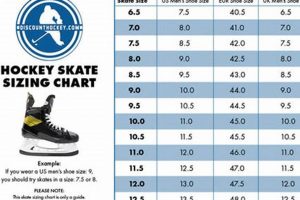
Ice hockey skate width is generally indicated by letters (e.g., D, EE, EEE), with higher letters denoting increased width. Standard shoe sizing does not always directly translate to skate sizing; professional fitting is essential for accurate measurement. In certain circumstances, it can be several sizes bigger than regular shoes to accommodate for wide feet.
Question 2: What are the potential consequences of using skates that are too narrow?
Using skates that are too narrow can result in discomfort, blisters, numbness, and restricted circulation. Long-term use can lead to foot deformities and reduced athletic performance due to impaired foot mechanics.
Question 3: Are there specific brands or models of ice hockey skates known to accommodate wider feet?
Several brands offer models specifically designed for wider feet. Specific models within these brands feature wider chassis construction and expanded toe boxes. Consulting product specifications and reviews is recommended.
Question 4: Can heat molding adequately compensate for a skate that is marginally too narrow?
Heat molding can provide some degree of customization, but it cannot fundamentally alter the skate’s overall width. It is most effective for fine-tuning fit and addressing localized pressure points, not for significantly widening a narrow skate.
Question 5: What role do aftermarket insoles or orthotics play in fitting wider feet into ice hockey skates?
Aftermarket insoles or orthotics can provide additional support and cushioning, but they also occupy volume within the skate. While they can improve comfort, they may not fully address the issue of insufficient width. Care should be taken to get fitted for the proper size.
Question 6: How frequently should ice hockey skates be professionally fitted, especially for growing athletes?
Professional skate fitting is recommended at least annually, and more frequently for growing athletes. Children and adolescents experience rapid foot growth, necessitating regular assessments to ensure proper skate fit and prevent injury.
Proper selection and fitting of ice hockey skates for wider feet require careful consideration of width, volume, and individual foot characteristics. Consulting with experienced skate technicians is highly recommended.
This concludes the FAQ section. The next section will offer concluding remarks and resources for further information.
Concluding Remarks
This exploration of ice hockey skates wide feet has underscored the critical importance of proper fit for athletes with broader foot dimensions. Adequate width, appropriate boot volume, and adaptable lacing systems, coupled with potential aftermarket solutions, collectively contribute to enhanced comfort, performance, and injury prevention on the ice. The intricacies of skate selection necessitate careful consideration of individual foot characteristics and consultation with experienced professionals.
The information provided serves as a foundation for informed decision-making regarding skate selection. Prioritizing proper fit remains paramount for maximizing athletic potential and minimizing the risk of foot-related complications. Continued advancements in skate technology and fitting techniques promise further improvements in accommodating the diverse needs of all ice hockey players.