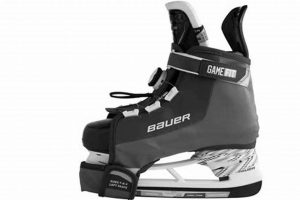
These protective devices are external components affixed to hockey skates, primarily shielding the foot and ankle from impacts delivered by errant pucks and sticks. These are usually constructed from rigid materials, such as molded plastic or composite materials, designed to absorb and deflect high-velocity impacts. An example of their use is during a penalty kill, where a player intentionally positions themselves to impede a shot on goal, using the skate guards to mitigate potential injury.
Their incorporation into a player’s equipment is paramount for injury prevention, contributing to enhanced player safety during gameplay. Historically, foot and ankle injuries were common occurrences due to the exposed nature of skates. The introduction of these guards significantly reduced the incidence of such injuries, allowing players to engage more aggressively and confidently without fear of severe lower extremity trauma. This advancement has allowed for a more dynamic and competitive environment in the sport.
The following sections will detail the various types available, the materials used in their construction, fitting guidelines to ensure maximum protection and comfort, and considerations for maintenance and replacement, ensuring players are well-informed about these vital pieces of equipment.
Hockey Skate Shot Blockers
The effective utilization of skate-mounted protective equipment requires careful consideration and proactive strategies to maximize safety and performance.
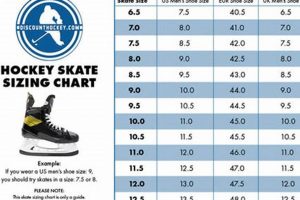
Tip 1: Proper Fit is Paramount: Ensure the devices are correctly sized and securely attached to the skates. An ill-fitting guard can shift during play, exposing vulnerable areas and hindering mobility. Consult sizing charts and seek professional fitting assistance.
Tip 2: Material Considerations: Opt for guards constructed from high-density polyethylene or composite materials. These materials offer superior impact resistance compared to less robust alternatives. Examine the construction for potential weak points before purchase.
Tip 3: Regular Inspection for Damage: Routinely inspect the protective equipment for cracks, tears, or other signs of wear and tear. Compromised integrity diminishes protective capabilities. Replace damaged devices immediately.
Tip 4: Consistent Attachment Security: Before each game or practice, verify that the straps or fastening mechanisms are securely fastened. Loose attachments negate the intended protection and can pose a tripping hazard.
Tip 5: Gradual Acclimation Period: If introducing new guards, allow for an adjustment period during practice sessions. Familiarize oneself with the altered feel and range of motion to avoid performance disruptions during critical game situations.
Tip 6: Complementary Protective Gear: Utilize these guards in conjunction with other protective equipment, such as shin guards and padded hockey pants. Comprehensive protection is crucial in mitigating the risk of injury.
Tip 7: Understanding Limitations: Recognize that these devices provide a degree of protection, but they are not impervious to all impacts. Maintain awareness of surroundings and employ strategic positioning to minimize direct shots to the lower extremities.
Adhering to these guidelines ensures the reliable operation of protective measures and contributes significantly to player safety. Remember, vigilance and proper maintenance are key.
The subsequent section explores different types of hockey skate shot blockers available, providing a comprehensive comparison of their features and benefits.
1. Protection Level

The protection level inherent in hockey skate shot blockers represents a critical determinant of their effectiveness in mitigating injury. This level is primarily dictated by the materials used in construction and the overall design of the device. Higher protection levels typically correlate with the capacity to absorb and dissipate greater impact forces, thereby reducing the likelihood of fractures, contusions, or other lower extremity trauma. The cause-and-effect relationship is direct: increased protection levels lead to decreased injury risk. For example, a shot blocker constructed from high-density polyethylene will offer superior protection compared to one made of a less rigid material, absorbing a higher percentage of the impact energy from a direct shot.
The practical significance of understanding the protection level stems from its direct influence on player safety and performance. Players engaging in defensive roles, where shot blocking is a frequent activity, require higher levels of protection to withstand the repeated impacts. Conversely, players prioritizing agility and maneuverability might opt for a lower protection level to minimize weight and bulk, accepting a slightly elevated risk. The selection process necessitates a careful evaluation of individual playing styles and positional demands. Professional leagues, for example, often mandate minimum protection standards for these devices to ensure a baseline level of safety for all participants.
In summary, the protection level of hockey skate shot blockers is intrinsically linked to their capacity to prevent injuries and facilitate optimal performance. Selecting an appropriate level requires a nuanced understanding of material properties, design characteristics, and individual player needs. While challenges remain in balancing protection with mobility, ongoing research and development continue to refine these devices, enhancing both safety and performance. This understanding contributes to the broader goal of fostering a safer playing environment within the sport of hockey.
2. Material Composition

Material composition constitutes a foundational aspect of hockey skate shot blockers, directly influencing their protective capabilities, durability, and overall performance. The selection of materials significantly impacts the device’s ability to absorb and dissipate impact forces, safeguarding the player’s foot and ankle.
- High-Density Polyethylene (HDPE)
HDPE is frequently employed in the construction of shot blockers due to its high impact resistance, rigidity, and relatively low cost. Its ability to withstand repeated impacts from pucks and sticks makes it a suitable choice for entry-level and mid-range products. For example, many recreational leagues utilize shot blockers predominantly composed of HDPE. The implication is a balance between affordability and adequate protection for players at lower skill levels.
- Polycarbonate
Polycarbonate offers enhanced impact resistance compared to HDPE, while maintaining a relatively lightweight profile. Its transparency allows for potential design integration with aesthetics. For instance, some manufacturers use polycarbonate in specific areas requiring increased protection against high-velocity impacts. This results in a greater investment from the player to provide that enhanced shot blocking.
- Composite Materials (Carbon Fiber, Aramid Fibers)
Composite materials, such as carbon fiber and aramid fibers (e.g., Kevlar), are utilized in high-end shot blockers. These materials exhibit exceptional strength-to-weight ratios, providing superior impact absorption without significantly increasing the overall weight. Professional players often prefer these due to the balance of protection and mobility. However, the elevated cost of these materials limits their use to premium products.
- Padding and Liners (Foam, Gel)
In addition to rigid outer shells, shot blockers incorporate padding and liners to enhance comfort and provide supplemental impact absorption. Materials like closed-cell foam and gel are strategically placed to cushion the foot and ankle. These materials play a critical role in mitigating the force transmitted to the player’s body. The specific type and thickness of padding vary depending on the protection level and intended use.
The interplay between these materials defines the performance characteristics of the shot blockers. The choice of materials represents a trade-off between protection, weight, durability, and cost. Understanding the properties of these materials enables informed decisions regarding the selection of appropriate hockey skate shot blockers, optimizing both safety and performance on the ice. For instance, a competitive skater may want more coverage than a recreational skater to prevent injury.
3. Attachment security

Attachment security, in the context of hockey skate shot blockers, refers to the reliability and robustness of the mechanisms used to secure the device to the hockey skate. Inadequate attachment security directly compromises the protective function. If a shot blocker detaches or shifts upon impact, it leaves the foot and ankle vulnerable to injury. For example, a strap that loosens repeatedly during play necessitates constant readjustment, diverting the player’s attention and potentially leading to a mistimed block. The cause is simple: Weak connection equals decreased protection.
The importance of attachment security is amplified by the dynamic and high-impact nature of hockey. Players execute rapid movements, sharp turns, and endure frequent collisions, placing significant stress on the attachment points. Systems typically involve straps, buckles, or specialized mounting hardware designed to withstand these forces. Some manufacturers incorporate reinforced stitching and durable materials to enhance security. Real-world examples illustrate the practical significance: a player whose shot blocker remains firmly in place after absorbing a high-velocity shot avoids injury, while one with a compromised attachment suffers a contusion. Understanding this difference is the difference between a minor injury and a major injury for players.
Attachment security is integral to the overall effectiveness and reliability of hockey skate shot blockers. Deficient security mechanisms negate the protective benefits and potentially increase the risk of injury. Continued advancements in design and materials are essential to ensure these devices remain securely affixed to the skate, allowing players to execute their roles without compromising their safety. This remains a key area for research and development in protective hockey equipment.
4. Range of motion

Range of motion, in the context of hockey skate shot blockers, denotes the extent to which a player can move their ankle and foot while wearing the protective device. A restricted range of motion can impede agility, skating speed, and overall performance. Shot blockers, by their very nature, encase a portion of the lower leg, potentially limiting the natural flexibility required for efficient skating. The cause is inherent in the design: adding external protection restricts movement. For example, a device that extends too far up the ankle can hinder forward flexion, affecting the player’s ability to maintain a low center of gravity during skating.
The importance of range of motion becomes apparent when considering the demands of various hockey positions. Forwards, who rely on speed and agility to evade defenders, require a shot blocker that minimizes restriction. Conversely, defensemen, prioritizing shot blocking and physical presence, may accept a slightly reduced range of motion in exchange for increased protection. A real-life example illustrates the trade-off: a defenseman sacrifices a fraction of a second in skating speed to gain superior protection when blocking a shot, potentially preventing a goal. Conversely, a forward’s range of motion, unimpeded by a bulky shot blocker, enables a quicker offensive maneuver.
Maintaining an optimal balance between protection and range of motion remains a critical challenge in the design and selection of hockey skate shot blockers. Manufacturers continuously strive to create devices that offer robust impact resistance without significantly hindering a player’s ability to move freely. This ongoing refinement involves exploring new materials, innovative designs, and adjustable fitting systems. Understanding the inherent trade-offs and carefully considering positional demands are essential for players in selecting a shot blocker that optimizes both safety and performance. The practical significance of this understanding leads to improved player efficiency and reduced risk of injury.
5. Skate compatibility
Skate compatibility, in the context of hockey skate shot blockers, refers to the degree to which a particular shot blocker design is suitable for use with various models and sizes of hockey skates. A lack of compatibility undermines the intended protective function. Ill-fitting shot blockers can create pressure points, restrict movement, or fail to adequately cover the vulnerable areas of the foot and ankle. The cause is rooted in design variations: different skate manufacturers employ distinct contours and dimensions, necessitating tailored shot blocker designs. For example, a shot blocker designed for a Bauer skate may not properly fit a CCM skate, resulting in compromised protection.
The importance of skate compatibility is underscored by the potential for injury. A shot blocker that shifts or detaches during play due to poor compatibility exposes the foot and ankle to direct impacts. Manufacturers address this issue through universal designs, adjustable attachment systems, and model-specific shot blockers. For example, some brands offer size charts that correlate skate size with shot blocker size, while others utilize adjustable straps to accommodate a wider range of skate shapes. A player using incompatible equipment faces a higher risk of contusions, fractures, or lacerations. The practical significance lies in informed purchasing decisions: players must verify compatibility before use.
In conclusion, skate compatibility is a crucial consideration when selecting hockey skate shot blockers. Incompatible equipment negates the protective benefits and can increase injury risk. Advances in design and adjustability aim to improve compatibility across different skate models. Players must prioritize compatibility to ensure the shot blocker functions as intended. Future developments may focus on fully customizable shot blockers tailored to individual skate characteristics, further enhancing protection and performance. A better fit contributes to safer play.
6. Durability
Durability, in the context of hockey skate shot blockers, represents the capacity of these protective devices to withstand the rigors of repeated impacts and abrasive forces encountered during gameplay. It is a critical attribute that directly influences the lifespan and continued effectiveness of these essential pieces of equipment.
- Material Fatigue Resistance
Shot blockers are subjected to high-velocity impacts from pucks and sticks, leading to material fatigue over time. Durable materials, such as high-density polyethylene or composite blends, resist cracking, deformation, and delamination, maintaining their structural integrity after numerous collisions. Inferior materials exhibit premature fatigue, compromising their protective capabilities. For example, a shot blocker constructed from a brittle plastic may shatter after a single impact, rendering it useless. Therefore, a high material fatigue resistance is highly recommended.
- Abrasion Resistance
Hockey skate shot blockers frequently come into contact with the ice surface, boards, and other equipment, resulting in abrasion. Durable materials exhibit high abrasion resistance, preventing surface degradation and maintaining their original shape. Conversely, materials with low abrasion resistance degrade quickly, leading to reduced structural integrity and compromised protection. The best shot blocker will minimize damage that occurs when a skater slides across the ice.
- Attachment Integrity Under Stress
The attachment mechanisms that secure shot blockers to skates are subjected to significant stress during gameplay. Durable attachment systems, utilizing robust straps, buckles, and rivets, resist loosening, tearing, or breakage under repeated stress. Weak attachment points compromise the shot blocker’s ability to remain securely in place during impacts, exposing the foot and ankle to injury. Therefore, it is important to replace this equipment frequently.
- Environmental Degradation Resistance
Exposure to moisture, temperature fluctuations, and cleaning agents can degrade the materials used in shot blockers. Durable materials resist environmental degradation, maintaining their properties and extending their lifespan. Susceptible materials may become brittle, discolored, or weakened over time, compromising their protective capabilities. This is even more important for skaters who use these shot blockers daily.
The durability of hockey skate shot blockers is paramount in ensuring the continued safety and performance of players. Devices constructed from durable materials and featuring robust attachment systems provide reliable protection throughout their lifespan. Assessing the durability of shot blockers involves evaluating material fatigue resistance, abrasion resistance, attachment integrity, and environmental degradation resistance, ensuring a judicious selection process and prolonging the lifespan of these critical pieces of protective gear.
7. Weight

Weight, as a characteristic of hockey skate shot blockers, represents a critical consideration in player performance and comfort, influencing agility, fatigue levels, and overall skating efficiency. The mass of these protective devices directly affects a player’s ability to maneuver on the ice and can impact endurance during extended periods of play.
- Inertia and Agility
Increased weight translates to greater inertia, hindering rapid acceleration, deceleration, and changes in direction. A heavier shot blocker necessitates more energy expenditure to initiate and control movements, potentially diminishing agility. For example, a forward relying on quick footwork to evade defenders may find a bulky, heavy shot blocker detrimental to their speed and maneuverability. This inertia may be the difference between scoring and failing.
- Fatigue and Endurance
The added weight of shot blockers contributes to increased fatigue over the course of a game. The player expends more energy to carry and manipulate the extra mass, leading to muscle strain and reduced endurance. A defenseman who consistently blocks shots while wearing heavy protective gear may experience leg fatigue, impacting their ability to maintain defensive positioning late in the game. This is why players in certain positions may choose lighter equipment.
- Material Selection and Weight Optimization
Manufacturers employ various materials, such as lightweight composites, to minimize the weight of shot blockers without sacrificing protection. The selection of materials directly impacts the overall weight of the device. For instance, carbon fiber offers a high strength-to-weight ratio, enabling manufacturers to create lightweight shot blockers that provide robust impact resistance. This material selection can be the difference between a recreational and professional piece of equipment.
- Trade-offs Between Protection and Weight
A fundamental trade-off exists between protection and weight. Maximizing protection often necessitates the use of denser, heavier materials, while minimizing weight may require compromising on impact resistance. The ideal balance depends on individual player preferences and positional demands. For example, a goaltender may prioritize maximum protection, accepting a heavier shot blocker, while a forward may prioritize agility, opting for a lighter, less protective design. Finding this trade-off is vital to a skaters performance.
The weight of hockey skate shot blockers is inextricably linked to player performance, comfort, and endurance. Understanding the interplay between weight, materials, and protection levels is essential for selecting a device that optimizes both safety and skating efficiency. Continuing advancements in materials science and design aim to minimize weight without compromising the protective capabilities of these critical pieces of equipment, enabling players to perform at their best while minimizing the risk of injury. This allows for a skater to focus on the game and less on the equipment that they are wearing.
Frequently Asked Questions
The following section addresses common inquiries concerning hockey skate shot blockers, providing concise and informative answers to enhance understanding of these protective devices.
Question 1: What constitutes a suitable material for hockey skate shot blockers?
The efficacy of these products hinges directly on the material of construction. High-density polyethylene (HDPE), polycarbonate, and composite materials offer varying degrees of impact resistance. Composite materials, while costlier, typically provide superior protection due to their high strength-to-weight ratios. The choice must reflect the skater’s competitive environment and risk tolerance.
Question 2: How is a proper fit determined for hockey skate shot blockers?
A secure and snug fit is paramount. Ill-fitting products compromise protective capabilities and can impede movement. Sizing charts provided by manufacturers serve as a primary reference. The equipment must fully cover the vulnerable areas of the foot and ankle without causing constriction or discomfort. Consultation with a qualified equipment specialist is advised.
Question 3: How frequently should hockey skate shot blockers be replaced?
The replacement frequency depends on usage intensity and visible wear. Regular inspection is critical. Any signs of cracking, deformation, or compromised attachment mechanisms necessitate immediate replacement. Even absent visible damage, professional skaters are advised to replace annually due to material fatigue from consistent high-impact forces. These forces may not be visible to the naked eye.
Question 4: Do hockey skate shot blockers impede skating performance?
While any additional equipment can potentially impact agility, modern designs prioritize minimizing interference. Lighter materials and streamlined profiles aim to preserve range of motion. An acclimation period is often necessary to adjust to the altered feel. A proper fitting will also prevent skating performance issues.
Question 5: What are the primary maintenance requirements for hockey skate shot blockers?
Routine cleaning with mild soap and water prevents the buildup of sweat and debris. Inspect the attachment mechanisms regularly, ensuring straps and buckles are secure. Avoid prolonged exposure to direct sunlight or extreme temperatures, as this can degrade materials. Proper storage will prevent damage.
Question 6: Do all hockey leagues mandate the use of skate shot blockers?
Mandatory use varies by league and level of play. Professional and competitive leagues frequently enforce regulations concerning protective equipment. Recreational leagues may offer greater latitude. It is imperative to consult the specific rules and guidelines governing the relevant league before participation. These guidelines can often be found online.
In summary, selecting and maintaining hockey skate shot blockers requires careful consideration of material composition, fit, replacement frequency, and adherence to league regulations. These devices play a crucial role in mitigating the risk of injury and enhancing player safety.
The subsequent segment will address common misconceptions associated with these protective products, further elucidating their role in hockey safety.
Conclusion
The preceding discussion has explored essential aspects of hockey skate shot blockers, encompassing their types, material compositions, fitting considerations, durability factors, and impact on player performance. The information presented underscores the critical role these devices play in mitigating lower extremity injuries within the sport. Ensuring proper fit, material selection, and consistent maintenance practices are paramount for optimizing the protective capabilities.
The informed adoption of protective equipment, including hockey skate shot blockers, contributes directly to a safer and more sustainable playing environment. Further research and development in materials science and design remain essential to advancing player safety without compromising athletic performance. A continued emphasis on education and awareness regarding protective equipment will promote responsible practices at all levels of play, underscoring their vital contribution to player well-being.