Equipment designed to accommodate broader foot dimensions is critical for hockey players seeking optimal performance and comfort. Standard skate designs often create discomfort and impede mobility for individuals with wider feet. Specialized options address these issues through increased internal volume and customizable features.
The selection of appropriately fitted skates significantly impacts a player’s agility, power transfer, and overall skating experience. Historically, athletes with wider feet encountered difficulty finding suitable equipment, leading to compromised performance and potential injuries. Modern manufacturing techniques and design innovations offer improved solutions, allowing these athletes to achieve their full potential on the ice.
The following sections will delve into the key characteristics of suitable equipment, explore prominent brands offering wider models, and provide guidance on proper fitting techniques to ensure athletes experience peak performance and comfort.
Guidance for Selecting Hockey Skates Designed for Broad Feet
Choosing hockey skates requires careful consideration, particularly for those with broader feet. This section provides essential guidance to facilitate an informed decision.
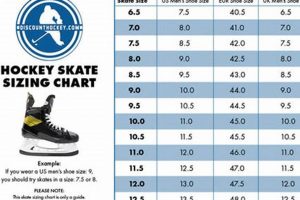
Tip 1: Prioritize Measuring Foot Width Accurately: Precise foot measurements are crucial. Use a Brannock device or a similar tool to determine both length and width. The width measurement will be instrumental in identifying appropriate skate models.
Tip 2: Research Skate Models Offering “EE” or “Wide” Options: Many manufacturers produce skate models specifically designated as “EE” or “Wide” width. These models provide increased internal volume to accommodate broader feet comfortably.
Tip 3: Consider Thermoformable Skate Models: Thermoformable skates allow for heat molding, enabling a customized fit that conforms to the specific contours of the foot. This can be particularly beneficial for individuals with unusual foot shapes.
Tip 4: Examine the Skate Boot’s Internal Volume and Last: The “last” refers to the foot-shaped form around which the skate boot is constructed. A boot with a high-volume last will typically offer a more accommodating fit for wider feet.
Tip 5: Consult with a Knowledgeable Skate Fitter: A skilled skate fitter can assess foot characteristics, recommend suitable models, and assist with the fitting process. Their expertise can significantly improve the likelihood of selecting a well-fitting skate.
Tip 6: Try on Skates Wearing Hockey Socks: Always try on skates while wearing the type of hockey socks that will be used during play. This ensures an accurate assessment of fit and comfort.
Tip 7: Be Aware of Skate Break-in Period: New skates require a break-in period. Expect some initial stiffness, but persistent discomfort indicates a potential fit issue that should be addressed.
Selecting appropriately sized and shaped hockey skates is paramount to player comfort and performance. Ignoring the need for wider fitting options can cause discomfort and negatively impact skating ability.
With proper assessment and selection, athletes with wide feet can find hockey skates that provide optimal support, comfort, and performance. The following will address key brands and model offerings.
1. Width (EE or wider)

The designation “EE” or wider directly correlates with the suitability of hockey skates for individuals with broader feet. Standard skate models are engineered to accommodate average foot widths, typically designated as “D” or “R.” Consequently, individuals exceeding this average experience discomfort, restricted circulation, and compromised performance due to the constrictive nature of standard skates. The availability of “EE” or wider options directly addresses this issue by providing increased internal volume, thereby alleviating pressure points and facilitating a more natural foot position within the skate boot. A real-world example involves players who, when using standard-width skates, frequently experience foot cramping, numbness, or the development of blisters and calluses. The adoption of “EE” width skates often resolves these issues, permitting extended periods of comfortable skating and enhanced agility.
Beyond immediate comfort, appropriate width selection influences biomechanics. Overly tight skates can disrupt natural foot movement and impair ankle flexion, hindering stride efficiency and overall skating power. Conversely, skates with sufficient width allow for proper foot splay and engagement of supporting muscles, contributing to improved balance and a more powerful skating technique. The practical application of this understanding extends to the skate fitting process, where careful measurement of foot width is paramount. Retailers specializing in hockey equipment often employ Brannock devices or similar tools to accurately determine the appropriate width designation, guiding players toward models that align with their individual foot dimensions.
In summary, the “EE” or wider specification represents a critical factor in identifying hockey skates suitable for individuals with broader feet. Its importance stems from the direct impact on comfort, performance, and the prevention of foot-related injuries. The challenges associated with inadequate width underscore the necessity of accurate foot measurement and informed skate selection, ensuring that players with wider feet can experience the full benefits of properly fitted equipment.
2. Boot Volume
Boot volume, in the context of hockey skates, refers to the internal space within the boot’s three-dimensional structure. For individuals requiring wider skates, boot volume becomes a critical determinant of overall fit and comfort. While width addresses the horizontal space across the foot, volume encompasses the vertical space, accommodating higher insteps or generally thicker feet. Skates designed with insufficient boot volume often cause pressure on the top of the foot, leading to discomfort, numbness, and potential circulation issues. Conversely, adequate boot volume allows the foot to settle comfortably within the skate, promoting natural movement and efficient power transfer. For instance, a skater with a wide foot and high instep may find “EE” width skates still uncomfortable if the boot volume is too low, necessitating a model specifically engineered for high-volume feet.
The importance of boot volume extends beyond mere comfort; it also influences performance and injury prevention. Skates with inadequate volume can restrict ankle flexion, impeding a player’s ability to achieve a deep skating stance and generate maximum power. Furthermore, constant pressure on the foot can lead to the formation of blisters, calluses, and even stress fractures over time. Addressing boot volume often involves a combination of skate selection and customization. Some manufacturers offer models with adjustable or heat-moldable tongues that can be modified to create additional space. Aftermarket inlays or orthotics can also play a role in optimizing foot positioning within the skate and mitigating pressure points.
In conclusion, boot volume is a crucial consideration for individuals seeking appropriately fitted hockey skates, especially those with wider feet. Its impact on comfort, performance, and injury risk underscores the need for careful assessment during the skate selection process. Ignoring boot volume can negate the benefits of selecting a wider skate, highlighting the interconnectedness of these features in achieving optimal fit and function. Retailers specializing in hockey equipment should prioritize accurate foot measurement and provide knowledgeable guidance to ensure customers choose skates that adequately address both width and volume requirements.
3. Thermoformability

Thermoformability, the capacity of a material to be shaped through heat application, represents a significant feature in hockey skates designed for wide feet. For individuals whose feet deviate considerably from standard dimensions, achieving a precise and comfortable fit with off-the-shelf skates proves challenging. Thermoformable skates offer a solution by allowing the boot’s shell and internal padding to be custom-molded to the unique contours of the foot. This process involves heating the skate, typically in a specialized oven, and then allowing the wearer to stand or sit in the skate as it cools and conforms to the foot’s shape. The result is a more personalized fit, minimizing pressure points and maximizing support.
The benefits of thermoformability are particularly pronounced for those with wide feet, as it enables the skate to accommodate bony prominences, bunions, or other irregularities that might otherwise cause discomfort or impede performance. For example, a skater with a wide forefoot and narrow heel often experiences slippage in standard skates, compromising stability and power transfer. Thermoforming allows the boot to be molded for a snug fit around the heel while providing ample room in the forefoot, addressing both issues simultaneously. Moreover, thermoformability can enhance circulation by eliminating constricting pressure points, contributing to improved comfort and reduced fatigue during extended periods of skating.
Thermoformability plays a crucial role in optimizing the fit of hockey skates for individuals with wide feet. By enabling a customized fit that conforms to the foot’s unique shape, thermoformable skates minimize discomfort, enhance performance, and reduce the risk of foot-related injuries. The availability of this feature represents a significant advancement in skate technology, providing athletes with wide feet access to equipment that meets their specific needs and allows them to perform at their best.
4. Ankle Support
Ankle support constitutes a crucial element in hockey skates, particularly for individuals with wider feet. The relationship between appropriate ankle support and wider skate designs is one of interconnected functionality. Wider skates, designed to accommodate broader foot dimensions, can sometimes compromise ankle stability if not engineered with adequate support mechanisms. Insufficient ankle support can lead to instability during lateral movements, reducing agility and increasing the risk of ankle injuries. A hockey skate properly fitted in width but lacking sufficient support around the ankle renders the width advantage moot, as the foot may move excessively within the boot, diminishing power transfer and control.
The integration of robust ankle support in wider skates involves several design considerations. Stiffer boot materials, strategically placed padding, and reinforced ankle collars are common features aimed at providing the necessary stability. Moreover, lacing systems play a critical role; designs that effectively lock the heel in place and prevent excessive ankle movement are paramount. Athletes with wider feet who require heightened ankle support may benefit from skates featuring adjustable ankle straps or custom orthotics that further enhance stability and control. For instance, a player with a history of ankle sprains, despite finding a skate with sufficient width, must prioritize a model known for its exceptional ankle support to mitigate the risk of re-injury.
In conclusion, ankle support is inextricably linked to the overall performance and safety of hockey skates, especially for athletes with wider feet. While width addresses foot comfort, adequate ankle support ensures stability, power transfer, and injury prevention. The optimal skate choice requires a holistic evaluation, balancing width requirements with the need for robust ankle support features to maximize on-ice performance and minimize potential risks.
5. Blade Stability

Blade stability in hockey skates directly influences an athlete’s ability to execute precise movements and efficiently transfer power to the ice. For individuals requiring wider skates, maintaining blade stability presents unique considerations that impact performance and safety.
- Stance and Balance Maintenance
Sufficient blade stability promotes a centered stance, enabling optimal balance and agility. Inadequate stability compels compensatory muscle engagement, leading to fatigue and potentially compromising control. In the context of broader skates, achieving this stability necessitates a robust chassis and secure boot-to-blade interface.
- Efficient Power Transfer
Blade stability ensures that the force generated during strides is directly translated into forward momentum. Any instability dissipates energy, diminishing skating speed and efficiency. Wider skates must maintain a rigid connection between the foot and the blade to prevent energy loss, often requiring reinforced boot structures.
- Edge Control and Precision
Precise edge control is crucial for executing turns, stops, and intricate maneuvers. Unstable blades compromise edge engagement, reducing responsiveness and increasing the likelihood of losing control. Skates designed for wider feet must prioritize torsional stiffness to ensure consistent edge contact with the ice.
- Risk Mitigation for Injury
A stable blade reduces the risk of ankle roll and subsequent injuries. Instability can lead to unexpected movements, placing undue stress on ligaments and tendons. Wider skates designed with enhanced blade stability minimize these risks by providing a secure and supportive platform for the foot.
The integration of these facets is essential for optimizing the performance of hockey skates designed for wider feet. A stable blade, coupled with appropriate boot fit and support, enables athletes to confidently execute maneuvers, maximize power output, and minimize the potential for injury, ultimately enhancing their overall skating experience.
6. Proper Fit
Achieving optimal performance and comfort with hockey skates, particularly for individuals with wider feet, hinges on proper fit. This transcends mere size selection, encompassing a multifaceted assessment of foot dimensions and skate characteristics to ensure harmonious integration.
- Accurate Foot Measurement and Volume Assessment
Proper fit begins with precise measurement of foot length and width using a Brannock device or similar instrument. This measurement serves as the foundation for selecting the appropriate skate size and width (e.g., EE). Furthermore, assessment of foot volume, especially instep height, is critical. A skate that is wide enough but lacks sufficient vertical volume can cause discomfort and impede circulation. An example is the athlete who, despite selecting an EE width skate, experiences persistent pressure on the top of the foot, necessitating a model with greater internal volume.
- Heel Lock and Ankle Support Integration
Proper fit mandates secure heel lock to prevent slippage and ensure efficient power transfer. The heel should be firmly seated in the skate, minimizing movement during skating. Concurrently, adequate ankle support is essential for stability and injury prevention. Wider skates, if not designed with sufficient ankle support, can compromise stability, particularly during lateral movements. A skater experiencing heel lift or ankle instability requires a skate with a tighter heel pocket and enhanced ankle support features.
- Customization through Thermoforming and Aftermarket Inserts
Achieving optimal fit often necessitates customization, particularly for individuals with asymmetrical feet or bony prominences. Thermoforming allows the skate boot to be molded to the unique contours of the foot, minimizing pressure points and maximizing comfort. Aftermarket inserts or orthotics can further refine the fit by providing additional arch support or correcting biomechanical imbalances. An athlete with a bunion, for instance, may benefit from thermoforming to create space around the affected area, complemented by a custom orthotic to improve foot alignment.
- Break-in Period and Ongoing Assessment
Even with careful selection and customization, new skates require a break-in period. During this time, the skate will gradually conform to the foot’s shape. It is imperative to monitor for any persistent discomfort or pressure points and make necessary adjustments. Continued assessment of fit is essential, as changes in foot size or shape may necessitate modifications or even a new skate selection over time.
These facets collectively underscore the critical role of proper fit in optimizing the performance and comfort of hockey skates, especially for individuals with wider feet. A comprehensive approach that considers foot measurements, volume assessment, heel lock, ankle support, customization options, and ongoing assessment is paramount for ensuring a harmonious interface between the foot and the skate, ultimately enhancing the skating experience.
Frequently Asked Questions
The following addresses common inquiries regarding hockey skates specifically designed to accommodate wider foot dimensions.
Question 1: How does one determine the appropriate skate width for a wide foot?
The use of a Brannock device is recommended for precise measurement of foot length and width. If the width measurement exceeds the standard range, a skate model designated as “EE” or “Wide” is generally appropriate.
Question 2: Are wider skates simply longer skates?
No, wider skates maintain the same length as standard skates but offer increased internal volume to accommodate broader foot dimensions. Selecting a longer skate to compensate for width is not advisable, as it can compromise agility and control.
Question 3: Can thermoforming compensate for an inadequately wide skate?
Thermoforming can improve the fit of a skate, but it cannot compensate for a skate that is fundamentally too narrow. It is primarily intended to fine-tune the fit and address specific pressure points, not to significantly expand the overall width of the boot.
Question 4: What design features contribute to ankle support in wider skates?
Wider skates engineered with robust ankle support often incorporate stiffer boot materials, strategically placed padding, and reinforced ankle collars. Secure lacing systems that effectively lock the heel in place are also crucial.
Question 5: Does blade stability differ in wider versus standard skates?
Blade stability should not inherently differ between wider and standard skates if both are properly designed. However, wider skates lacking sufficient structural integrity may experience reduced blade stability, compromising power transfer and control.
Question 6: Are aftermarket insoles a substitute for properly fitted wide skates?
Aftermarket insoles can enhance comfort and support, but they are not a substitute for skates that adequately accommodate foot width. Insoles primarily address arch support and cushioning, not the overall fit and volume of the skate boot.
In summary, selecting appropriately sized and shaped hockey skates is paramount to player comfort and performance. Ignoring the need for wider fitting options can cause discomfort and negatively impact skating ability.
The subsequent section will explore prominent brands and models known for catering to athletes with broader feet.
Conclusion
This exploration has underscored the critical importance of selecting hockey skates that properly accommodate wider feet. The discussed attributeswidth, boot volume, thermoformability, ankle support, blade stability, and proper fitcollectively determine comfort, performance, and injury prevention. Addressing these factors necessitates accurate foot measurement, informed skate selection, and potentially, customization to achieve an optimal interface between the foot and the equipment.
The search for hockey skates best suited for wider feet demands diligent assessment and informed decision-making. Athletes and equipment providers who prioritize these considerations contribute to enhanced on-ice performance and a reduced risk of foot-related injuries, ultimately promoting a more positive and sustainable engagement with the sport.